Folk Song Selection Guide for Non-Singers
Not sure what to sing? Tell us about your situation, and we'll suggest the perfect Indian folk style to keep you sounding confident!
Our Recommendation:
Adjust the settings and click "Find My Best Match" to see your ideal folk style!
Why Folk Songs Are Your Secret Weapon
If you can't sing, the biggest mistake you can make is trying to perform a complex Bollywood hit or a heavy classical piece. Those require precise pitch control. Folk music is different. It is built on repetition and rhythmic hooks. If you miss a note, the beat usually carries you through, and since these songs are often sung in groups, any individual "mistake" just blends into the collective sound. Think about it this way: folk songs are the "campfire songs" of India. They are meant to be sung by farmers in the fields of Punjab or women at a wedding in Rajasthan. The goal isn't technical perfection; it's emotional connection. When you choose a song with a limited vocal range-meaning the distance between the lowest and highest note is small-you remove the risk of your voice cracking or sounding strained.The Best Picks for the Vocally Challenged
Depending on the vibe of the room, you want a song that feels natural. Here are a few regional styles and specific types of tracks that won't expose your lack of training.The High-Energy Punjabi Boliyaan
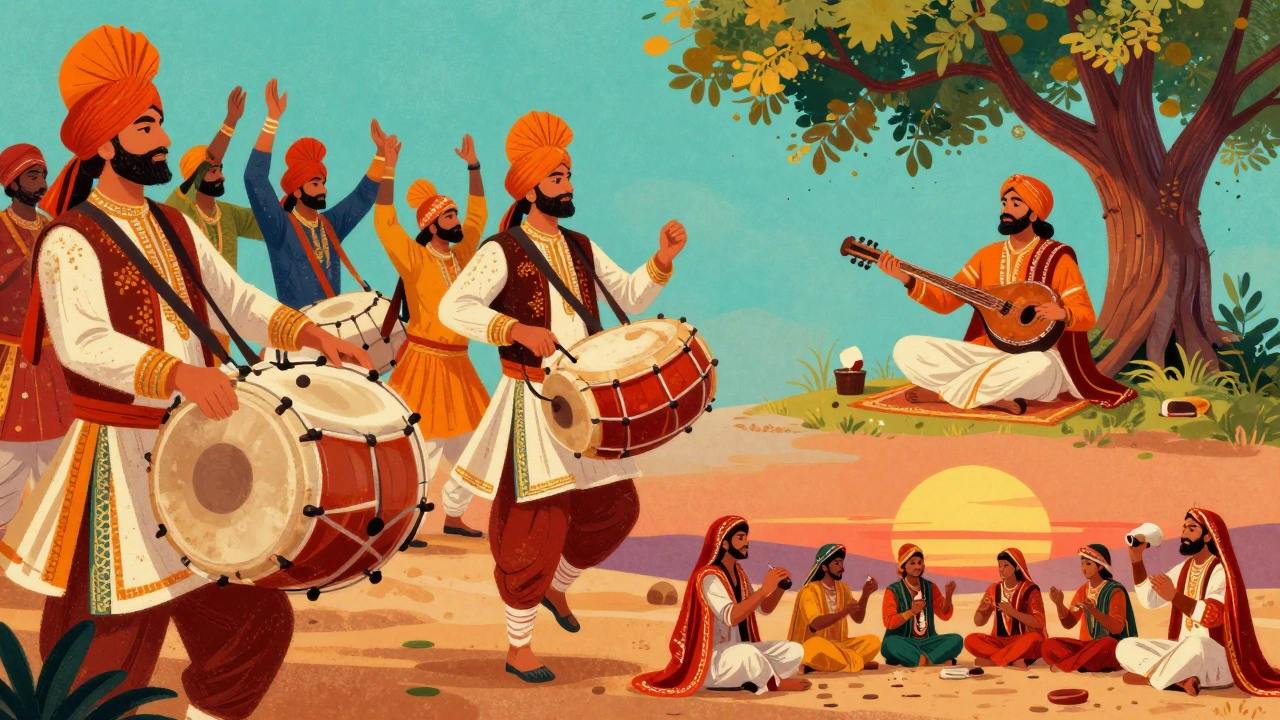
Boliyaan are short, rhythmic couplets typical of Punjabi folk music, often performed during celebrations and Giddha dance. These are perfect because they are half-spoken, half-sung. You aren't holding long, difficult notes. Instead, you are delivering a punchy line with a lot of attitude. If you can talk with rhythm, you can sing a Boli. The focus is on the dhol beat. As long as you stay on beat, the crowd will be cheering before you even finish the first verse.The Soulful Baul Songs of Bengal
If you want something slower and more grounded, look at the Baul tradition. These are mystic songs from West Bengal. The melody usually stays within a very narrow range. Because they are often meditative, a slightly "flat" or "rough" voice actually adds authenticity to the performance. It sounds more like a storyteller and less like a pop star, which takes the pressure off your vocal cords.The Festive Rajasthani Manganiyar Style
Rajasthani folk often uses a lot of call-and-response. This is a goldmine for non-singers. You sing a simple line, and the audience (or a backing group) repeats it. You only have to be "on" for a few seconds at a time. The rhythmic nature of the Kamaicha (a traditional bowed instrument) often leads the melody, so you are essentially following the instrument's lead.| Style | Vocal Range | Main Focus | Difficulty Level |
|---|---|---|---|
| Punjabi Boliyaan | Low to Mid | Rhythm & Energy | Very Easy |
| Bengali Baul | Mid | Emotion & Story | Easy |
| Rajasthani Folk | Variable | Call-and-Response | Medium-Easy |
| Lavani (Maharashtra) | High/Expressive | Drama & Tempo | Medium |
How to "Fake It" Until You Make It
Even with an easy song, nerves can make your voice shake. Here are a few practical tricks to sound better than you actually are without taking a single music lesson.- Lower the Key: If the song feels too high, don't struggle. Just sing it lower. In folk music, the "correct" key is whatever feels comfortable in your throat. If you are using a karaoke track, use an app to drop the pitch by 1 or 2 semitones.
- Lean Into the Percussion: Use your hands to clap or snap. When you emphasize the beat, people focus more on the rhythm than the pitch. It transforms the performance from a "recital" into a "jam session."
- Focus on Diction: If you can't hit the note, hit the consonant. Clear, crisp pronunciation of the lyrics makes you sound confident. Confidence is 70% of the battle when singing in public.
- Smile While Singing: It sounds cliché, but smiling actually lifts the soft palate in the back of your throat, which can naturally brighten your tone and make your voice sound more resonant.
Common Pitfalls to Avoid
Avoid the "Siren Effect." This happens when a non-singer tries to slide between notes to sound more "emotional." Unless you have great control, this usually results in you landing completely off-key. Stick to the notes. It is better to sound a bit plain and steady than to attempt a slide and miss the mark entirely. Also, steer clear of songs with long held notes. If a song requires you to hold a vowel for five seconds, you're playing a dangerous game with your breath control. Look for songs with "staccato" delivery-short, clipped phrases that let you breathe frequently.
Turning the Performance Into a Group Event
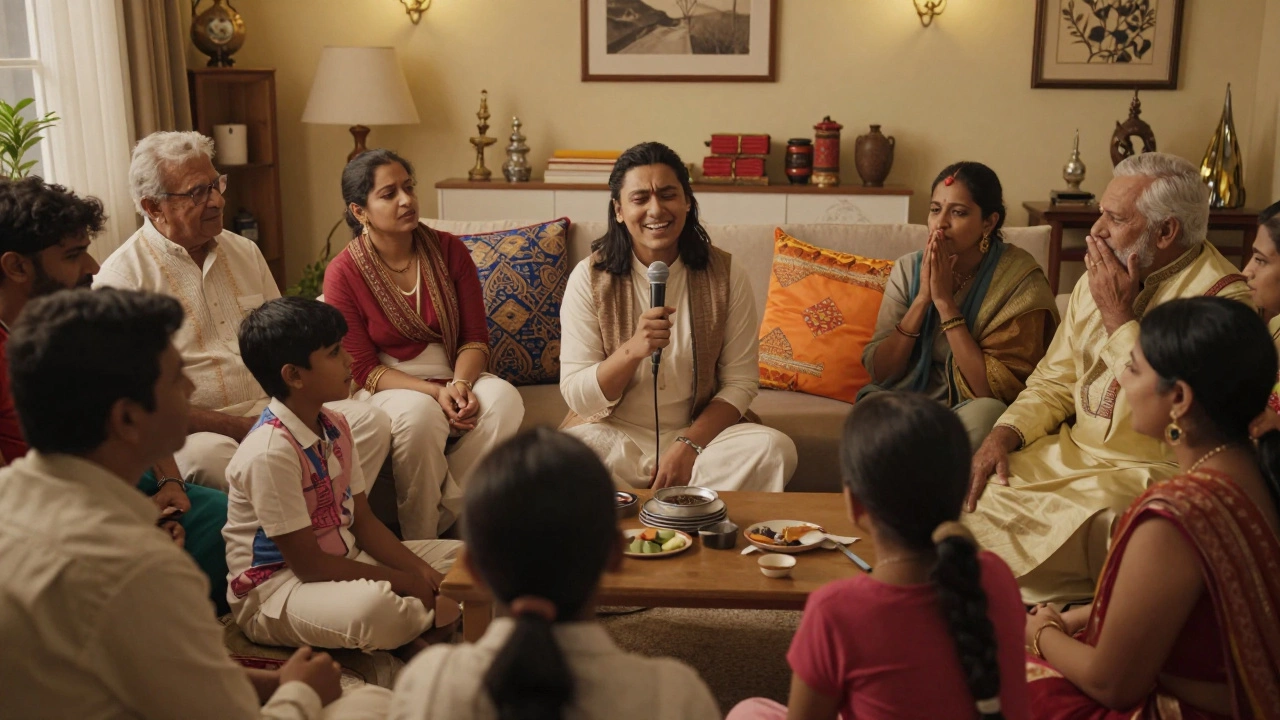
The ultimate goal for someone who can't sing is to stop being the only person singing. The moment you turn a solo into a sing-along, the spotlight disappears and the party starts. Start by teaching the audience a simple chorus. If you're singing a popular folk tune like "Suhani Raat," tell the crowd, "Whenever I stop, you all sing this part!" By directing the energy, you move from being a "performer under scrutiny" to a "conductor of the fun." This is why folk music is the safest bet; it is inherently inclusive.What if I don't know any Indian languages fluently?
Stick to songs with repetitive choruses. You can learn the phonetic sounds of the main hook, and for the verses, you can lean more into the rhythmic "chanting" style. Most people appreciate the effort of trying a regional folk song even if your accent isn't perfect.
Can I use a microphone if I'm a bad singer?
Yes, but keep your distance. Don't put the mic right against your lips, as this picks up every breath and imperfection. Keep it a few inches away and project your voice. The mic should support you, not amplify your mistakes.
Which is easier: a slow folk song or a fast one?
Fast songs are actually easier for non-singers. Why? Because there is less time to dwell on a wrong note. The momentum carries you forward. Slow songs expose every tremor in your voice, whereas fast, rhythmic songs hide them in the energy.
Do I need an instrument to make it sound better?
You don't need to play an instrument, but having a rhythmic accompaniment-like a tabla or a simple drum machine-is a lifesaver. It keeps you on track and fills the sonic space so your voice doesn't feel "naked."
What is the absolute safest song type for a total beginner?
A "call-and-response" song. This is where you sing a line and a group repeats it. It breaks the song into small, manageable chunks and ensures you aren't singing alone for long.