Christian Cremation Guidelines Checker
Select a denomination
--Click on a denomination from the list to view their specific stance on cremation and how to handle ashes.
Key Guidelines & Restrictions:
No data selected.
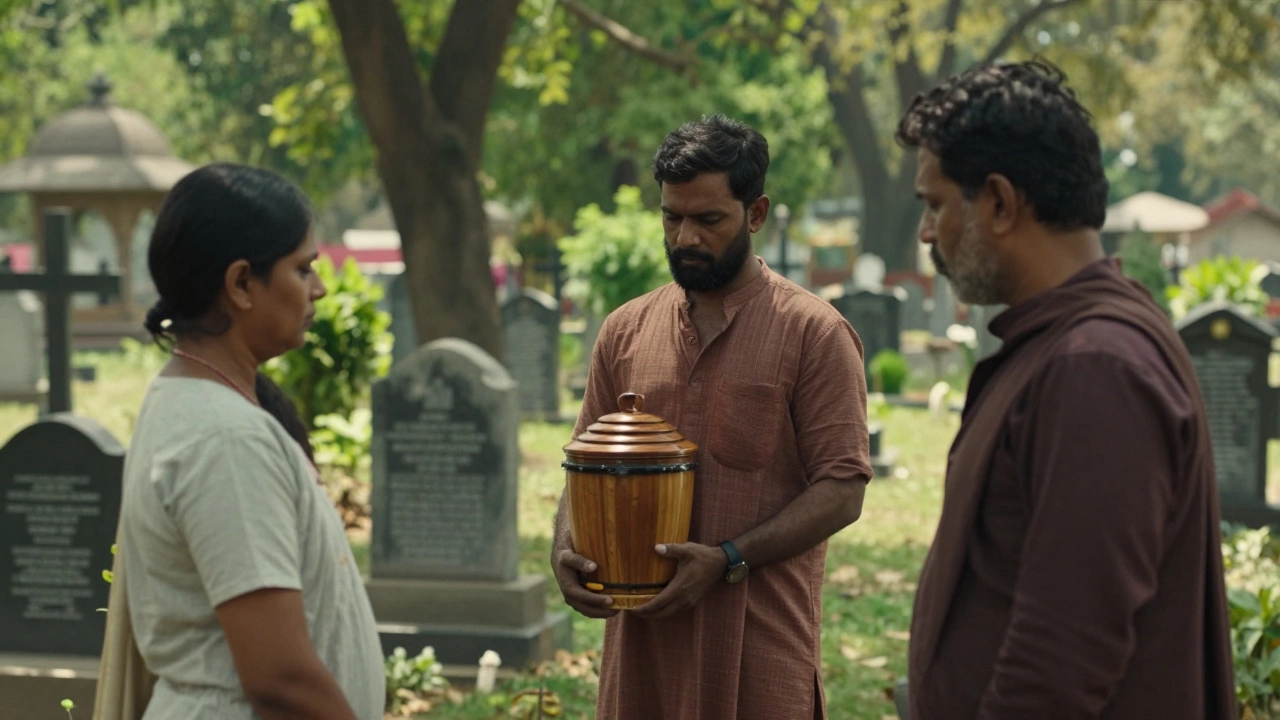
You’re standing at the edge of a difficult decision. Someone you love has passed away, and now you have to choose between a traditional earth burial and cremation. If you are a devout Christian, this choice might feel heavier than just logistics or cost. You might be wondering: Is it okay? Does God care how my body is handled? Will I still get into heaven if I’m turned to ash?
For centuries, the answer was a hard "no." Burial in consecrated ground was the only option for believers. But times have changed. Today, most major Christian denominations-including the Roman Catholic Church, which held out the longest-allow and even facilitate cremation. The shift isn’t about abandoning tradition; it’s about adapting to modern realities while keeping the core faith intact.
The Biblical Silence on Cremation
If you look through the Bible, you won’t find a verse that says, "Thou shalt not burn thy dead." In fact, the text is surprisingly quiet on the specific method of body disposal. What the scriptures do emphasize is the dignity of the human body as a temple of the Holy Spirit (1 Corinthians 6:19) and the hope of bodily resurrection.
In the Old Testament, we see both practices. Burial was the norm for patriarchs like Abraham and Jacob. However, burning occurred too. Sometimes it was a punishment for extreme sin, such as the case of Nadab and Abihu (Leviticus 10:1-2). Other times, it was a practical necessity due to war or disease. When King Saul died, his body was burned because the Philistines had desecrated it (1 Samuel 31:12). This shows that while burial was preferred, cremation wasn't viewed as an automatic barrier to God's grace in those contexts.
The New Testament focuses less on the physical remains and more on the spiritual reality. Jesus said, "Do not fear those who kill the body but cannot kill the soul" (Matthew 10:28). The apostle Paul describes our earthly bodies as tents that will be destroyed, awaiting a heavenly dwelling (2 Corinthians 5:1). From a theological standpoint, God’s power to resurrect is not limited by whether your bones are under soil or mixed with dirt in a garden.
Why Did Churches Oppose Cremation?
If the Bible doesn’t explicitly forbid it, why did the Church say no for so long? It comes down to symbolism and reaction against other beliefs.
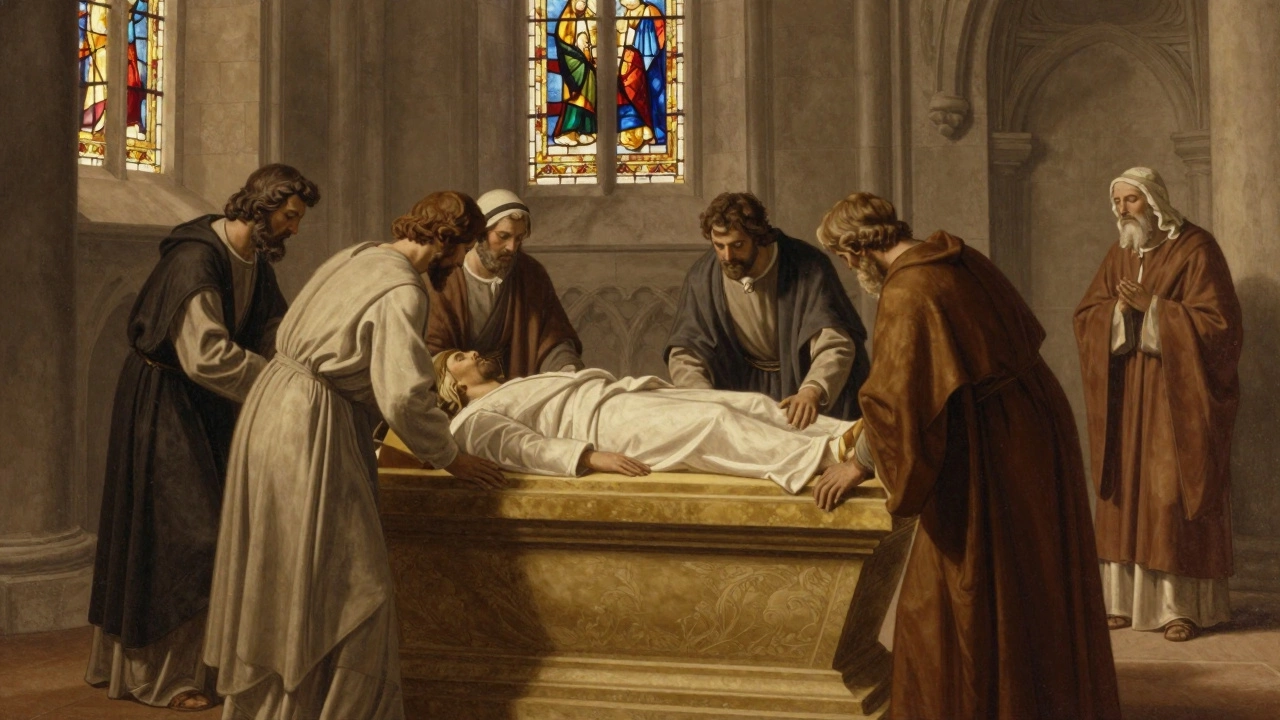
Early Christians buried their dead to mirror Jesus’ own burial. They believed in the literal resurrection of the body. To them, fire symbolized hellfire and judgment. Burning a body felt like rejecting the promise of life after death. Additionally, many pagan cultures practiced cremation as part of rituals that denied the afterlife. By choosing burial, Christians were making a public statement of faith distinct from their neighbors.
Then there was the issue of respect. For a long time, cremation was associated with poverty or social stigma. It was seen as a way to dispose of the body quickly and cheaply, rather than honoring the deceased. The Church wanted to ensure that every believer received a dignified send-off, which traditionally meant a coffin, a grave, and a headstone.
The Turning Point: Vatican II and 1963
The biggest shift happened in 1963. The Vatican issued a decree lifting the ban on cremation for Catholics. Before this, if you chose cremation, you could be denied a Catholic funeral and burial in consecrated ground. The new rule stated that cremation was permitted unless it was chosen for reasons contrary to Christian doctrine-for example, if someone believed the body shouldn't be resurrected.
This change rippled through other denominations. Protestant churches, which generally have less centralized authority, began accepting cremation more readily throughout the 20th century. By the 1970s and 80s, it became common practice in the US and Europe. The primary concern shifted from "is it allowed?" to "how do we honor the person?"
Current Stances of Major Denominations
Today, the landscape is much more open. Here is how different branches of Christianity view cremation:
- Roman Catholic Church: Permitted since 1963. Updated guidelines in 2016 clarified that ashes should be kept in a sacred place, like a cemetery columbarium or church crypt. Scattering ashes, keeping them at home, or turning them into jewelry is discouraged because it can show a lack of respect for the body.
- Eastern Orthodox Church: Generally opposes cremation. They hold firmly to the belief in bodily resurrection and view the body as holy. While some parishes may make exceptions for legal reasons, it is rarely encouraged.
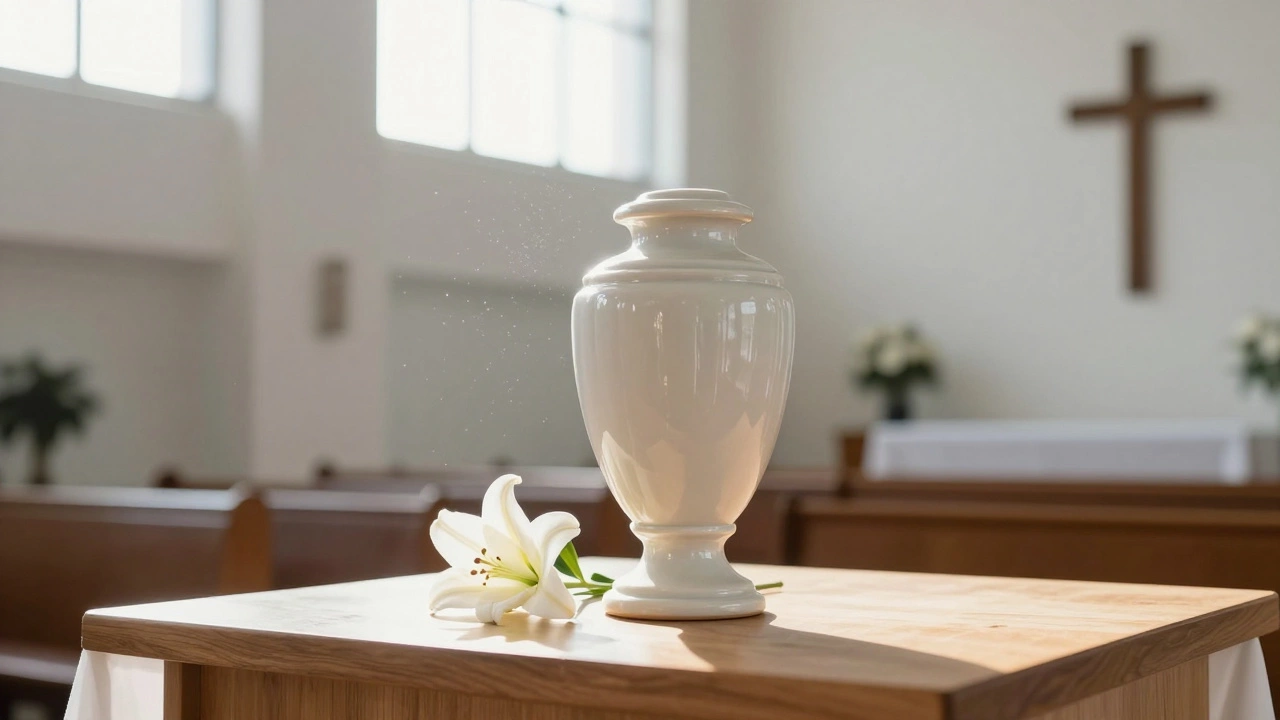
- Protestant Denominations (Baptist, Methodist, Lutheran, etc.): Most allow cremation without restriction. They focus on the heart of the believer rather than the state of the remains. Many offer specific "cremation services" where the urn is present during the liturgy.
- Seventh-day Adventists: Historically opposed cremation due to health concerns and theological views on the intermediate state. However, recent statements suggest they will not deny membership or ministry to those who choose cremation, though burial remains the preferred recommendation.
| Denomination | Status | Key Restrictions/Notes |
|---|---|---|
| Roman Catholic | Permitted | Ashes must be buried/entombed in sacred ground. No scattering. |
| Eastern Orthodox | Discouraged | Strong preference for burial due to resurrection theology. |
| Protestant (Mainline) | Accepted | No major restrictions. Focus on memorial service. |
| Evangelical | Accepted | Viewed as a personal preference. No doctrinal barrier. |
Respecting the Ashes: What Not to Do
Just because you can be cremated doesn't mean you can do whatever you want with the ashes. The Catholic Church, in particular, has been very clear about this in recent years. The document Adressum Satissimum (2016) lists several actions that are considered disrespectful:
- Keeping ashes at home: While common in secular society, the Church argues that ashes belong in a communal, sacred space where people can pray for the deceased.
- Scattering ashes: Whether in the sea, mountains, or air, scattering is discouraged because it makes it impossible to have a specific place for remembrance and prayer.
- Making keepsakes: Turning ashes into diamonds, jewelry, or glass art is viewed as trivializing the human body. The body deserves reverence, not decoration.
- Dividing ashes among family: This fragments the remains and removes them from a dedicated resting place.
Other denominations may be more flexible, but even they encourage treating the remains with dignity. The goal is to create a space for grief and memory, not to treat the deceased as a souvenir.
Practical Considerations for Families
Beyond theology, there are practical reasons why families choose cremation. Cost is a huge factor. A traditional burial involves a casket, a vault, a plot of land, and a headstone. These costs can easily exceed $10,000 in many Western countries. Cremation is significantly cheaper, often costing a fraction of that amount.
Space is another issue. Cemetery plots are running out in urban areas like London or New York. Columbaria (niches for urns) take up much less space. For families who move around frequently, having a fixed grave site can be logistically difficult. An urn is easier to transport if needed, though again, religious guidelines may restrict where it ends up.
If you are planning ahead, talk to your local pastor or priest. Ask them what their specific parish requires. Some churches have designated sections for urns. Others may require you to use a specific funeral home that follows their guidelines. Knowing these details beforehand saves stress when you need to make quick decisions.
Will Cremation Stop Resurrection?
This is the question that keeps many believers up at night. If my body is gone, how can God bring me back? Theologians argue that God created the universe from nothing. He knows every atom of every person. The idea that fire destroys the possibility of resurrection limits God’s power.
Think of it this way: When a tree falls and decays, its nutrients return to the soil. New trees grow from that same soil. The material changes form, but it isn't lost. Similarly, Christian doctrine holds that God can reassemble your body regardless of its current state. Whether your atoms are in a box under grass or scattered in the wind (though scattering is discouraged), God’s knowledge of you is complete.
The early Church Father St. John Chrysostom wrote, "God will raise us up... whether we are buried or burned." The focus is on the soul's union with Christ, not the preservation of calcium and carbon.
Conclusion: Honoring Life in Death
So, can Christians be cremated? Yes. For most denominations, it is a permissible choice that respects both faith and modern circumstances. The key is intention. Are you choosing cremation to deny the resurrection? Or are you choosing it for practical reasons while still honoring the deceased?
If you are Catholic, ensure the ashes are placed in a sacred location. If you are Protestant, follow your conscience and community norms. Regardless of the method, the most important part of any funeral is the gathering of friends and family to celebrate the life lived and to pray for the soul's journey. That act of love matters far more than the temperature of the furnace.
Does the Catholic Church allow cremation in 2026?
Yes, the Catholic Church allows cremation. However, it requires that the ashes be buried or entombed in a sacred place like a cemetery or church crypt. Scattering ashes or keeping them at home is not permitted.
Is cremation mentioned in the Bible?
Cremation is mentioned occasionally in the Old Testament, often in contexts of war or punishment. However, there is no direct commandment forbidding it for believers. The New Testament focuses on the spiritual resurrection rather than the physical handling of the body.
Can you have a Christian funeral with cremation?
Yes. Most Christian denominations offer full funeral services with cremation. The urn is often present during the service, allowing for prayers, readings, and hymns just like a traditional burial service.
Why did the Church oppose cremation for so long?
The Church opposed cremation because it mirrored pagan rituals that denied the afterlife and seemed to reject the belief in bodily resurrection. Fire was also associated with hellfire. Over time, as these associations faded, the Church relaxed its stance.
What happens to the ashes according to Christian belief?
Christians believe that the physical body dies, but the soul goes to God. The ashes are simply the remaining physical matter. At the end of time, God will resurrect the faithful, regardless of whether their bodies were buried or cremated.