Secular Yoga Style Matcher
Not sure which yoga class to join? Answer these three questions to find a practice that fits your body and your worldview.
Secular Score
Recommended:
- Focus:
- Spiritual Content:
- Best For:
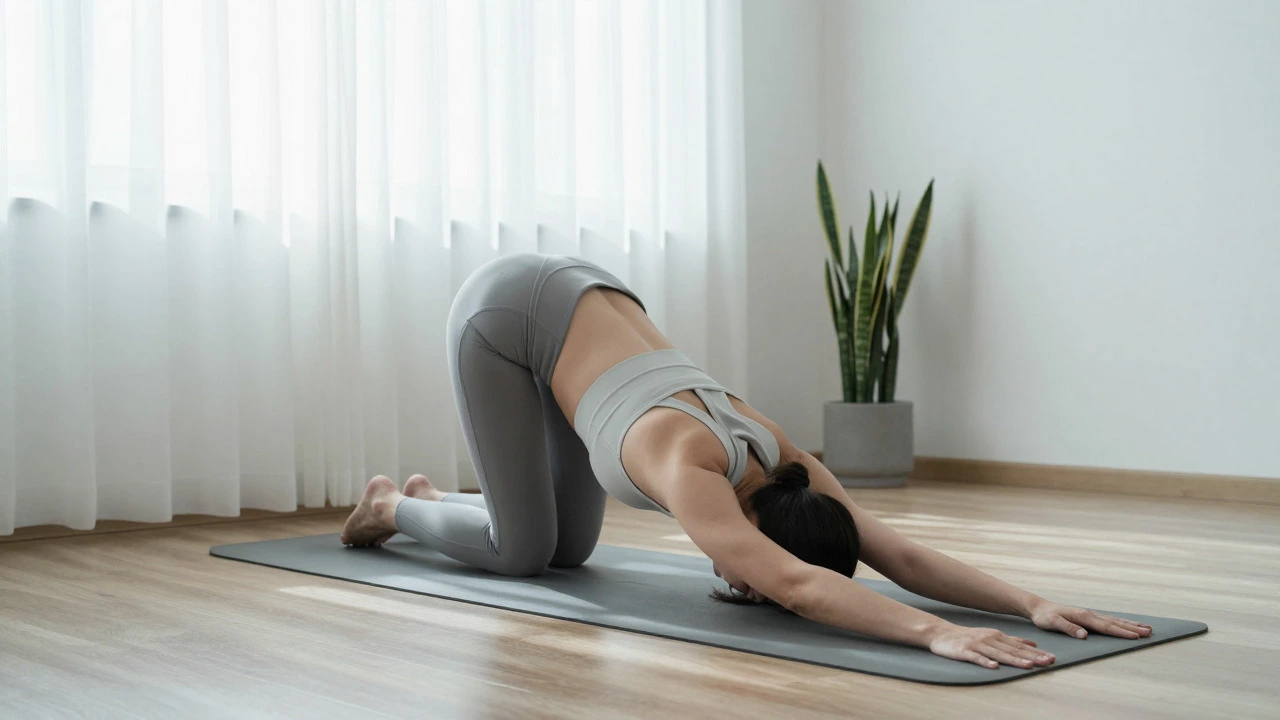
You step onto the mat, unroll your blanket, and prepare to move. The instructor cues you into a forward fold, then asks you to 'find your inner peace' or 'connect with your divine self.' You feel the stretch in your hamstrings, but the spiritual language feels like noise. It doesn't fit your worldview, your schedule, or your goals. You just want to fix your lower back pain, reduce stress, or build strength. So, the question arises: can yoga be non-spiritual?
The short answer is yes. Absolutely. While yoga has deep roots in ancient Indian philosophy, its modern iteration-especially in the West-is largely a physical and mental discipline that stands on its own. You do not need to believe in karma, chakras, or reincarnation to benefit from a downward dog. In fact, stripping away the metaphysical layers often makes the practice more accessible and practical for everyday life.
Separating History from Hatha
To understand how yoga can be secular, we have to look at what it actually is today versus where it came from. Patanjali’s Yoga Sutras are ancient texts compiled around 400 CE that outline the eight limbs of yoga, including ethical disciplines, postures, breath control, and meditation. These texts are deeply philosophical. They view physical postures (asanas) as merely one small part of a larger path toward spiritual liberation (moksha).
However, the yoga most people practice in studios worldwide is primarily Hatha Yoga, which focuses on physical postures and breathing techniques designed to balance the body's energy and improve physical health. This form gained popularity in the West during the mid-20th century, largely through teachers who emphasized the physiological benefits over the metaphysical ones. When you attend a class focused on alignment, muscle engagement, and breath awareness, you are engaging in a somatic practice-a way of learning about your body through movement. That process requires no theology.
Think of it like this: you can eat food without knowing the history of agriculture. Similarly, you can practice yoga postures without subscribing to the religious framework that originally codified them. The physical mechanics of a pose remain the same regardless of your belief system.
The Science Behind the Mat
If you remove the spirituality, what is left? A lot. Modern science has extensively studied the effects of yoga on the human body and mind, providing concrete evidence for its benefits that rely on biology, not mysticism.
- Musculoskeletal Health: Regular practice improves flexibility, balance, and core strength. Studies published in journals like JAMA Internal Medicine show that yoga can significantly reduce chronic low back pain, often outperforming standard physical therapy exercises in long-term outcomes.
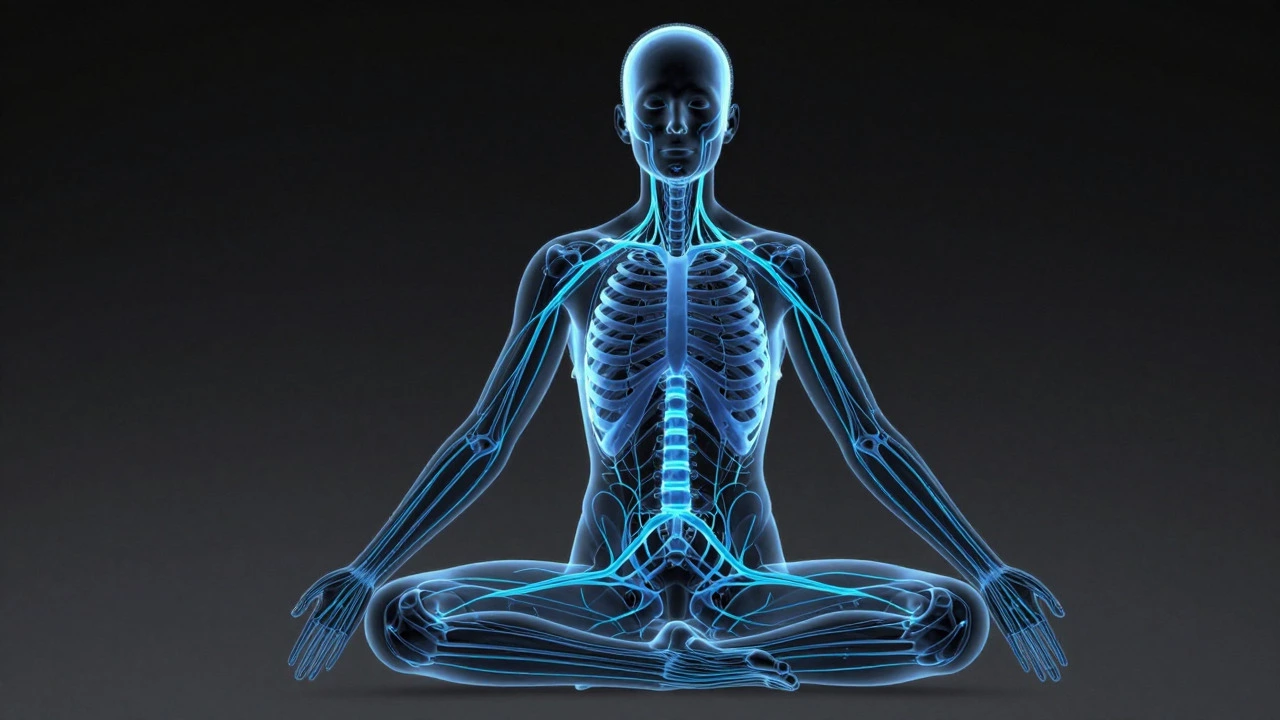
- Nervous System Regulation: The controlled breathing techniques (Pranayama, which involves regulated breathing patterns used to influence the autonomic nervous system and reduce stress responses) activate the parasympathetic nervous system. This triggers the 'rest and digest' response, lowering heart rate and cortisol levels. This is physiology, not magic.
- Mental Clarity: Mindfulness practices inherent in yoga have been shown to increase gray matter density in brain regions associated with memory and emotional regulation. Research from Harvard Medical School indicates that consistent mindfulness practice can lead to measurable changes in brain structure, helping with anxiety and depression.
When you approach yoga through this lens, it becomes a tool for biological optimization. You are training your nervous system to stay calm under pressure and your muscles to support your skeleton efficiently. These are tangible, measurable outcomes that anyone can achieve, regardless of their spiritual beliefs.
Finding Your Style: Secular-Friendly Practices
Not all yoga classes are created equal. Some instructors lean heavily into Sanskrit mantras, chanting, and philosophical lectures. Others focus strictly on anatomy and biomechanics. If you are looking for a non-spiritual experience, here are styles that tend to align better with a secular mindset:
| Style | Focus | Spiritual Content | Best For |
|---|---|---|---|
| Iyengar Yoga | Precision, alignment, props | Low | Injury rehabilitation, learning correct form |
| Vinyasa Flow | Movement linked to breath | Variable (often low) | Cardiovascular fitness, dynamic movement |
| Anatomy-Based Yoga | Muscle groups, joint health | None | Athletes, skeptics, physical therapists |
| Kundalini Yoga | Energy channels, chanting | High | Spiritual seekers, energy work enthusiasts |
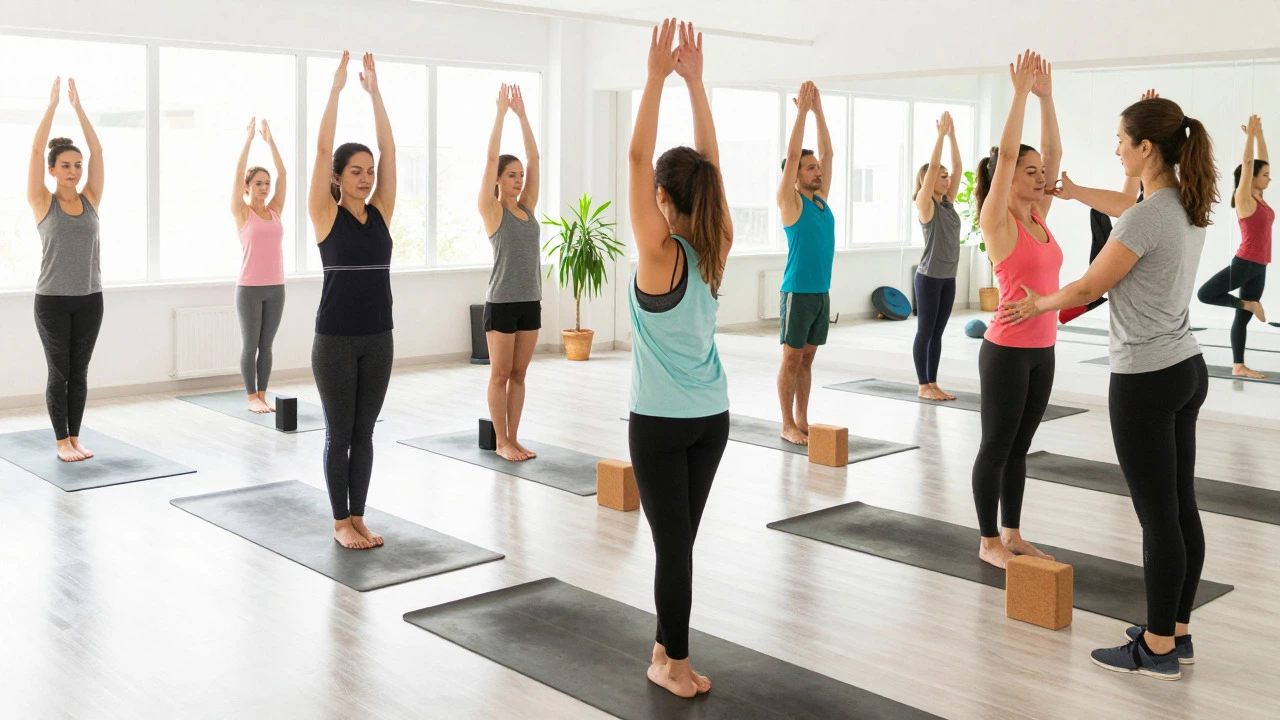
Iyengar Yoga is particularly popular among those who prefer a scientific approach. Founded by B.K.S. Iyengar, this style emphasizes precise alignment and the use of props like blocks and straps to ensure safety and effectiveness. It treats the body as a complex machine that needs proper calibration.
Vinyasa Flow connects movement with breath in a continuous sequence, creating a meditative state through physical exertion rather than ritualistic practice. Many Vinyasa classes are purely athletic, focusing on flow and endurance without any philosophical commentary.
If you see words like 'chakra balancing,' 'karmic cleansing,' or 'third eye opening' in a class description, you might want to look elsewhere. Instead, search for terms like 'alignment-focused,' 'anatomy-based,' or 'strength and flexibility.'
Reframing the Language
One of the biggest hurdles for secular practitioners is the jargon. Words like 'prana' (life force), 'dharma' (duty/path), and 'ahimsa' (non-violence) can feel alienating if you don't share the cultural or religious context. But you can reframe these concepts using secular language.
For example, prana can simply be understood as breath or metabolic energy. When an instructor tells you to 'draw prana up the spine,' they are likely cueing you to engage your core and lengthen your torso. Ahimsa, traditionally meaning non-harming to others, can be interpreted as listening to your body and avoiding injury. It’s about self-care and respect for your physical limits.
You don't have to accept the traditional definitions. Create your own meaning. If 'meditation' feels too woo-woo, call it 'focused attention training.' If 'surrender' sounds passive, think of it as 'letting go of tension.' By translating the language into terms that resonate with your worldview, you reclaim the practice for yourself.
Building a Personal, Secular Routine
You don't need a studio membership to practice non-spiritual yoga. In fact, practicing at home allows you to curate an environment that is entirely free of external influences. Here is how to build a routine that works for you:
- Define Your Goals: Are you trying to sleep better? Reduce anxiety? Improve posture? Having clear, secular goals helps you choose the right poses and sequences.
- Choose Resources Wisely: Look for apps or online videos from instructors who emphasize anatomy and science. Platforms like Yoga with Adriene or Alo Moves offer classes that range from gentle stretches to intense workouts, often with minimal spiritual fluff.
- Focus on Breath and Body: Spend time noticing how your breath moves through your body. How does your ribcage expand? Where do you hold tension? This internal awareness is the core of yoga, and it requires no belief system.
- Be Consistent, Not Perfect: Ten minutes a day is better than two hours once a month. Consistency builds the neural pathways and muscular adaptations that lead to real change.
Remember, yoga is a tool. Like a hammer, it can be used to build a house or drive a nail. Its value lies in how you use it, not in the mythology surrounding its creation.
Common Misconceptions About Secular Yoga
Even within the yoga community, there is sometimes debate about whether 'real' yoga must include spirituality. Let's address some common concerns.
'If you remove the spirit, it's just gymnastics.' This is a common critique, but it misses the point. Gymnastics focuses on performance and aesthetics. Yoga focuses on internal sensation and sustainable movement. Even without spiritual intent, yoga encourages you to move slowly and mindfully, paying attention to subtle sensations in the body. This interoceptive awareness is unique to yoga and distinct from high-impact sports.
'You're disrespecting the culture.' Cultural appropriation is a valid concern, but practicing yoga without spirituality isn't necessarily disrespectful. Many Indian teachers themselves teach yoga as a physical and mental health practice. Respecting the culture means acknowledging its origins while adapting the practice to your own life. You can honor the tradition by being a mindful practitioner, even if you aren't a devotee.
'It won't work as well without the belief.' Placebo effects are powerful, but they aren't the only mechanism at play. The physiological benefits of stretching, strengthening, and controlled breathing are real. Whether you believe in chakras or not, your vagus nerve still responds to slow, deep breathing. The results are grounded in biology.
Integrating Yoga Into a Busy, Modern Life
In our fast-paced world, we often don't have time for hour-long rituals. Secular yoga fits neatly into a busy schedule because it is modular. You can do a five-minute neck stretch at your desk, a ten-minute morning routine to wake up your body, or a twenty-minute evening session to unwind before bed.
This flexibility makes it highly practical. You can combine yoga with other fitness activities. Runners use yoga for recovery and injury prevention. Weightlifters use it to improve mobility and counteract the tightness from heavy lifting. Office workers use it to combat the effects of sitting all day. In these contexts, yoga is complementary medicine, not a replacement for religion.
Consider integrating micro-practices throughout your day. Take three deep breaths before answering a difficult email. Roll your shoulders back when you stand up from your chair. These small moments of awareness add up, creating a cumulative effect on your stress levels and physical health.
Conclusion: Your Mat, Your Rules
So, can yoga be non-spiritual? Yes. It can be a rigorous physical workout, a therapeutic tool for pain management, or a method for stress reduction. The essence of yoga is the union of body and mind, and that union can be achieved through many paths.
You have the freedom to take what serves you and leave what doesn't. If the spiritual aspects resonate with you, great. If they don't, ignore them. Focus on the breath, the movement, and the present moment. That is enough. That is yoga.
Is it disrespectful to practice yoga without believing in its spiritual origins?
No, it is not inherently disrespectful. Many yoga practitioners worldwide view it as a physical and mental discipline. Respect comes from acknowledging the origins and practicing mindfully, not necessarily adopting the religious beliefs. Many Indian teachers themselves teach yoga for health and fitness purposes.
What is the difference between Hatha Yoga and Ashtanga Yoga for a secular practitioner?
Hatha Yoga generally refers to slower, static poses focusing on alignment and holding positions, making it easier to focus on physical sensations. Ashtanga is a vigorous, set sequence of poses linked by breath, which can feel more like a workout. Both can be practiced secularly, but Hatha is often more accessible for beginners interested in anatomy and alignment.
Can I practice yoga at home without an instructor?
Yes, absolutely. There are many reputable online resources, apps, and YouTube channels that offer secular, anatomy-focused yoga classes. Just ensure you start with beginner-friendly sequences to avoid injury and listen to your body's limits.
Does yoga require special equipment?
No, yoga requires minimal equipment. A yoga mat is helpful for grip and cushioning, but you can practice on a carpet or towel. Props like blocks, straps, or bolsters are optional and used to modify poses for better alignment or comfort, not as mandatory spiritual tools.
How quickly will I see physical benefits from secular yoga?
Many people report feeling less stressed and more relaxed after just one session. Physical improvements like increased flexibility and strength typically become noticeable within 4 to 8 weeks of consistent practice (2-3 times per week). Pain relief, especially for back pain, may take longer depending on the severity of the condition.