Explore the Pillars of Indian Culture
Click on a concept card below to learn how these ancient principles influence modern life.
Moral Duty
The cosmic order and personal responsibility.
Cause & Effect
Actions in this life shape future outcomes.
Non-Violence
Compassion in thought, word, and deed.
Interdependence
Collective well-being over individualism.
Unity in Diversity
Many paths, one truth.
Mindfulness
Connecting daily actions to the cosmos.
Imagine walking into a room where every action, from the way you greet someone to how you handle conflict, is guided by an invisible code. That’s the reality for billions of people who identify with Indian culture. It isn’t just a collection of festivals or spicy food; it’s a complex web of philosophical and social beliefs that have shaped civilization for millennia. If you’ve ever wondered why Indians touch feet, why cows are sacred, or why family decisions often involve the whole clan, you’re asking about the core tenets of this heritage.
Trying to pin down "Indian beliefs" in one sentence is like trying to describe the ocean in a cup. It’s vast, deep, and constantly moving. But at its heart, Indian culture is built on a few foundational pillars: Dharma, the concept of cosmic order and duty, Karma, the law of cause and effect, and the profound respect for Family and community. These aren’t just religious rules; they are social contracts that dictate how life is lived.
Dharma: The Moral Compass of Life
If you strip away the rituals and the gods, what remains is Dharma. This Sanskrit word doesn’t have a perfect English translation, but it’s closest to "righteousness," "duty," or "cosmic order." In Indian culture, everyone has a role to play. Your dharma changes based on your stage of life, your gender (traditionally), and your profession. For a student, dharma might mean studying hard and respecting teachers. For a parent, it means nurturing children without attachment to the outcome.
This belief system creates a society where personal desires often take a backseat to communal harmony. It’s not about suppressing individuality, but rather finding peace by fulfilling your responsibilities. When an Indian elder says, "It’s your duty," they aren’t being bossy; they are invoking a moral framework that has existed for thousands of years. Ignoring dharma is seen as causing chaos, not just in your life, but in the fabric of society itself.
Karma and Reincarnation: The Cycle of Action
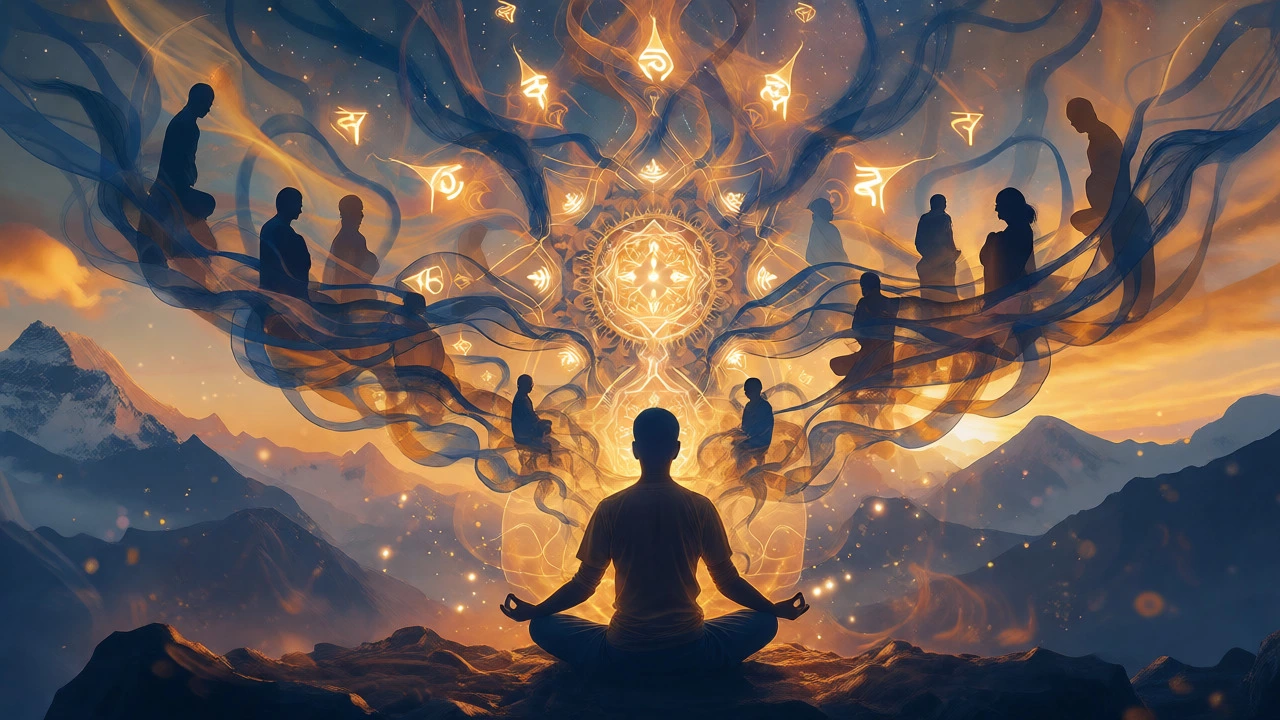
You’ve probably heard of Karma. Pop culture has turned it into a vague idea of "what goes around comes around," but in traditional Indian belief, it’s much more precise. Karma is the universal law of cause and effect. Every thought, word, and deed generates energy that returns to you, either in this life or the next.
This connects directly to the belief in Reincarnation, the cycle of birth, death, and rebirth. Most Indian traditions believe the soul is eternal. Death isn’t the end; it’s a transition. This perspective changes how people view suffering and success. Why do some people struggle while others thrive? Karma offers an answer: past actions influence present circumstances. This doesn’t mean Indians are fatalistic. On the contrary, it empowers them. If your current situation is the result of past actions, your future is determined by what you do right now. You have the power to change your destiny through righteous living.
| Concept | Core Meaning | Practical Impact |
|---|---|---|
| Dharma | Duty and moral order | Guides decision-making and social roles |
| Karma | Cause and effect | Encourages ethical behavior and accountability |
| Ahimsa | Non-violence | Influences diet, politics, and daily interactions |
| Moksha | The ultimate spiritual goal for many |
Ahimsa: The Power of Non-Violence
Ahimsa, non-violence in thought, word, and deed, is arguably the most globally recognized Indian belief. Thanks to figures like Mahatma Gandhi, the world knows non-violent resistance as a political tool. But culturally, Ahimsa is deeper. It starts with the plate. Why are so many Indians vegetarian? It’s not just health; it’s compassion. To harm a living being is to violate Ahimsa.
This extends beyond animals. It shapes how people argue, how they treat service staff, and how they resolve disputes. Aggression is often seen as a loss of self-control. In business negotiations, for example, maintaining a calm demeanor is a sign of strength and adherence to Ahimsa. It’s a subtle but powerful force that keeps a diverse society from tearing itself apart.
The Family Unit: Joint Families and Respect
Western culture celebrates independence. Indian culture celebrates interdependence. The family is the primary unit of identity. Historically, this meant living in joint families-multiple generations under one roof. While urbanization has changed this structure, the mindset hasn’t shifted entirely.
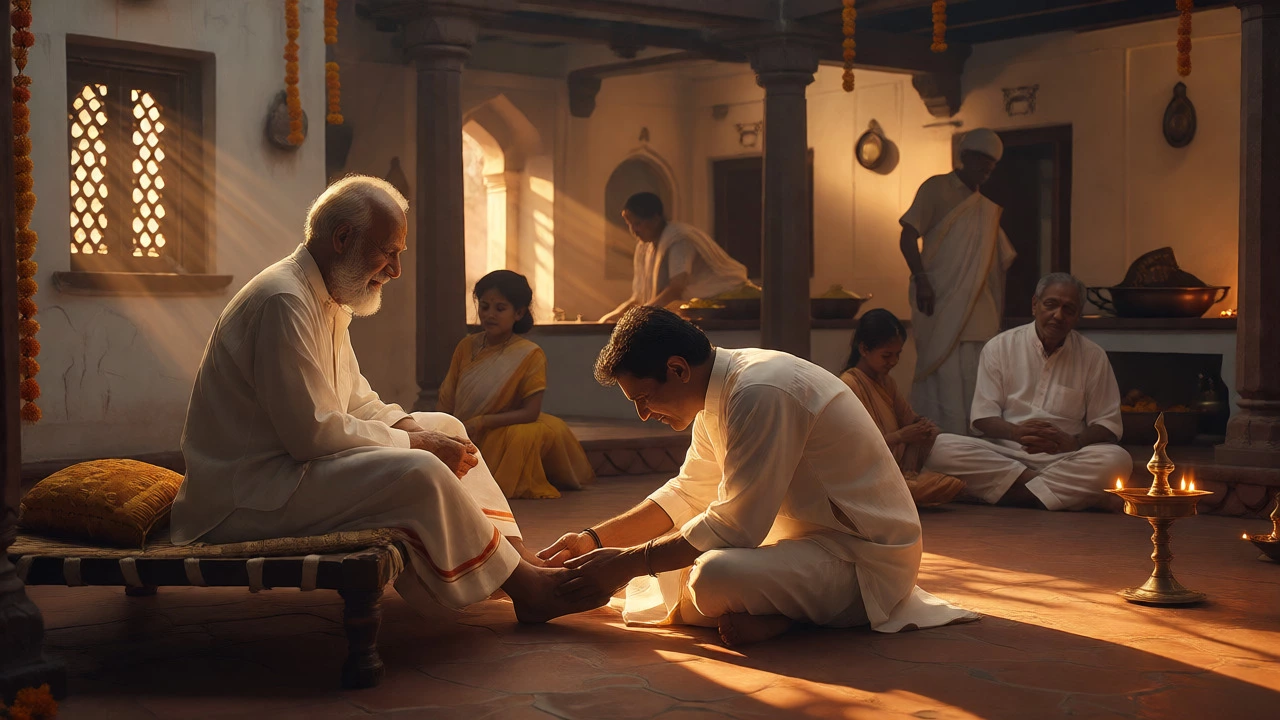
Respect for elders is non-negotiable. Touching the feet of grandparents isn’t just a greeting; it’s a ritual of humility and seeking blessings. Children are expected to care for their parents in old age, not out of obligation, but as a reciprocal act of love. This strong familial bond provides a safety net. If you lose your job in India, you don’t just lose income; you still have a home and a support system. However, this can also lead to pressure, as individual choices often need to align with family expectations.
Spiritual Pluralism: Many Paths, One Truth
India is the birthplace of four major religions: Hinduism, Buddhism, Jainism, and Sikhism. Yet, these aren’t seen as mutually exclusive enemies. The underlying belief is Vasudhaiva Kutumbakam-"The world is one family." There is a widespread acceptance that different paths can lead to the same summit.
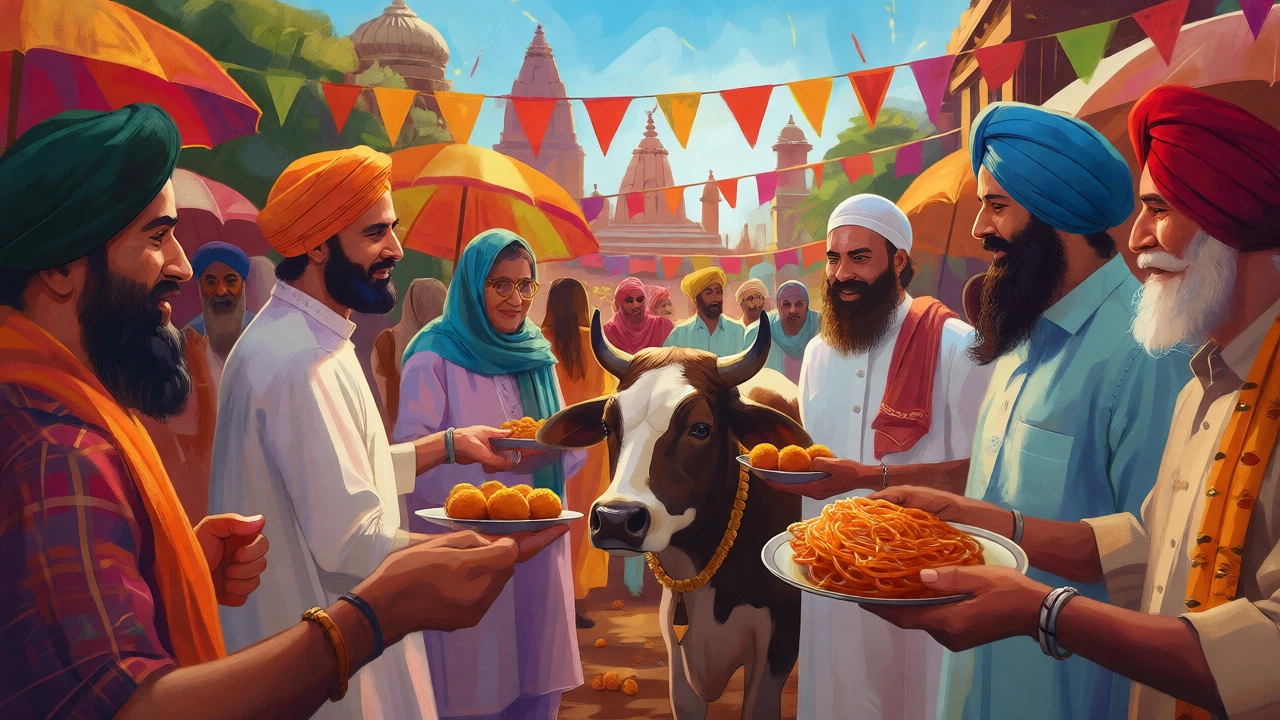
You’ll see Hindus visiting Sufi shrines, Christians celebrating Diwali, and Muslims participating in Ganesh Chaturthi. This syncretism is a hallmark of Indian culture. It stems from the philosophical idea that truth is infinite and no single doctrine can contain it all. This openness makes Indian culture incredibly adaptable. It absorbs new ideas, integrates them, and moves forward without losing its core identity.
Rituals and Daily Practices
Beliefs in India aren’t just abstract concepts; they are enacted daily. Morning prayers, lighting incense, fasting during specific lunar days, and wearing colors associated with planets are all part of routine life. These practices serve as mindfulness anchors. They remind individuals of their connection to the cosmos.
Festivals are the peak of this expression. Whether it’s the lights of Diwali symbolizing the victory of light over darkness, or the Holi colors representing the arrival of spring and unity, each event reinforces cultural values. Food plays a huge role here too. Sharing sweets is a way to share joy. Refusing food can sometimes be seen as rejecting goodwill. Hospitality is treated as divine service-Atithi Devo Bhava means "The guest is God."
Modern Shifts and Enduring Traditions
Is Indian culture changing? Absolutely. Younger generations in cities like Mumbai, Bangalore, and Delhi are blending traditional values with modern aspirations. Arranged marriages are becoming "assisted introductions." Gender roles are evolving. Yet, the core beliefs remain resilient. Even tech-savvy Indians consult astrologers before big investments. They still seek parental approval for career moves.
The tension between tradition and modernity is real, but it’s also creative. It leads to innovations like yoga apps that teach ancient philosophy through modern interfaces. The essence of Indian culture isn’t static; it’s a living dialogue between the past and the future. Understanding these beliefs helps you navigate not just India, but any community influenced by its diaspora.
Quick Summary / Key Takeaways
- Dharma dictates duty and moral order, guiding social behavior and personal responsibility.
- Karma and reincarnation encourage ethical living by linking current actions to future outcomes.
- Ahimsa promotes non-violence, influencing diet, conflict resolution, and interpersonal relationships.
- Family is central, with deep respect for elders and a focus on collective well-being over individualism.
- Spiritual pluralism allows for coexistence of multiple faiths and practices under a umbrella of tolerance.
What is the difference between Dharma and Karma?
Dharma refers to your duty, righteousness, and the moral order you should follow in life. Karma is the consequence of your actions. Essentially, Dharma is the path you walk, and Karma is the footprint you leave behind.
Why is family so important in Indian culture?
Family is considered the foundation of society and individual identity. It provides emotional, financial, and social support. Respect for elders and collective decision-making are rooted in the belief that the group's well-being often outweighs individual desires.
Do all Indians believe in reincarnation?
While most traditional Indian religions (Hinduism, Buddhism, Jainism, Sikhism) accept reincarnation, individual beliefs vary. Secular Indians or those from Abrahamic faiths (Islam, Christianity) may not subscribe to this concept, though cultural exposure often influences perspectives.
What does Ahimsa mean in daily life?
Ahimsa means non-violence. In daily life, it often translates to vegetarianism, avoiding harsh words, practicing patience, and resolving conflicts peacefully. It is a commitment to minimizing harm to all living beings.
How does religion influence Indian culture?
Religion permeates daily routines, festivals, dietary habits, and social norms. However, Indian culture is largely syncretic, meaning it blends religious practices with secular traditions, allowing for a high degree of tolerance and diversity within communities.