Delhi Handicraft Authenticity Checker
Select a craft below to learn the key signs of authenticity and where to find it in Delhi.
Zardozi
Meenakari
Phulkari
Pachikarma
Craft Name
Key Authenticity Signs
Best Markets & Tips
Click on a craft card above to start your authenticity check.
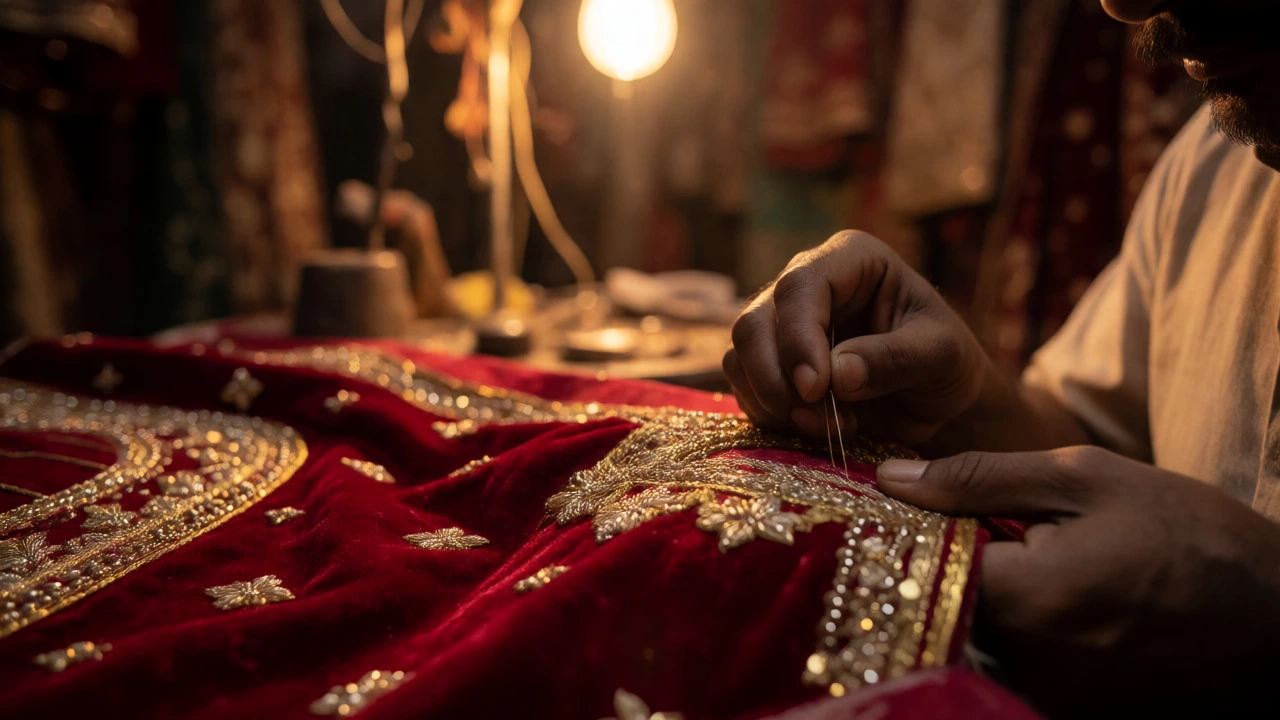
You walk into a shop in Chandni Chowk and see a blouse that costs more than your monthly rent. Why? Because it’s not just fabric; it’s a canvas for Zardozi a heavy metal thread embroidery technique using gold, silver, and copper wires. This is the reality of Delhi’s handicraft scene. It’s chaotic, colorful, and deeply rooted in Mughal history. If you are trying to figure out which craft actually defines this city, you’re asking the wrong question. Delhi doesn’t have one famous craft; it has a cluster of them, each with its own neighborhood and story.
The Crown Jewel: Zardozi Embroidery
If there is one craft that screams "Delhi," it’s Zardozi. Originating from Persian roots but perfected under the Mughals, this is embroidery done with real or synthetic metallic threads. The name literally means "gold work" (zar = gold, dozi = embroidery). You’ll find the heart of this industry in areas like Hauz Khas and parts of Old Delhi.
What makes Delhi’s Zardozi different from Lucknow’s Chikankari or Kashmiri crewel? It’s the weight. Delhi artisans are known for heavy embellishments-beads, sequins, stones, and thick metallic wires stitched onto velvet, silk, or satin. It’s loud, luxurious, and perfect for weddings. When you buy a Zardozi piece here, you aren’t just buying decoration; you’re buying hours of meticulous handwork. A single bridal lehenga can take three months to complete. If you want authenticity, look for pieces where the reverse side shows the knotting clearly-that’s the mark of true hand-embroidery, not machine replication.
Meenakari: The Art of Enamel Work
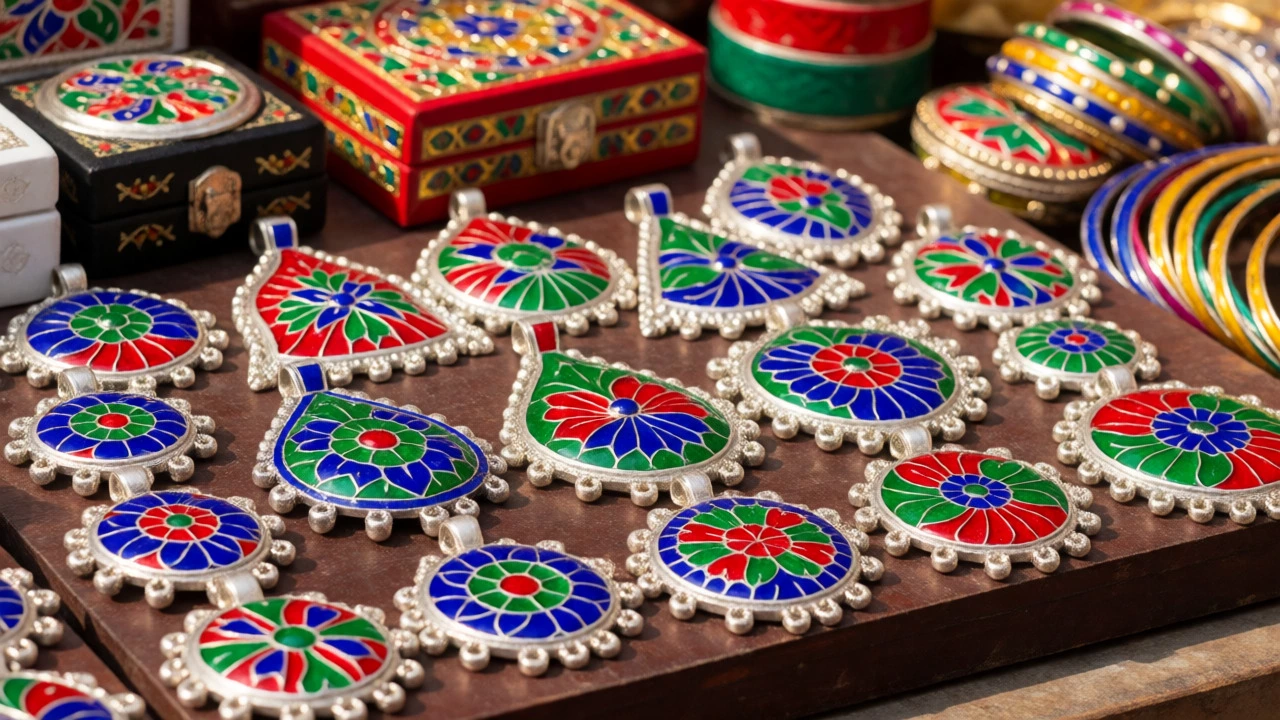
While Zardozi dresses people up, Meenakari the art of coloring metals by fusing colored enamel powders through heat decorates their jewelry and home accents. Often called "the painting of metal," Meenakari involves filling intricate designs etched into gold, silver, or copper with vibrant mineral colors and firing them at high temperatures.
Delhi became a hub for this craft because of the influx of skilled artisans from Rajasthan and Punjab during the partition era. Today, you can find stunning Meenakari bangles, pendants, and even decorative boxes in markets like Sarojini Nagar and Janpath. The trick to spotting good Meenakari? Check the back. Traditional Meenakari often features a mirror finish on the reverse (called Jadua) to reflect light through the front. If the back looks plain or painted rather than fired enamel, it’s likely a cheaper imitation.
Chikan and Phulkari: The Textile Titans
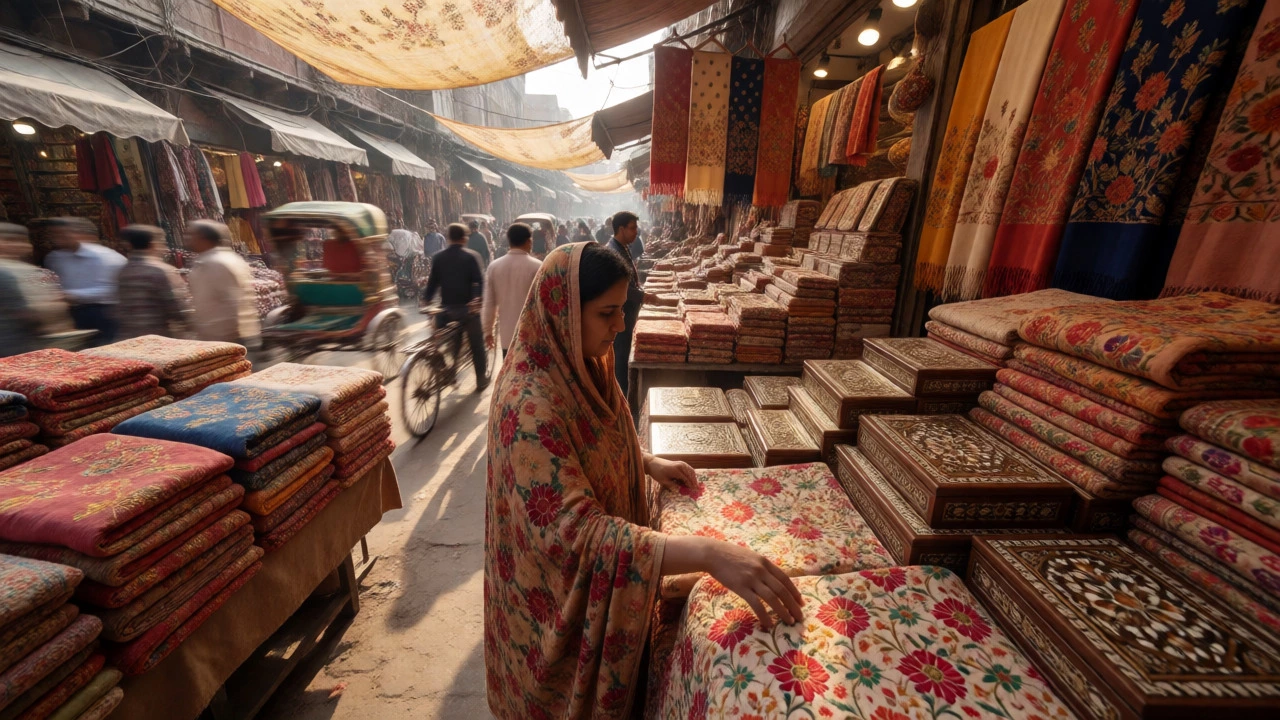
It might seem odd to list crafts from other states as "famous in Delhi," but here’s the thing: Delhi is the marketplace. While Phulkari a folk embroidery style from Punjab characterized by geometric floral patterns on cotton originates in neighboring Punjab, Delhi is where the largest volume of authentic Phulkari shawls and dupattas changes hands. Similarly, while Chikan comes from Lucknow, Delhi’s export houses drive much of the global demand for it.
For Phulkari, look for the "Bagh" style, where the entire cloth is covered in stitches, leaving no background visible. These are rare and expensive. For everyday wear, lighter Phulkari on cotton suits is a great entry point. The key indicator of quality is the density of the stitch. Run your finger over the pattern; if it feels flat and printed, put it down. Authentic Phulkari has texture.
Pachikarma: The Wooden Inlay Wonder
Move away from textiles and metals, and you hit wood. Pachikarma an intricate wooden inlay craft using brass, copper, and silver wires set into teak or rosewood is a hidden gem often overlooked by tourists who stick to fabric markets. This craft requires immense patience. Artisans carve grooves into solid wood and hammer thin strips of metal into them until they sit flush with the surface.
Delhi’s proximity to timber hubs and its status as an export center make Pachikarma accessible here. You’ll find small jewelry boxes, coasters, and wall panels. The value lies in the precision. If the metal feels raised or loose, the glue was used instead of proper fitting-a common shortcut in mass-produced items. True Pachikarma should feel smooth to the touch, with the metal seamlessly integrated into the grain.
Where to Shop: Navigating the Markets
Knowing the craft is half the battle; knowing where to buy it without getting ripped off is the rest. Here is a quick guide to the main hubs:
| Market | Best For | Vibe & Tips |
|---|---|---|
| Chandni Chowk | Zardozi, Wedding Wear | Chaotic. Bargain hard. Visit Katra Neel for fabrics. |
| Sarojini Nagar | Export Surplus, Trendy Decor | Flea market style. Great for finding unique Meenakari knock-offs or genuine surplus. |
| Janpath Market | Handloom, Silver Jewelry | Tourist-heavy but curated. Good for guaranteed authentic handicrafts if you pay slightly more. |
| Hauz Khas Village | Boutique Crafts, Modern Designs | Cleaner, air-conditioned shops. Higher prices, lower stress. |
| Dilli Haat | All India Handicrafts | Fixed price stalls. Safe bet for first-timers wanting variety without haggling anxiety. |
How to Spot Fakes vs. Real Handcrafts
Everyone says "handmade." Few are. Here is how you verify:
- Imperfections are friends: Machine work is too perfect. Look for slight variations in stitch length or color shading in Meenakari.
- Check the reverse: As mentioned with Zardozi and Meenakari, the back tells the truth. Loose threads on the back of embroidery mean it was done by hand on a frame, not a computerized machine.
- Weight test: Real Zardozi uses metal wires. It should feel heavier than standard polyester thread embroidery.
- Ask about the artisan: In places like Dilli Haat, many stalls display photos of the actual weaver or karigar (artisan). Ask to see the process video if available.
Why Buy From Delhi?
You might wonder, why not buy these crafts directly from their source villages? Well, logistics. Delhi aggregates everything. You get access to a range of qualities-from village-level rustic pieces to high-end designer collaborations-in one trip. Plus, the competition among sellers keeps prices competitive compared to boutique stores in Mumbai or Bangalore. Just remember, your bargaining power depends on your willingness to walk away. Sellers know the cost of production better than you do. Offer a fair price, not an insulting one.
Frequently Asked Questions
Is Zardozi only for wedding clothes?
No. While heavy Zardozi is reserved for bridal wear, lighter versions using fine silver or copper threads are popular on kurtis, stoles, and cushion covers for everyday elegance. Many designers now incorporate subtle Zardozi motifs into western jackets and bags.
Can I wash Meenakari jewelry at home?
Yes, but gently. Use lukewarm water and mild soap. Avoid harsh chemicals or ultrasonic cleaners, as they can crack the enamel or loosen the setting. Dry immediately with a soft cloth to prevent water spots on the metal base.
Which market is best for budget-friendly handicrafts?
Sarojini Nagar is ideal for budget shoppers, especially for export surplus items. However, be prepared to dig through piles. For a mix of budget and quality with less chaos, try the outer lanes of Chandni Chowk rather than the main bridal streets.
Are handicrafts in Delhi tax-free for tourists?
India does not have a VAT refund system for tourists like Europe. However, some large emporiums offer tax invoices that might help with customs declarations in your home country, though you still pay the local GST. Always ask for a bill if you need proof of purchase.
How do I care for Phulkari shawls?
Dry clean only is the safest option for vintage or heavy Phulkari. For newer cotton pieces, gentle hand washing in cold water with mild detergent works, but never wring them out. Lay them flat to dry to maintain the shape of the embroidery.