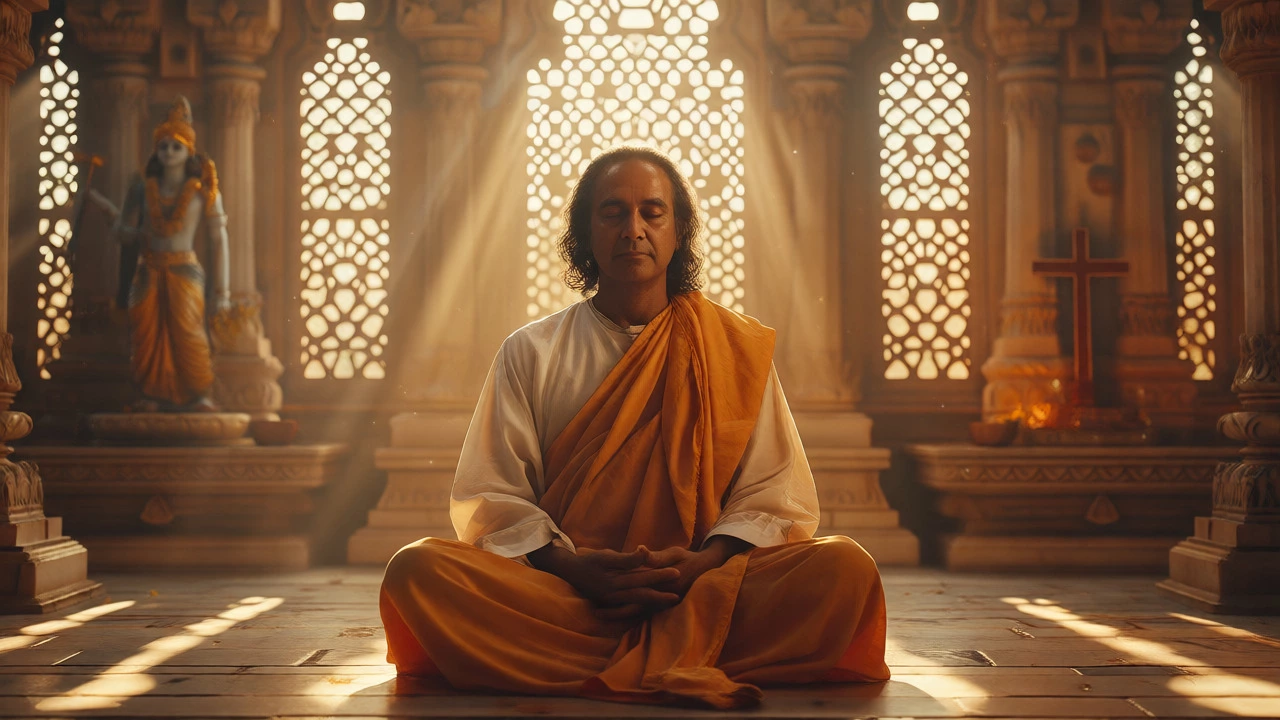
Yogananda's Bridge: East-West Spiritual Translator
Explore how Paramahansa Yogananda bridged the gap between Christian teachings and Yogic philosophy. Click on a concept to see his unique interpretation.
Kingdom of Heaven
Samadhi
Yogananda's Interpretation
"A state of super-conscious awareness achievable now, not just in the afterlife."
Key Insight from the Article
Yogananda did not reject the divinity of Jesus; he redefined it. He taught that every human has the potential to realize their inherent oneness with God, effectively becoming "a little Christ." This view democratizes holiness, moving it from an exclusive historical event to a universal spiritual capacity accessible through meditation (Kriya Yoga).
Most people assume that a Hindu guru from India wouldn’t have much to say about Jesus of Nazareth. But Paramahansa Yogananda, the man who brought Kriya Yoga to the West, didn’t just talk about Jesus-he spent decades analyzing his teachings alongside those of Krishna and Buddha. If you’ve ever wondered whether Yogananda accepted Christianity or if he saw Jesus as merely another avatar, you’re asking the right question. The answer isn’t a simple yes or no. It’s a nuanced bridge between East and West that challenges how we define religious identity today.
The Core Belief: One Truth, Many Paths
Yogananda didn’t believe in Jesus in the traditional Christian sense of exclusive salvation through faith alone. Instead, he viewed Jesus as a fully realized soul-a Christ Consciousness-who had achieved the same state of divine union that Hindu masters call Moksha or liberation. For Yogananda, the difference between Jesus and Krishna wasn’t theological; it was geographical. He argued that both taught the exact same science of God-realization, just packaged for different cultures.
This perspective might sound like syncretism, but Yogananda insisted it was based on direct spiritual experience. In his famous book, Autobiography of a Yogi, he describes meeting saints who could perform miracles similar to those attributed to Jesus. To him, these weren’t supernatural violations of nature but demonstrations of mastery over physical laws through deep meditation. When he spoke of Jesus, he wasn’t talking about the historical carpenter from Galilee alone; he was referring to the universal principle of divine love and wisdom that Jesus embodied.
How Yogananda Interpreted the Bible
You might think a yoga master would ignore the Bible, but Yogananda did the opposite. He wrote extensive commentaries on the New Testament, particularly the Sermon on the Mount. His work, The Second Coming of Christ: The Resurrection of the Christ Within You, is a prime example. Here, he translates biblical metaphors into yogic concepts. For instance, when Jesus says, "The Kingdom of God is within you," Yogananda interprets this not as a future heaven, but as the present reality of inner consciousness accessible through meditation.
He often pointed out that early Christianity, before it became institutionalized, focused heavily on mystical experience. Yogananda believed that the original teachings of Jesus were lost in translation and dogma. By stripping away centuries of church doctrine, he claimed to reveal the "original" Jesus who practiced techniques very similar to Kriya Yoga. This approach allowed Western readers to see their own scriptures through a new lens, making Eastern practices feel less foreign.
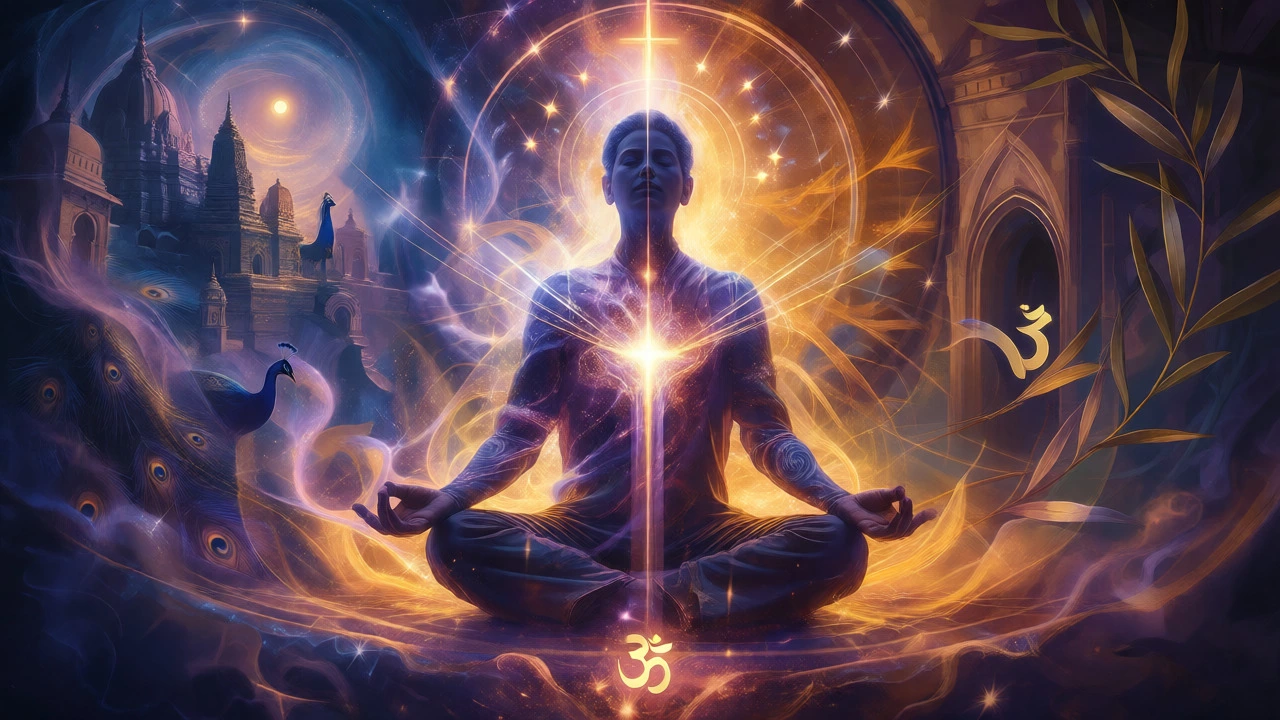
Jesus vs. Krishna: Comparing the Masters
To understand Yogananda’s view, you need to look at how he compared Jesus with other avatars. He didn’t rank them. Instead, he highlighted their similarities. Both Jesus and Krishna, according to Yogananda, emphasized non-violence, compassion, and the importance of controlling the mind. They both used parables and stories to convey complex spiritual truths. And crucially, both taught that God is not an external judge but an internal presence.
| Concept | Christian Terminology | Yogic Terminology | Yogananda’s Interpretation |
|---|---|---|---|
| Divine State | Kingdom of Heaven | Samadhi | A state of super-conscious awareness achievable now. |
| Inner Guide | Holy Spirit | Aum (Pranava) | The cosmic vibration felt during deep meditation. |
| Liberation | Salvation | Moksha | Freedom from the cycle of birth and death via self-realization. |
| Master | Christ | Guru | A realized being who guides others to truth. |
This table isn’t just academic. It shows how Yogananda helped practitioners navigate two traditions without conflict. If you grew up in a Christian household but found peace in yoga, Yogananda gave you permission to keep both. He argued that rejecting one meant limiting your understanding of the whole.
The Role of the Self-Realization Fellowship
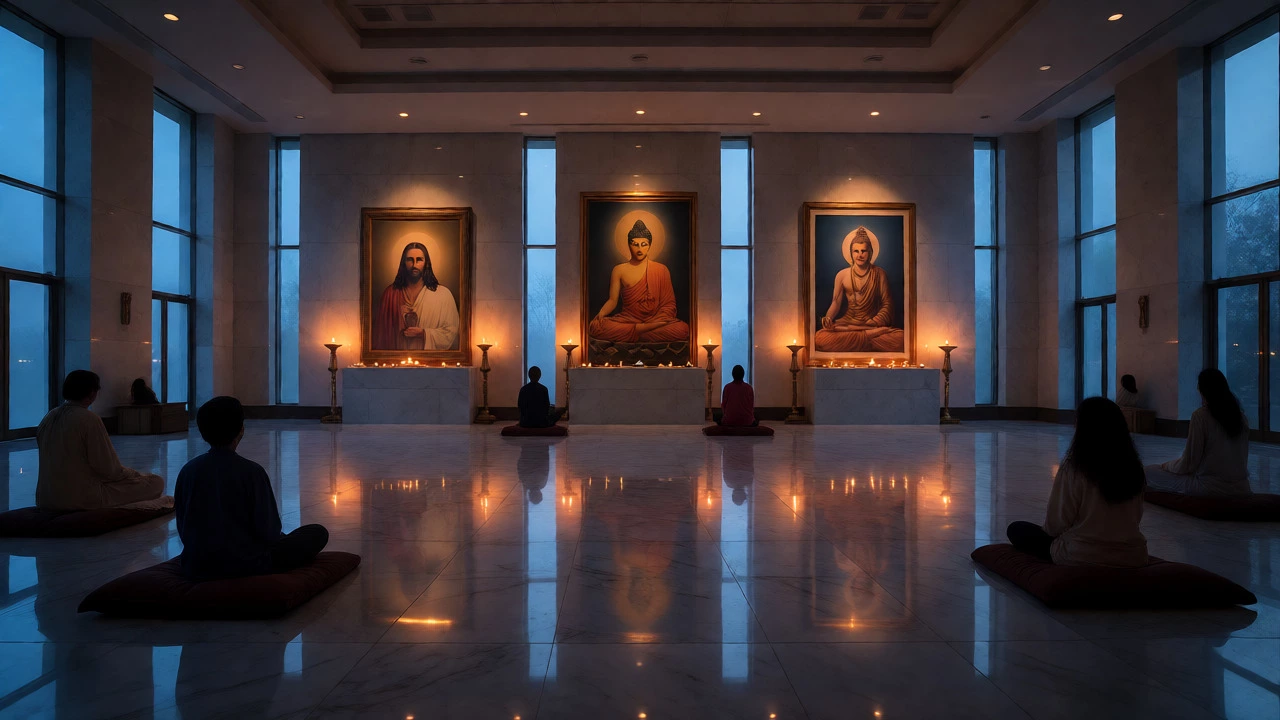
Yogananda founded the Self-Realization Fellowship (SRF) in Los Angeles in 1920. SRF remains unique because its temples display images of Jesus, Buddha, and Hindu deities side by side. This visual representation reinforces Yogananda’s message: all great religions lead to the same summit. Members are encouraged to study both the Bhagavad Gita and the Bible, using meditation as the common tool for verification.
Critics sometimes argue that this dilutes specific religious identities. They ask, "If everything is the same, why bother with rituals?" Yogananda’s response was practical. He believed rituals help focus the mind, but they aren’t ends in themselves. Whether you bow to a statue of Jesus or sit in lotus position chanting Om, the goal is the same: stilling the mind to hear the voice of God. For SRF members, honoring Jesus doesn’t mean accepting dogmatic creeds; it means respecting his method of achieving divine consciousness.
Why This Matters Today
In an increasingly polarized world, Yogananda’s inclusive stance offers a refreshing alternative. Many people feel stuck between cultural heritage and modern spirituality. Maybe you love the community aspects of church but find the theology restrictive. Or perhaps you enjoy yoga classes but miss the moral framework of religion. Yogananda suggests you don’t have to choose. His life demonstrates that you can honor your roots while embracing universal truths.
Consider the practical benefits. Studies on mindfulness show reduced stress and improved emotional regulation. Yogananda linked these benefits directly to the practices taught by Jesus and other sages. By viewing Jesus as a teacher of mental discipline rather than just a savior figure, you gain actionable tools for daily life. You learn to forgive not because you’re told to, but because holding grudges disrupts your inner peace-a concept central to both Christian ethics and yogic psychology.
Common Misconceptions About Yogananda’s View
One big myth is that Yogananda rejected the divinity of Jesus. Not true. He affirmed Jesus’ divinity but defined it differently. For Christians, divinity often means being part of the Trinity. For Yogananda, divinity means realizing one’s inherent oneness with God. He said every human has the potential to become "a little Christ." This democratizes holiness. It’s not reserved for one person in history; it’s a latent capacity in everyone.
Another misconception is that he dismissed prayer. Actually, Yogananda emphasized prayer as a powerful technique. He distinguished between petitionary prayer (asking for things) and contemplative prayer (listening). He aligned more with the latter, similar to the silent prayer traditions in Christian mysticism. So, when he praised Jesus, he was praising a master of contemplative practice, not necessarily endorsing every doctrinal statement made by later churches.
Did Paramahansa Yogananda consider himself a Christian?
No, Yogananda identified primarily as a Hindu yogi and monk. However, he deeply respected Jesus and considered his teachings compatible with Hindu philosophy. He believed in the universality of truth and did not adhere to exclusive religious labels, viewing all major religions as different paths to the same goal.
What did Yogananda say about the Resurrection of Jesus?
Yogananda interpreted the resurrection symbolically and scientifically. He suggested that Jesus demonstrated mastery over the physical body and energy, showing that consciousness transcends death. He viewed the event as proof of the power of Kriya Yoga-like techniques to transform matter and spirit, rather than solely as a miraculous exception to natural law.
Can I follow Yogananda’s teachings if I am a devout Christian?
Yes, many Christians follow Yogananda’s teachings. He encouraged studying the Bible alongside yogic texts. His methods focus on meditation and inner experience, which can deepen your Christian faith by providing practical tools for prayer and contemplation without requiring you to abandon your core beliefs.
Is Kriya Yoga compatible with Christian prayer?
Yogananda taught that Kriya Yoga is a scientific method for accelerating spiritual evolution. It can be practiced alongside Christian prayer. Many users report that Kriya enhances their ability to concentrate during prayer, allowing for a deeper sense of connection with God, regardless of the specific name used for the Divine.
Which books by Yogananda discuss Jesus?
Key works include "The Second Coming of Christ," "The Life of Christ," and sections of "Autobiography of a Yogi." These books explore the parallels between Jesus’ teachings and yogic principles, offering interpretations of biblical passages through the lens of Eastern mysticism.