Indian Wedding Alcohol Quiz
How well do you know Indian wedding traditions?
Test your knowledge about alcohol consumption at Indian weddings. Questions cover religious, regional, and cultural differences.
At an Indian wedding, you’ll see colorful saris, loud music, endless food, and dancing that goes until sunrise. But one question that often pops up-especially among outsiders-is: Do people drink at Indian weddings? The answer isn’t simple. It depends on the family, the region, the religion, and even the day of the week.
It’s Not One Rule for All Indian Weddings
Indian weddings aren’t monolithic. There are over 2,000 ethnic groups in India, each with their own customs. In a Punjabi wedding in Chandigarh, it’s common to see guests sipping whiskey or beer during the sangeet night. But in a traditional Brahmin wedding in Varanasi, alcohol might not even be served on the premises-let alone consumed.The biggest divider? Religion. Hindu weddings, especially those following orthodox rituals, often avoid alcohol entirely. Many families believe that sacred ceremonies like the phera (circling the fire) require purity. Alcohol is seen as tamasic-clouding the mind, which goes against the spiritual intent of the ritual. In these cases, even if someone brings a bottle, it’s quietly set aside.
On the other hand, Christian and Parsi Indian weddings almost always include alcohol. A typical Goan wedding might feature feni (a local cashew liquor), wine, and cocktails served throughout the reception. Muslim weddings in Kerala or Hyderabad often serve alcohol too, especially if the family is secular or from a cosmopolitan background. In cities like Mumbai or Delhi, even many Hindu families now serve alcohol-especially to non-family guests.
Regional Differences Matter More Than You Think
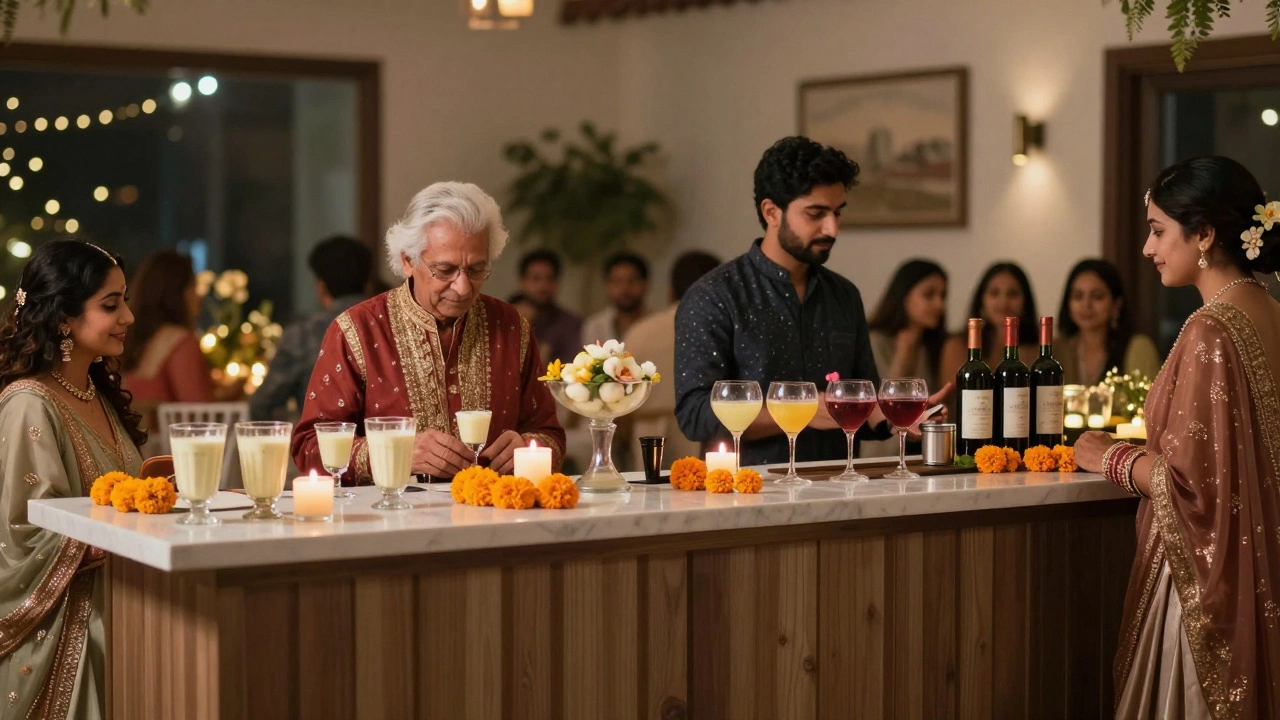
If you’re invited to a wedding in Rajasthan, don’t be surprised if you’re offered thandai-a spiced milk drink that sometimes contains bhang (cannabis paste). It’s traditional during Holi, but some families serve it at weddings too, especially in rural areas. It’s not about getting drunk; it’s about cultural participation.In South India, alcohol is more common at weddings than you’d expect. In Tamil Nadu, liquor is often served during pre-wedding events like the maṅgala snānam. In Kerala, where Christianity and Islam are deeply rooted, wine and arrack are standard at receptions. Even in Karnataka, where many families are vegetarian and conservative, the groom’s side might serve alcohol while the bride’s side doesn’t-resulting in two separate bar setups.
North India is the most mixed. In urban Punjab, liquor flows freely. In rural Haryana or Uttar Pradesh, families might strictly prohibit it. One family in Lucknow told me they serve alcohol only to guests who are not blood relatives. “We don’t want our cousins drinking during the ceremony,” they said. “But our friends? They’re not bound by our rules.”
When Is Alcohol Actually Served?
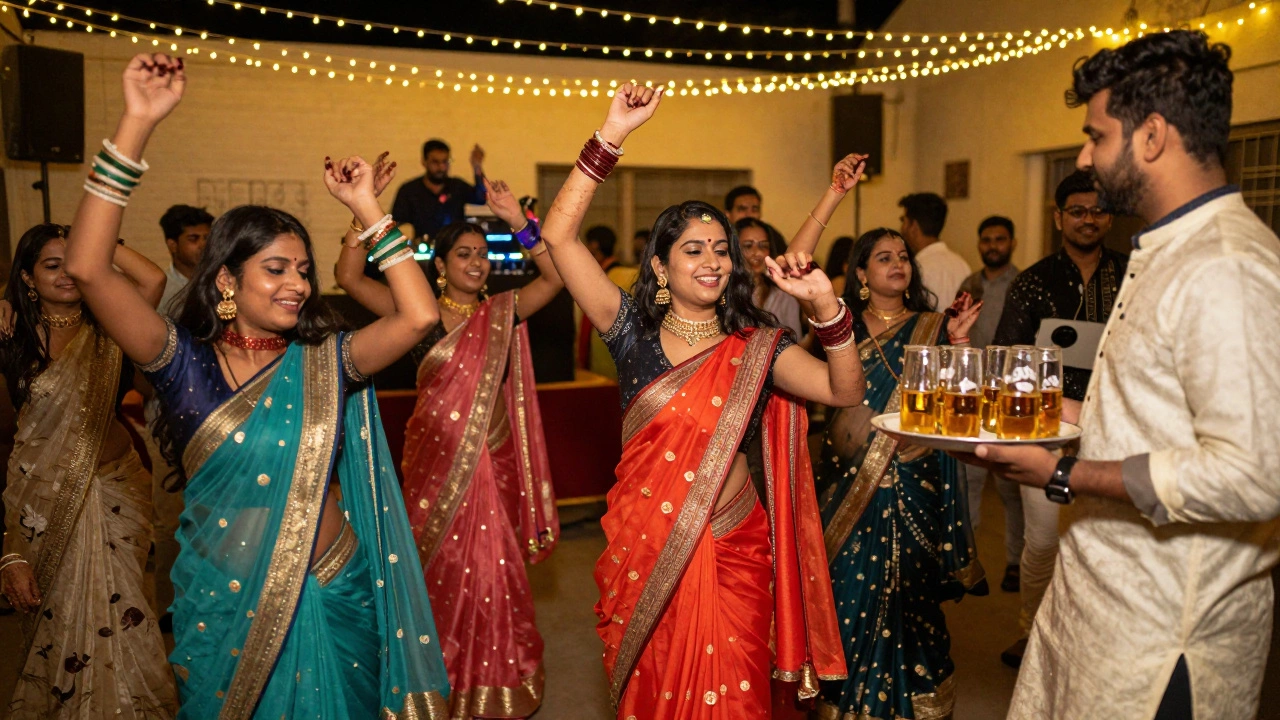
Indian weddings last days, not hours. Each event has its own vibe.- Mehendi and Sangeet: These are the parties. Alcohol is most likely here. DJs play Bollywood hits, and guests loosen up. Even conservative families often allow drinks during these nights.
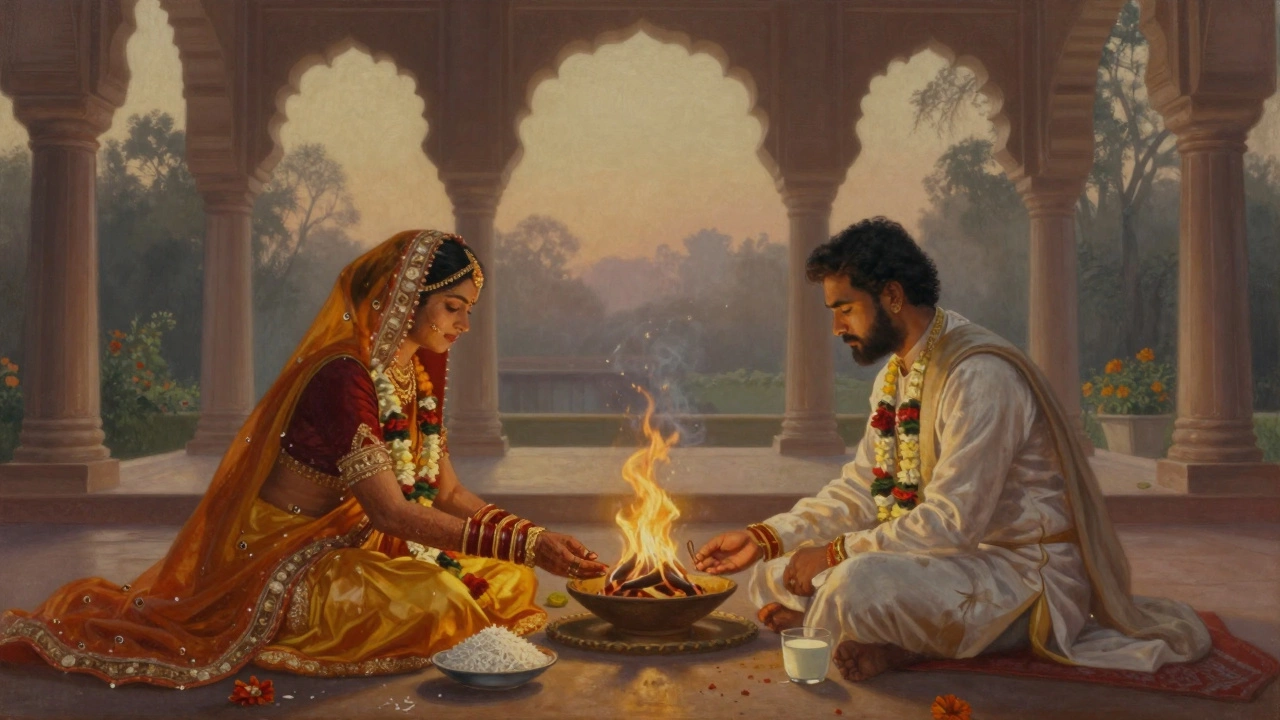
- Wedding Day Ceremony: The actual rituals-kanyadaan, pheras, mangalsutra tying-are almost always alcohol-free. This is sacred ground. Even families that serve alcohol elsewhere won’t touch it during the puja.
- Reception: This is where things get flexible. In cities, receptions are like Western weddings-with open bars, signature cocktails, and waiters carrying trays. In smaller towns, it might just be a few bottles of beer or whiskey for the elders.
Some families use a clever workaround: they serve alcohol only after the main ceremony ends. Guests are told, “No drinks until after the pheras.” That way, tradition is respected, and celebration isn’t denied.
What About the Guests? Do They Drink?
Many Indian guests-especially younger ones or those living abroad-will drink even if it’s not served. I’ve seen people sneak in mini bottles of vodka in their bags. Others bring their own wine to receptions, especially if they’re from a different cultural background. One bride told me her American cousin brought a bottle of champagne and quietly popped it during the reception. No one said anything. It wasn’t a scandal-it was just how things are now.But don’t assume everyone is okay with it. Many older guests, especially from rural areas, will refuse alcohol outright. Some won’t even sit at a table where drinks are served. In one wedding I attended, a grandmother refused to enter the banquet hall because she saw liquor bottles on the bar. The family moved the bar to a separate room the next day.
The Changing Norms: Younger Generations Are Rewriting the Rules
The biggest shift? Urban, educated, middle-class Indian families are redefining what’s acceptable. A 2023 survey by a Mumbai-based wedding planner found that 68% of couples under 35 now serve alcohol at their weddings-even if their parents don’t. The reason? They want their weddings to feel like celebrations, not religious ceremonies.Some couples offer a “no alcohol” option for elders and an “open bar” for younger guests. Others hire two caterers-one for traditional vegetarian food without alcohol, another for international-style buffets with cocktails. It’s not about rebellion. It’s about inclusion.
Even in traditionally strict communities, you’ll see changes. A family in Jaipur that never served alcohol for generations now offers mocktails and wine for international guests. “We don’t drink,” the groom’s mother told me. “But we want our guests from London and Dubai to feel welcome.”
What to Expect as a Guest
If you’re invited to an Indian wedding and you’re unsure about alcohol:- Look at the invitation. Does it say “formal reception” or “traditional ceremony”? The former often means drinks.
- Ask a friend who knows the family. Don’t assume.
- If alcohol is served, it’s usually at the reception, not the main ceremony.
- If you don’t drink, don’t feel pressured. Saying “I don’t drink” is perfectly normal.
- Don’t bring your own alcohol unless you know the family is open to it. It can be seen as rude.
And if you’re unsure whether to drink? Watch the elders. If the aunts and uncles are sipping soda, you probably should too. If the uncle is pouring himself a whiskey before dinner? You’re safe to join.
It’s About Respect, Not Rules
At the end of the day, Indian weddings are about family, connection, and joy. Whether or not there’s alcohol doesn’t change that. The real tradition isn’t the absence or presence of liquor-it’s the warmth, the chaos, the laughter, and the way strangers become family by the end of the night.So yes, people drink at Indian weddings. But only when it fits the story the family wants to tell. And sometimes, the most beautiful part isn’t the drink-it’s the quiet nod from a grandmother who lets you have a sip, even if she doesn’t.
Is alcohol banned at all Indian weddings?
No, alcohol is not banned at all Indian weddings. It depends on the family’s religion, region, and personal beliefs. Orthodox Hindu weddings often avoid alcohol, while Christian, Parsi, and many urban Hindu weddings serve it freely. Some families serve it only during pre-wedding parties, not the main ceremony.
Can I bring my own alcohol to an Indian wedding?
It’s generally not recommended. Bringing your own alcohol can be seen as disrespectful, especially if the family has chosen not to serve it for religious or cultural reasons. If you’re unsure, ask the hosts politely. Most will appreciate your consideration.
Do Indian brides drink at their own weddings?
It’s rare for the bride to drink during the main ceremony, as she’s the focal point of sacred rituals. But after the ceremony, especially at the reception, many modern brides do have a drink. It’s becoming more common in urban areas, though still not universal.
What are some traditional non-alcoholic drinks served at Indian weddings?
Common non-alcoholic drinks include thandai (spiced milk, sometimes with bhang), lassi (yogurt drink), sharbat (sweet fruit syrups), nimbu pani (lemonade), and chaas (spiced buttermilk). These are served throughout the event and are especially popular during hot weather or long ceremonies.
Are there any legal restrictions on alcohol at Indian weddings?
In some Indian states like Gujarat, Bihar, and Nagaland, alcohol is banned or heavily restricted by law. Weddings in these states must follow local regulations-even if the family wants to serve drinks. In other states, you need a license to serve alcohol at large events, which many venues handle automatically.