Indian Cultural Heritage Quiz
Explore the living legacy of India through this interactive quiz. From ancient texts to modern adaptations, discover how culture evolves while maintaining its core identity.
According to the article, what is a key characteristic of Indian cultural heritage?
How does the article describe the relationship between Yoga today and its ancient roots?
Which of the following is cited as an example of Intangible Cultural Heritage in India?
What distinction does the article make regarding Classical Dance forms like Bharatanatyam and Kathak?
Which intellectual contributions are highlighted as part of India's cultural DNA?
Quiz Completed!
Your Score: 0/5
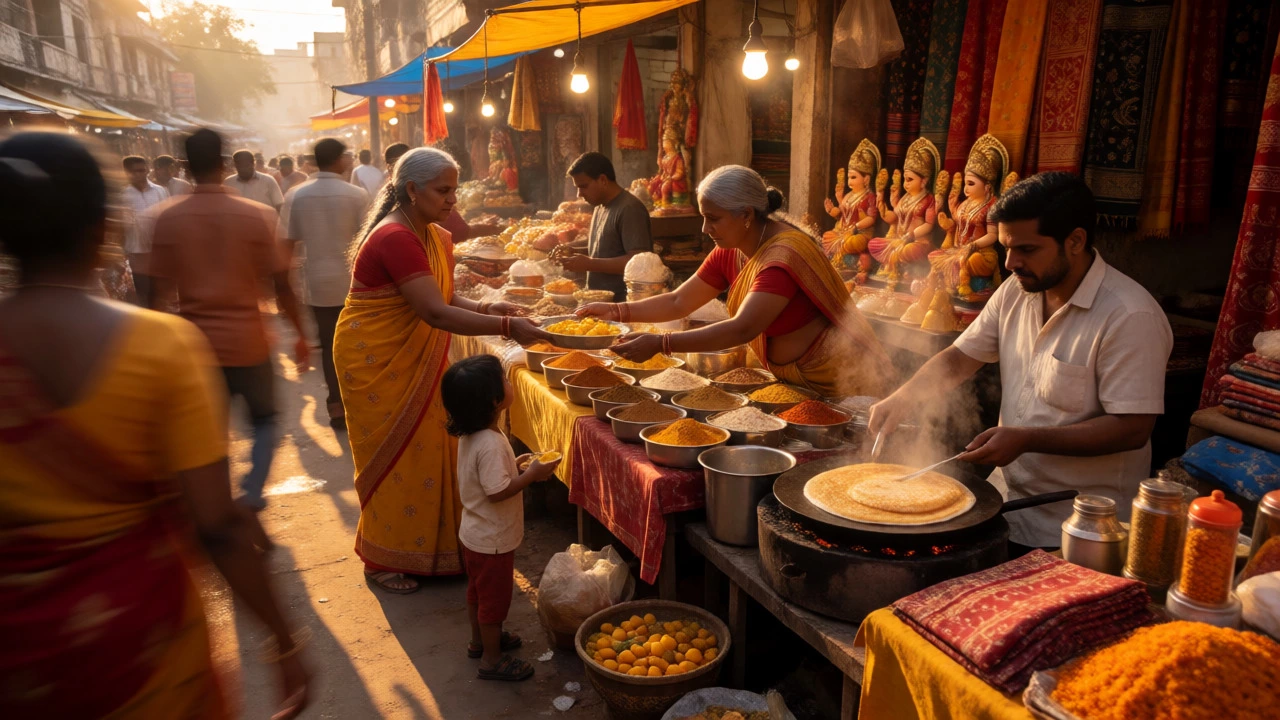
Ask someone if India has a heritage of culture, and you might get a laugh. It’s like asking if the ocean has water. But here is the twist: that question isn’t just rhetorical. In a world obsessed with museum pieces and static artifacts, we often forget that Indian culture isn’t something preserved in glass cases-it’s breathing, evolving, and arguing with itself every single day.
If you think heritage means only what you see on Instagram reels of the Taj Mahal or Varanasi ghats, you’re missing half the story. The real Indian cultural heritage is messy, loud, and deeply personal. It’s the way your grandmother refuses to eat before praying, even if she’s late for work. It’s the specific dialect spoken in a village in Kerala that changes every ten kilometers. So, does India have a heritage? Absolutely. But it’s not a relic; it’s a live wire.
The Myth of the "Ancient" Static Culture
We tend to label India as "ancient," which sounds respectful but actually boxes it into the past. This creates a false binary: India is old, and the West is new. Reality is far more nuanced. Vedic traditions are indeed thousands of years old, but they have been continuously reinterpreted by scholars, poets, and ordinary people throughout history. Take yoga, for instance. The yoga practiced in a London studio today bears little resemblance to the ascetic practices described in ancient texts, yet both claim lineage from the same root. That adaptability is the core of Indian heritage.
This continuity is rare. Many civilizations collapsed and left ruins behind. India didn’t leave ruins; it left a civilization that kept running. The Sanskrit language is a prime example. While no longer a primary mother tongue for millions, it remains the liturgical and scholarly backbone of Hindu philosophy, influencing modern linguistic studies and AI natural language processing models due to its structured grammar. When you speak Hindi, Bengali, or Tamil, you are using languages that evolved directly from older roots, maintaining a continuous thread of literary and oral tradition that spans millennia.
Intangible Heritage: The Soul of the Subcontinent
UNESCO lists dozens of Intangible Cultural Heritage elements from India, ranging from Kutiyattam theater to Ramlila performances. But these official listings barely scratch the surface. Intangible heritage refers to practices, representations, expressions, knowledge, and skills that communities recognize as part of their cultural heritage. In India, this isn’t a separate category from daily life; it is daily life.
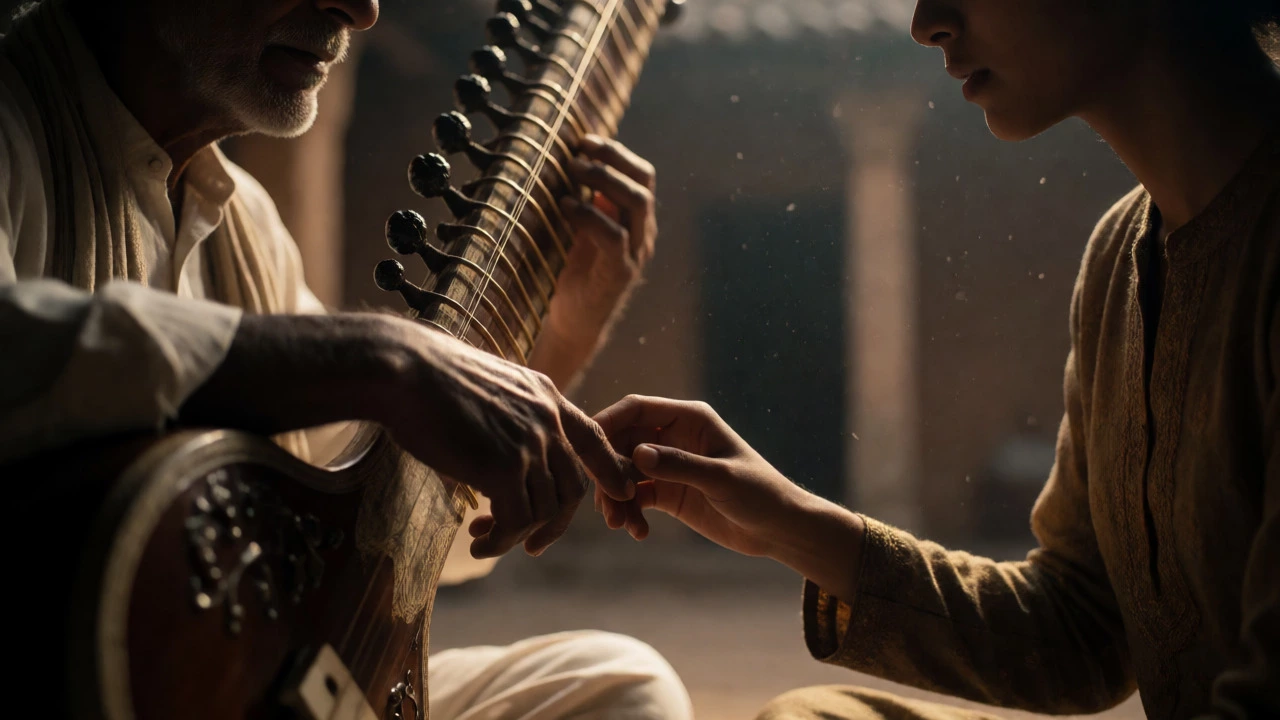
Consider food. Is eating Dosa an act of heritage preservation? Yes. The fermentation process, the specific ratio of rice to urad dal, the method of spreading it on a tawa-these are techniques passed down through generations without written manuals. Similarly, the Guru-Shishya Parampara (teacher-student tradition) ensures that classical arts like Hindustani music survive not through recordings alone, but through direct human transmission. You cannot download a raga’s soul; you must hear it from a master who heard it from theirs.
Regional Diversity: One Nation, Many Nations
To say "Indian culture" is singular is a mistake. It’s more accurate to speak of a mosaic of cultures that share a geographic container. The cultural fabric of Punjab differs vastly from that of Odisha, yet both contribute to the broader national identity. This diversity is not a bug; it’s the feature.
| Region | Primary Classical Dance | Culinary Signature | Linguistic Family |
|---|---|---|---|
| South India | Bharatanatyam, Kathakali | Rice-based, coconut, fermented foods | Dravidian |
| North India | Kathak | Wheat-based, dairy-rich, tandoori cooking | Indo-Aryan |
| East India | Odissi, Manipuri | Fish, mustard oil, sweets | Indo-Aryan & Austroasiatic |
| West India | Garba, Ghoomar | Vegetarian thalis, dry snacks, jaggery | Indo-Aryan |
Notice how the dance forms aren’t just entertainment; they are storytelling mediums rooted in mythology. Bharatanatyam originated in the temples of Tamil Nadu, serving as a devotional offering. Meanwhile, Kathak evolved in North Indian courts, blending Hindu mythological themes with Persian influences during the Mughal era. These art forms prove that Indian heritage absorbs external influences rather than rejecting them. That synthesis is a hallmark of the culture.
Architecture as Frozen History
If intangible heritage is the soul, architecture is the body. From the rock-cut caves of Ajanta to the marble domes of Agra, Indian monuments tell a chronological story of technological and aesthetic evolution. The Taj Mahal is often cited as the peak of Mughal architecture, but look closer at its foundation. It sits on a plinth that reflects earlier Hindu architectural principles, while its symmetry and garden layout reflect Islamic Persian ideals.
However, heritage isn’t just about grand monuments. It’s also about vernacular architecture. The stepwells of Gujarat, known as Vavs, were engineering marvels designed to manage water scarcity centuries ago. Today, many are being restored not just as tourist spots, but as reminders of sustainable resource management. When you walk through a traditional Chettinad house in Tamil Nadu, you see climate-responsive design-high ceilings for ventilation, courtyards for light-that modern architects are now trying to replicate with expensive technology.
The Modern Clash: Globalization vs. Tradition
Here is where the conversation gets tricky. Does globalization dilute Indian heritage? Or does it spread it? Look at Bollywood. Critics call it superficial pop culture. Yet, Bollywood films have introduced global audiences to Indian festivals, family dynamics, and moral dilemmas rooted in Dharma. It’s a modern vehicle for traditional narratives.
Simultaneously, there is a pushback. Young Indians are rediscovering handloom textiles like Khadi and Ikat, not because they are forced to, but because fast fashion feels empty. The revival of organic farming methods based on Ayurvedic principles shows a desire to return to ecological balance. This isn’t nostalgia; it’s adaptation. The heritage survives because it solves modern problems.
Why This Matters to You
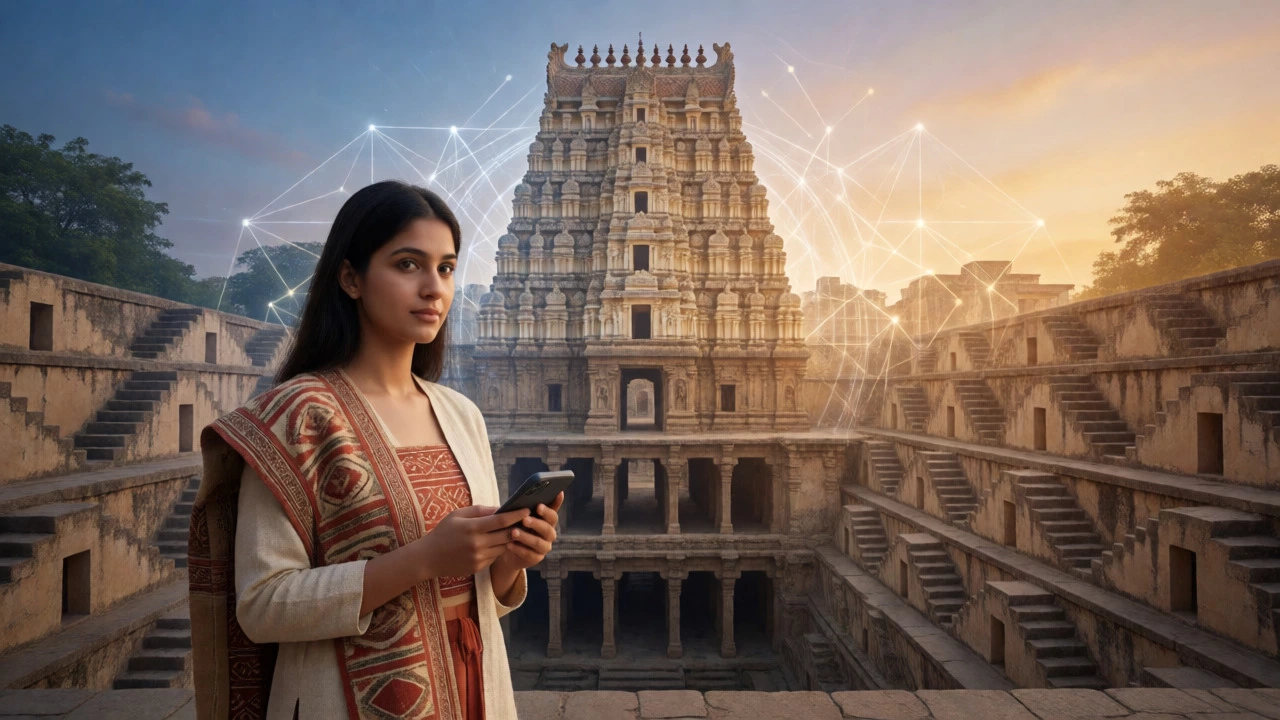
You might wonder why this matters if you’re not Indian. Because understanding Indian heritage offers a different lens on time and community. Western culture often prioritizes individual achievement and linear progress. Indian heritage emphasizes cyclical time, collective responsibility, and harmony with nature. In an age of climate crisis and social isolation, these values are becoming increasingly relevant globally.
Moreover, recognizing the depth of this heritage combats stereotypes. India is not just poverty or spirituality; it is also scientific innovation, artistic complexity, and philosophical rigor. The Zero concept invented in India revolutionized mathematics worldwide. The Chess game originated as Chaturanga in Gupta-era India. These contributions are part of the cultural DNA, proving that heritage includes intellectual property, not just rituals.
Preserving the Flame
So, does India have a heritage of culture? Yes, but it requires active participation to maintain. It dies when we treat it as a museum exhibit. It lives when we practice it. If you stop speaking your mother tongue, you lose a worldview. If you stop celebrating local harvest festivals, you disconnect from your agricultural roots.
The challenge for the next generation is balancing authenticity with relevance. How do you keep the essence of a ritual while adapting it to urban schedules? How do you teach children the value of respect for elders without enforcing rigid hierarchy? These questions don’t have easy answers, but asking them is part of the heritage itself. Indian culture has always been a debate, not a monologue.
Is Indian culture considered one of the oldest in the world?
Yes, Indian culture is widely regarded as one of the oldest living cultures in the world. Its roots trace back to the Indus Valley Civilization (c. 3300 BCE) and the subsequent Vedic period. Unlike many other ancient civilizations that disappeared, Indian cultural practices, languages, and religious philosophies have maintained a continuous presence for over 5,000 years.
What is meant by "intangible cultural heritage" in the Indian context?
Intangible cultural heritage refers to non-physical practices such as oral traditions, performing arts, social practices, rituals, festive events, and knowledge concerning nature. In India, examples include Yoga, Ayurveda, Kumbh Mela, Ramlila, and various folk music traditions. These are transmitted from generation to generation and provide communities with a sense of identity and continuity.
How has colonialism affected Indian cultural heritage?
Colonialism introduced English education and Western administrative systems, which altered social structures and created a divide between elite and traditional classes. However, it also sparked a cultural renaissance where Indians consciously revived and redefined their heritage in response to colonial critiques. Post-independence, efforts focused on decolonizing minds while integrating useful aspects of modernity.
Are Indian festivals religious or cultural?
Most Indian festivals blur the line between religious and cultural. For instance, Diwali is rooted in Hindu mythology (the return of Lord Rama), but it is celebrated by Jains, Sikhs, and some Buddhists for different historical reasons. Secular communities also celebrate it as a festival of lights and prosperity. Thus, these events serve as both spiritual observances and communal cultural gatherings.
Can digital media preserve Indian heritage effectively?
Digital media can document and disseminate information about heritage, making it accessible globally. Platforms like YouTube allow masters of classical arts to reach wider audiences. However, digital media cannot fully replace the experiential aspect of heritage, such as the tactile experience of handicrafts or the communal energy of a festival. It serves as a complement, not a substitute, for lived practice.