Durga Puja Experience Planner
Planning your first visit to the spectacular celebrations of Durga Puja? Tell us what you're most excited about, and we'll build a recommended itinerary and checklist for you!
Suggested Itinerary
Dress Code Recommendation
Essential Checklist
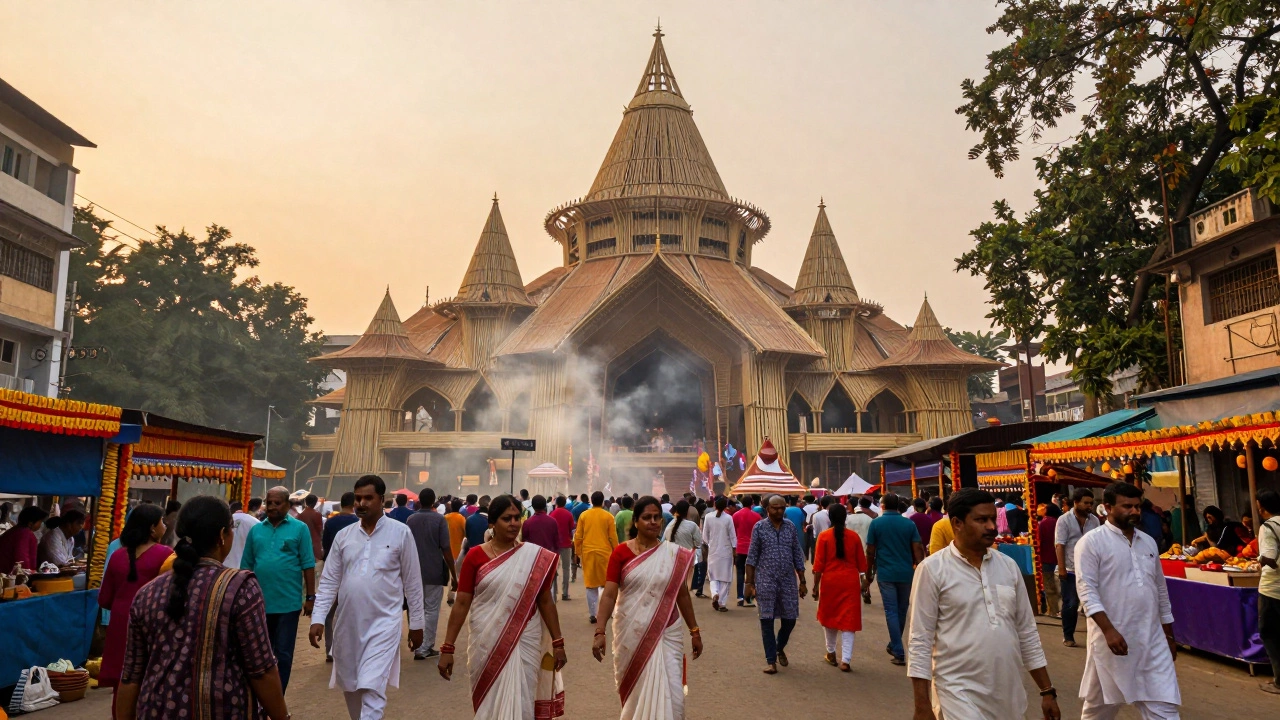
For those wondering what makes this specific event stand out among other Asian celebrations, it is the blend of faith and high art. This isn't just about praying to a deity; it is about the construction of massive, temporary structures called Pandals. These aren't your average tents. Some are built to look like the Burj Khalifa, while others are crafted entirely from recycled glass or traditional jute. It is the ultimate expression of Bengali creativity, where the community comes together to celebrate the victory of good over evil.
The Heart of the Celebration: Who is Maa Durga?
To get why this festival matters, you have to understand the story. Durga is the warrior goddess, created by the combined powers of the gods to defeat a shape-shifting demon named Mahishasura. Unlike many other deities, she represents the fierce side of femininity-strength, protection, and unrelenting power. In the Bengali tradition, the festival is not just a theological victory; it is treated as the homecoming of a daughter. People view the goddess as a family member returning to her parents' home for a few days, which adds a deeply personal, emotional layer to the public spectacle.
What Happens During the Five Days of Puja?
The festival builds up over several days, each with its own vibe. It all kicks off with Mahalaya, where a hauntingly beautiful chant is broadcast across the radio at 4:00 AM, signaling that the goddess is on her way. Then comes the main event: Shashti, Saptami, Ashtami, Navami, and Dashami.
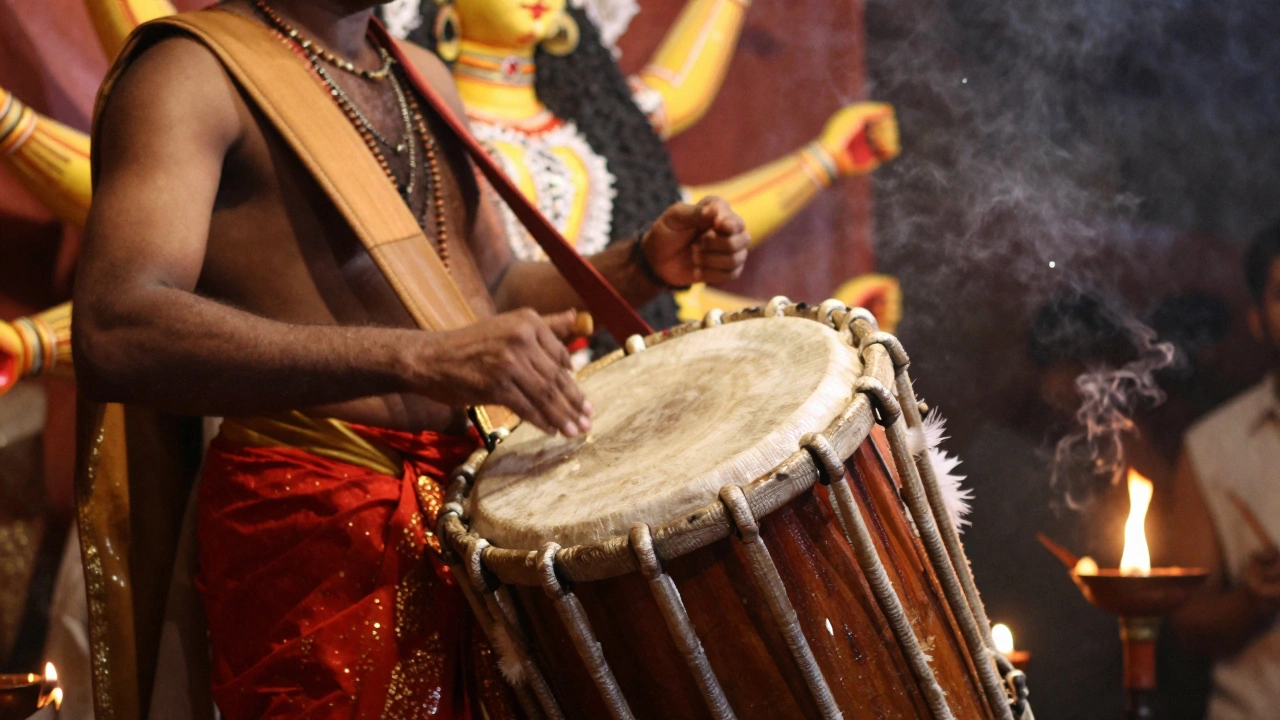
The peak is usually Maha Ashtami. This is the day you will see the most crowds. People dress in traditional white and red sarees or crisp kurtas to offer "Anjali" (prayers). The sound of the Dhaki (traditional drummers) fills the air. These drummers use huge drums draped in feathers, and their rhythmic beat is the heartbeat of the festival. If you are walking through the streets, you can feel the vibrations in your chest long before you see the drummers.
The Art of the Pandal: Architecture on Steroids
One of the most unique parts of Durga Puja is the "Pandal hopping." A Pandal is a temporary structure that houses the idol of the goddess. In cities like Kolkata, these are competitive. Neighborhood committees spend months and millions of rupees to create the most impressive structure.
You might find a Pandal that mimics a famous European cathedral or one that uses 10,000 pieces of hand-woven bamboo to create a futuristic wave. Inside, the idol of the goddess is crafted from clay and straw, painted with precision. The focus on art is so intense that UNESCO actually recognized the festival as an Intangible Cultural Heritage of Humanity. It is essentially the world's largest open-air art exhibition, where the exhibits are free for everyone, regardless of their social status.
Flavors of the Festival: The Street Food Craze
You cannot talk about Bengali culture festivals without mentioning the food. During the Puja, dieting simply doesn't exist. The streets are lined with stalls selling Kathi Rolls, spicy phuchkas, and hot mutton cutlets.
There is a specific tradition of "Bhog," which is the blessed food offered to the goddess and then distributed to the crowds. This usually consists of Khichdi (a rice and lentil mix), Labra (a mixed vegetable stew), and a sweet chutney. Eating this together on the floor of a community hall, surrounded by thousands of other people, is where the real sense of community happens. It is a democratic experience where the richest businessman and the poorest laborer sit side-by-side, eating the same meal.
| Feature | Durga Puja | Lunar New Year (China) | Songkran (Thailand) |
|---|---|---|---|
| Primary Focus | Art, Community, & Goddess Victory | Family Reunions & New Beginnings | Water Purification & New Year |
| Key Visual | Massive Theme Pandals | Red Lanterns & Fireworks | Water Splashing |
| Main Activity | Pandal Hopping | Family Dinners | Street Water Fights |
| Cultural Vibe | Artistic & Spiritual | Traditional & Familial | Playful & Refreshing |
The Emotional Finale: Bijoya Dashami
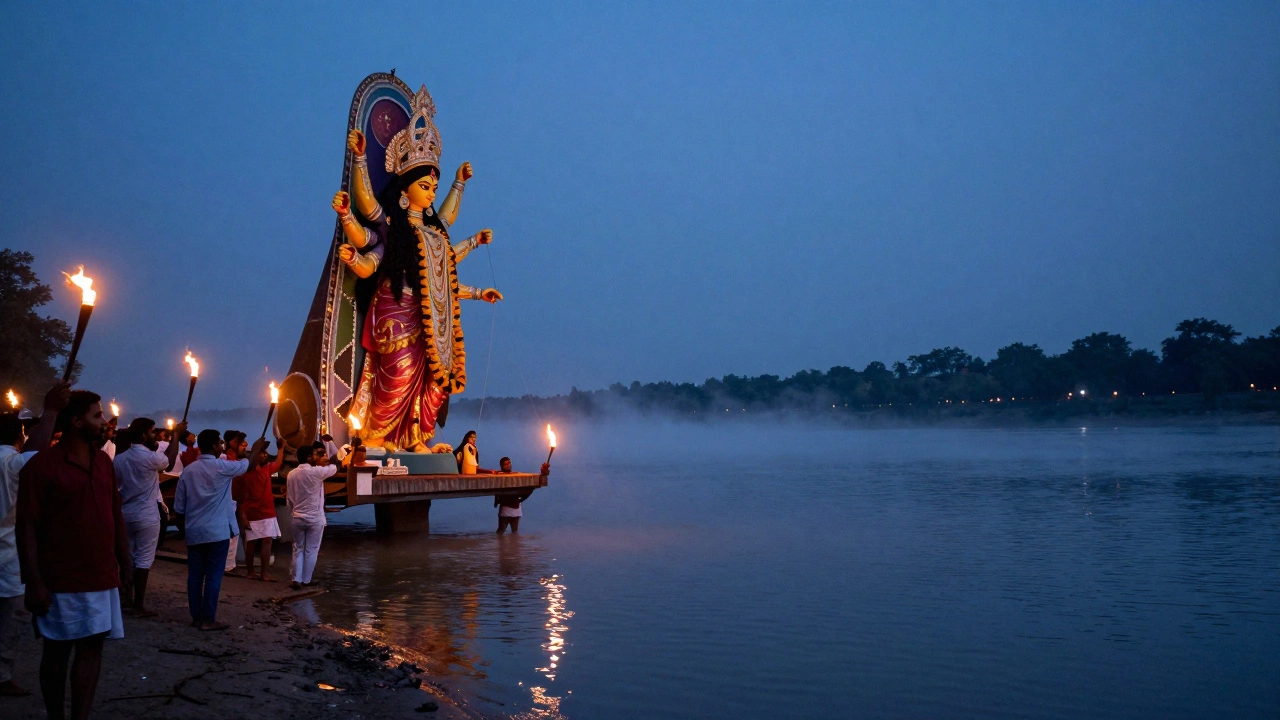
The festival ends with a bittersweet event called Bijoya Dashami. This is when the idols are carried in grand processions to the river. In a ritual called "Visarjan," the idols are immersed in the water. It symbolizes the goddess returning to her husband's home in the Himalayas.
The atmosphere is a mix of sadness and hope. As the idol sinks, people shout "Asche Bochor Abar Hobe," which means "It will happen again next year." It is a reminder that every ending is just a preparation for a new beginning. After the immersion, people visit friends and family to exchange sweets and seek blessings from elders, cementing the social bonds that hold the community together.
Common Pitfalls for First-Timers
If you're planning to visit, don't expect a quiet spiritual retreat. This is high-energy chaos. The biggest mistake newcomers make is trying to see everything on foot. The crowds are immense-sometimes millions of people are moving in a single direction. Use rickshaws or hire a local guide who knows the shortcuts. Also, wear comfortable shoes; you will likely walk several miles a night. Lastly, remember that while the festival is welcoming, it's still a religious event. Dress modestly when entering the inner sanctum of the Puja halls to show respect for the traditions.
Is Durga Puja only celebrated in West Bengal?
While it is the heart of Bengali culture in West Bengal, it is celebrated by Bengali communities worldwide. From London and New York to Dhaka and Mumbai, the diaspora organizes Puja celebrations. However, the scale and the "Pandal culture" are most prominent in Kolkata.
When does the festival actually take place?
The dates change every year because it follows the lunar calendar. It usually falls between September and October. The exact dates are determined by the Hindu calendar, specifically the month of Ashwin.
Can non-Hindus participate in the festival?
Absolutely. In fact, one of the most beautiful things about Durga Puja is its inclusivity. People of all faiths, and even tourists from around the world, are welcome to visit the Pandals and enjoy the art and food. It is treated as a cultural festival as much as a religious one.
What are the best clothes to wear for the event?
For women, a traditional white saree with a red border (known as Garad) is a classic choice for Ashtami. For men, a cotton Kurta-Pyjama is the most common and comfortable option. However, casual wear is perfectly fine for general sightseeing.
What is the significance of the 'Dhunuchi Naach'?
Dhunuchi Naach is a traditional dance performed with a clay incense burner (dhunuchi) filled with burning coconut husk and resin. It is a high-energy offering to the goddess, usually performed to the beat of the Dhaki drums, and is one of the most visually striking parts of the ritual.