Gujarati Tradition Explorer
Discover the vibrant culture of Gujarat. Choose a category below to learn about specific traditions, foods, or festivals.
Welcome to Gujarat!
Select a category above to start exploring.
From the rhythmic circles of Garba to the sweet-salty balance of the Thali, Gujarat offers a rich tapestry of traditions.
You’ve probably heard of Gujarat for one reason or another. Maybe it’s the home of Mahatma Gandhi, or perhaps you’ve seen videos of thousands of people dancing in colorful circles during Navratri. But asking "what is the famous tradition in Gujarat?" is like asking what is the most famous ingredient in a curry. There isn’t just one. The state has a cultural heartbeat that pulses through its festivals, its plate, and its daily rituals.
If you are planning a trip there, or just want to understand the vibe before you eat at a Gujarati restaurant in London, you need to look beyond the surface. It’s not just about the clothes. It’s about how people greet each other, how they celebrate nine nights without sleep, and why their food is so uniquely balanced between sweet and salty. Let’s break down the real traditions that make this western Indian state stand out.
The Nine Nights of Dance: Navratri and Garba
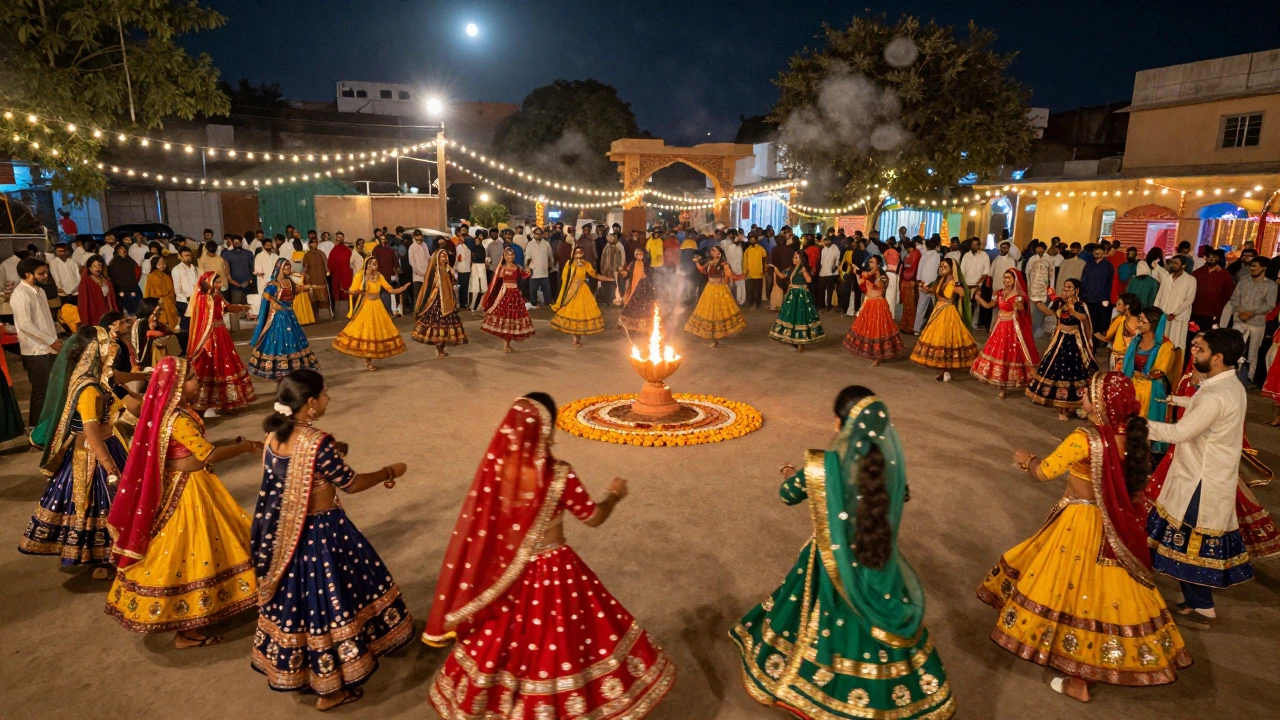
If there is one event that defines modern Gujarat globally, it is Navratri. While many parts of India celebrate this nine-night festival honoring the goddess Durga, Gujarat takes it to a whole different level. This isn’t just a religious observance; it’s a massive social phenomenon.
The core of this celebration is Garba, a folk dance performed in concentric circles around a clay lantern (the garbo) or an image of the Goddess Amba. The name comes from the Sanskrit word for "womb," symbolizing the cycle of life and death. You don’t need to be a professional dancer to join in. The steps are rhythmic, clapping-based, and incredibly infectious.
Here is what makes it unique:
- The Scale: In cities like Ahmedabad and Vadodara, entire neighborhoods shut down streets to host these events. We are talking about hundreds of thousands of participants in a single night.
- The Attire: Women wear vibrant chaniya cholis with mirror work, while men wear kediyu (embroidered kurtas) and dhotis. The colors change every day of the week, representing different forms of the Goddess.
- Dandiya Raas: Often confused with Garba, this is a partner dance using two sticks called dandiyas. It’s faster, more energetic, and usually happens after the Garba circle ends.
Attending a Navratri event is less about watching and more about doing. If you visit in October, you will likely find yourself swept up in the rhythm whether you planned to dance or not.
A Plate That Tells a Story: The Gujarati Thali
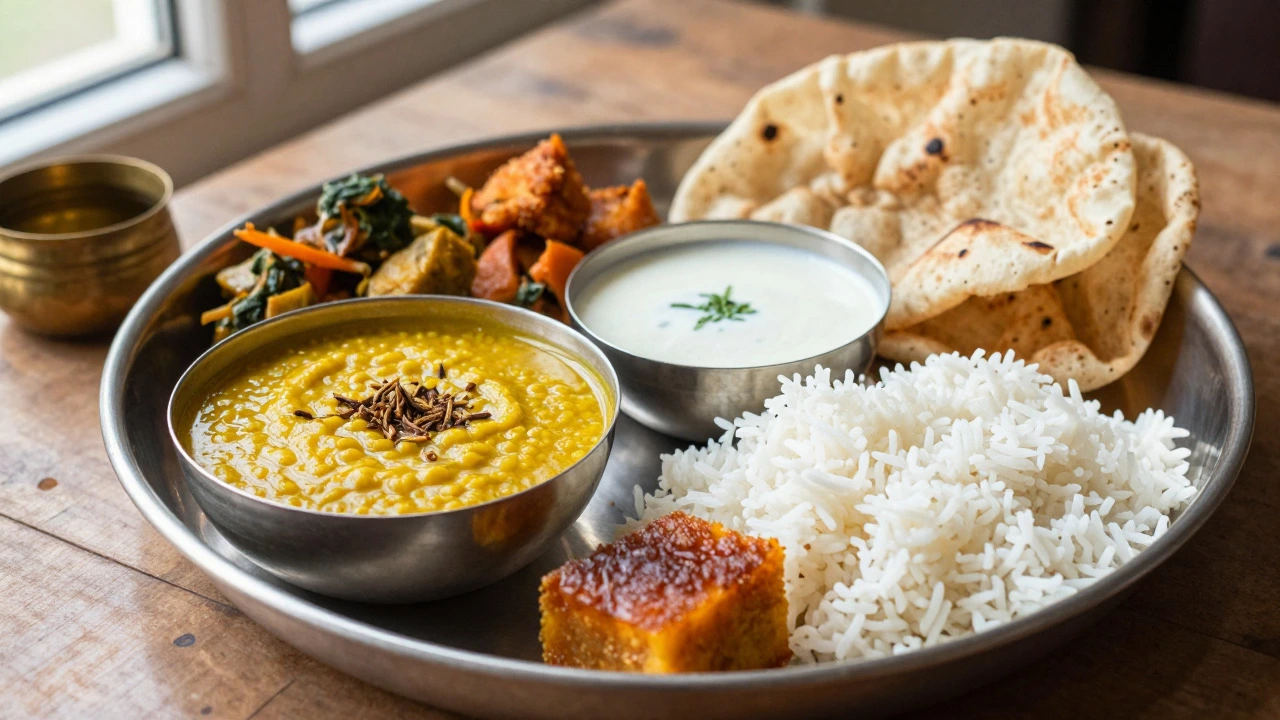
You cannot talk about Gujarat without talking about food. The Gujarati Thali is not just a meal; it is a complete nutritional and philosophical statement. Unlike North Indian curries that might focus heavily on cream or ghee, or South Indian meals centered on rice and sambar, the Gujarati thali balances six tastes: sweet, sour, salty, bitter, pungent, and astringent.
This balance is intentional. Traditional Gujarati cuisine leans towards vegetarianism, largely due to the strong influence of Jainism and Vaishnavism in the region. A typical lunch thali includes:
| Component | Description | Example Dish |
|---|---|---|
| Roti/Bhakri | Flatbread made from wheat flour, often thin and crisp. | Phulka |
| Dal | Lentil soup, usually slightly sweetened with jaggery. | Gujarati Dal |
| Shak | Vegetable dish, seasonal and spiced lightly. | Undhiyu (mixed vegetables) |
| Kadhi | Yogurt-based gravy with pakoras (fritters). | Gujarati Kadhi |
| Rice | Steamed basmati rice, sometimes with peas. | Cucumber Rice |
| Sweet | Milk-based dessert or fried pastry. | Puri with Sugar |
The secret ingredient in almost everything is jaggery (unrefined sugar). Yes, even in the dal and the kadhi. It sounds strange if you aren’t used to it, but that subtle sweetness cuts through the spices and creates a comforting, rounded flavor profile. If you try authentic Thepla-thin, spiced flatbreads made with methi (fenugreek) leaves-you’ll taste this balance immediately. They are designed to last days without refrigeration, making them perfect for travel.
The Art of Greeting and Hospitality
Gujaratis are famously hospitable. There is a saying in the language: "Atithi Devo Bhava," which means "The guest is God." But in practice, this goes beyond polite words. When you enter a Gujarati home, expect to be fed. Refusing food can sometimes be seen as rejecting hospitality, so come hungry.
The greeting itself is distinct. Instead of a handshake, the traditional greeting is the Namaste or "Kem Cho?" (How are you?). However, the physical gesture matters. Touching feet to elders is a deep sign of respect. If you meet a grandmother, bending down to touch her feet is appreciated and reciprocated with a blessing.
Another small but significant tradition is the offering of betel nut (supari) and paan after meals. It’s a digestive aid and a palate cleanser. You might see small brass boxes filled with colorful ingredients for making paan in living rooms. Accepting one is a nice way to bond with your hosts, even if you don’t chew it all.
Festivals Beyond Navratri
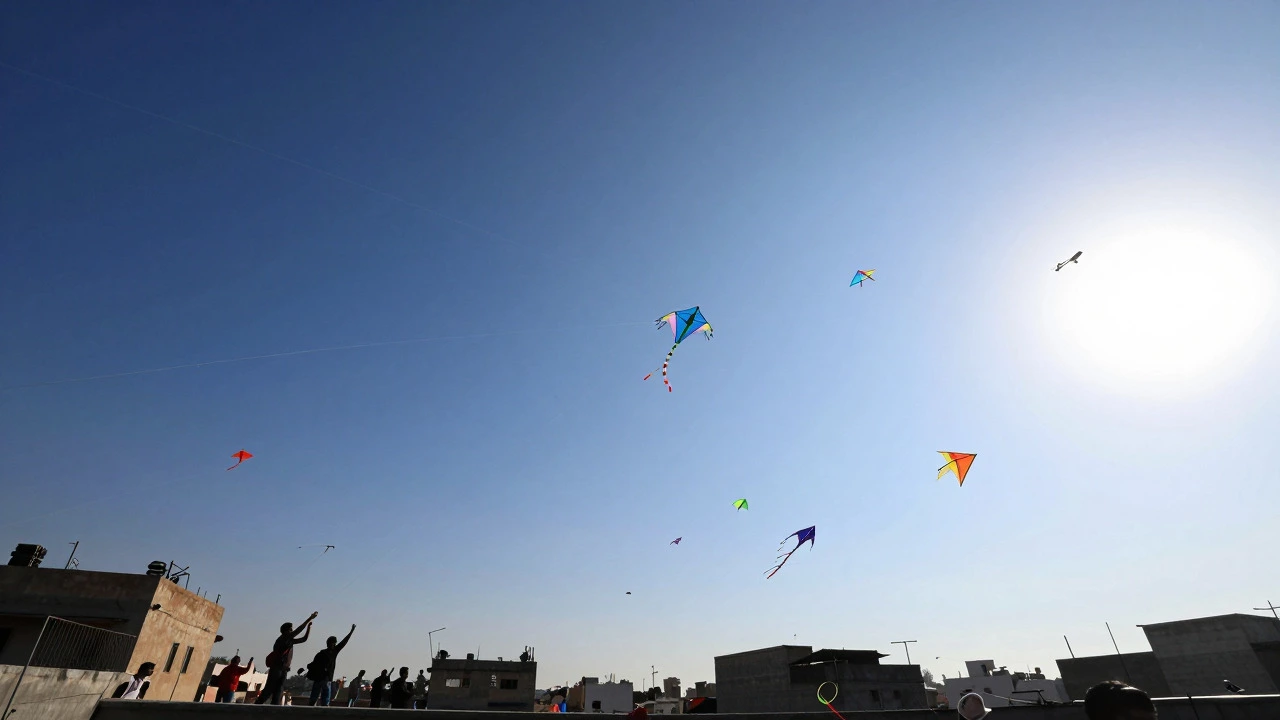
While Navratri gets the headlines, other festivals show different sides of the culture. Uttarayan (also known as Makar Sankranti) is celebrated in January with kite flying. Imagine the sky over Ahmedabad completely covered in thousands of kites. Families spend the entire day on rooftops, eating sesame seeds and jaggery sweets (undhiyu), and trying to cut other people’s kite strings. It’s competitive, joyful, and visually stunning.
Then there is Diwali. For Gujaratis, Diwali marks the New Year. Business owners close their old account books (Chopda Pujan) and start new ones. It’s a time for lighting lamps, exchanging gifts, and performing puja for Lakshmi, the goddess of wealth. The energy here is focused on prosperity and fresh starts.
Handicrafts and Textiles
Gujarat is also a hub for artisanal traditions. If you buy souvenirs, you are likely buying into centuries-old techniques. Bandhani (tie-dye) is iconic. Small portions of fabric are tied tightly with thread before dyeing, creating intricate patterns of dots. It requires immense skill and patience.
Similarly, Patola saris from Patan are double-ikat weaves, meaning both the warp and weft threads are dyed before weaving. These saris can cost thousands of pounds because they take months to create. Wearing a Patola sari is considered auspicious for weddings.
Don’t overlook the embroidery work from Kutch. The white cotton fabrics with bright geometric patterns are not just decorative; they historically identified the community and marital status of the wearer. Today, they are prized globally for their bold aesthetic.
Why These Traditions Matter Today
You might wonder why any of this matters if you’re just visiting for business or tourism. Understanding these traditions changes how you interact with locals. Knowing that food is a love language helps you appreciate a dinner invitation. Knowing that Navratri is a community event helps you understand why people prioritize family and neighbors over personal schedules during October.
Gujarati culture is resilient. Despite rapid urbanization and industrial growth, these traditions remain vibrant. The blend of ancient ritual and modern commerce is seamless here. You’ll see tech entrepreneurs praying at temples before meetings, and traditional artisans selling handwoven textiles via Instagram.
So, next time someone asks you about Gujarat, don’t just say "it’s where Gandhi was born." Tell them about the dance circles under the moonlight, the sweet-salty dal, and the kites that turn the winter sky into a canvas. That’s the real Gujarat.
What is the most popular dance in Gujarat?
Garba is the most popular traditional dance, especially during the Navratri festival. It involves circular movements around a central lamp or deity image. Dandiya Raas, a partner dance with sticks, is also extremely popular during the same period.
Is Gujarati food always vegetarian?
Traditionally, yes, much of Gujarati cuisine is vegetarian due to religious influences like Jainism and Hinduism. However, coastal areas and specific communities do consume seafood and meat. Still, vegetarian options are dominant and highly developed.
When is the best time to visit Gujarat for festivals?
October is ideal for experiencing Navratri and Garba. January is perfect for Uttarayan (Kite Festival). November offers pleasant weather for general sightseeing and seeing handicraft markets.
What is a typical Gujarati breakfast?
A common breakfast includes Dhokla (steamed fermented cake), Khaman, Fafda with Jalebi, or Thepla with yogurt and pickle. These foods are light yet filling and reflect the regional preference for mild spices.
Do Gujaratis speak Hindi?
Most Gujaratis speak Gujarati as their mother tongue. Many also learn Hindi and English in school, so communication is rarely a barrier for tourists, especially in cities.