Indian Classical Music Brain Activity Simulator
Select Musical Element
Click an element to see which part of the brain it activates and the resulting cognitive benefits.
How It Works
This tool visualizes the concept of neuroplasticity discussed in the article. Different musical structures require different cognitive loads, stimulating specific neural pathways.
Brain Activation Map
Select a musical element from the left to view its neurological impact.
Have you ever sat through a long performance of Indian classical music is a traditional musical system from the Indian subcontinent characterized by improvisation within strict frameworks of ragas and talas, deeply rooted in ancient texts like the Natya Shastra and Samaveda. and felt your mind shift gears? Maybe the tension dropped. Maybe your focus sharpened. It’s not just poetic imagery or spiritual mysticism. There is actual science happening behind your ears. The question isn’t whether this music feels good; it’s whether it physically changes how your brain processes information, emotion, and time.
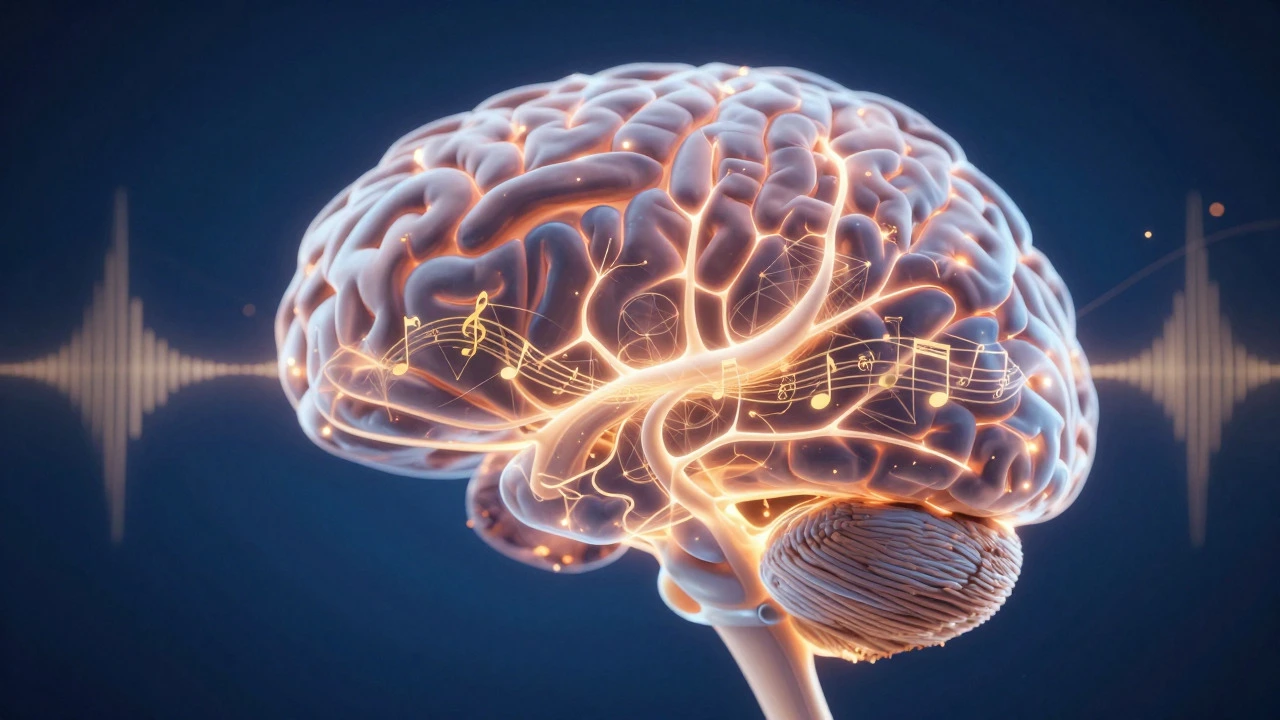
We often think of music as entertainment. But for centuries, practitioners of Hindustani and Carnatic traditions have treated sound as medicine. Now, modern neuroscience is catching up. Studies on neuroplasticity-the brain's ability to reorganize itself by forming new neural connections-suggest that complex auditory inputs can literally reshape our neural pathways. When we listen to structured, mathematically precise music, we aren't just hearing notes; we are engaging in a workout for our cognition.
The Mechanics of Raga and Neural Pathways
To understand how Raga (the melodic framework) affects the brain, we first need to look at what makes it different from Western scales. A Raga is more than a scale; it is a melodic entity with specific rules for ascent, descent, and ornamentation, designed to evoke a particular mood or time of day. This complexity forces the listener’s brain to work harder.
When you hear a simple pop song, your brain predicts the next note easily. It’s comfortable. But when you listen to a master performer navigating a complex Raga Yaman or Raga Bhairav, your brain has to constantly update its predictions. This process activates the prefrontal cortex, which handles attention and decision-making. Over time, this repeated engagement strengthens the neural circuits responsible for sustained focus and pattern recognition.
Research in auditory processing shows that musicians who practice intricate systems show increased gray matter density in areas related to motor control and auditory perception. For listeners, while the effect is less pronounced than for performers, regular exposure still promotes synaptic pruning-the elimination of weak neural connections-and strengthens the ones used frequently. Essentially, listening to Hindustani music trains your brain to handle complexity without getting overwhelmed.
Tala, Rhythm, and Cognitive Synchronization
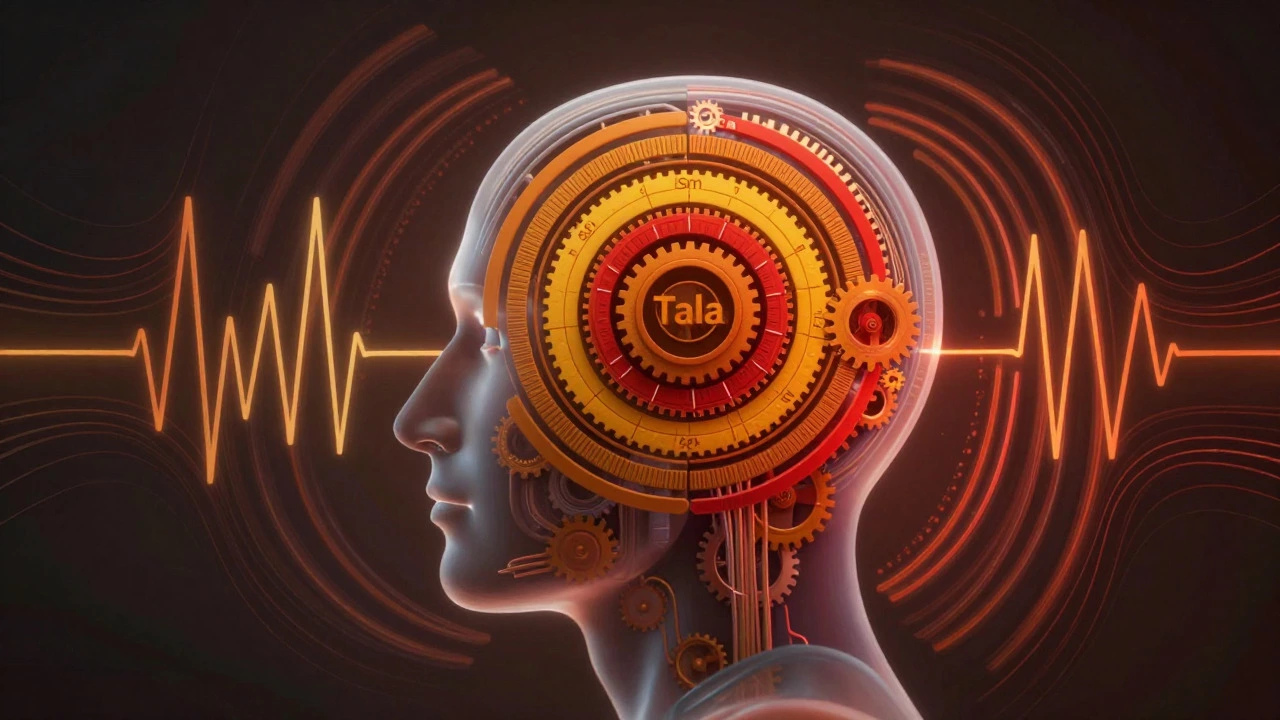
If melody is the soul of Indian classical music, rhythm is its skeleton. Tala refers to the rhythmic cycles that govern the timing of the music. These cycles can be incredibly complex, involving layers of beats that repeat over minutes or even hours. Engaging with these rhythms requires a high level of cognitive synchronization.
Consider the concept of Sam, the first beat of the cycle where all rhythmic patterns converge. Finding the Sam in a fast-paced Teental (16-beat cycle) or a dense Jhaptaal (10-beat cycle) requires intense concentration. This act of tracking multiple rhythmic layers simultaneously engages the cerebellum and the basal ganglia, parts of the brain responsible for timing and motor coordination.
This isn't just about tapping your foot. It’s about maintaining an internal clock that aligns with external stimuli. Studies on entrainment show that synchronized movement or mental tracking of rhythm can reduce stress hormones like cortisol. By forcing your brain to lock into these complex cycles, you create a state of flow that lowers anxiety and improves emotional regulation. The brain learns to find order in chaos, a skill that translates directly to daily life stress management.
| Musical Element | Brain Region | Cognitive Function Enhanced |
|---|---|---|
| Raga (Melody) | Prefrontal Cortex | Attention, Pattern Recognition, Emotional Processing |
| Tala (Rhythm) | Cerebellum & Basal Ganglia | Timing, Motor Coordination, Stress Reduction |
| Alap (Improvisation) | Hippocampus | Memory Formation, Creative Thinking |
| Shruti (Microtones) | Auditory Cortex | Fine Discrimination, Sensory Acuity |
Emotional Regulation Through Rasa Theory
Indian aesthetics rely heavily on the concept of Rasa, which translates roughly to "essence" or "flavor." In music, Rasa theory posits that specific ragas evoke specific emotional states in the listener, such as devotion, love, or peace. While Western psychology might call this "mood induction," the Indian tradition views it as a direct channel to the subconscious.
When you listen to a slow, meditative Raga Darbari Kanada, the minor tonality and slow tempo trigger the parasympathetic nervous system. This shifts your body from "fight or flight" to "rest and digest." Heart rate slows, blood pressure drops, and breathing deepens. This physiological change signals the brain to release neurotransmitters associated with calmness, such as serotonin and dopamine.
Conversely, energetic ragas performed during the morning or evening can stimulate alertness. This bidirectional influence means you can use music as a tool to regulate your emotional state intentionally. Instead of reacting to stress, you can preemptively wire your brain for resilience by choosing the right sonic environment. This is the core principle behind Nada Yoga, the yoga of sound, which suggests that vibration is the fundamental building block of reality and consciousness.
Memory, Learning, and Neurogenesis
One of the most promising areas of research involves memory enhancement. The human brain is wired to remember melodies better than spoken words. This is why children learn languages through songs. Indian classical music takes this further by embedding complex mathematical structures within memorable melodic phrases.
Learning to recognize and recall the nuances of a Thumri or a Dadra (light classical forms) exercises the hippocampus, the brain's memory center. Regular engagement with these forms has been linked to improved verbal memory and spatial reasoning. For older adults, this kind of cognitive stimulation can delay the onset of age-related cognitive decline.
Moreover, the improvisational nature of the music encourages creative problem-solving. Unlike sheet music, which provides a fixed path, Indian classical music requires the musician (and the attentive listener) to navigate possibilities in real-time. This flexibility fosters neurogenesis, the growth of new neurons, particularly in areas associated with learning and adaptation. You are not just consuming art; you are participating in a dynamic cognitive exercise.
Practical Application: Integrating Music Into Daily Life
You don’t need to be a trained musician to benefit from these neurological effects. However, passive background noise won’t cut it. To truly rewire your brain, you need active listening. Here is how to integrate Carnatic music or Hindustani music into your routine effectively:
- Morning Routine: Start your day with an upbeat morning raga like Raga Bilawal. The bright intervals help wake up the brain and set a positive tone for the day.
- Focus Sessions: During work or study, play instrumental performances of slower ragas. Avoid vocals if lyrics distract you. The steady rhythm helps maintain focus without overwhelming your working memory.
- Evening Wind-Down: Use calming ragas like Raga Shivranjani before bed. This signals to your brain that it’s time to relax, improving sleep quality.
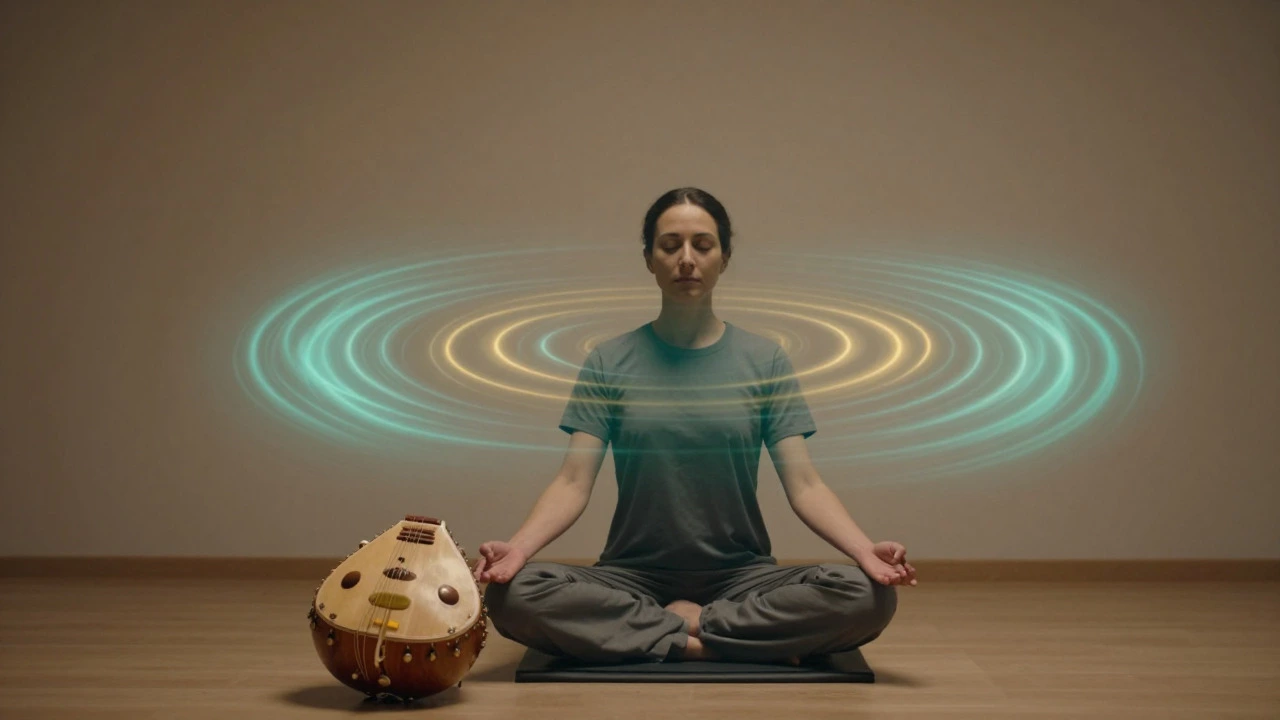
- Meditation: Incorporate drone instruments like the Tanpura into your meditation practice. The continuous harmonic background stabilizes your attention and reduces mind-wandering.
Consistency is key. Just as physical exercise requires regularity to build muscle, cognitive training through music requires consistent exposure to see lasting changes in neural structure. Aim for at least 20-30 minutes of focused listening daily.
Bridging Tradition and Modern Science
The intersection of ancient wisdom and modern neuroscience is fascinating. While traditional gurus spoke of Prana (life force) and energy centers, scientists talk about neural oscillations and brainwave coherence. Both descriptions point to the same outcome: a harmonized, balanced mind.
As we move forward, more studies will likely emerge quantifying these effects. We might see clinical applications for Raga Therapy in hospitals, using specific frequencies to aid recovery or manage pain. For now, the evidence is strong enough to suggest that embracing this rich cultural heritage offers more than aesthetic pleasure-it offers a pathway to a healthier, more resilient brain.
So, the next time you put on headphones or sit down for a concert, ask yourself: What am I feeding my brain? Choose wisely, and let the vibrations do their work.
Does listening to Indian classical music actually increase intelligence?
While it doesn't magically boost IQ scores overnight, it enhances cognitive functions like memory, attention, and pattern recognition. These improvements contribute to better overall mental agility and learning capacity over time.
What is the best time of day to listen to Indian classical music for brain benefits?
Traditional theory suggests specific ragas are tied to times of day. Morning ragas like Bilawal energize the brain, while evening ragas like Bhairavi promote relaxation. Aligning your listening with these natural rhythms can maximize the neurological impact.
Can Indian classical music help with anxiety and stress?
Yes. The slow tempos and predictable yet complex structures of many ragas activate the parasympathetic nervous system, lowering cortisol levels and promoting a state of calm. This makes it highly effective for stress management.
Is there a difference between Hindustani and Carnatic music in terms of brain impact?
Both traditions offer similar cognitive benefits due to their shared emphasis on raga and tala. However, Hindustani music often features more free-flowing improvisation (Alap), which may challenge predictive coding differently than the structured compositions (Kritis) common in Carnatic music.
How long does it take to notice changes in my brain from listening?
Neuroplasticity is a gradual process. Most people report feeling calmer or more focused after a few sessions. Structural changes in the brain, however, typically require consistent practice over several weeks or months to become significant.
Do I need to understand the language of the lyrics to get the benefits?
No. The primary neurological benefits come from the melodic and rhythmic structures, not the semantic meaning of the words. Instrumental versions or vocal pieces where you don't understand the language can still provide full cognitive and emotional benefits.
What is Nada Yoga and how does it relate to brain rewiring?
Nada Yoga is the yoga of sound. It uses the power of vibration to align the mind and body. By focusing on pure sound (like the Tanpura drone), practitioners aim to quiet mental chatter, leading to deeper states of awareness and neural coherence.
Can children benefit from listening to Indian classical music?
Absolutely. Early exposure to complex musical structures supports auditory development, language acquisition, and mathematical thinking. It helps build a robust foundation for cognitive skills in developing brains.