
Ayurvedic Meal Frequency Calculator
Find Your Ideal Meal Frequency
Answer these questions to determine your Ayurvedic meal frequency based on your dosha type and digestion.
How would you describe your digestion?
How do you typically feel in the morning?
How do you feel after eating?
What's your preferred meal size?
How does your body react to cold foods?
Your Recommended Meal Frequency
Vata Dosha Recommendations
Three meals with a small snack if needed. Your digestion can be irregular, so regular eating helps ground you. Avoid skipping meals and cold foods.
Pitta Dosha Recommendations
Three meals on time. Your digestion is strong, so you can handle larger meals. Avoid spicy snacks and eating late.
Kapha Dosha Recommendations
Two meals, with a light evening snack if needed. Your metabolism is slower, so less frequent meals help prevent sluggishness. Consider skipping breakfast if you feel sluggish in the morning.
Seasonal Adjustment Tip
Most people today eat three meals a day-breakfast, lunch, and dinner-without thinking twice. But if you ask an Ayurvedic practitioner, they might say that’s too much, or maybe even too little. The truth? Ayurveda doesn’t push a one-size-fits-all meal plan. It asks you to listen to your body, your environment, and your unique constitution. So how many meals a day does Ayurveda really recommend? The answer isn’t just a number-it’s a rhythm shaped by your dosha, your digestion, and the time of year.
Why Ayurveda Looks at Digestion First
Ayurveda doesn’t count meals. It counts digestive fire-called agni. If your agni is strong, you can handle more food. If it’s weak, even one meal can feel heavy. That’s why Ayurveda doesn’t tell you to eat three times a day because that’s what’s common. It tells you to eat when you’re truly hungry, and not before your last meal has fully digested.
Think of it like a campfire. If you keep throwing logs on it while it’s still smoldering, it’ll drown in smoke. Same with your body. Eating before your last meal is digested creates toxins-what Ayurveda calls ama. Ama leads to sluggishness, bloating, and long-term imbalances. So the real question isn’t ‘how many meals?’ It’s ‘is your body ready for the next one?’
The Three-Meal Standard: When It Works
For most healthy adults with balanced digestion, Ayurveda recommends three meals: breakfast, lunch, and dinner. But the timing matters more than the count.
- Breakfast should be light and eaten within two hours of waking. Think warm porridge, stewed apples, or a small bowl of kitchari. Avoid cold cereal or heavy toast.
- Lunch is your biggest meal. It should be eaten between 12 and 2 p.m., when the sun is highest and your digestive fire is strongest. This is when your body is best equipped to break down proteins, fats, and complex carbs.
- Dinner is the lightest. Eat it at least three hours before bedtime. A soup, steamed veggies, or dal with rice works well. Avoid fried foods, cheese, or heavy desserts.
This rhythm isn’t arbitrary. It follows the natural rise and fall of pitta dosha, the energy that governs digestion. Pitta peaks at noon-so lunch becomes your metabolic anchor.
Two Meals a Day? Yes, If It Fits Your Body
Many people in Ayurvedic traditions, especially in rural India, eat only two meals a day. This isn’t fasting-it’s intentional. It’s common among those with slower metabolisms, older adults, or people with excess kapha dosha (characterized by heaviness, sluggishness, and tendency to gain weight).
For kapha types, skipping breakfast can help. Waking up with a feeling of sluggishness? That’s ama building up. Delaying your first meal until mid-morning gives your body time to burn off overnight toxins. Lunch becomes the main meal. Dinner is light or skipped entirely.
A 2023 study published in the Journal of Ayurveda and Integrative Medicine tracked 120 adults with kapha-predominant constitutions who switched from three meals to two (lunch and a light evening snack). After 12 weeks, 78% reported better digestion, reduced bloating, and improved energy levels-without feeling hungry.
Four Meals? Only for Specific Cases
Four meals a day sounds excessive-but in Ayurveda, it’s not about quantity. It’s about need.
Children, pregnant women, athletes, and people recovering from illness often need more frequent, smaller meals. In these cases, Ayurveda suggests:
- Breakfast
- Mid-morning snack (like a handful of almonds or warm milk with cardamom)
- Lunch
- Evening snack (light soup or herbal tea with soaked raisins)
Notice: no heavy dinner. Even with four meals, the last one is always light and early. The goal isn’t to fill up-it’s to nourish without overwhelming.
What About Snacking?
Snacking between meals? Ayurveda says no-unless you’re truly hungry and your last meal was digested. Constant grazing keeps your agni weak. It’s like keeping a pilot light on all day-you never get a full flame.
But if you’re feeling shaky, dizzy, or irritable between meals, that’s not hunger. That’s blood sugar crashing from eating the wrong foods. Ayurveda fixes this by balancing your meals with complex carbs, healthy fats, and slow-digesting proteins-not by adding snacks.
Instead of reaching for a granola bar, try sipping warm water with lemon. Or chew a few fennel seeds. These reset your digestion without adding fuel.
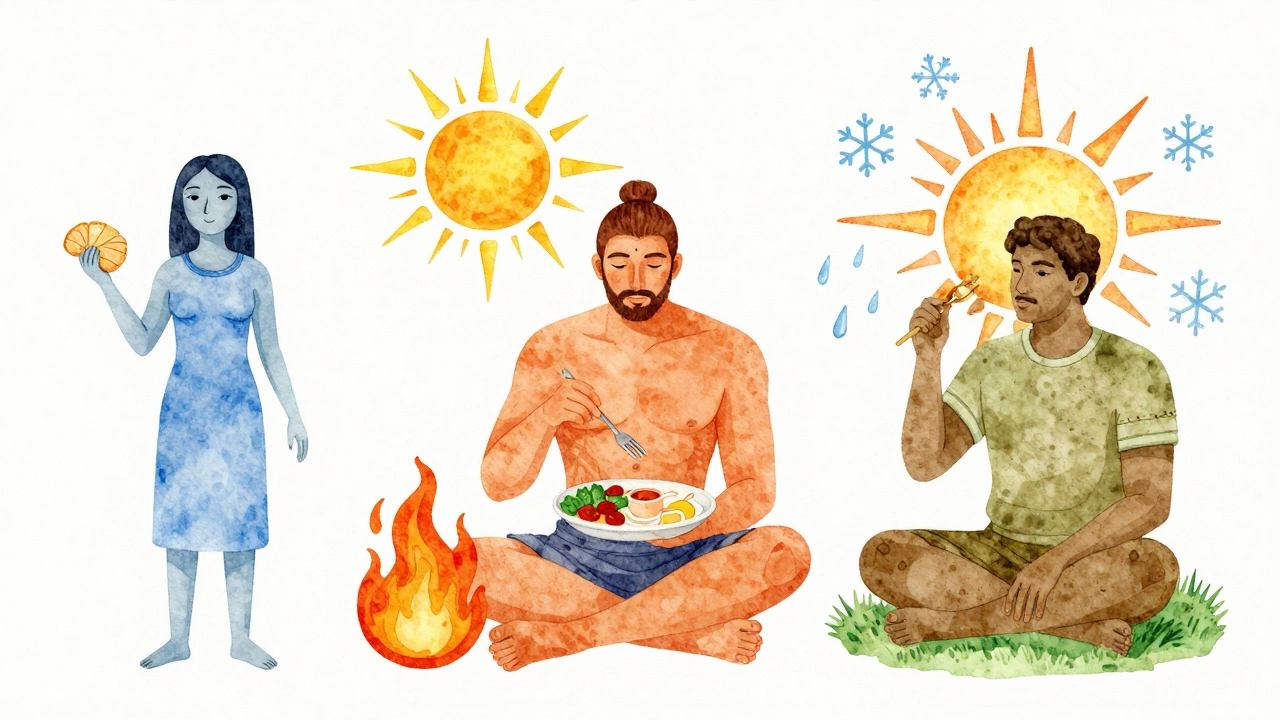
Your Dosha Dictates Your Meal Plan
There’s no universal number. Your ideal meal frequency depends on your dosha.
| Dosha | Best Meal Frequency | Why | What to Avoid |
|---|---|---|---|
| Vata | Three meals, with a small snack if needed | Prone to irregular digestion and low appetite. Needs regular fuel to stay grounded. | Skipping meals, cold foods, raw salads |
| Pitta | Three meals, on time | Strong digestion. Can handle larger meals. Irregular eating causes acidity. | Spicy snacks, skipping lunch, eating late |
| Kapha | Two meals, light dinner or none | Slow digestion. Feels full quickly. Skipping breakfast helps burn ama. | Heavy breakfasts, sweets, dairy after dinner |
If you don’t know your dosha, start with three meals. Pay attention to how you feel after eating. Do you feel energized? Or heavy and sleepy? That’s your body’s feedback.
Seasons Change the Rules Too
Ayurveda doesn’t treat the body like a machine that runs the same way all year. Your digestion changes with the seasons.
- Winter (Kapha season): Your agni is strongest. You can handle heavier meals. Two meals may be enough if you’re active.
- Summer (Pitta season): Digestion slows slightly. Stick to three light meals. Avoid oily foods.
- Monsoon (Vata season): Digestion weakens. Eat warm, cooked food. Three small meals with ginger tea between meals help.
Adjusting your meals to the season is just as important as adjusting them to your body type.

Signs You’re Eating Too Much-or Too Little
Here’s how to tell if your meal schedule is working:
- Too many meals: Constant hunger, bloating after eating, feeling sluggish after meals, weight gain, bad breath, coated tongue.
- Too few meals: Dizziness, irritability, low energy, cold hands and feet, difficulty concentrating, dry skin.
The sweet spot? You feel satisfied after eating. You don’t crave food between meals. You wake up without hunger pangs. And your digestion feels smooth-not rushed, not stuck.
Start Here: A Simple 7-Day Test
Try this if you’re unsure how many meals to eat:
- For seven days, eat only when you feel true physical hunger-not boredom, stress, or habit.
- Wait at least three hours after your last meal before eating again.
- Track how you feel: energy, digestion, mood, sleep.
- At the end of the week, ask: Do you feel better with two meals? Three? Did skipping breakfast help?
You don’t need a doctor or an Ayurvedic consultant to figure this out. Your body already knows. You just have to stop overriding it with routines that don’t fit.
Final Thought: It’s Not About the Number
Ayurveda isn’t about counting meals. It’s about honoring your body’s rhythm. Some people thrive on two meals. Others need three. A few-like growing teens or laborers-might need four. The right number is the one that leaves you feeling clear, light, and energized-not stuffed, tired, or anxious.
Forget what you’ve been told. Listen to your hunger. Respect your digestion. Eat when your body asks-not when the clock says so.
Is it okay to skip breakfast in Ayurveda?
Yes, especially if you have a kapha constitution or feel sluggish in the morning. Ayurveda recommends skipping breakfast if you’re not genuinely hungry. Your body may still be digesting your last meal. Waiting until mid-morning gives your digestive fire time to reset. But if you feel weak or dizzy without breakfast, eat a light, warm meal like porridge or stewed fruit.
Can I eat dinner after 8 p.m.?
Ayurveda advises against eating dinner after 7 or 8 p.m. because digestion slows down at night. Your body needs energy to repair and rest, not to process food. Eating late can lead to poor sleep, acid reflux, and ama buildup. If you must eat late, keep it under 200 calories and stick to warm, easy-to-digest foods like soup or herbal tea with soaked almonds.
Does Ayurveda recommend fasting?
Yes, but not in the modern sense. Ayurveda supports occasional light fasting-like skipping one meal or eating only warm liquids for a day-to reset digestion. This is called langhana. It’s not about starving. It’s about giving your body a break from digestion so it can focus on detoxification. Fasting is best done in the spring or during seasonal transitions, and only if you’re not under stress or ill.
What should I eat between meals if I’m hungry?
Ayurveda discourages snacking. If you’re truly hungry between meals, it means your last meal wasn’t balanced or you’re eating too often. Instead of reaching for a snack, drink warm water with lemon or chew a few fennel or cumin seeds. These stimulate digestion and reduce cravings. If hunger persists, your meals may lack healthy fats or protein-adjust your main meals, not add snacks.
Is three meals a day the only correct way?
No. Three meals is common, but not universal. Ayurveda is personalized. Two meals work better for kapha types. Three are ideal for pitta. Vata types may need a small snack. Children, pregnant women, and athletes often need four. The right number is the one that supports your energy, digestion, and well-being without forcing you into a rigid schedule.
If you want to deepen your practice, try tracking your meals for a week. Note what you ate, when, and how you felt afterward. You’ll start seeing patterns-your body’s own guide to eating the Ayurvedic way.