Indian Eye Contact Etiquette Checker
Select the parameters of your interaction to receive culturally appropriate guidance for eye contact in India.
Recommended Behavior:
Pro Tip:
Have you ever locked eyes with someone on the Mumbai local train or in a Delhi market and felt an immediate wave of discomfort? You aren't alone. For many travelers and expats coming from Western backgrounds, where direct eye contact is often synonymous with honesty and confidence, navigating Indian social etiquette can feel like walking through a minefield of unspoken rules. The short answer to whether eye contact is rude in India is: it depends entirely on who you are looking at.
In India, non-verbal communication carries heavy weight. A glance isn't just a glance; it’s a signal of hierarchy, gender dynamics, and regional tradition. Misreading these signals doesn’t just make you awkward-it can inadvertently cause offense. Understanding the nuance between respectful attention and intrusive staring is key to building genuine connections here.
The Hierarchy of Gaze: Age and Status Matter
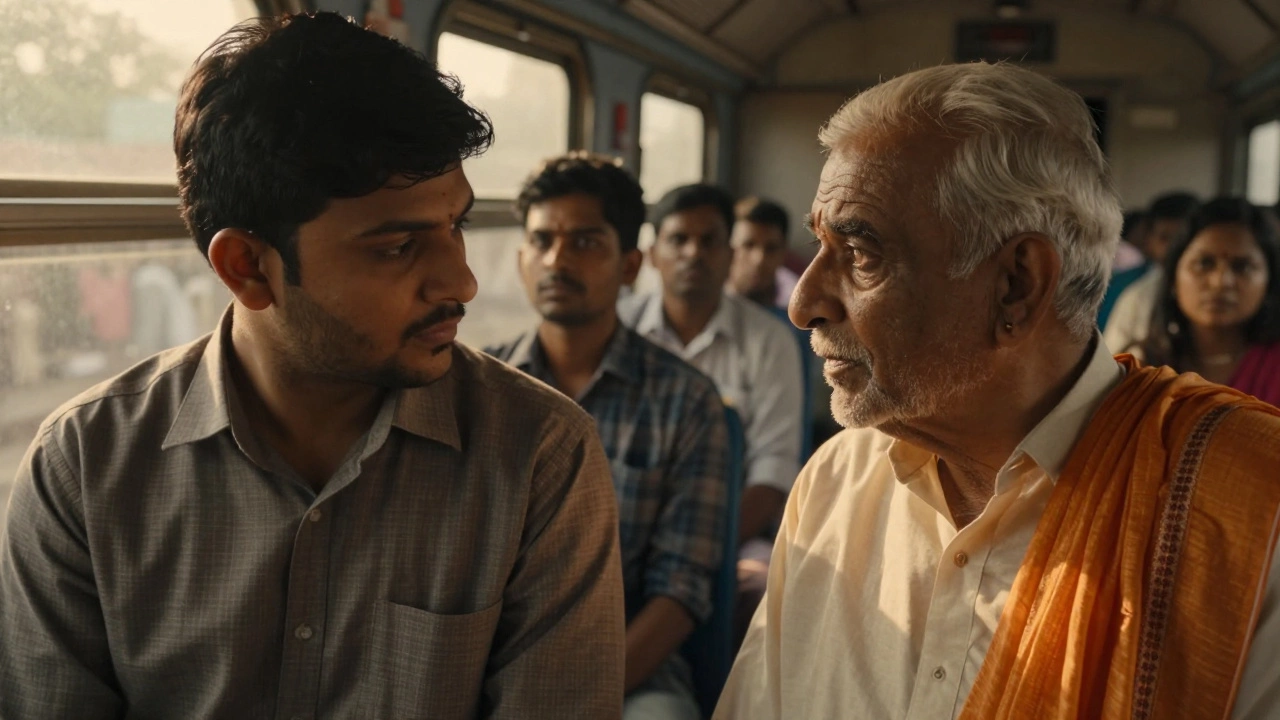
The most critical rule in Indian non-verbal communication involves age and status. In a culture deeply rooted in respect for elders and authority figures, prolonged direct eye contact with someone older or more senior than you is often interpreted as defiance or disrespect. This isn't about shyness; it's a deliberate act of humility.
If you are speaking to your boss, a teacher, or an elder relative, maintaining steady eye contact might be seen as challenging their authority. Instead, Indians often lower their gaze slightly while listening. This gesture signals that you are receiving their wisdom with reverence. When they speak, you look at them; when they pause, you might briefly look down or away. It’s a subtle dance that acknowledges their position in the social hierarchy.
- With Elders: Keep eye contact soft and intermittent. Lowering your eyes shows deference.
- With Authority Figures: Avoid intense staring. Nodding while looking slightly downward is safer.
- With Peers: Direct eye contact is acceptable and encouraged to show engagement.
Gender Dynamics and Social Comfort
Gender plays a massive role in how eye contact is perceived. Traditional Indian society has strict boundaries regarding interactions between men and women who are not related. While this is changing rapidly in urban centers like Bangalore and Gurgaon, conservative norms still hold sway in many parts of the country.
A man should generally avoid prolonged eye contact with a woman he does not know. It can be interpreted as aggressive, flirtatious, or even threatening. Conversely, a woman may also avert her gaze from a stranger male to protect her privacy and safety. This isn't rudeness; it's a protective social mechanism. In professional settings, however, these rules relax significantly. Business meetings in corporate India follow global standards where eye contact denotes professionalism and confidence.
For women interacting with other women, or men with other men, the rules are much looser. Friends and colleagues can maintain strong eye contact without issue. The context-whether it's a casual street encounter or a formal office meeting-dictates the intensity of the gaze.
Regional Variations: North vs. South vs. West
India is not a monolith. What works in the bustling streets of Mumbai might fall flat in the quiet villages of Kerala. Regional cultures have distinct approaches to body language.
| Region | General Attitude | Key Nuance |
|---|---|---|
| North India (e.g., Delhi, Punjab) | More reserved with strangers | Strong emphasis on hierarchical respect; less eye contact with superiors. |
| West India (e.g., Maharashtra, Gujarat) | Balanced | Urban areas are quite open; rural areas prefer modesty in gaze. |
| South India (e.g., Tamil Nadu, Kerala) | Formal and polite | Often uses hand gestures alongside speech; eye contact is moderate. |
| East India (e.g., West Bengal) | Intellectual and expressive | Direct eye contact is common in debates and intellectual discussions. |
In the North, particularly in states like Punjab and Uttar Pradesh, the concept of izzat (honor) dictates behavior. Looking a superior in the eye for too long can be seen as trying to "read" them or challenge their honor. In contrast, East India, especially Bengal, has a strong literary and intellectual tradition. Here, direct eye contact during conversation is often seen as a sign of intelligence and engagement. You’ll find people locking eyes passionately during political or philosophical debates in Kolkata cafes.
When Is Staring Actually Okay?
Not all eye contact is negative. There are specific contexts where looking someone in the eye is expected and appreciated. One such instance is during emotional exchanges. If you are comforting a friend who is grieving, or sharing a moment of joy, direct eye contact conveys empathy and sincerity. In these moments, the hierarchy dissolves, and human connection takes precedence.
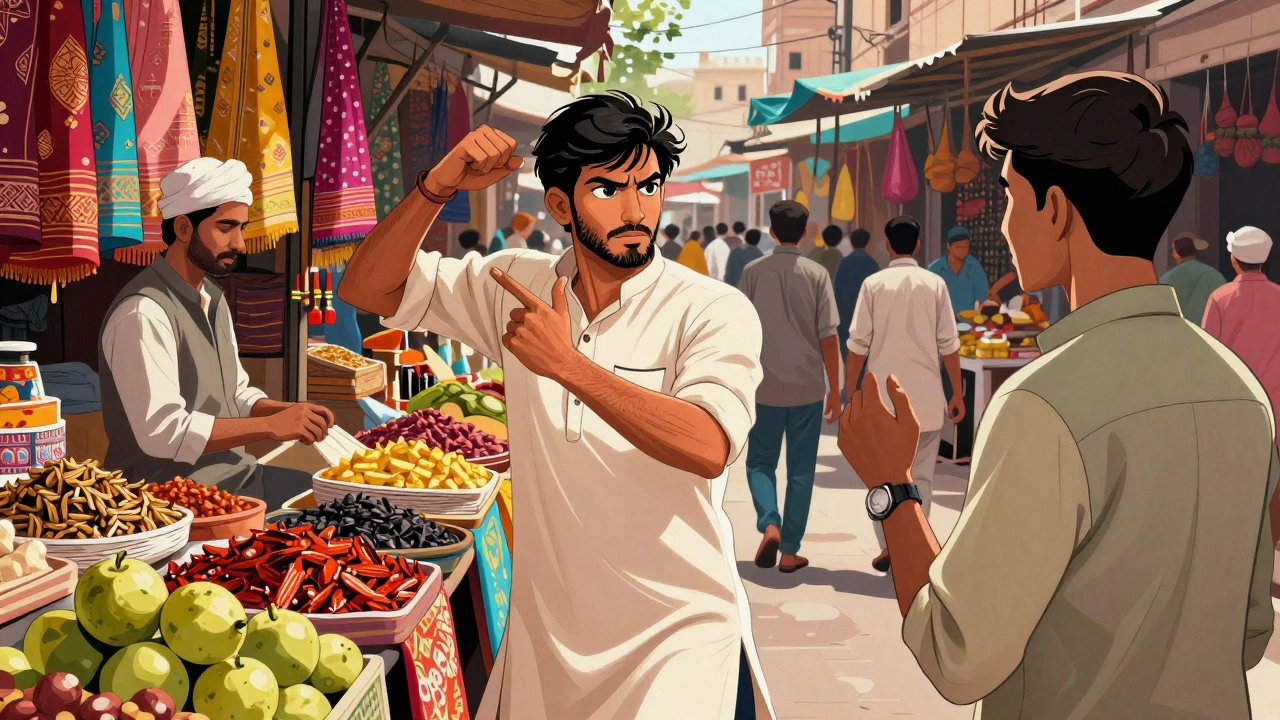
Another area is commerce. When bargaining in a market, such as Chandni Chowk in Delhi or Crawford Market in Mumbai, eye contact is part of the negotiation strategy. Sellers will use intense gazes to project confidence in their price, while buyers might break eye contact to feign disinterest. It’s a theatrical performance where the eyes play a leading role. However, this is consensual within the context of the transaction.
Also, consider the setting. In a crowded public transport system, avoiding eye contact is actually the norm. Everyone is trying to carve out personal space in a physically invasive environment. Making eye contact with a stranger on a packed bus can be seen as an invasion of their bubble. Here, looking away is a courtesy, not a sign of disrespect.
The Role of the "Indian Head Wobble"
You cannot talk about Indian non-verbal communication without mentioning the famous head wobble. Often mistaken for confusion by foreigners, this side-to-side tilt of the head is a versatile gesture that can mean yes, no, maybe, I understand, or I’m listening. Interestingly, the head wobble often accompanies eye contact patterns. When someone is nodding/wobbling while looking at you, they are actively engaged. If they stop wobbling and look away, they might be distracted or disagreeing silently.
Combining eye contact with the head wobble creates a complex layer of meaning. A slight eye contact followed by a wobble can mean "I hear you, but let me think." Breaking eye contact completely while wobling might indicate hesitation. Pay attention to the combination of these two signals rather than just the eyes alone.

Practical Tips for Visitors and Expats
If you are visiting India or working there, here are some actionable tips to navigate these waters smoothly:
- Read the Room: Observe how locals interact before engaging. Are they looking each other in the eye? Are they looking down?
- Soften Your Gaze: Instead of a piercing stare, use a softer, wider focus. This reduces the intensity and makes the interaction feel less confrontational.
- Break Contact Naturally: Look away occasionally to give the other person space. Continuous staring can feel predatory.
- Respect Gender Boundaries: Be mindful of gender dynamics, especially in smaller towns or traditional families.
- Use Smiles: A smile can soften the impact of eye contact and make it friendly rather than interrogative.
Remember, intent matters. If your eye contact comes from a place of curiosity and respect, most Indians will appreciate the effort to connect. They are generally forgiving of cultural missteps if they sense goodwill. However, being aware of these nuances shows that you value their cultural heritage and social structures.
Modern Shifts in Urban India
It is important to note that India is evolving. In metropolitan hubs like Hyderabad, Pune, and Chennai, younger generations are increasingly adopting global communication styles. In tech parks and startups, direct eye contact is standard practice. Young professionals view it as a sign of transparency and leadership. The rigid hierarchies of the past are loosening, especially among those who work in international environments.
However, this shift is not uniform. Even in cities, family gatherings and religious ceremonies revert to traditional norms. A young software engineer might maintain strong eye contact with his CEO but will lower his gaze when speaking to his grandmother. Context remains king. Always adjust your behavior based on the specific situation and the people involved.
Is it rude to look a stranger in the eye in India?
Not necessarily rude, but it can be uncomfortable. In public spaces like buses or markets, avoiding eye contact is common to respect personal space. Prolonged staring at strangers, especially across genders, can be perceived as aggressive or inappropriate.
Why do Indians look down when speaking to elders?
Looking down is a sign of respect and humility. It acknowledges the elder's higher status in the social hierarchy and shows that the speaker is listening with deference rather than challenging their authority.
Can I maintain eye contact during business meetings in India?
Yes, in modern corporate settings, eye contact is expected and valued as a sign of confidence and honesty. However, be mindful of seniority levels; you may need to soften your gaze when addressing very senior executives or older clients.
What does the head wobble mean with eye contact?
The head wobble combined with eye contact usually indicates active listening, agreement, or understanding. It is a positive non-verbal cue that the person is engaged in the conversation and processing what you are saying.
How does eye contact differ between rural and urban India?
Urban areas tend to have more relaxed norms, influenced by global business practices and diverse populations. Rural areas often adhere more strictly to traditional hierarchies and gender roles, making indirect gaze more common and respectful.