Indian Culture Classification Evaluator
Explore Cultural Misclassification
Select a cultural element to see how it's often mislabeled versus its true significance. This tool reveals how colonial thinking distorted India's living cultural fabric.
Select a cultural element to see the analysis
People often ask if India is high culture or low culture-as if the entire country can be squeezed into one label. That’s like asking if the ocean is deep or shallow. It’s both. And neither. India doesn’t fit into Western boxes built for museums and opera houses. Its culture doesn’t live behind velvet ropes. It lives in the street, the temple, the kitchen, the field, and the family gathering. The idea that Indian culture can be split into ‘high’ and ‘low’ is a colonial leftover that still fools people today.
Where Did the ‘High’ and ‘Low’ Labels Come From?
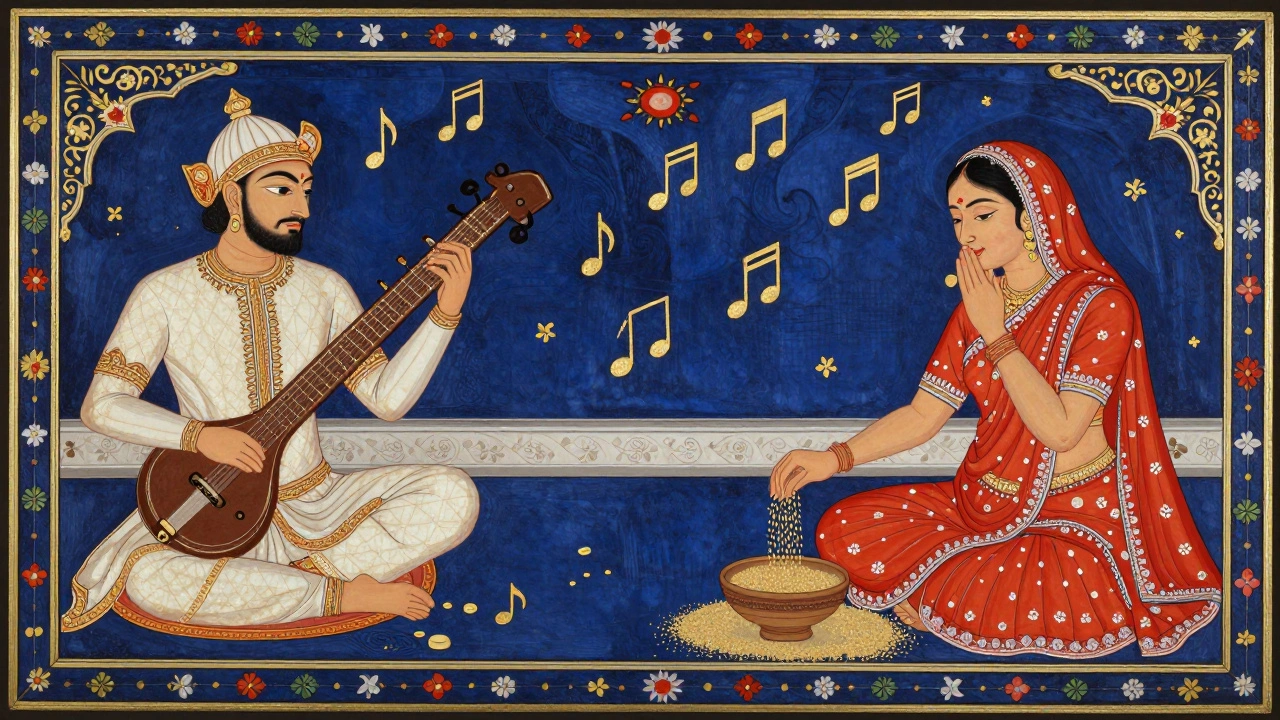
The terms ‘high culture’ and ‘low culture’ were invented in 19th-century Europe to rank art forms. ‘High culture’ meant opera, classical music, fine painting, and literature written in Latin or Greek. ‘Low culture’ was folk songs, street theater, crafts, and rituals-anything ordinary people did. When British colonizers came to India, they applied the same system. They admired Sanskrit texts, Mughal miniatures, and classical dance forms like Bharatanatyam. They called these ‘high.’ But they dismissed village puppet shows, tribal drumming, street food traditions, and temple festivals as ‘low’-even though millions lived by them every day.
The truth? India never had this divide. In ancient India, art wasn’t separated from life. The same sculptor who carved the intricate carvings at Khajuraho also made clay toys for children. The same musician who played ragas in royal courts also sang folk ballads at harvest fairs. The distinction was never about quality-it was about who got to write the history.
What Gets Called ‘High Culture’ in India?
Today, when people say ‘high culture’ in India, they usually mean:
- Sanskrit literature like the Upanishads, Manusmriti, and epics like the Mahabharata and Ramayana
- Classical dance forms: Bharatanatyam, Kathak, Odissi, Kuchipudi
- Indian classical music: Hindustani and Carnatic traditions with ragas and talas
- Mughal and Rajput miniature paintings
- Temple architecture like those at Konark, Meenakshi, or Khajuraho
These are celebrated in universities, government festivals, and UNESCO lists. They’re preserved in institutions, taught in schools, and funded by the state. They’re the face of India’s cultural identity on the global stage.
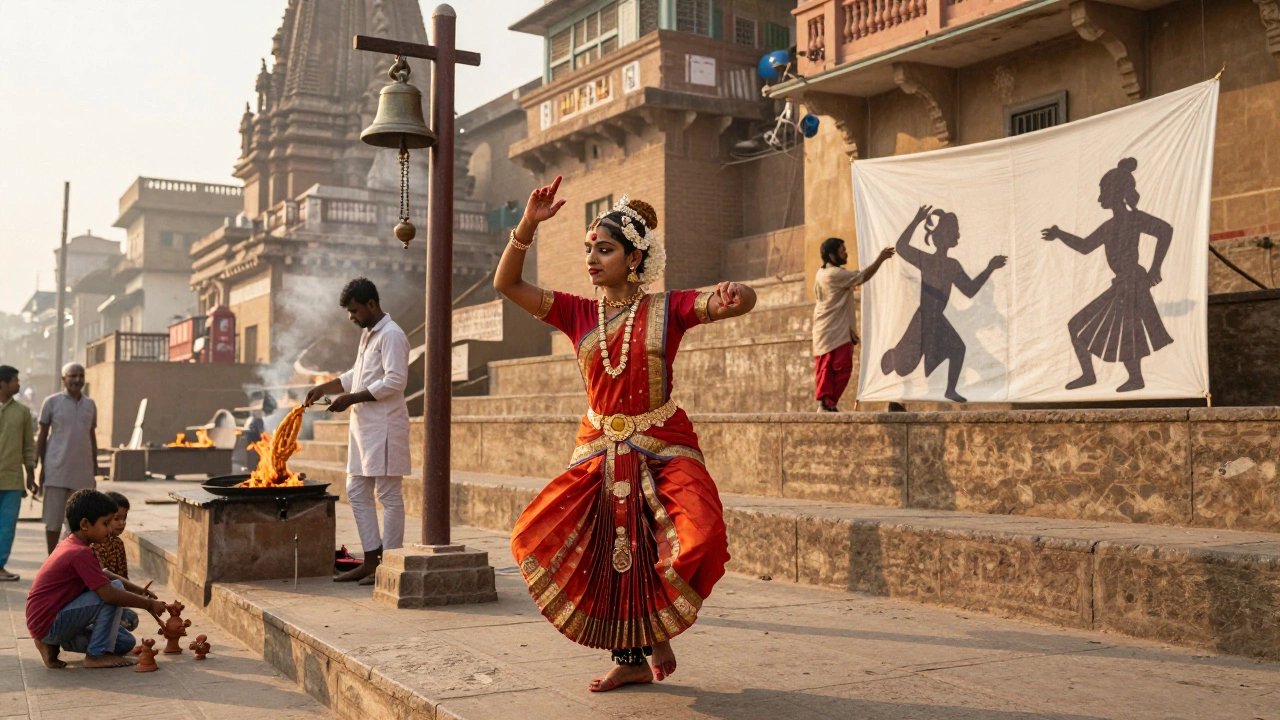
But here’s what’s missing from that list: the women who sing lullabies while grinding grain in rural Uttar Pradesh. The potters of Khurja who shape clay with their bare hands and fire it in open pits. The street performers in Varanasi who tell stories from the Puranas using shadow puppets. The fishermen’s songs off the Kerala coast that change with the monsoon. These aren’t ‘low’-they’re the living roots of what we call ‘high.’
What Gets Called ‘Low Culture’-And Why It’s Wrong
‘Low culture’ in India usually means:
- Folk theater like Bhaona (Assam), Yakshagana (Karnataka), or Jatra (West Bengal)
- Local festivals like Holi in Barsana, Pongal in Tamil Nadu, or Bhogali Bihu in Assam
- Street food traditions: vada pav in Mumbai, pani puri in Delhi, jalebi in Lucknow
- Handicrafts: Warli painting, Madhubani art, Bidriware, Kalamkari
- Oral storytelling, folk songs, and tribal rituals
These are often dismissed as ‘primitive’ or ‘unrefined.’ But look closer. Warli painting uses only white pigment on mud walls-yet it encodes centuries of cosmology. Madhubani art, once painted only by women in Bihar’s homes, now hangs in the Louvre. Pongal isn’t just a harvest festival-it’s a ritual that connects farming cycles to cosmic time. The spice blends in a street vendor’s chaat? They’re based on Ayurvedic principles passed down through generations.
These aren’t ‘low.’ They’re dense with meaning. They’re not less sophisticated-they’re just less documented. And that’s because they weren’t written by kings or scholars. They were lived by ordinary people.
The Real Divide: Power, Not Culture
The real problem isn’t that India has high and low culture. The problem is that power decided which culture gets counted.
During colonial rule, British administrators and missionaries labeled indigenous practices as ‘superstitious’ or ‘backward’ to justify control. After independence, India’s elite-many educated in English schools-kept using the same framework. They promoted ‘high culture’ as national identity while sidelining the rest. Even today, state-sponsored cultural programs favor classical dance over folk, Sanskrit over regional dialects, and temple architecture over village shrines.
But culture doesn’t care about status. It survives in the cracks. In 2023, a study by the Indian Council of Social Science Research found that over 72% of rural households still practice some form of folk art or ritual daily. In urban centers, young people are reviving tribal music, rediscovering forgotten crafts, and cooking ancestral recipes they learned from their grandmothers.
There’s no hierarchy here. Only different ways of knowing.
India’s Culture Is One Big, Living Network
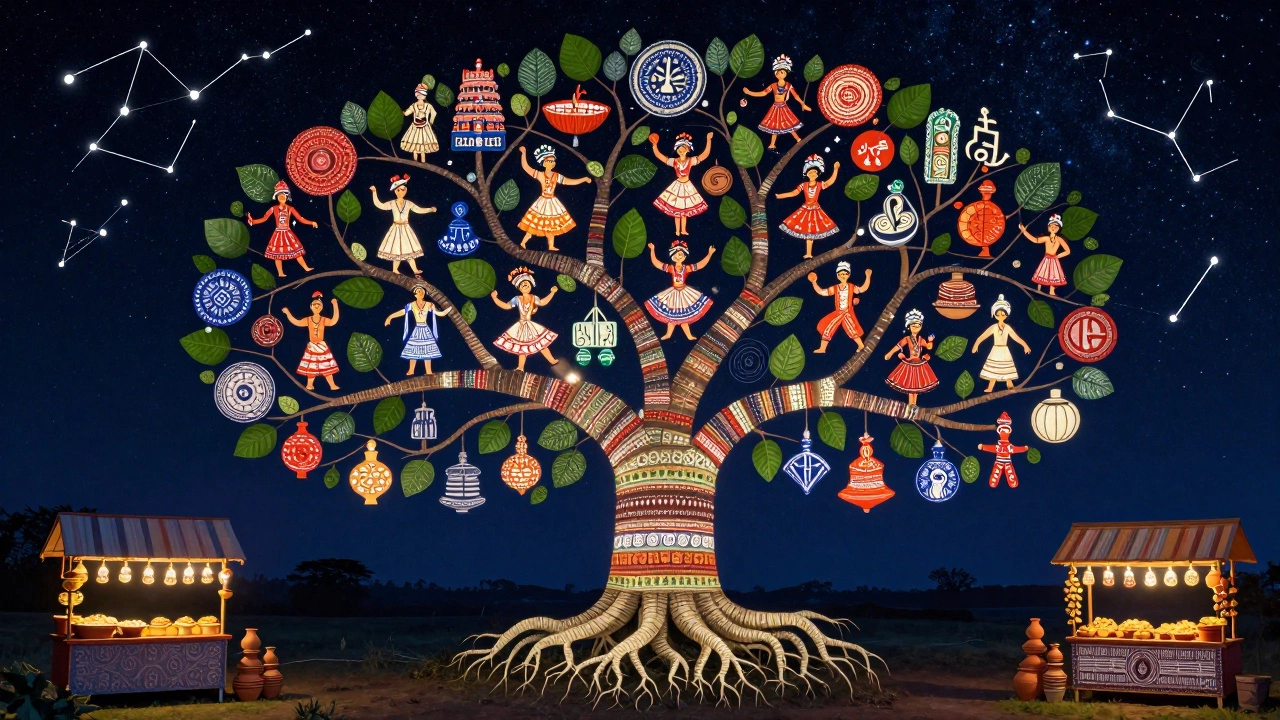
Think of Indian culture like a tree. The classical arts? They’re the branches-visible, admired, studied. But the roots? They’re the folk traditions, the oral histories, the daily rituals. Without the roots, the branches die.
Classical music draws from folk scales. Bharatanatyam evolved from temple dances performed by devadasis. The rhythms in Bollywood songs come from Bhangra and Dandiya. Even yoga, often sold as a ‘high’ spiritual practice, grew from ascetic traditions in villages and forests.
There’s no clean line between what’s elite and what’s everyday. A woman in Odisha singing a folk song to calm her child? That’s the same melodic structure used in Odissi music. A street vendor in Jaipur making jalebi? He’s using fermentation techniques documented in 12th-century texts. A tribal elder in Chhattisgarh telling a creation myth? That story shares themes with the Rigveda.
India’s culture isn’t a ladder. It’s a web. Every thread matters.
Why This Myth Still Hurts
Believing in ‘high’ and ‘low’ culture does real damage. It makes people feel ashamed of their roots. A girl from a rural village might hide that she knows a folk song because she’s told it’s ‘not sophisticated.’ A craftsman might stop making hand-painted pottery because his work isn’t valued in galleries. Families stop speaking dialects because they’re labeled ‘uneducated.’
It also distorts tourism. Visitors come to India expecting ‘high culture’-Taj Mahal, classical dance, yoga retreats. They miss the real magic: the morning aarti on the Ganges where fishermen join the chant, the clay idols made by children during Durga Puja, the songs sung by tea stall workers in the Himalayas.
When we call something ‘low,’ we’re not judging the art. We’re judging the people who made it.
The Future Isn’t High or Low-It’s Together
Things are changing. Young artists in Bengaluru are blending Kalaripayattu with hip-hop. Designers in Chennai are using Madhubani patterns on sustainable fashion. Filmmakers are documenting folk singers before they’re gone. Apps now record tribal languages. Universities are hiring folk artists as visiting professors.
The next generation doesn’t care about the old labels. They see culture as something alive, something shared. They know that the same hands that weave a Banarasi silk sari also make baskets for grain. That the same voice that sings a Carnatic raga also hums a lullaby in Tamil.
India’s culture isn’t high or low. It’s whole. And it’s still growing.
Is Indian classical music considered higher than folk music in India?
Yes, in official circles-universities, government awards, media-it’s treated that way. But that’s a legacy of colonial thinking, not truth. Folk music is older, more widespread, and more diverse. Many classical ragas evolved from folk melodies. Today, artists like Anoushka Shankar and Darshan Raval blend both, proving the divide is artificial.
Do Indians themselves believe in the high vs. low culture divide?
Many older generations, especially those educated under British systems, still use these terms. But younger Indians-especially in cities-are rejecting them. Surveys show that 68% of Indians under 30 say their village traditions are just as important as classical arts. They’re proud of both.
Why is street food sometimes called ‘low culture’?
Because it’s messy, cheap, and made by people without formal training. But street food in India carries centuries of culinary science. The fermentation in idli batter, the spice blends in chaat masala, the use of turmeric and cumin for digestion-all come from Ayurvedic knowledge passed through generations. Calling it ‘low’ ignores its complexity.
Can folk art be as valuable as classical art?
Absolutely. Madhubani paintings now sell for over $5,000 in international auctions. Warli art is used in global fashion collections. The difference isn’t value-it’s access. Classical art has institutional backing. Folk art has community memory. Both are equally rich.
Is the high vs. low culture debate unique to India?
No. Similar divides exist in Mexico (folk vs. muralism), Japan (Noh theater vs. folk festivals), and Nigeria (Yoruba classical music vs. street drumming). But India’s version is especially deep because of its colonial history and the scale of its diversity. The myth was imposed, but the reality has always been far richer.