Khayal: The Soul of North Indian Classical Vocal Music
When you hear a singer weave long, floating notes into sudden bursts of speed and emotion, you’re listening to khayal, a dominant form of Hindustani classical vocal music that prioritizes improvisation and personal expression. Also known as khyal, it’s not just a style—it’s a living conversation between the singer, the raga, and the audience. Unlike older forms like dhrupad, which stick to rigid structures, khayal gives the performer freedom to explore, repeat, and reshape melodies in real time. This freedom is what makes it so powerful—and why it became the most popular vocal tradition across North India by the 18th century.
Khayal doesn’t exist in a vacuum. It’s shaped by gharanas, distinct musical lineages passed down through generations, each with its own phrasing, ornamentation, and emotional emphasis. The Gwalior gharana is known for clarity and balance, the Agra gharana for bold, dramatic delivery, and the Kirana gharana for slow, meditative note development. These aren’t just schools—they’re families of sound, each preserving unique ways of breathing life into a raga. Behind every khayal performance is a lineage of teachers and students who spent decades mastering the space between notes, the pause before the climax, the whisper that carries more weight than a shout.
Khayal also connects deeply to raga, the melodic framework that defines mood, time of day, and even season in Indian music. A raga isn’t a scale—it’s a world. The raga Yaman might evoke dusk, while Bhairavi brings morning’s quiet stillness. A khayal singer doesn’t just sing notes—they tell a story with them. And that story changes every time. No two performances are alike, because the singer’s mood, the audience’s energy, even the weather can shift how the raga unfolds. This is why khayal isn’t performed for background noise—it’s listened to with full attention.
Today, khayal still thrives—not just in concert halls in Delhi or Mumbai, but in living rooms, radio studios, and YouTube videos watched by students from Tokyo to Toronto. It’s the foundation for many modern Indian vocalists, even those who blend it with pop or jazz. You’ll hear its influence in the long, sustained notes of playback singers, the improvisational flair in fusion bands, and the emotional depth of devotional songs. If you’ve ever been moved by a single sustained note that seemed to hang in the air longer than it should, you’ve felt khayal.
Below, you’ll find articles that explore khayal’s roots, its most celebrated singers, how it compares to other Indian styles, and why it remains one of the most expressive art forms in the world. Whether you’re new to Indian music or have been listening for years, these pieces will help you hear it deeper.
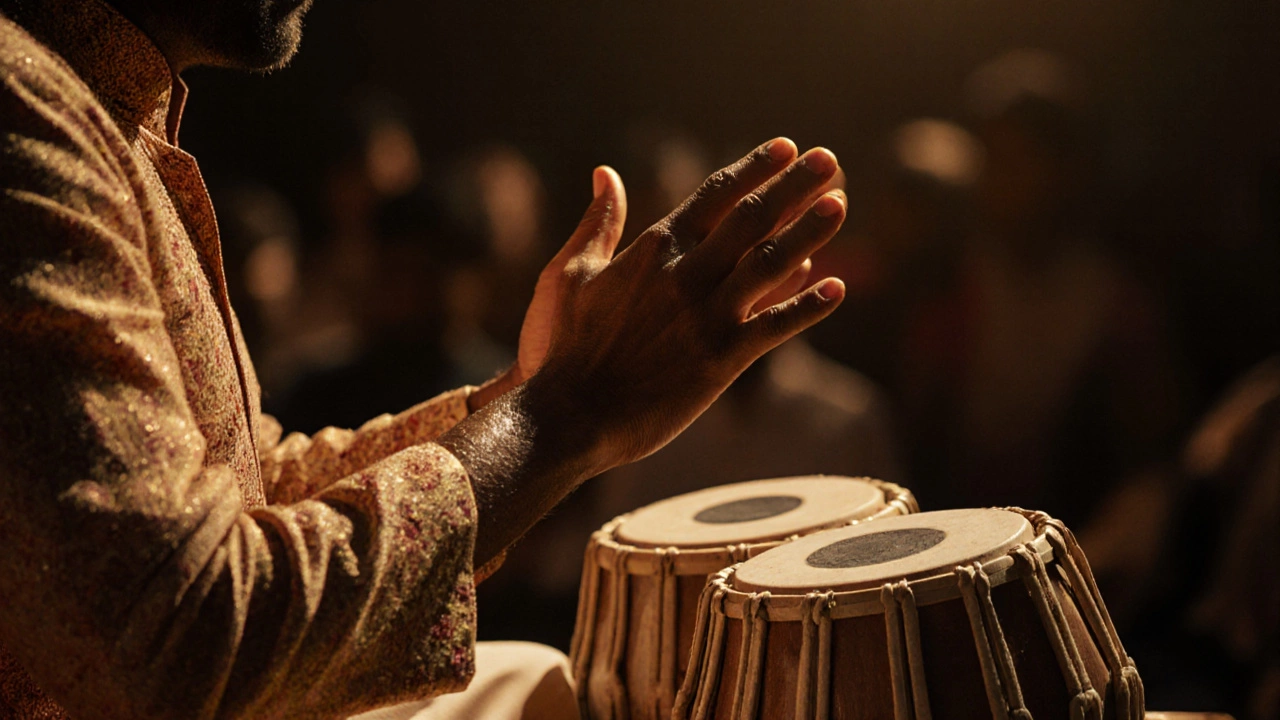
What Is Tali in Indian Classical Music? Understanding the Rhythmic Anchor
Tali is the first beat in Indian classical music's rhythmic cycles, acting as the anchor that structures improvisation and connects performer with audience. It's the heartbeat of tala, distinct from Western downbeats.
Read more