Khyal: The Soul of Hindustani Classical Vocal Music
When you hear a singer stretch a single note for minutes, weaving emotion into every microtone, you’re listening to Khyal, a dominant form of North Indian classical vocal music that prioritizes improvisation and emotional expression over rigid structure. Also known as Khayal, it’s not just a style—it’s a conversation between the singer, the raga, and the audience. Unlike older forms like Dhrupad, which follow strict rules, Khyal gives space for the artist to explore, play, and reveal their inner world. It’s the music you hear in concert halls in Delhi, on radio stations in Kolkata, and in quiet homes where grandparents still hum ragas after dinner.
Khyal emerged in the 13th century but truly took shape under Mughal patronage, blending Persian poetic forms with Indian melodic systems. It’s built on two main parts: the slow-paced Vilambit Khyal, where the singer unfolds the raga with deep, meditative detail, and the faster Drut Khyal, where rhythm and ornamentation explode in dazzling patterns. The singer doesn’t just sing the words—they become the raga itself. Instruments like the harmonium and tabla don’t accompany; they respond, challenge, and mirror the voice. This is why Khyal is called the most expressive form of Indian classical music—it’s not about perfection, it’s about truth.
What makes Khyal unforgettable are the voices that shaped it: legends like Amir Khusrau, who’s often credited with its early form, and later giants like Ustad Bade Ghulam Ali Khan and Begum Akhtar. Their recordings still move people today because they didn’t just sing notes—they told stories of love, longing, and loss. You’ll find Khyal alive in festivals like the Sawai Gandharva Bhimsen Mahotsav, in radio broadcasts during monsoon evenings, and in the daily practice of students who spend years just learning how to hold one note without shaking.
What you’ll find in the posts below isn’t just a list of articles—it’s a window into how Khyal connects to deeper threads of Indian culture: the spiritual weight of ragas, the discipline behind improvisation, the regional variations that make each singer’s voice unique, and how this ancient art survives in a digital age. Some posts explore its links to other forms like Thumri or Bhajan. Others look at how modern singers balance tradition with innovation. There are stories of teachers, of forgotten techniques, and of audiences who still sit silent for ten minutes just to hear a single note fade away. This is more than music. It’s memory, identity, and soul, sung out loud.
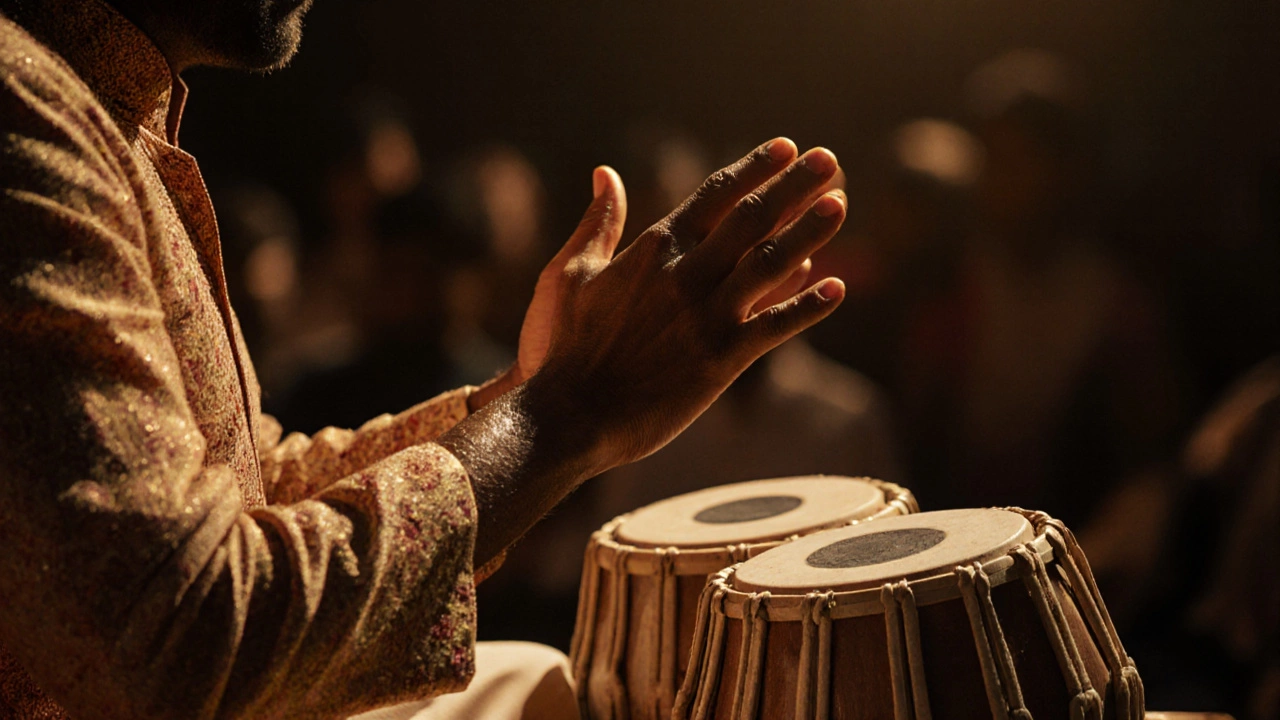
What Is Tali in Indian Classical Music? Understanding the Rhythmic Anchor
Tali is the first beat in Indian classical music's rhythmic cycles, acting as the anchor that structures improvisation and connects performer with audience. It's the heartbeat of tala, distinct from Western downbeats.
Read more