Taal: Understanding Rhythm in Indian Music and Culture
When you hear the steady beat of a tabla in a classical concert, or the clapping during a temple ritual, you're experiencing taal, the structured rhythmic cycle that organizes time in Indian music. Also known as tala, it’s not just a beat—it’s the heartbeat of performance, prayer, and dance across India. Unlike Western time signatures that repeat in predictable bars, taal cycles can stretch from 3 to 108 beats, each with its own name, feel, and emotional weight. A single taal like teentaal (16 beats) can carry a whole raga, while jhaptal (10 beats) shifts the energy entirely. This isn’t theory—it’s lived experience. In Tamil Nadu, temple drummers keep taal for daily pujas. In Bengal, Durga Puja dancers move in sync with ektaal. Even in Bollywood, the most popular songs are built on taal patterns that make you tap your foot without thinking.
Taal doesn’t exist in isolation. It’s tied to Indian classical music, a system where melody (raga) and rhythm (taal) are inseparable. A vocalist won’t sing a raga without matching it to the right taal—just like you wouldn’t wear a sari to a funeral. The percussionist, or tabla player, isn’t just keeping time; they’re conversing with the lead musician, improvising within the cycle’s structure. And then there’s percussion, the instruments that give taal its voice. The tabla, mridangam, ghatam, and kanjira aren’t just tools—they’re extensions of the body, each tuned to specific tonal ranges and rhythms. In Tamil culture, the mridangam isn’t just used in concerts—it’s played during weddings, festivals, and even in village processions. The rhythm tells you when to dance, when to pray, when to stop and listen.
What you’ll find in the posts below isn’t just a list of articles—it’s a map of how taal moves through Indian life. You’ll read about ancient lullabies that follow taal patterns older than written language, see how dance forms like Kalbeliya rely on complex cycles, and learn why certain rhythms are linked to specific gods and seasons. There’s no fluff here. Just real connections: how a farmer in Andhra might tap out a taal while working, how a grandmother in Bengal hums a rhythm to soothe a child, how a modern composer in Chennai blends taal with electronic beats. This is rhythm as culture—not just music, but memory, identity, and belonging. Ready to hear what the beats are really saying?
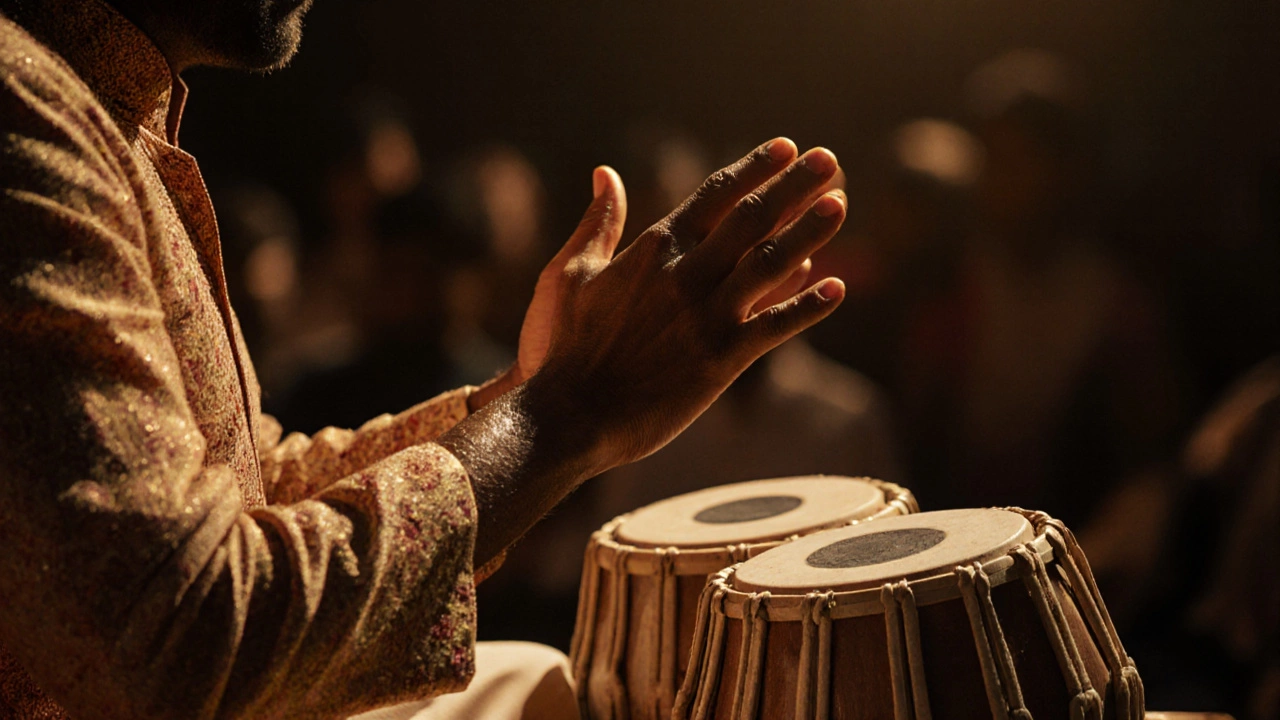
What Is Tali in Indian Classical Music? Understanding the Rhythmic Anchor
Tali is the first beat in Indian classical music's rhythmic cycles, acting as the anchor that structures improvisation and connects performer with audience. It's the heartbeat of tala, distinct from Western downbeats.
Read more