Tabla: The Heartbeat of Indian Classical Music
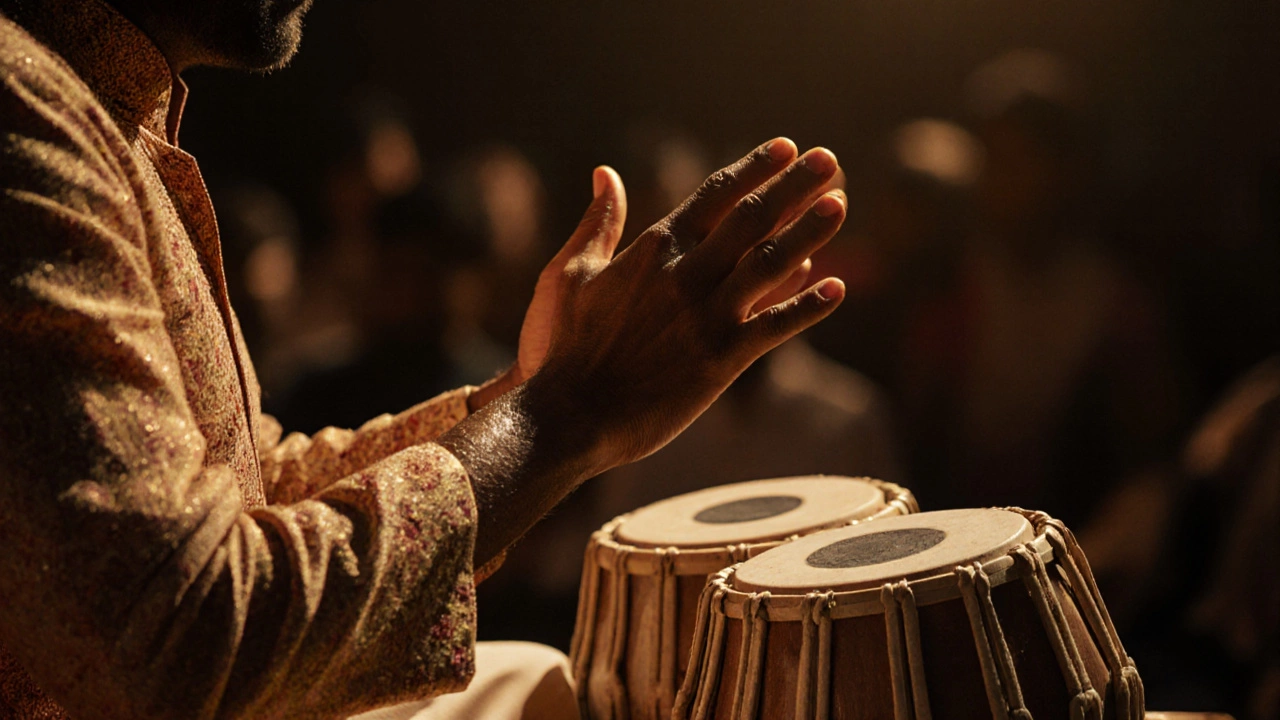
When you hear the sharp tin and deep na of the tabla, a pair of hand-played drums central to North Indian classical music. Also known as Indian hand drums, it’s not just an instrument—it’s a language of rhythm that speaks through patterns called bol and carries centuries of musical thought. Unlike Western drums, the tabla isn’t just about keeping time—it shapes melody, drives emotion, and even answers the lead instrument like a conversation. Each drum—the smaller dayan and larger bayan—has its own voice, tuned precisely to the raga being played. You won’t find this setup in any other musical tradition.
The tabla’s roots stretch back over 300 years, evolving from older drums like the pakhawaj. It became the backbone of Hindustani music, the classical system of North India, where it accompanies vocalists, sitar players, and even dancers. Its versatility lets it fit into everything from slow, meditative alap to lightning-fast tala cycles. You’ll hear it in temple rituals, wedding processions, and modern fusion tracks. It’s the instrument that makes Indian music feel alive, breathing with each tap and slide of the fingers. The player doesn’t just strike—they press, slide, and mute the drumhead to create over 20 distinct sounds from just two drums.
What makes the tabla special isn’t just how it’s played, but how it’s learned. Masters teach through oral tradition—students memorize complex rhythmic patterns by repeating syllables like "dha", "dhin", and "ta". This method keeps the music alive without sheet music. It’s why tabla players often train for over a decade before performing publicly. The instrument demands patience, precision, and deep listening. You can’t fake a good tabla performance—it reveals every mistake, every hesitation.
Across India, the tabla connects to other traditions. In Indian classical music, a system blending melody, rhythm, and improvisation rooted in ancient texts, it’s paired with the sitar or bansuri, but also appears in qawwali, ghazal, and even Bollywood scores. Its presence in Tamil Nadu’s film music, though less common, shows how deeply it’s woven into India’s broader sonic identity. Even when you don’t notice it, the tabla is often there—holding the groove, lifting the energy, giving structure to chaos.
What you’ll find in the posts below isn’t just a list of articles—it’s a journey through how the tabla lives in music, culture, and daily life. From its role in sacred rituals to its place in modern studios, these stories show why this small pair of drums holds such a big place in India’s soul.
What Is Tali in Indian Classical Music? Understanding the Rhythmic Anchor
Tali is the first beat in Indian classical music's rhythmic cycles, acting as the anchor that structures improvisation and connects performer with audience. It's the heartbeat of tala, distinct from Western downbeats.
Read more