Tala: Understanding Rhythm in Indian Music and Culture
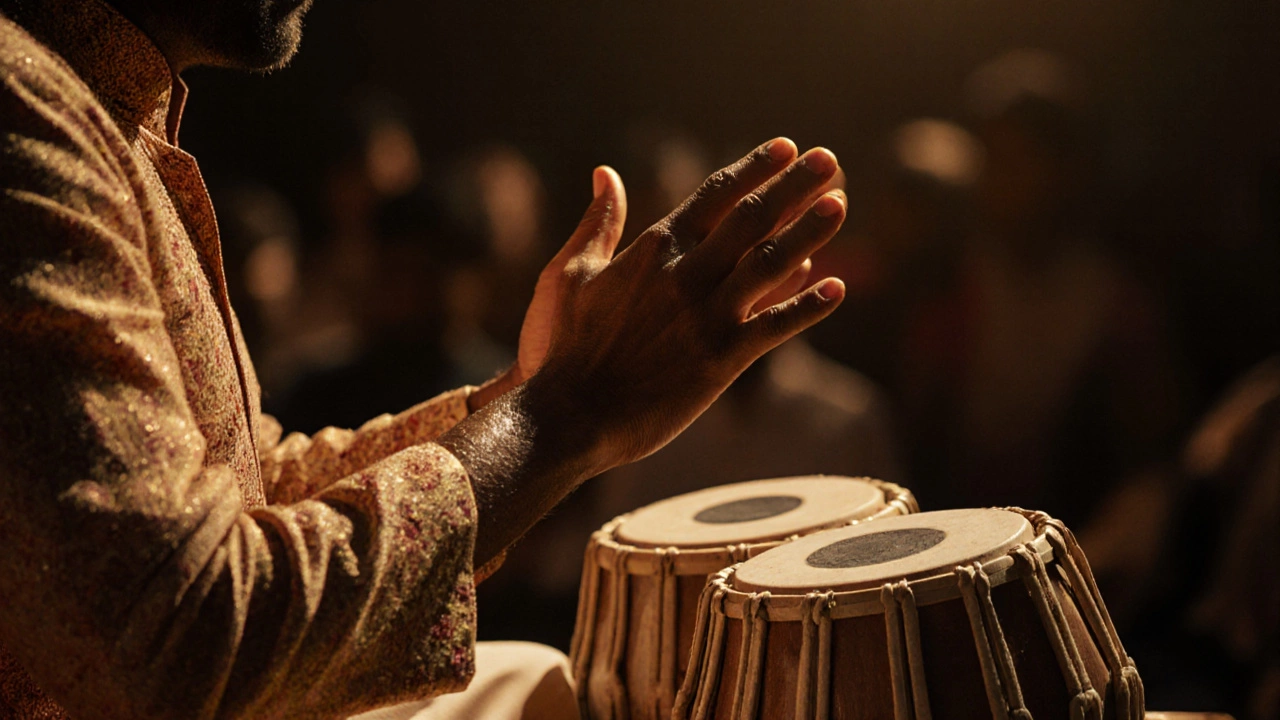
When you hear a tabla player lock into a complex pattern that repeats flawlessly for minutes, you’re witnessing tala, the structured rhythmic cycle that organizes Indian classical music. Also known as tal, it’s not just a beat — it’s a living, breathing system that guides melody, dance, and devotion. Unlike Western time signatures that often feel linear, tala is circular. It has a beginning, a middle, and an end — but then it starts again, like a wheel turning in time. This cyclical nature mirrors deeper ideas in Indian philosophy: cycles of creation, preservation, and dissolution.
Tala isn’t just for musicians. It’s woven into temple rituals, folk dances like Bharatanatyam, and even daily chants. In South India, where Carnatic music thrives, talas like Adi (8 beats) and Rupaka (6 beats) are as common as breathing. In the North, Hindustani musicians use talas like Teental (16 beats) and Jhaptal (10 beats), each with its own feel, emphasis, and emotional weight. A single tala can be played slowly for meditation or fast enough to make your heart race. What’s fascinating is how the same tala can sound completely different depending on the instrument — whether it’s the tabla, mridangam, or even hand claps in a village festival.
Behind every tala is a vocabulary of syllables — ta ka di mi, ta ka ta ka — that drummers recite to internalize the pattern. These aren’t random sounds; they’re precise sonic symbols passed down for centuries. And while modern composers sometimes bend or break these rules, the core structure remains sacred. Whether you’re listening to a 3-hour raga performance or a folk song at a wedding, tala is the invisible thread holding it all together.
You’ll find tala at the center of many posts here — from how it shapes classical singing to how it’s used in ancient lullabies and temple ceremonies. Some articles break down the math behind the cycles, others show how dancers count beats with their feet. There’s even a piece on how certain talas are linked to specific times of day or seasons. What ties them all together? The understanding that rhythm isn’t just background noise — it’s the pulse of culture.
What Is Tali in Indian Classical Music? Understanding the Rhythmic Anchor
Tali is the first beat in Indian classical music's rhythmic cycles, acting as the anchor that structures improvisation and connects performer with audience. It's the heartbeat of tala, distinct from Western downbeats.
Read more