Tali: The Sacred Thread in Tamil and Hindu Weddings
When a groom ties the Tali, a sacred thread or pendant worn by married Tamil women, often made of gold and black beads, symbolizing marital commitment and spiritual protection. Also known as mangalsutra, it is more than jewelry—it's a living emblem of union, duty, and identity in Tamil and Hindu households. Unlike rings in Western cultures, the Tali is tied during the wedding ceremony itself, usually at the center of the chest, and is never removed. It’s not just worn—it’s honored. Women touch it when praying, adjust it with care, and pass down its meaning through generations.
The Tali connects deeply to Tamil deities, the gods and goddesses worshipped in Tamil Nadu, including Shiva, Parvati, and Lakshmi, whose stories shape rituals like the Tali tying. In many traditions, the Tali is blessed by priests with mantras from the Vedas, linking it to ancient spiritual texts. The black beads in the thread are meant to ward off the evil eye, while the gold represents prosperity and divine grace. This isn’t just a regional custom—it’s a thread woven into the fabric of Indian wedding traditions, the multi-day ceremonies that blend family, faith, and ritual across India, from the seven vows around the sacred fire to the final Griha Pravesh. You’ll find variations of the Tali in Karnataka, Andhra, and Kerala, but in Tamil culture, it’s non-negotiable. A woman without her Tali isn’t fully recognized as married—not legally, not socially, not spiritually.
Modern Tamil women still wear the Tali daily, even in offices and abroad. Some swap the heavy gold version for lightweight designs, but the meaning stays. It’s a quiet rebellion against erasure, a daily reminder of lineage and love. The posts below explore how this simple object ties into larger stories: why Hindu gods are depicted in blue, what forbidden foods mean in Hinduism, how Indian weddings unfold step by step, and how values like duty and devotion still guide life in Tamil Nadu today. You’ll find stories of rituals, resistance, and resilience—all connected by a thread.
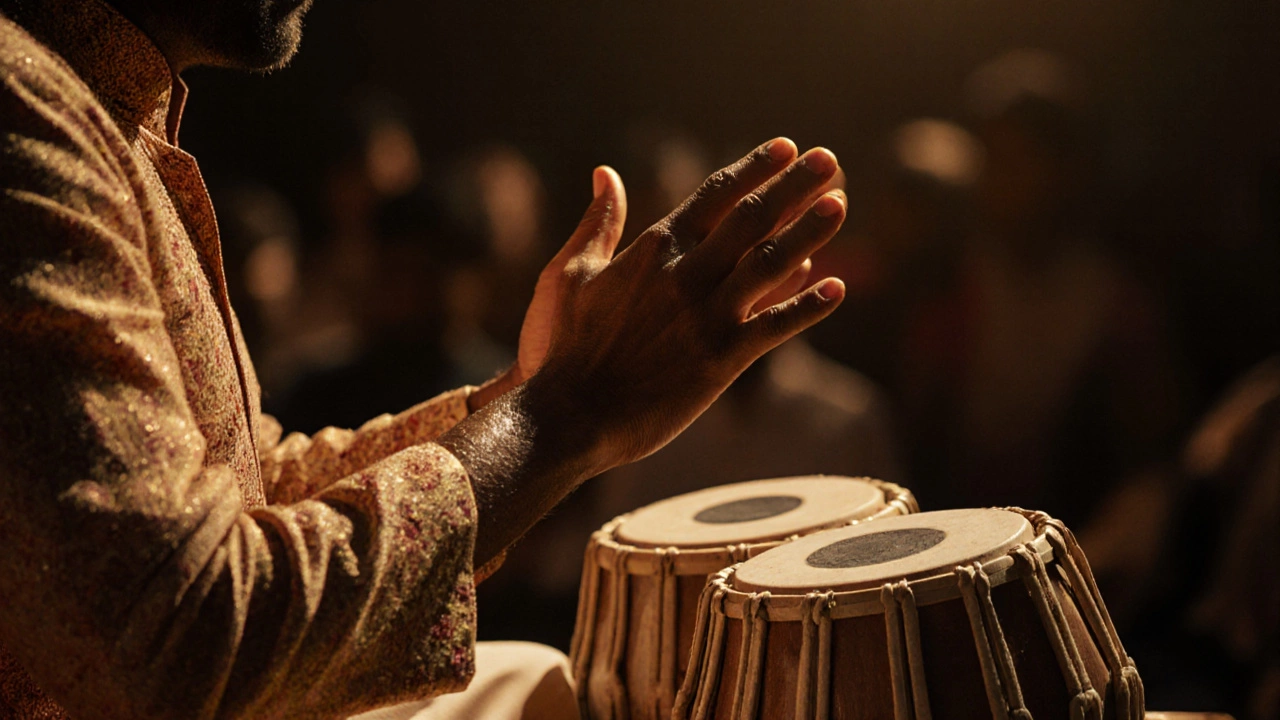
What Is Tali in Indian Classical Music? Understanding the Rhythmic Anchor
Tali is the first beat in Indian classical music's rhythmic cycles, acting as the anchor that structures improvisation and connects performer with audience. It's the heartbeat of tala, distinct from Western downbeats.
Read more