
Tirukkural Wisdom Generator
Explore Ancient Wisdom
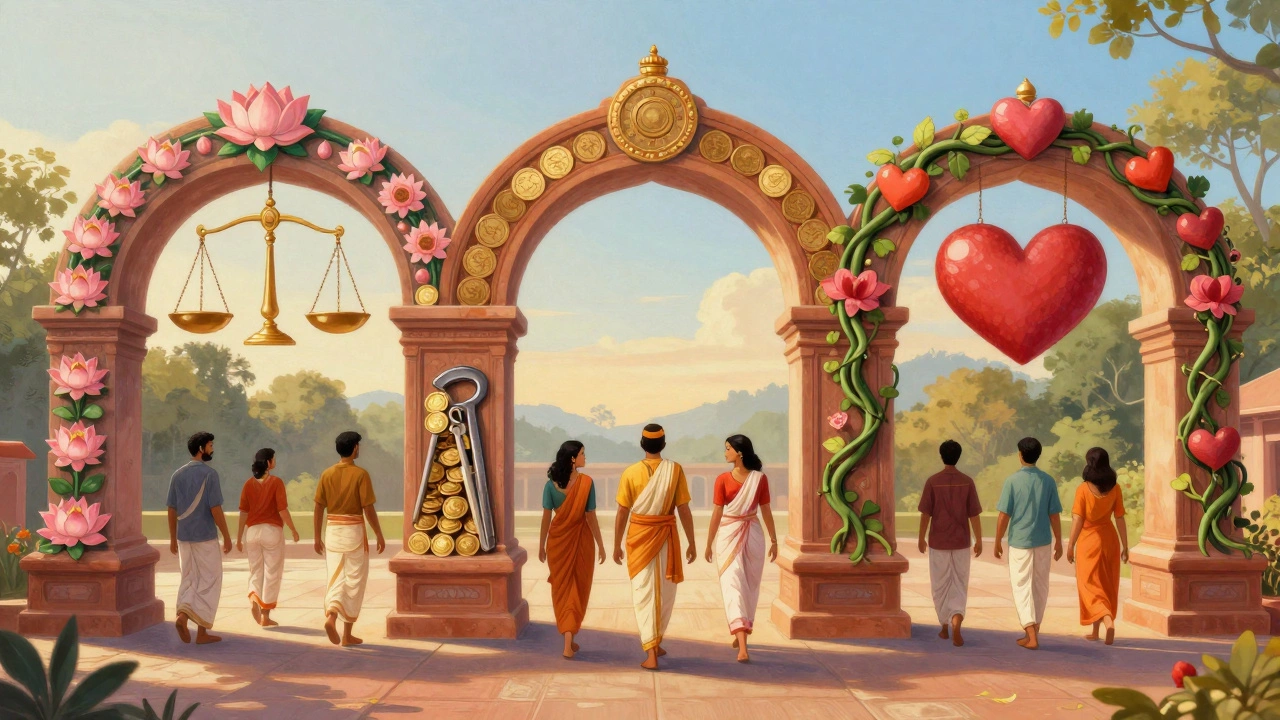
The Tirukkural consists of 1,330 couplets divided into three sections: Aram (Virtue), Porul (Wealth), and Inbam (Love). Click below to discover a random verse.
Welcome
Click the button to reveal a timeless couplet from the Tirukkural.
Discover practical advice on governance, relationships, and moral conduct.
When people ask about the spiritual heart of Tamil Nadu, they often look for a single text that defines the region’s moral compass. In many cultures, this role belongs to a religious scripture like the Bible or the Quran. But in Tamil culture, the title of "the Bible" is widely given to a secular masterpiece known as the Tirukkural, also known as Kural. It is a classic work of Tamil literature composed by the sage Thiruvalluvar, focusing on universal ethics rather than specific religious dogma.
This collection of 1,330 couplets has guided generations not through divine commandments, but through practical wisdom about how to live a good life. Unlike texts that focus solely on worship or afterlife rewards, the Kural addresses daily conduct, governance, and relationships. If you want to understand why Tamils revere this book so deeply, you need to look beyond its status as poetry. You have to see it as a manual for human behavior that remains relevant even today.
The Structure of Universal Wisdom
The power of the Tirukkural lies in its simplicity and structure. The text is divided into three main sections, each addressing a different aspect of life. This tripartite structure makes it easy for readers to find guidance on specific topics without getting lost in complex theological debates.
- Aram (Virtue): This first section covers virtues such as non-violence, truthfulness, contentment, and gratitude. It forms the ethical foundation of the work.
- Porul (Wealth): The second section deals with worldly matters, including governance, leadership, military strategy, and economic prosperity. It provides advice for kings and citizens alike.
- Inbam (Love): The final section explores the nuances of love, marriage, and companionship. It offers insights into emotional intelligence and relationship dynamics.
Each section contains chapters dedicated to specific themes. For example, under "Virtue," there are chapters on humility, patience, and the importance of keeping promises. Under "Wealth," you will find discussions on the qualities of a good ruler and the dangers of greed. This comprehensive coverage ensures that every reader, regardless of their social status or profession, can find relevant advice.
What makes these couplets unique is their brevity. Each kural consists of two lines, typically containing twelve syllables each. This concise format makes them easy to memorize and recite. Many Tamils learn these verses by heart during childhood, embedding these values into their subconscious from an early age.
Thiruvalluvar: The Sage Behind the Verses
To truly appreciate the Tirukkural, you must understand who wrote it. The author, Thiruvalluvar, is a revered Tamil poet-sage believed to have lived between the 1st and 6th centuries CE. While his exact dates remain debated among historians, his legacy is undisputed. He is often referred to as the "Tamil Veda" because his words carry the weight of ultimate authority in Tamil society.
Unlike many ancient authors who claimed divine inspiration, Thiruvalluvar presented himself as a human observer. His wisdom comes from keen observation of human nature and society. This approach makes his teachings feel grounded and accessible. He does not demand blind faith; instead, he invites readers to reflect on their own actions and choices.
There are several legends surrounding Thiruvalluvar’s life. One popular story suggests that he was blessed by the goddess Parvati, who granted him the ability to compose perfect couplets. Another legend claims that he spent years meditating in a cave before writing the Kural. Regardless of the historical accuracy of these stories, they highlight the reverence in which he is held.
In modern times, Thiruvalluvar is celebrated annually on January 1st, known as Thiruvalluvar Day. On this day, statues of the sage are adorned with flowers, and cultural programs are organized across Tamil Nadu. This celebration underscores the enduring relevance of his work in contemporary society.

Why It Is Called the "Bible" of Tamil Nadu
The comparison between the Tirukkural and the Bible is not just metaphorical; it reflects the deep respect Tamils have for this text. Here are the key reasons why it holds this special status:
- Universality: Unlike religious scriptures that cater to specific faiths, the Kural appeals to all humans. Its principles transcend religious boundaries, making it a shared heritage for Hindus, Muslims, Christians, and others living in Tamil Nadu.
- Moral Authority: Just as the Bible serves as a moral guide for Christians, the Kural serves as an ethical benchmark for Tamils. People often quote kurals to resolve disputes, offer counsel, or justify their actions.
- Cultural Identity: The text is deeply woven into the fabric of Tamil identity. Learning the Kural is considered essential for anyone wishing to understand Tamil culture and values.
- Literary Excellence: The poetic beauty of the Kural is unmatched. Its rhythmic flow and precise word choice make it a literary treasure that is enjoyed even by those who do not follow its teachings strictly.
This universal appeal is perhaps its greatest strength. In a diverse state like Tamil Nadu, where multiple religions coexist, the Kural provides a common ground for ethical discourse. It allows people from different backgrounds to agree on basic principles of right and wrong without compromising their individual beliefs.
Relevance in Modern Life
You might wonder if a text written over a thousand years ago still matters today. The answer is a resounding yes. The issues addressed in the Tirukkural-corruption, inequality, environmental degradation, and interpersonal conflict-are still prevalent in the modern world.
Consider the chapter on "Governance." Thiruvalluvar warns rulers against arrogance and emphasizes the importance of serving the people. These lessons are applicable to politicians, corporate leaders, and community organizers alike. Similarly, the chapters on "Contentment" offer valuable advice for individuals struggling with materialism and stress in today’s fast-paced society.
Education systems in Tamil Nadu include the Kural in school curricula. Students are required to memorize selected couplets, ensuring that new generations inherit this wisdom. Additionally, translations of the Kural into various languages-including English, French, German, and Chinese-have introduced its teachings to a global audience.
Even in the digital age, the Kural finds new life. Social media platforms are filled with quotes from the text, shared by users seeking inspiration or motivation. Apps and websites dedicated to the Kural allow people to access random couplets daily, integrating ancient wisdom into modern routines.
| Feature | Tirukkural | Bible | Dhammapada |
|---|---|---|---|
| Origin | Tamil Nadu, India | Middle East | India/Sri Lanka |
| Primary Focus | Secular Ethics | Religious Faith & Salvation | Spiritual Liberation |
| Structure | 1,330 Couplets | Books/Chapters/Verses | Verses/Chapters |
| Target Audience | All Humans | Followers of Christianity | Followers of Buddhism |
| Language Style | Concise Poetic | Narrative & Prophetic | Instructive Prose/Poetry |
Preservation and Global Recognition
The Tirukkural has survived centuries due to its oral tradition and written preservation. Before printing presses existed, scholars memorized and transmitted the text orally. This method ensured its accuracy and continuity. Later, manuscripts were copied by hand, further securing its place in history.
Today, the Kural is available in numerous editions, ranging from simple pocket books to elaborate commentaries. Scholars continue to study the text, analyzing its linguistic features and philosophical implications. This ongoing scholarship keeps the conversation alive and relevant.
Internationally, the Kural has gained recognition as a significant work of world literature. UNESCO has acknowledged its importance, and libraries around the world house copies of the original manuscripts. Translations into over 30 languages demonstrate its universal appeal and intellectual value.
If you visit Tamil Nadu, you will notice murals depicting scenes from the Kural in public spaces. Temples, government buildings, and schools often feature inscriptions of famous kurals. This visible presence reinforces its role as a guiding light for the community.
Is the Tirukkural a religious text?
No, the Tirukkural is primarily a secular text. While it mentions God and spiritual concepts, its core focus is on ethical living and social conduct rather than religious rituals or doctrines. It is respected by people of all faiths in Tamil Nadu.
Who wrote the Tirukkural?
The Tirukkural was written by the sage Thiruvalluvar. Although his exact lifespan is debated, he is traditionally dated to between the 1st and 6th centuries CE. He is revered as one of the greatest poets in Tamil history.
How many couplets are in the Tirukkural?
The Tirukkural consists of exactly 1,330 couplets, known as "kurals." These are divided into three sections: Virtue (500 kurals), Wealth (382 kurals), and Love (448 kurals).
Can I read the Tirukkural in English?
Yes, there are many English translations of the Tirukkural available. Some popular versions include translations by C.J. Sankaran Nair and A.K. Ramanujan. These translations help non-Tamil speakers appreciate the wisdom contained in the text.
Why is January 1st important for Tamils?
January 1st is observed as Thiruvalluvar Day in Tamil Nadu. It commemorates the birth anniversary of the sage Thiruvalluvar. On this day, cultural events, lectures, and flower offerings to his statue are held to honor his contributions to Tamil literature and ethics.