Yoga Intention Explorer
Select a pose below to uncover its spiritual intent and learn how to shift your practice from physical stretching to spiritual exploration.
Vrksasana (Tree Pose)
Root ChakraSpiritual Intent: Grounding & Stability
Beyond the balance, this pose embodies the connection between the earthly realm and the spiritual heavens. Use this pose to practice stability amidst the chaos of the world.
Virabhadrasana (Warrior)
Solar PlexusSpiritual Intent: Internal Strength & Courage
The "warrior" is not fighting another person, but the internal battles of doubt, fear, and ego. It is about claiming your space in the universe with confidence.
Balasana (Child's Pose)
Heart / Third EyeSpiritual Intent: Humility & Surrender
A physical representation of letting go of the ego. It is the sacred right to retreat, find sanctuary within yourself, and trust the ground beneath you.
Bhujangasana (Cobra)
Heart ChakraSpiritual Intent: Awakening & Opening
By physically opening the chest, you are spiritually inviting love, compassion, and vulnerability back into your life, clearing the path for emotional healing.
Quick Takeaways on Yoga and Spirituality
- Asanas are designed to clear energy blockages in the body to make meditation easier.
- Many poses mirror nature, animals, or divine beings to connect the practitioner to the cosmos.
- The goal of a pose isn't the "perfect look," but the internal state of awareness it creates.
- Yoga links the physical body (Annamaya Kosha) to the spiritual layers of existence.
The True Purpose of Asana
In the modern West, we've turned yoga into a fitness industry. However, in the Yoga Sutras of Patanjali, the fourth limb of yoga, asana is described very simply: "a steady, comfortable seat." That's it. The entire point of doing these complex movements is to get your body to a place where it no longer distracts you from your spiritual practice. Imagine trying to meditate for an hour while your hip is screaming in pain or your legs are falling asleep. You can't focus on the divine if your body is shouting for attention. By practicing asanas, you're essentially "cleaning the house" so the spirit can reside there comfortably.
When you move through a flow, you aren't just burning calories. You are working with Prana, which is the vital life force energy that flows through the body via channels called nadis. If this energy gets stuck due to stress or trauma, we feel it as physical tension or emotional heaviness. The spiritual meaning of a pose often lies in how it unlocks these specific channels, allowing prana to move freely from the base of the spine to the crown of the head.
Decoding the Symbolism of Common Poses
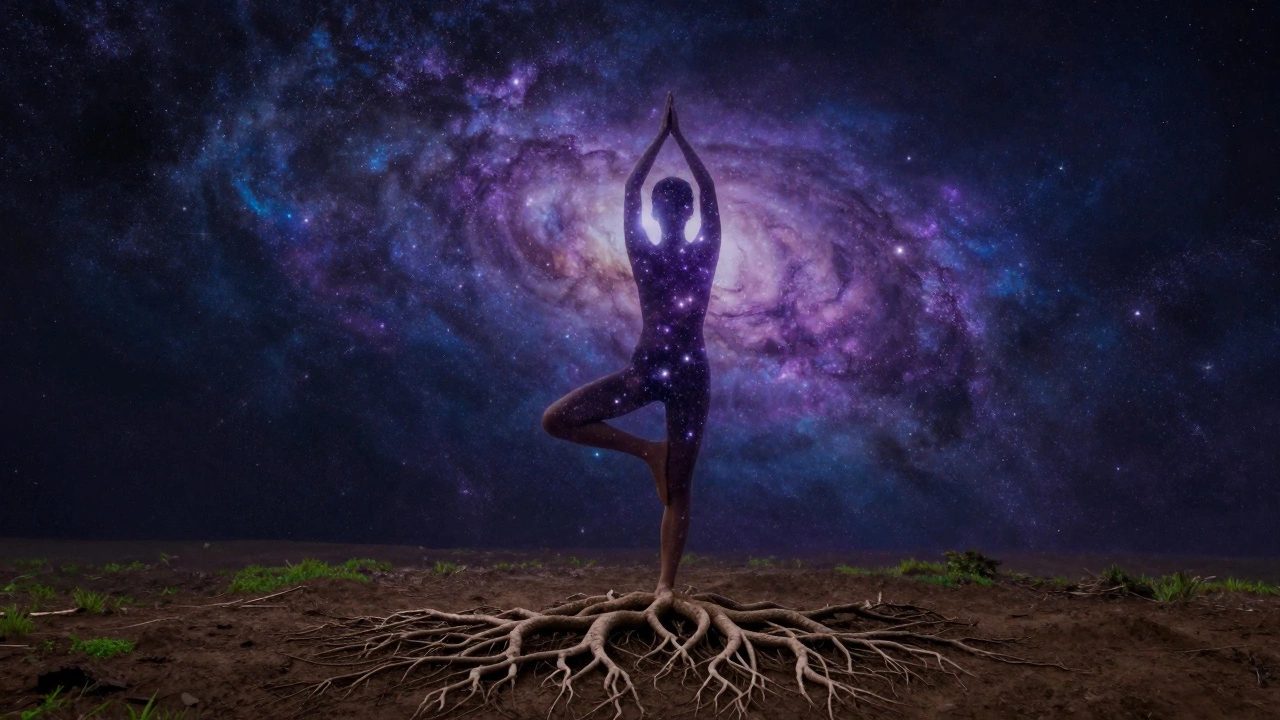
Many poses aren't just random stretches; they are physical metaphors. Take the Tree Pose (Vrksasana), for example. On the surface, it's a balance test. Spiritually, it's about grounding. By rooting one foot into the earth and reaching upward, you are embodying the connection between the earthly realm and the spiritual heavens. You are practicing stability amidst the chaos of the world. If you wobble, you aren't "failing" the pose; you're experiencing the spiritual lesson of imperfection and the need for a single-pointed focus (Drishti).
Then there is the Warrior Poses (Virabhadrasana). These aren't about fighting another person. The "warrior" is an internal one. These poses are designed to build courage, strength, and determination. The spiritual intent is to fight the ego and the internal battles of doubt and fear. When you stand in a strong Warrior II, you are claiming your space in the universe and declaring your presence with confidence and peace.
Child's Pose (Balasana) is a complete shift in energy. It's the act of surrender. By curling inward and touching your forehead to the mat, you are returning to a state of innocence and humility. It's a physical representation of letting go of the ego and trusting the ground beneath you. In a world that demands we always be "on" and "productive," the spiritual meaning of Child's Pose is the sacred right to retreat and find sanctuary within yourself.
| Pose (Asana) | Physical Action | Spiritual Meaning / Intent | Energy Target |
|---|---|---|---|
| Tadasana (Mountain) | Standing still | Stillness, Presence, Connection | Root Chakra |
| Adho Mukha Svanasana (Down Dog) | Inverted V-shape | Humility, Rejuvenation | Heart & Crown |
| Bhujangasana (Cobra) | Chest lift | Awakening, Heart Opening | Heart Chakra |
| Savasana (Corpse Pose) | Lying flat | Detachment, Integration | Whole Body/Spirit |
The Connection to Energy Centers
You can't talk about the spiritual meaning of yoga without mentioning Chakras. These are spinning wheels of energy located along the spine that govern different aspects of our physical and emotional well-being. Each pose is designed to stimulate or balance a specific chakra. For example, backbends like the Bridge or Wheel pose are meant to open the Heart Chakra (Anahata). When we are hurt or guarded, we physically hunch our shoulders and close our chests. By physically opening the heart, we are spiritually inviting love, compassion, and vulnerability back into our lives.
Conversely, twisting poses focus on the Solar Plexus (Manipura), which is the center of our personal power and will. When you twist, you are literally "wringing out" the old energy and toxins from your internal organs and your psyche. It's a process of purification. You're not just detoxing your liver; you're clearing out old grudges or stagnant emotions that keep you from moving forward in life.
Yoga as a Path to Mindfulness
The transition from a physical stretch to a spiritual experience happens through Mindfulness. If you're just thinking about your grocery list while doing a plank, you're doing gymnastics. But if you bring your awareness to the breath and the sensation of the muscle stretching, you are practicing spiritual meaning of yoga poses. This is the bridge between the physical and the metaphysical. The pose becomes a mirror. If you feel frustration during a difficult balance, the yoga is asking you: "Why are you reacting with anger? Where else in your life do you struggle with things not going your way?"
This is why the breath (Pranayama) is so vital. The breath is the link between the mind and the body. When you synchronize a movement with an inhale or exhale, you are aligning your physical actions with your life force. This alignment creates a state of flow, where the boundary between the "doer" and the "action" disappears. That disappearance is the core of spiritual liberation-the realization that you are more than just a body in a room.
The Final Act: Savasana and the Great Release
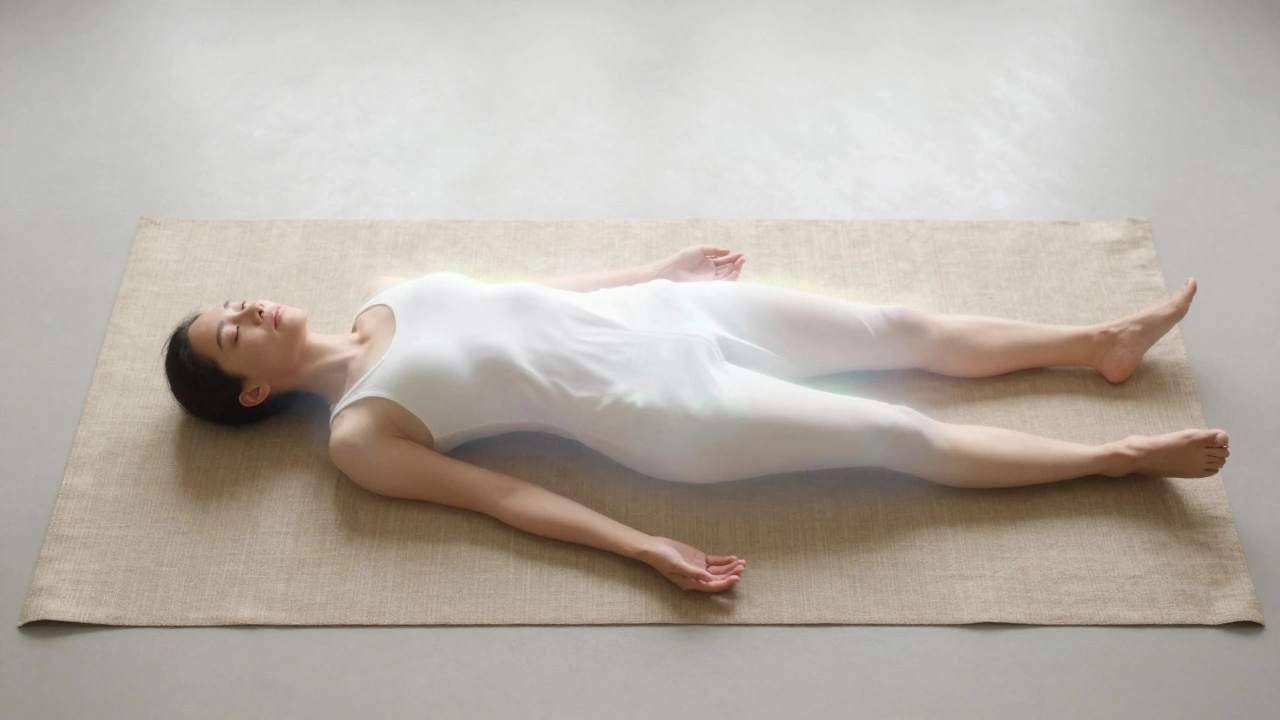
Many beginners find Savasana, or Corpse Pose, the hardest part of the class because they're just lying there. But spiritually, this is the most important pose of all. Savasana is the practice of dying to the ego. By lying perfectly still and releasing all control, you are practicing the ultimate surrender. It's where the physical work of the other poses integrates into your nervous system.
In Savasana, you aren't trying to achieve anything. There is no goal, no stretch, and no balance. This emptiness is where the spiritual shift occurs. It is the moment of total acceptance. You are acknowledging that you are enough exactly as you are, without the need to perform or improve. This deep state of relaxation allows the consciousness to expand beyond the physical limits of the skin, leading to a feeling of oneness with everything around you.
Can I experience the spiritual benefits if I'm not religious?
Absolutely. Yoga is a spiritual practice, but it isn't a religion. It's more of a toolkit for consciousness. You don't need to believe in a specific deity to feel the shift in energy or the mental clarity that comes from a dedicated asana practice. The "spirituality" in yoga is about your relationship with yourself and the universe, not about adhering to a set of dogmas.
Do I have to be flexible to get the spiritual meaning out of a pose?
Not at all. In fact, the spiritual growth often happens more in the struggle than in the ease. If you are naturally flexible, you might glide through poses without ever questioning your limits. Someone who struggles to touch their toes has to deal with frustration, patience, and acceptance in every single class. That mental work is exactly where the spiritual meaning resides.
Why are some yoga poses named after animals?
Naming poses after animals (like the Crow, Cobra, or Lion) is a way of tapping into the archetypal energy of those creatures. For instance, the Lion's breath is used to release suppressed emotions and "roar" out tension. By mimicking nature, we acknowledge that humans are not separate from the animal kingdom or the earth, but an integral part of a larger, interconnected web of life.
Does the order of the poses matter for spirituality?
Yes, in many traditional sequences, the order is designed to move energy from the ground up. You typically start with grounding poses to stabilize the mind, move into heating poses to clear toxins and activate the will, open the heart for compassion, and finally settle into a state of total release. This mirrors the journey of the soul: from the material world to the spiritual void.
What is the difference between a stretch and a spiritual asana?
The difference is intent and awareness. A stretch is a physical act to increase range of motion. An asana is a meditative act. When you add focused breath, a specific gaze (Drishti), and an intention (Sankalpa), the stretch becomes a vehicle for spiritual exploration. One is about the muscle; the other is about the soul using the muscle as a tool.
Next Steps for Your Practice
If you want to move beyond the physical, start by picking one pose in your routine and giving it a specific intention. Instead of just doing a downward dog, tell yourself, "I am letting go of everything that no longer serves me." Notice how the feeling in your body changes when you attach a spiritual meaning to the movement.
For those feeling stuck, try focusing on your breath for five minutes before you even step on the mat. When you enter the poses from a place of stillness rather than a place of rushing, the spiritual dimensions of the practice become much more apparent. You'll find that the mat is not just a piece of rubber, but a sacred space for transformation.