
AMA Buildup Assessment Quiz
How much AMA do you have in your body?
This short quiz helps you assess your current level of AMA buildup based on Ayurvedic principles. Answer the questions honestly to get personalized results.
Total score: 0-10 = Low | 11-20 = Moderate | 21-30 = High
Ever feel sluggish after a big meal, even when you didn’t eat anything "bad"? Or notice a coating on your tongue, brain fog, or constant fatigue - even with enough sleep? In Ayurveda, this isn’t just bad luck or stress. It’s AMA.
What Exactly Is AMA?
AMA isn’t a modern invention. It’s an ancient Sanskrit word meaning "undigested" or "that which doesn’t move." In Ayurveda, AMA refers to a toxic byproduct formed when digestion breaks down. It’s not poison you swallow - it’s poison you make inside your own body.
Think of it like burnt food stuck to a pan. When food isn’t fully cooked, it leaves residue. Your body works the same way. If your digestive fire - called agni - is weak, food doesn’t turn into energy. Instead, it turns into sticky, heavy waste that clogs your system.
Unlike modern science that talks about "toxins" as chemicals from pollution or processed foods, Ayurveda sees AMA as a result of internal imbalance. It’s the physical manifestation of poor digestion, emotional stress, irregular eating, and lifestyle habits that clash with your body’s rhythm.
How AMA Forms: The Digestive Breakdown
Your body isn’t meant to process fast food, cold drinks, or three meals an hour apart. Ayurveda says digestion happens in stages. First, food is broken down mechanically and chemically. Then, nutrients are absorbed. Finally, waste is eliminated. If any step falters, AMA forms.
Here’s how it happens:
- You eat when you’re stressed - your body prioritizes survival over digestion.
- You drink ice-cold water with meals - it douses your digestive fire.
- You skip meals or eat late - your body doesn’t know when to expect food.
- You eat heavy, processed, or incompatible foods - like dairy with fruit or fried food with sweets.
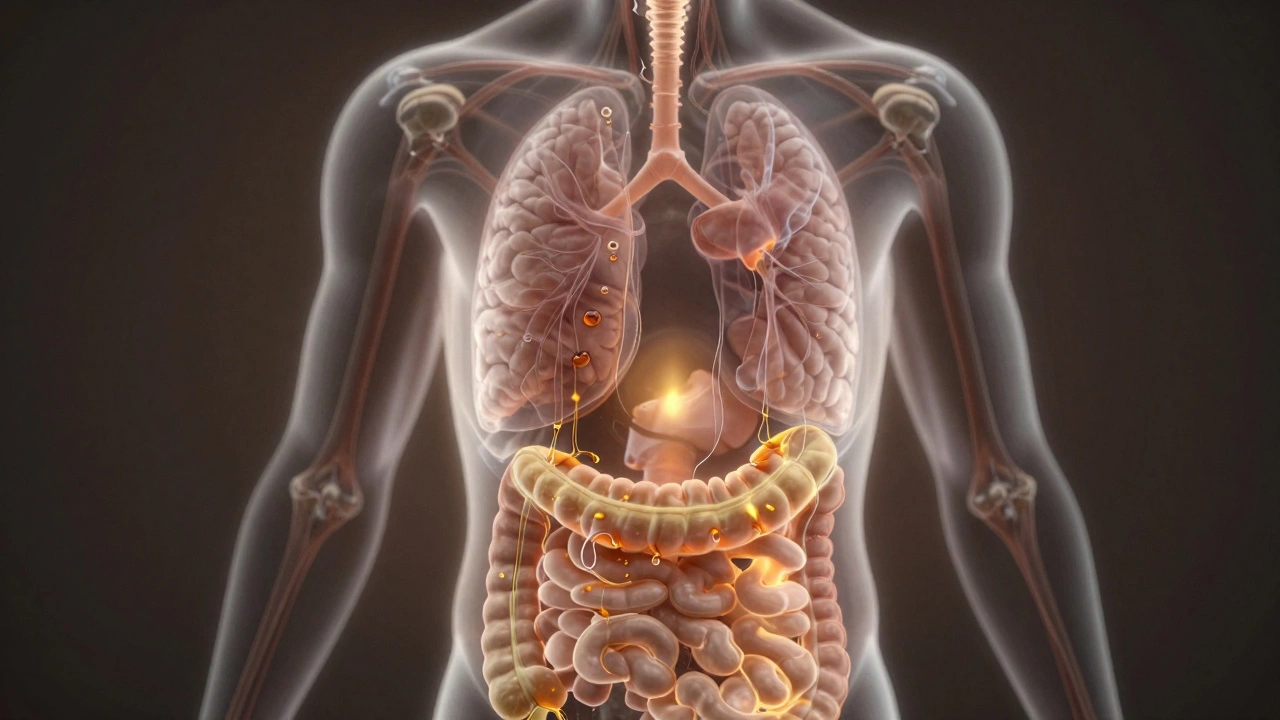
Each of these habits weakens agni. When agni sputters, food turns into a thick, sticky sludge. That sludge is AMA. It doesn’t get expelled. It sticks to your intestines, then moves into your bloodstream, and eventually settles in your joints, tissues, and even your brain.
Signs You Have AMA Buildup
AMA doesn’t announce itself with a siren. It creeps in slowly. Here are the most common signs:
- A thick white or gray coating on your tongue, especially in the morning
- Constant fatigue, even after a full night’s sleep
- Bloating, gas, or irregular bowel movements
- Heavy limbs, joint stiffness, or unexplained aches
- Brain fog, difficulty concentrating, or memory lapses
- Bad breath or a metallic taste in your mouth
- Loss of appetite or feeling full too quickly
If you notice two or more of these regularly, your body is likely carrying AMA. It’s not about occasional indigestion. It’s about patterns. One bad meal? Fine. Two weeks of late-night pizza and cold coffee? That’s a recipe for AMA.

Why AMA Is Dangerous - It’s Not Just "Feeling Off"
AMA doesn’t stay put. It travels. Once it enters your bloodstream, it settles where your body is weakest. That’s why two people with the same habits can end up with completely different problems.
One person might develop arthritis because AMA lodges in their joints. Another might get frequent colds because it clogs their respiratory channels. A third might struggle with anxiety because it affects their nervous system.
Ayurveda teaches that all chronic diseases - from diabetes to depression - start with AMA. It’s the root layer of imbalance. Modern medicine might call it inflammation. Ayurveda calls it AMA. Same problem, different language.
Studies from the National Institutes of Health show that low-grade inflammation is linked to over 70% of chronic diseases. Ayurveda identified this pattern over 5,000 years ago - and called it AMA.
How to Clear AMA: Simple, Daily Practices
Clearing AMA doesn’t require fasting for days or expensive supplements. It’s about consistency. Here’s what works:
- Warm water with lemon in the morning - This wakes up your digestion and flushes out overnight buildup.
- Eat your largest meal at noon - That’s when your digestive fire is strongest.
- Avoid cold drinks - Even room-temperature water is better than ice.
- Spice your food - Ginger, cumin, black pepper, and turmeric boost agni. Try a pinch of ginger powder with honey before meals.
- Don’t snack between meals - Give your gut 3-4 hours to fully digest before the next meal.
- Practice gentle movement - A 20-minute walk after dinner helps move AMA out of your system.
One woman in Pune, India, struggled with chronic fatigue for years. She changed nothing except her routine: warm lemon water every morning, no snacks, and dinner before 7 p.m. Within three weeks, her tongue coating disappeared. Her energy returned. She didn’t take a single pill.
AMA and Your Lifestyle: The Real Culprit
AMA isn’t caused by one bad meal. It’s caused by a lifestyle that ignores your body’s rhythm. Modern life pushes us to eat on the go, sleep late, and stress constantly. That’s a perfect storm for AMA.
Ayurveda doesn’t blame food. It blames timing. It’s not about organic vs. non-organic. It’s about whether you eat when your body is ready to digest.
Think of your body like a car. You wouldn’t rev the engine to 5,000 RPM while idling. Yet that’s what we do when we eat junk food while scrolling on our phones. Your digestive system needs focus, calm, and rhythm.
When to Seek Help - AMA Can’t Always Be Fixed Alone
For mild buildup, daily habits are enough. But if you’ve tried everything and still feel heavy, foggy, or achy, you may need deeper cleansing.
Ayurvedic detox programs - called Panchakarma - use herbal oils, steam, and gentle purgation to remove deep-seated AMA. These are done under guidance, not at home. Don’t try enemas or strong laxatives on your own. That can damage your system.
If you’re considering Panchakarma, find a certified Ayurvedic practitioner. Ask about their training. Look for someone who’s been trained in India under a recognized school, like the Vaidya Krishnadas or the Kerala Ayurveda Academy.
AMA vs. Modern "Toxins" - What’s the Difference?
Modern detox trends sell you green juices, colon cleanses, and expensive supplements. Ayurveda says: none of that works if your digestion is broken.
AMA isn’t about removing external chemicals. It’s about fixing internal function. You can drink all the celery juice you want - if your agni is weak, your body still won’t process nutrients. You’ll still make AMA.
That’s why Ayurveda is different. It doesn’t add more stuff. It removes the blockages so your body can heal itself.
Final Thought: AMA Is a Mirror
AMA doesn’t lie. If your tongue is coated, your body is telling you: "I’m overwhelmed." If you’re tired after eating, it’s saying: "I can’t handle this."
Clearing AMA isn’t about being "clean." It’s about being in sync. With your meals. With your sleep. With your emotions.
The cure isn’t complicated. It’s consistent. Eat when you’re hungry. Stop when you’re full. Move gently. Rest deeply. Let your body do what it was designed to do.
Is AMA the same as inflammation?
In many ways, yes. AMA is the Ayurvedic term for the sticky, sluggish waste that causes low-grade inflammation in the body. While modern medicine uses the term "inflammation" to describe immune responses, Ayurveda traces it back to undigested food particles (AMA) that clog tissues and trigger chronic stress in the system. They’re two sides of the same coin.
Can you have AMA even if you eat healthy?
Absolutely. Eating "healthy" foods like salads, smoothies, or raw veggies doesn’t guarantee good digestion. If you eat them cold, too fast, or on an empty stomach when your body isn’t ready, they can still create AMA. Ayurveda focuses on how you eat - not just what you eat.
Does everyone have AMA?
Not everyone, but most people in modern society do. Ayurveda says AMA accumulates over time due to lifestyle habits - irregular eating, stress, poor sleep, and cold or processed foods. People who follow natural rhythms - eating at regular times, avoiding snacks, and staying warm - rarely build up significant AMA.
How long does it take to clear AMA?
Mild AMA can clear in 2-4 weeks with simple changes: warm water in the morning, no cold drinks, eating main meal at noon, and walking after dinner. Deep-seated AMA, especially if you’ve had chronic symptoms for years, may take 3-6 months of consistent practice. Patience is key - it built up slowly, so it takes time to dissolve.
Can AMA cause weight gain?
Yes. AMA slows metabolism by clogging the channels that carry nutrients and energy. Your body holds onto fat as a protective mechanism when it can’t process food properly. That’s why some people can’t lose weight no matter how much they diet - their digestion is blocked by AMA. Clearing AMA often leads to natural weight loss without calorie counting.
Is Panchakarma necessary to remove AMA?
Not always. For most people, daily habits are enough. Panchakarma is a deep cleanse used for chronic conditions, long-term toxicity, or when lifestyle changes haven’t helped. It’s not a quick fix. It’s a reset. Only consider it if you’ve tried consistent daily practices for at least 3 months and still feel stuck.