Folk Song Explorer
Explore Traditions
Select a tradition to view details
Choose a folk tradition from the left panel to explore its unique characteristics
Click "Learn More" to see why these songs remain culturally significant
Indian folk songs aren’t just music-they’re stories sung by farmers in Punjab, fishermen on the Kerala coast, and brides in Rajasthan. They’ve been passed down for generations, long before recordings or radio. These songs carry the rhythm of daily life, the pain of separation, the joy of harvests, and the pulse of rituals you won’t find in textbooks. If you’ve ever wondered what real Indian folk music sounds like, here are the most powerful, authentic examples-and why they still matter today.
Bhangra: The Dance of the Punjab Fields
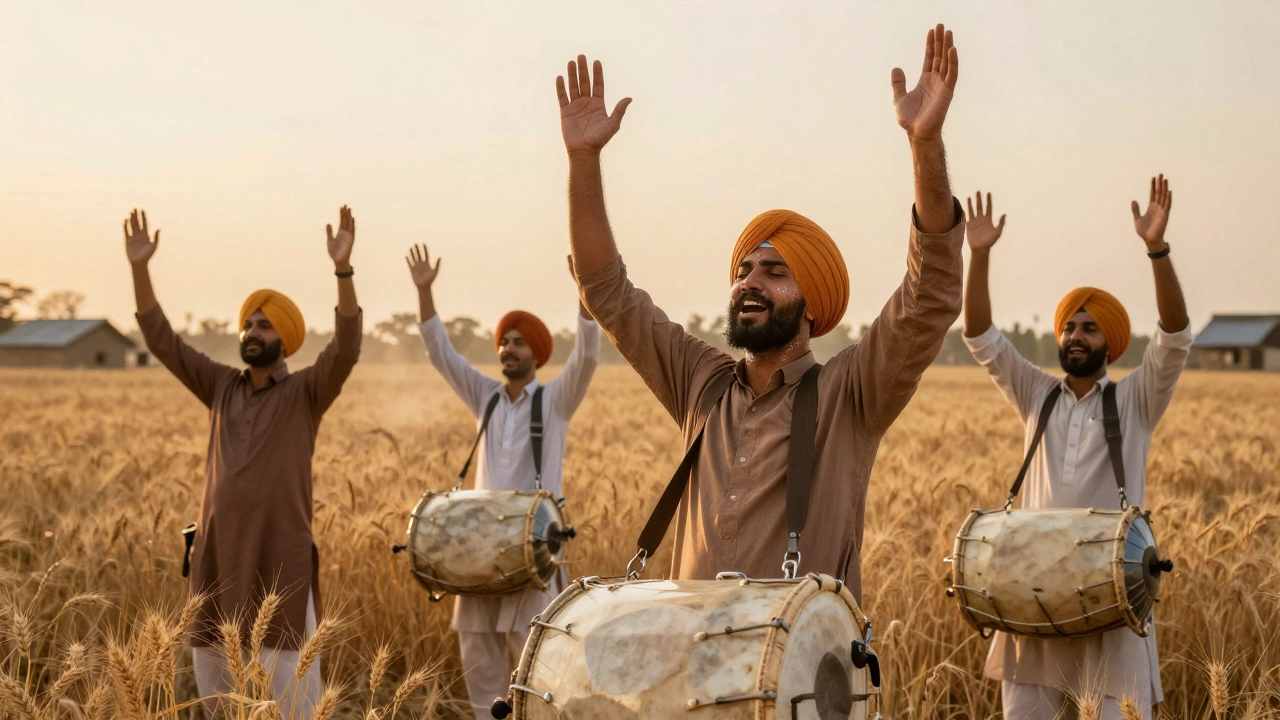
When you hear drums pounding and voices shouting "Hoi! Hoi!", you’re listening to Bhangra. Originating in the wheat-growing regions of Punjab, this isn’t just party music-it’s a celebration of harvest. Farmers sang these songs in the fields after a long day, using the dhol drum to keep time. The lyrics? Simple, direct, and full of earthy pride. One classic line goes: "Sada sunda, sunda sada, jatt da munda"-meaning "Always fresh, always new, the son of the farmer."
Bhangra doesn’t just celebrate crops. It’s a language of resilience. After Partition, displaced Punjabis carried these songs to the UK and Canada. Today, modern Bhangra fuses with hip-hop, but the roots are still in the soil. If you want to feel the heartbeat of rural Punjab, listen to the 1970s recordings by Kartar Singh or the live performances at village fairs in Amritsar.
Lavani: Power and Poetry from Maharashtra
In the dusty villages of Maharashtra, Lavani is more than song-it’s protest, seduction, and survival wrapped in one. Performed by women dancers in colorful sarees, Lavani songs speak of love, caste oppression, and the strength of women. The rhythm is fast, the beats heavy, and the lyrics sharp. One famous Lavani, "Mala Jivanat" ("I Want to Live"), was sung by women forced into brothels during British rule. They turned their pain into art, using metaphor to dodge censors.
Modern Lavani artists like Jyoti Kadam still perform in rural theatres. The music uses the dholki drum and the tambura. The lyrics? Often improvised, reacting to current events. A woman might sing about a corrupt local official one night, and a new lover the next. That’s the power of folk-it doesn’t stay frozen in time. It breathes.
Bihu: The Song of Assam’s New Year
Every April, when the sun rises over the Brahmaputra River, Assam bursts into song. Bihu is the festival of the new year, and the songs that come with it are pure joy. There are three types of Bihu-Rongali (spring), Kongali (autumn), and Bhogali (winter)-but Rongali Bihu is the biggest. The songs are sung by groups of young men and women, dancing in circles with bamboo sticks and hand claps.
One classic Bihu song, "Hoi Hoi Hoi", repeats a simple phrase that mimics the sound of birds and wind. The lyrics don’t tell a story-they create a mood. They’re about the scent of wet earth after rain, the first buds on mango trees, and the excitement of young love. The music uses the pepa (a buffalo horn instrument) and the toka (a wooden percussion stick). You won’t find sheet music for these songs. They’re learned by ear, passed from grandmother to granddaughter.
Garba: The Circle of Gujarat’s Devotion
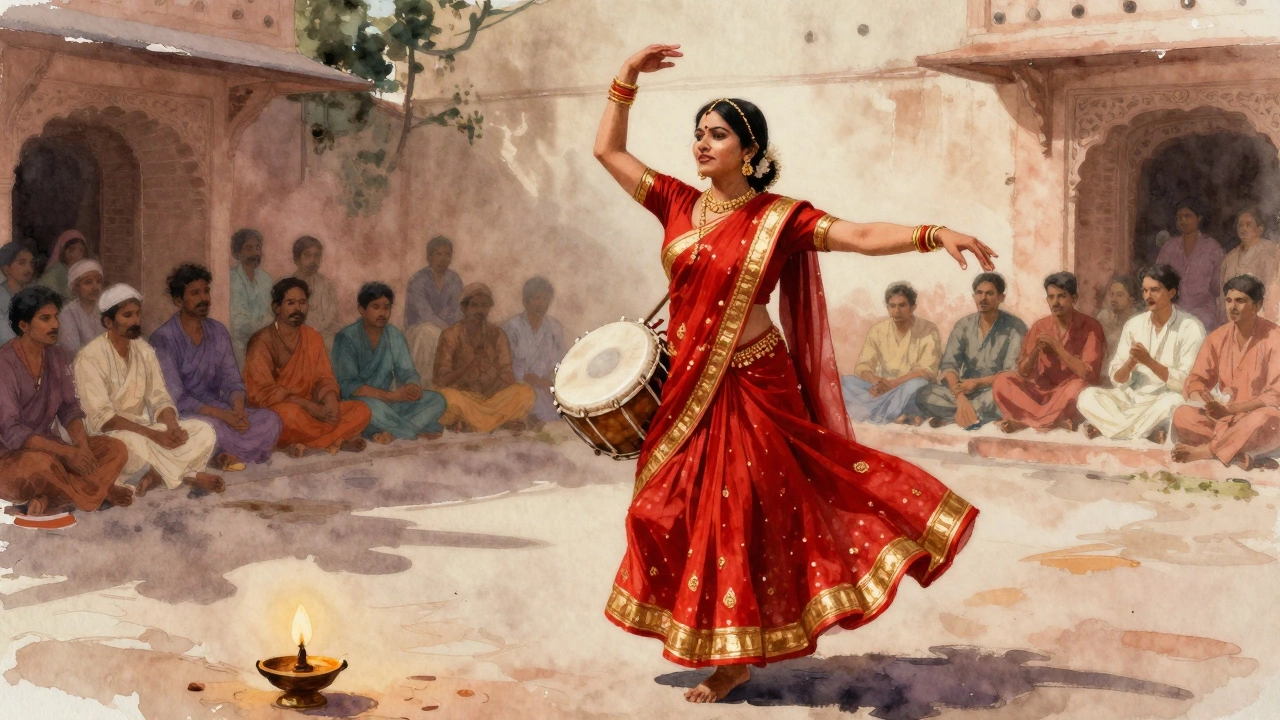
Garba isn’t just a dance. It’s a spinning prayer. During Navratri, women in Gujarat form concentric circles around a clay lamp or an image of the goddess Durga. They clap, step, and swirl for hours, singing songs that praise the divine feminine. The music is hypnotic, built on repetitive rhythms and call-and-response vocals.
One popular Garba song, "Jai Maa Amba", is sung in Gujarati with lines like "Aaj toh maa ne khele, koi na jeet sake"-"Today, the Mother has played, no one can win."
These songs have no composers. They’re collective creations, shaped by generations of women. Even today, in small towns like Vadodara or Surat, you’ll hear elderly women teaching children the old tunes. The songs don’t change much-but the voices do. That’s how tradition stays alive.
Panihari: The Water Carriers’ Lament
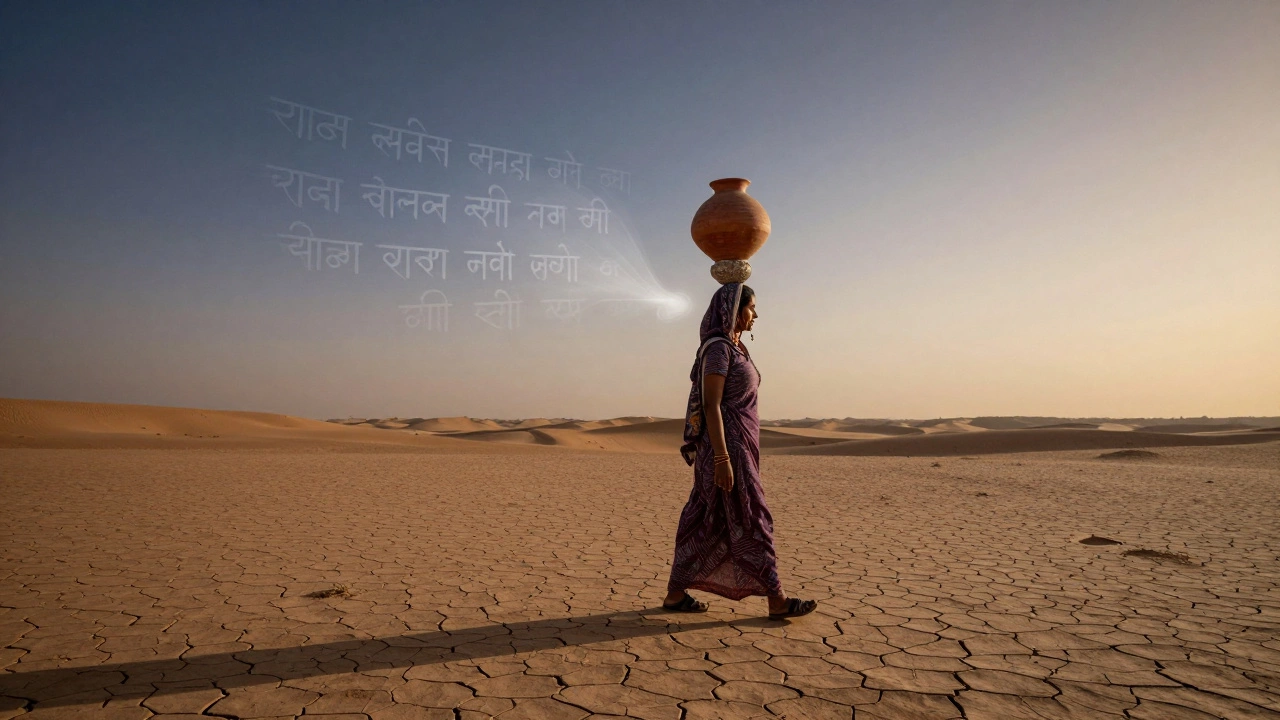
In the arid lands of Rajasthan and Haryana, women walked miles every day to fetch water. They sang while they walked. These songs are called Panihari. They’re slow, haunting, and full of longing. The lyrics speak of dry wells, absent husbands, and the weight of the clay pot on their heads.
One Panihari song goes: "Paani na aaya, dard bhi na gaya"-"Water didn’t come, and neither did the pain."
These songs were never meant for stages. They were sung in the quiet hours before dawn, when the only audience was the sky. Today, folk revivalists like the Rajasthan Folk Ensemble have recorded them. But the true power is still in the villages. If you visit a village near Jodhpur and ask an old woman to sing, she might hum one line-and then fall silent. Not because she’s tired. But because the memory is too heavy.
Chhau: The Masked Stories of Eastern India
In the forests of West Bengal, Jharkhand, and Odisha, men wear heavy masks and dance to tell epic tales. Chhau is a folk art that blends martial arts, dance, and music. The songs are sung by a small group of musicians using the dhol, shehnai, and dhamsa drum. The lyrics are in regional dialects-Santali, Sadri, or Odia-and recount stories from the Mahabharata or local legends.
One famous Chhau song, "Ravana Ka Dand", tells of the demon king’s punishment. The music doesn’t just accompany the dance-it drives it. The drumbeats mimic footsteps, the shehnai wails like a wounded animal. These performances happen only during spring festivals. They’re not for tourists. They’re sacred.
Why These Songs Still Matter
These aren’t museum pieces. They’re living traditions. When a farmer in Bihar sings a song about monsoon rains, he’s not just remembering his father-he’s warning his son about changing weather patterns. When a young girl in Assam learns Bihu from her grandmother, she’s not just learning steps-she’s learning how to hold her identity.
Modern Indian pop music borrows from these sounds. Artists like A.R. Rahman and Shreya Ghoshal have sampled Bihu rhythms and Lavani beats. But the originals? They’re still out there-in fields, villages, and homes where no one’s ever heard of Spotify.
Where to Hear Them Today
- Visit village fairs during harvest season in Punjab or Gujarat
- Check out the National Folk Museum in Delhi-they have audio archives of Panihari and Lavani
- Look for recordings by the Folk Music Society of India (they’ve preserved over 200 regional songs since 1985)
- Watch documentaries like "The Singing Villages" by the Indian Council for Cultural Relations
You won’t find these songs on trending playlists. But if you listen closely, you’ll hear the soul of India-not the version sold abroad, but the one that still sings in the dust, the rain, and the quiet hours before dawn.
What makes a song "folk" in India?
A folk song in India is one that’s passed down orally, created by ordinary people, and tied to a specific region or community. It’s not written by professional composers, doesn’t use modern instruments as its base, and reflects daily life-work, love, loss, or ritual. If it’s sung by a farmer, a weaver, or a mother while fetching water, it’s folk.
Are Indian folk songs only in Hindi?
No. Indian folk songs are sung in over 70 languages and dialects. Bihu is in Assamese, Lavani in Marathi, Panihari in Rajasthani and Haryanvi, Chhau in Santali and Odia. Hindi is just one of many. In fact, many folk songs are so regional that even speakers of other Indian languages can’t understand them.
Can I find recordings of these songs online?
Yes, but not on mainstream platforms like YouTube or Spotify. Look for archives from institutions like the National Mission for Manuscripts, the Sangeet Natak Akademi, or the Folk Music Society of India. Some recordings are free; others require academic access. Avoid commercial "Indian folk" playlists-they often mix pop with fake folk sounds.
Why do these songs sound different from Indian classical music?
Indian classical music is structured, based on ragas and talas, and taught through formal guru-shishya systems. Folk music is free-form, emotional, and rooted in community. It doesn’t follow strict scales. It uses simple instruments made from local materials-bamboo, clay, animal skin. It’s not about perfection. It’s about truth.
Are folk songs dying out in India?
In cities, yes. But in villages, they’re still alive. The real threat isn’t lack of interest-it’s lack of support. Young people leave for cities. Elders pass away without teaching. But there’s a quiet revival. Schools in Odisha now teach Chhau. Women’s cooperatives in Rajasthan record Panihari. These songs aren’t gone. They’re waiting to be heard again.
What to Do Next
If you want to truly understand Indian folk music, don’t just listen-go deeper. Visit a village during a festival. Talk to the singers. Ask them why they sing. Record it if you can. Don’t treat these songs as exotic background noise. They’re the voice of a land that’s been forgotten by the world-but never by itself.