When you think of South Asia, you might picture Diwali lights or Holi colors-but Bangladesh has its own rich, deeply rooted festival calendar shaped by history, religion, and the rhythm of the seasons. These aren’t just celebrations; they’re living expressions of Bengali identity, woven into daily life with music, food, color, and community. From the first day of the Bengali New Year to the quiet reverence of Muharram, these festivals turn streets into stages and homes into shrines.
Pohela Boishakh: The Bengali New Year
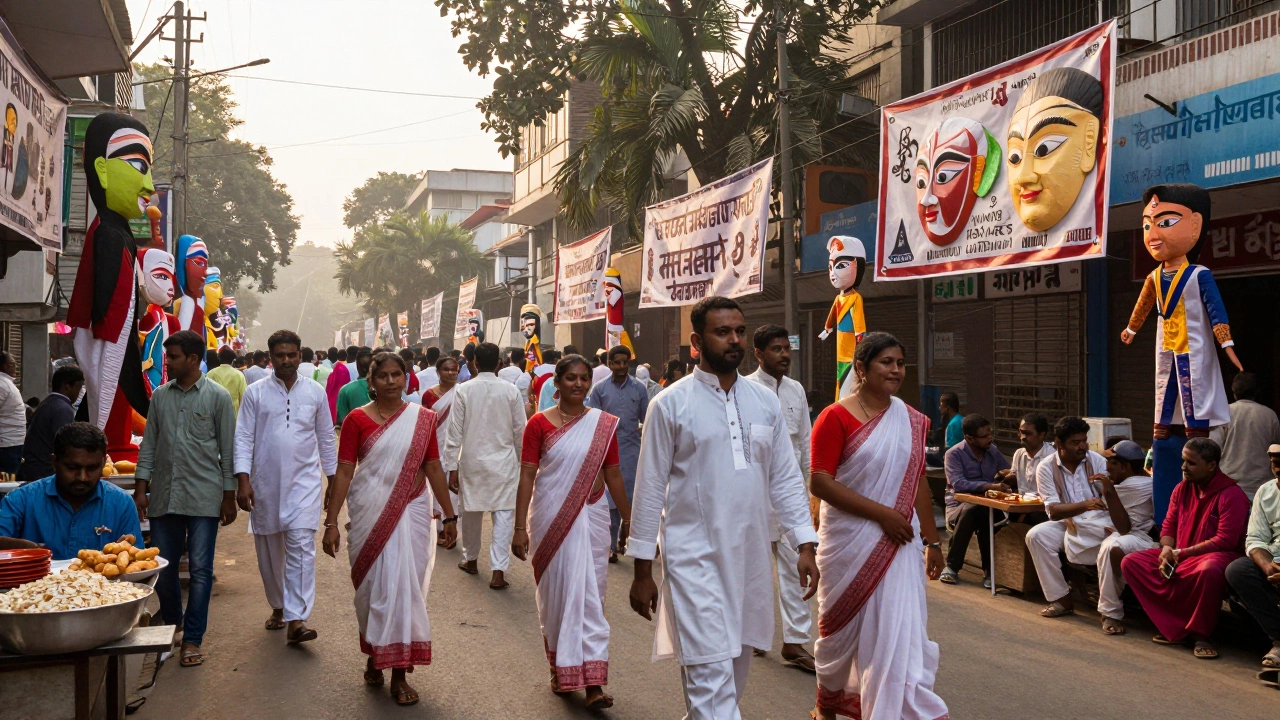
Every April 14, Bangladesh wakes up in red and white. Pohela Boishakh marks the start of the Bengali calendar, and it’s the one festival that unites people across religion, class, and region. In Dhaka, Chittagong, and Sylhet, you’ll see men in panjabis and women in white saris with red borders walking to cultural programs. Street vendors sell traditional sweets like shemai and panta bhat-fermented rice soaked overnight, served with fried fish and green chili. The day begins with Mangal Shobhajatra, a colorful procession of giant masks, puppets, and hand-painted banners. It’s not just a parade; it’s a protest against intolerance, a declaration of cultural pride. UNESCO recognized it in 2016 as an Intangible Cultural Heritage, not because it’s old, but because it’s alive-taught in schools, painted by children, sung by grandmothers.
Durga Puja: The Goddess Among Us
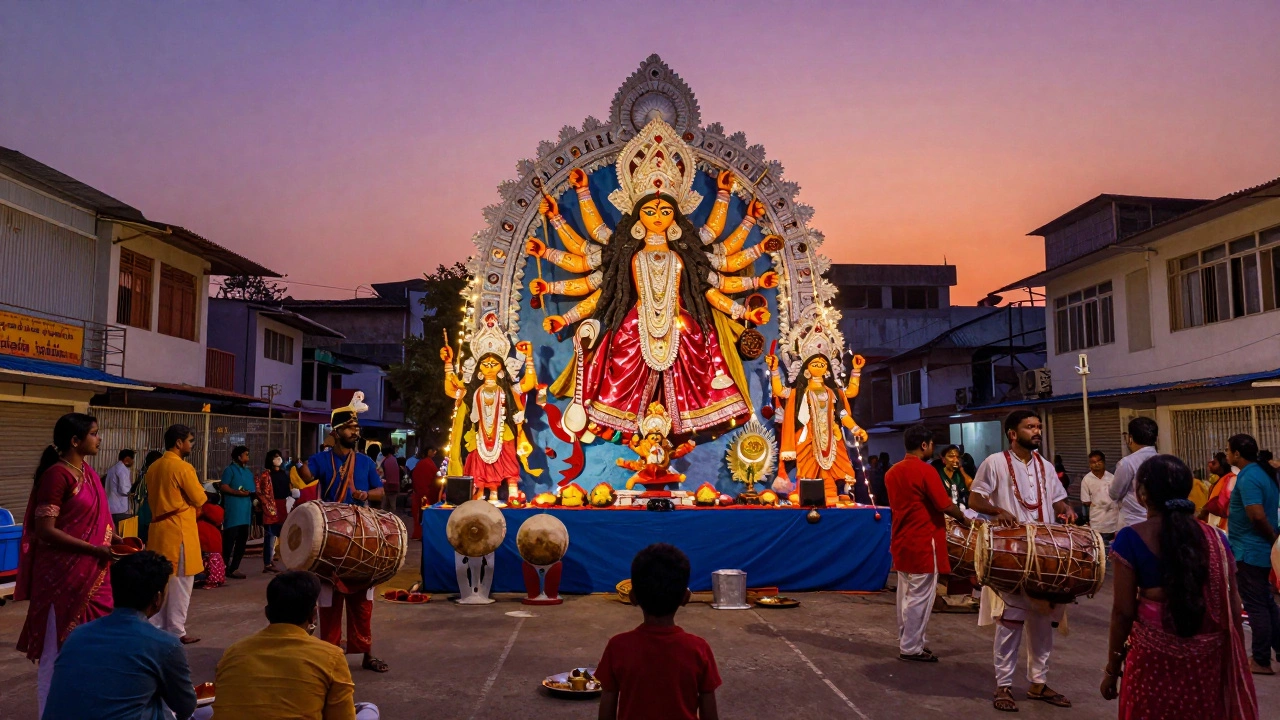
For ten days every autumn, Bangladesh transforms into a sea of clay and color. Durga Puja, though rooted in Hindu tradition, is celebrated with such energy that even non-Hindus join in. In Dhaka’s neighborhoods like Ramna and Motijheel, pandals (temporary temples) rise overnight. Each one tells a story-mythological, political, or even environmental. One year, a pandal showed Durga holding a tree instead of a sword; the next, she stood beside a child holding a book. The air fills with dhak drums and bhajans. Families gather for bhog, a vegetarian meal shared with neighbors. On the final day, Bishorjon, the idols are carried to rivers in solemn processions. Women weep. Men chant. Children watch in silence. It’s not just worship; it’s farewell. And it’s the largest cultural event in the country, drawing over 10 million people annually.
Eid al-Fitr and Eid al-Adha: Faith, Food, and Family
Bangladesh is over 90% Muslim, and Eid is its heartbeat. Eid al-Fitr, after Ramadan, is the sweeter of the two. People wake before dawn, bathe, wear new clothes-often handwoven jamdani saris or lungi with gold thread-and head to open-air prayer grounds. The streets are quiet until the call to prayer, then erupt in laughter and greetings: Eid Mubarak! Gifts of cash, called Eidi, are given to children. The day ends with feasts: kheer, pulao, and bhorta made from mashed vegetables and chili. Eid al-Adha, the Festival of Sacrifice, is quieter but heavier. Families sacrifice a goat or cow, sharing the meat with neighbors, the poor, and relatives. In rural villages, you’ll see men carrying livestock on bicycles. In cities, it’s a day of quiet reflection. But whether in a slum or a mansion, the message is the same: generosity is sacred.
Shab-e-Barat: Night of Forgiveness
On the 14th night of Sha’ban, before Ramadan, Bangladesh turns night into day. In villages, people light clay lamps called diyas outside their homes. In cities, families gather to pray, recite the Quran, and offer sweets to the dead. It’s not a public holiday, but you’ll see mosques filled past midnight. Children carry paper lanterns shaped like stars. Some burn incense and write names of loved ones on paper, then let the ashes float down rivers. It’s a quiet, personal ritual-no loud music, no crowds. But it’s deeply felt. For many, it’s the only night of the year when the living and the dead feel close.
Muharram: Mourning and Unity
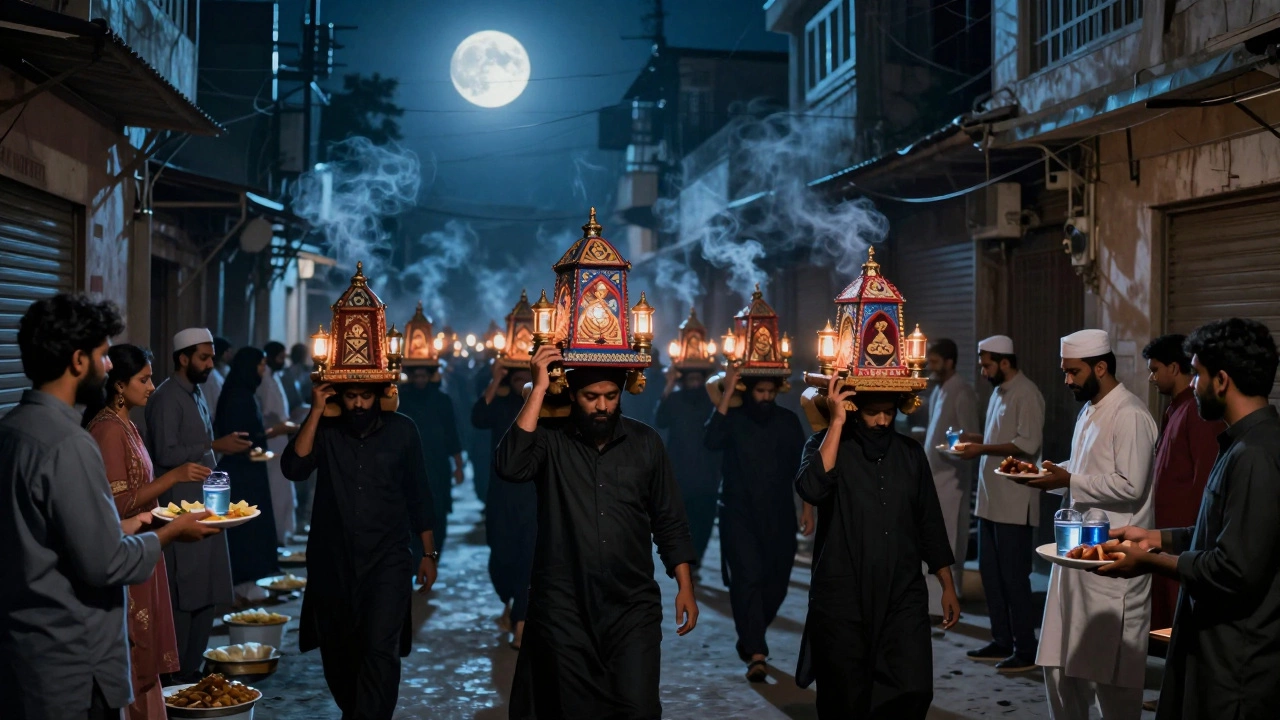
The first ten days of Muharram are somber, sacred, and strangely beautiful. Shia Muslims commemorate the martyrdom of Imam Hussain, but in Bangladesh, even Sunnis join the processions. In Dhaka’s Old Dhaka and Sylhet, you’ll see men in black, chanting Latmiya-poems of grief. Taziyas, ornate replicas of Imam Hussain’s tomb, are carried on shoulders. Some beat their chests. Others stand still, eyes closed. The most striking part? Hindu neighbors bring food. Christians offer water. It’s not a religious event-it’s a human one. In 2024, over 500,000 people walked the streets of Dhaka in a single procession. No one asked for permission. No one needed to.
Charak Puja: The Ritual of Pain
On the last day of the Bengali month of Chaitra, in rural areas like Pabna and Jessore, you’ll find men hanging from hooks pierced into their skin. Charak Puja is a Hindu ritual of devotion, where devotees swing from bamboo poles attached to steel hooks in their backs. It’s not for show-it’s a vow. Men and women do it to honor the goddess Kali, to ask for healing, or to give thanks. The ritual lasts one night. The next morning, the skin is clean, the wounds are healing, and the community shares a meal. Outsiders call it extreme. Locals call it faith. The government banned it in 2020 over safety concerns, but in many villages, it still happens-quietly, respectfully, passed down through generations.
Other Festivals: Quiet but Powerful
Beyond the big ones, Bangladesh pulses with smaller, local traditions. In the Sundarbans, fishermen celebrate Shitala Puja to ward off disease. In the Chittagong Hill Tracts, the Tripura community holds Biju, a festival of planting and harvest. In Sylhet, the Sufi shrine of Hazrat Shah Jalal draws thousands during his Urs, where qawwali music fills the air for days. These aren’t tourist attractions. They’re threads in a fabric that’s been woven for centuries.
Why These Festivals Matter
These aren’t just dates on a calendar. They’re how Bangladesh remembers who it is. After the trauma of 1971, after decades of political upheaval, these festivals became anchors. They don’t ask you to believe-they ask you to show up. To eat with strangers. To sing with neighbors. To carry a statue through rain. In a country where religion often divides, these festivals unite. They don’t erase differences-they make space for them. That’s why, when you walk through Dhaka during Pohela Boishakh or stand in a crowd during Eid, you don’t just see a festival. You see a nation breathing.
Are Bangladesh festivals open to tourists?
Yes, most major festivals like Pohela Boishakh, Durga Puja, and Eid are welcoming to visitors. Locals appreciate curiosity and often invite tourists to join meals or processions. Just be respectful-dress modestly, ask before taking photos, and never interrupt rituals. Many festivals are free to attend, though some religious sites may ask for a small donation.
What’s the best time of year to visit Bangladesh for festivals?
April is ideal for Pohela Boishakh. October is perfect for Durga Puja. Eid dates change yearly based on the lunar calendar, but they usually fall in March-April and June-July. Muharram is in July or August. If you want the full experience, plan around April or October. Weather is warm and humid, but the energy is unmatched.
Do people in Bangladesh celebrate Hindu and Muslim festivals equally?
Not equally in numbers, but deeply in spirit. Durga Puja draws millions of Hindus, but even non-Hindus visit pandals and help with food. Eid is the biggest Muslim festival, but Hindu and Christian neighbors often bring sweets to Muslim families. Bangladesh’s identity is built on this overlap. You’ll see Christian schoolteachers joining Pohela Boishakh parades and Muslim shopkeepers closing early for Durga Puja. It’s not about religion-it’s about belonging.
Are there any festivals unique to Bangladesh?
Yes. Pohela Boishakh and Mangal Shobhajatra are uniquely Bengali and are celebrated nowhere else with the same scale. Charak Puja, while found in parts of India, is far more visible and culturally central in Bangladesh. Shab-e-Barat, though observed across the Muslim world, takes on a distinct local flavor here-with clay lamps, street lanterns, and river offerings that aren’t common elsewhere.
How do festivals in Bangladesh compare to those in India?
They share roots-both come from the same Bengali cultural soil. But after Partition in 1947, Bangladesh developed its own rhythm. Durga Puja here is more community-driven, less commercialized than in West Bengal. Pohela Boishakh is a national holiday in Bangladesh, while in India it’s mostly regional. Eid is more dominant in Bangladesh, while in India, Diwali holds equal weight. The difference isn’t in the rituals-it’s in how they’re woven into national identity.