Tamil Deities & Traditions Explorer
Select a deity or tradition to explore its significance in Tamil culture:
Explore Tamil Spirituality
Select an option from the left to learn about the core beliefs, festivals, and cultural impact.
Walk through the streets of Chennai or the rural villages of Madurai, and you will see a spiritual rhythm that has persisted for thousands of years. It is not just about visiting temples; it is woven into daily life, from the morning lamp lit at dawn to the specific foods offered during festivals. But what exactly do the Tamil people believe in? The answer is complex because it is not a single, monolithic doctrine. Instead, it is a rich tapestry of ancient Hinduism, local folk traditions, and deep philosophical roots that have evolved over millennia.
Many outsiders assume that all South Indians practice the same version of Hinduism as those in the North. This is a common misconception. The Tamil spiritual landscape is distinct, heavily influenced by the Dravidian culture and the poetic legacy of the Sangam literature. To understand Tamil beliefs, you have to look beyond the standard rituals and dive into the unique deities, the devotional poetry, and the community-centric nature of their faith.
The Core: Shaivism and Vaishnavism
At the heart of Tamil belief lies Shaivism, the devotion to Lord Shiva. However, this is not just abstract worship. In Tamil Nadu, Shiva is often seen as the supreme being who is both distant and intimately present. The Nalayira Divya Prabandham, a collection of hymns composed between the 6th and 9th centuries CE, plays a crucial role here. These hymns were so influential that they are still recited in temples today, effectively forming a 'Veda' for Tamil Hindus.
Alongside Shaivism, Vaishnavism, the devotion to Lord Vishnu, holds significant sway. The Alvar saints, who were poet-saints devoted to Vishnu, wrote verses that emphasized personal love and surrender to the divine. Unlike the ritualistic approach often seen elsewhere, these traditions focus on bhakti (devotion) as the primary path to liberation. For a Tamil believer, God is not just a cosmic force but a father, a friend, or a lover.
Murugan: The Unique Tamil Deity
If there is one deity that truly defines Tamil identity, it is Murugan, also known as Kartikeya or Skanda. While worshipped across India, his significance in Tamil Nadu is unparalleled. Murugan is considered the god of war, wisdom, and beauty. He is deeply tied to the Tamil language itself; legend says he created the first Tamil grammar text, Tolkappiyam.
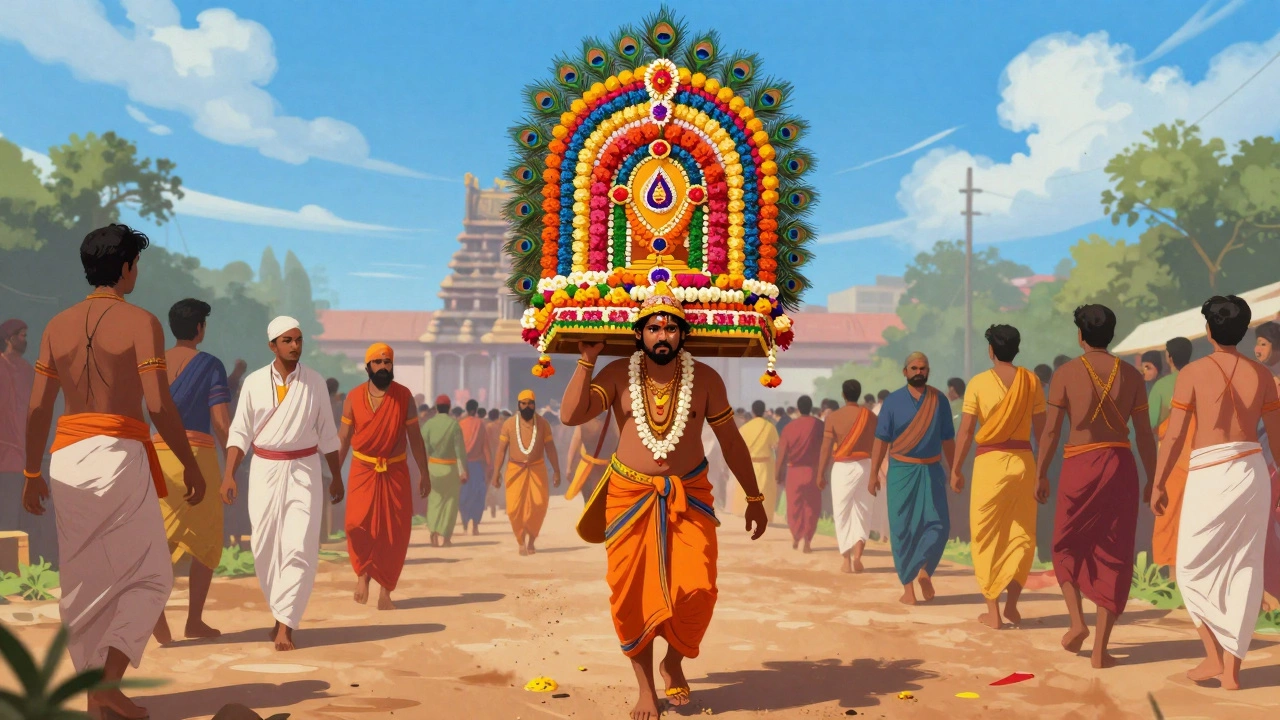
The festival of Thaipusam is perhaps the most visible expression of this devotion. During Thaipusam, devotees perform acts of penance, carrying kavadi (ornate structures) to honor Murugan. This isn't just about physical endurance; it is a profound act of gratitude and sacrifice. Murugan’s six abodes (Aruropadai Veedu) in Tamil Nadu are major pilgrimage sites, drawing millions who seek his blessings for success and protection.
| Deity | Primary Domain | Cultural Significance | Major Festival |
|---|---|---|---|
| Shiva | Transformation, Destruction | Supreme Being in Shaivism | Maha Shivaratri |
| Vishnu | Preservation, Protection | Central to Vaishnava Bhakti | Vasanthotsavam |
| Murugan | War, Wisdom, Language | Patron of Tamil Culture | Thaipusam |
| Mariamman | Health, Rain, Fertility | Folk Goddess of Rural Areas | Mariamman Teppam |
The Role of Folk Traditions and Mariamman
You cannot fully grasp Tamil beliefs without acknowledging the strong presence of folk religion. In rural Tamil Nadu, the goddess Mariamman is widely worshipped. She is associated with rain, fertility, and disease prevention. Unlike the temple-bound deities, Mariamman is often invoked in open-air shrines called kallu mandapams.
This aspect of belief highlights a practical side of Tamil spirituality. People turn to Mariamman when facing health crises or droughts. The rituals can be intense, involving animal sacrifices in some traditional communities, though this practice is declining and controversial. This duality-between the high philosophy of the Alvars and Nayanars and the earthy, immediate needs addressed by folk gods-is a defining feature of Tamil religious life.
Sangam Literature and Ancient Roots
To go deeper, we must look back to the Sangam period (roughly 300 BCE to 300 CE). The Sangam poets did not write about gods in the way later Puranic texts did. Instead, they focused on human emotions, nature, and ethics. Their worldview was shaped by akam (inner feelings, love) and puram (outer world, war, heroism).
This literary heritage suggests that early Tamil beliefs were more animistic and nature-centric. Mountains, forests, and rivers were sacred. Over time, these natural spirits merged with mainstream Hindu deities. For example, the mountain god became associated with Shiva, and the river goddess with Parvati. Understanding this evolution helps explain why Tamil rituals often include offerings to local spirits alongside major gods.
Daily Practices and Community Life
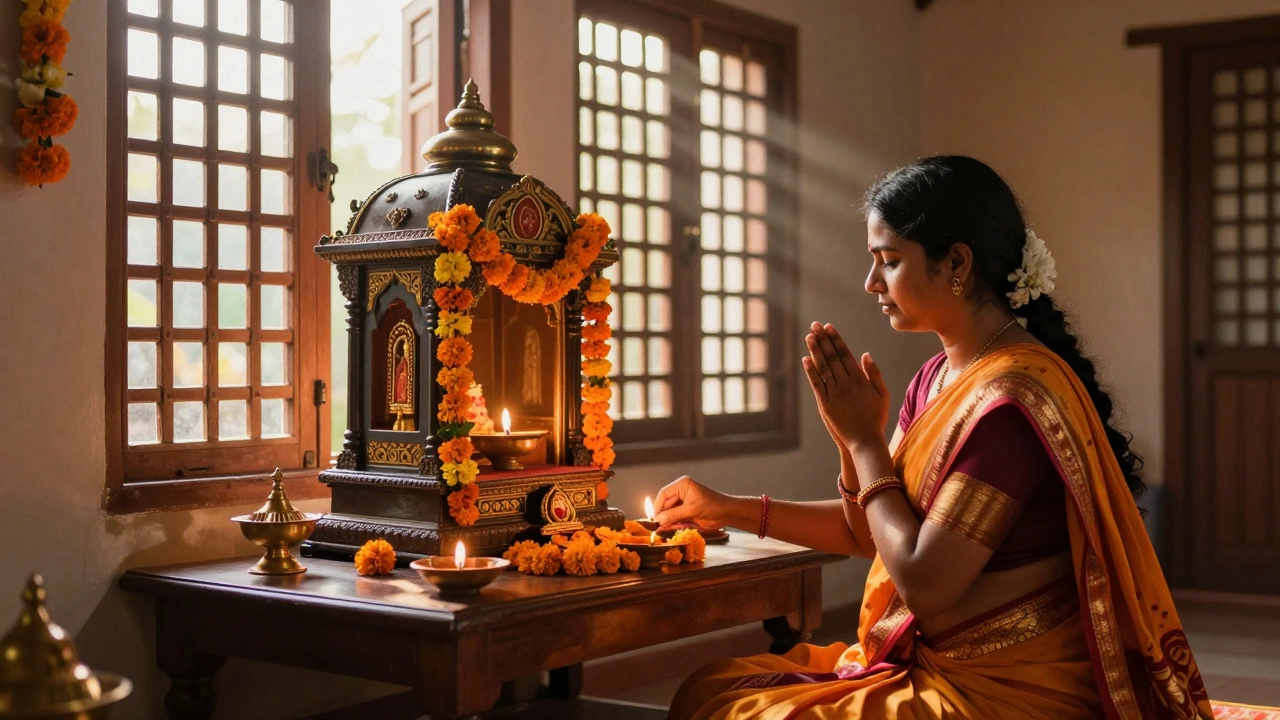
Belief in Tamil culture is not confined to special occasions. It is embedded in daily routines. Most households have a small shrine where lamps are lit every evening. Food is considered pure only after it is offered to the deity. This concept of naivedyam (offering) reinforces the idea that eating is a sacred act.
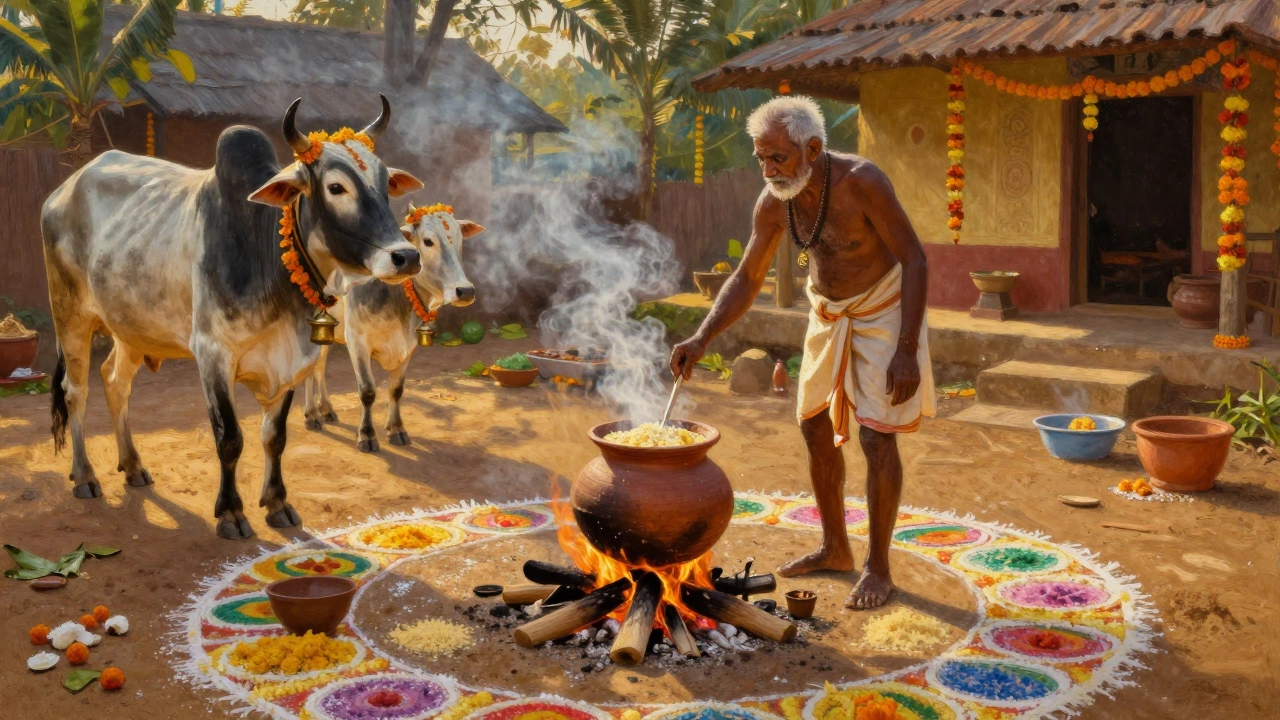
Community festivals like Pongal are another key pillar. Pongal is not just a harvest festival; it is a thanksgiving to the sun, cattle, and nature. The four days of Pongal involve cooking a special dish (also called Pongal), decorating homes with kolam (rangoli), and celebrating with family. These practices strengthen social bonds and reinforce shared values.
Modern Shifts and Global Influence
In recent decades, Tamil beliefs have adapted to modern life. Urbanization has led to smaller families and less time for elaborate rituals. However, technology has bridged gaps. Live streams of temple ceremonies allow Tamils living abroad to participate in real-time. Social media platforms are filled with discussions on astrology, which remains highly influential in decision-making, especially regarding marriage and business ventures.
There is also a growing interest in reviving ancient Tamil knowledge systems. Movements promoting the use of Sanskrit-free Tamil in religious contexts reflect a desire to reclaim cultural identity. This trend shows that while the core beliefs remain stable, their expression is dynamic and responsive to contemporary challenges.
Conclusion: A Living Tradition
So, what do Tamil people believe in? They believe in a interconnected universe where the divine is accessible through devotion, poetry, and community. It is a faith that balances high philosophy with practical needs, ancient texts with modern realities. Whether through the chanting of Tirukkural verses or the lighting of a diya at dusk, Tamil spirituality continues to thrive, offering guidance and comfort to millions around the world.
Is Tamil Hinduism different from other forms of Hinduism?
Yes, Tamil Hinduism places greater emphasis on bhakti (devotion) through poetry and music, particularly the works of the Alvar and Nayanar saints. It also has unique regional deities like Murugan and Mariamman, and distinct ritual practices rooted in Dravidian culture.
Who is the most important god in Tamil Nadu?
While Shiva and Vishnu are widely worshipped, Lord Murugan holds a special place as the patron of Tamil language and culture. Many Tamils consider him the most iconic deity representing their regional identity.
Do Tamil people follow vegetarian diets due to religious beliefs?
Vegetarianism is common among Brahmin and certain caste groups in Tamil Nadu due to religious principles of ahimsa (non-violence). However, non-vegetarian food is widely consumed across other communities, reflecting diverse dietary traditions.
What is the significance of the Tirukkural in Tamil beliefs?
The Tirukkural, written by Thiruvalluvar, is a classic work of ethical philosophy. Though not strictly religious, it is revered for its universal moral teachings on virtue, wealth, and love, influencing Tamil thought and behavior profoundly.
How does astrology play a role in Tamil daily life?
Astrology is deeply integrated into Tamil culture. Birth charts are consulted for marriages, starting new businesses, and even choosing auspicious times for travel. It serves as a guide for making life decisions in harmony with cosmic forces.