Regional Folk Dance Explorer
Discover the vibrant world of Indian folk dances from different regions. Select a dance form to learn about its origins, cultural significance, and key characteristics.
Select a dance to learn more
No dance selected yet. Choose one from the dropdown above to see details.
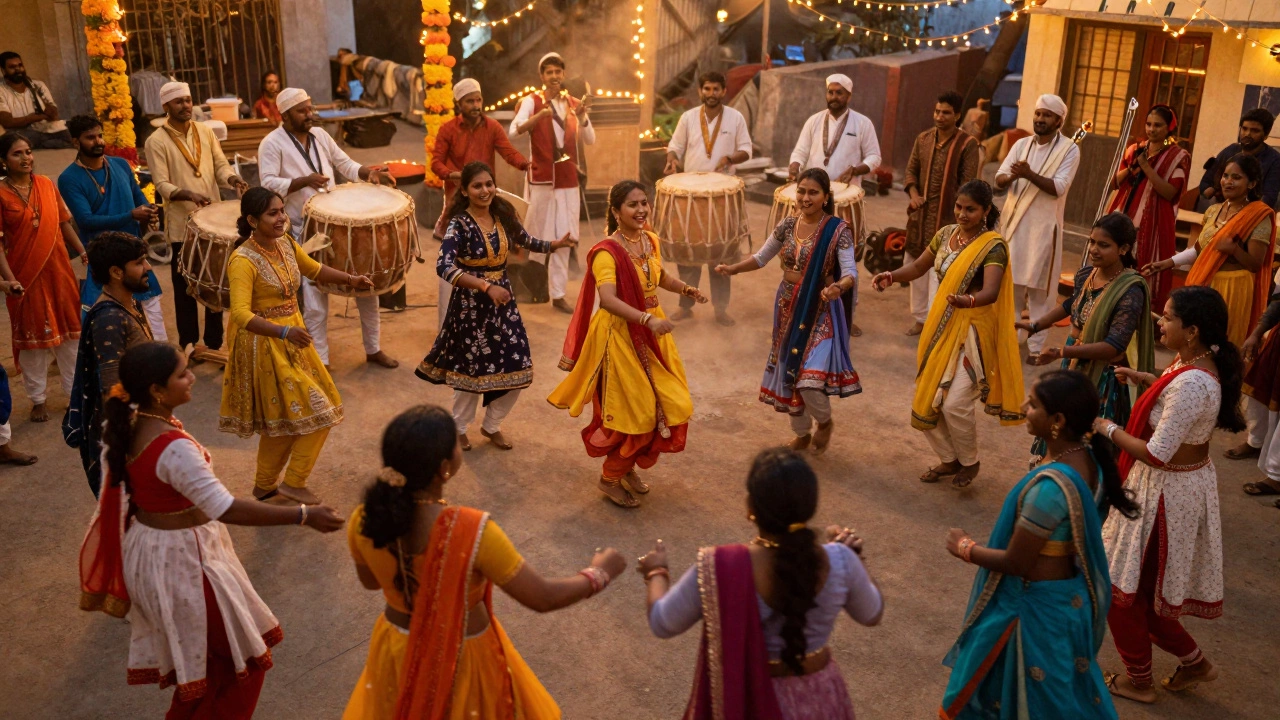
Have you ever watched a group of people moving in perfect rhythm during a village festival? Maybe you saw colorful costumes spinning in a circle or heard drums beating a fast tempo that made your feet want to tap. That energy is the heart of a local dance. It is not about perfect technique or sitting in a quiet theater. It is about community, celebration, and history moving together in real time. When you ask what a local dance is, you are really asking about the heartbeat of a region. It is the physical story of where people come from, what they grow, and how they celebrate life.
Many people think dance is only for stages and professional performers. But the truth is, dance started in the fields and courtyards long before theaters existed. Local dance forms are deeply tied to the land and the people who live on it. They are not just entertainment; they are a way of passing down stories, prayers, and social rules from one generation to the next. If you want to understand a culture, you do not just read its books. You watch how it moves.
Defining Local Dance and Folk Traditions
So, what exactly makes a dance form "local" or "folk"? The main difference lies in where it comes from and who performs it. Classical dances often have strict rules, specific training institutions, and a defined history of court patronage. In contrast, a local dance evolves naturally within a community. It grows from daily life activities like farming, harvesting, or fishing. There is no single "master" who invented it. Instead, it is created by the collective memory of the people.
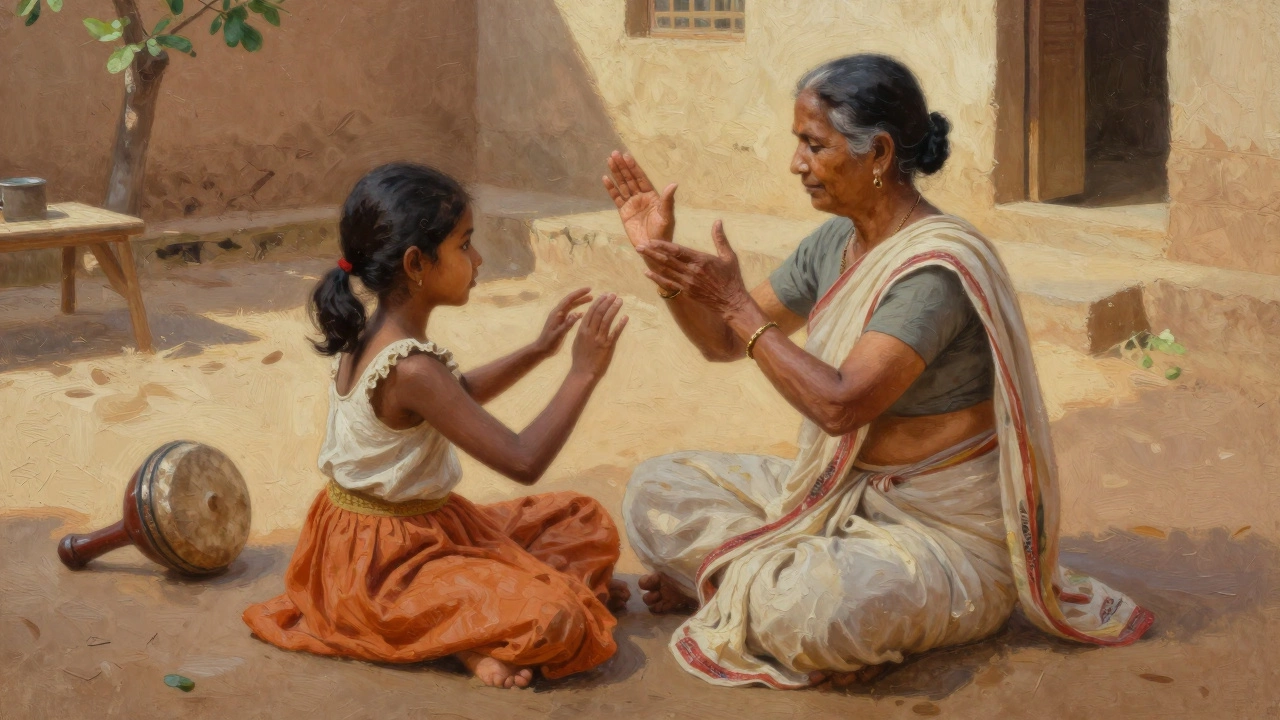
Folk Dance is a traditional dance form that originates from a specific region or community, often performed during festivals and social gatherings without rigid academic training. These dances are usually passed down orally and through observation. A grandmother teaches her granddaughter the steps while cooking. A brother shows his sister the moves during a wedding rehearsal. This organic transmission keeps the dance alive and adaptable. If the community changes, the dance changes slightly, but the core spirit remains.
Unlike classical forms that might focus on intricate hand gestures or spiritual devotion to a deity in a formal setting, local dances are often about joy and participation. You will rarely see a passive audience at a folk dance performance. Everyone is invited to join the circle. The boundary between the performer and the spectator is very thin. This inclusivity is what makes these forms so powerful. They are not meant to be observed from a distance; they are meant to be lived.
Roots and Origins in Daily Life
To understand these dances, you have to look at the history of the region. Most local dance forms in India, for example, are directly linked to agriculture and seasons. Think about the harvest. When the crops are ready, there is a sense of relief and gratitude. This feeling translates into movement. Dances like the Bihu in Assam or the Garba in Gujarat are deeply connected to the agricultural calendar. They mark the beginning of the sowing season or the end of the harvest.
Religion and mythology also play a huge role. Many dances are performed to please local deities or to reenact stories from ancient epics. However, the storytelling is usually simple and direct. It does not require a scholar to understand it. The movements mimic the actions of birds, animals, or daily chores. This connection to nature makes the dance feel grounded and authentic. It is not an abstraction; it is a reflection of the reality the dancers face every day.
Social bonding is another key origin. In villages, the dance floor was often the only place where different families or clans could mix freely. Weddings were the biggest occasion for this. A dance performance during a wedding was not just a show; it was a way to welcome the new bride into the community. It signaled unity. Even today, when you see a group of people dancing at a wedding in a small town, you are witnessing a ritual that has survived for centuries. It strengthens the social fabric of the community.
Popular Examples of Regional Dance Forms
India is a vast country with incredible diversity. Each state, and sometimes each district, has its own unique style. Let's look at a few specific examples to see how geography shapes movement. In Punjab, the energy is high and the beats are loud. The Bhangra dance is famous worldwide. Originally, it was a celebration of the spring harvest. Men would jump high and clap their hands to the beat of the Dhol drum. It represents strength and vitality. Today, you see it at weddings and sports events, but its roots are in the fields of wheat.
Bhangra is a vibrant folk dance from Punjab characterized by high energy, jumping movements, and the rhythmic beating of the Dhol drum. The costumes are bright, often featuring turbans and colorful kurtas. The music is fast, making it hard to stay still. It is a dance of celebration and pride. When you watch Bhangra, you feel the heat of the sun and the joy of a good harvest.
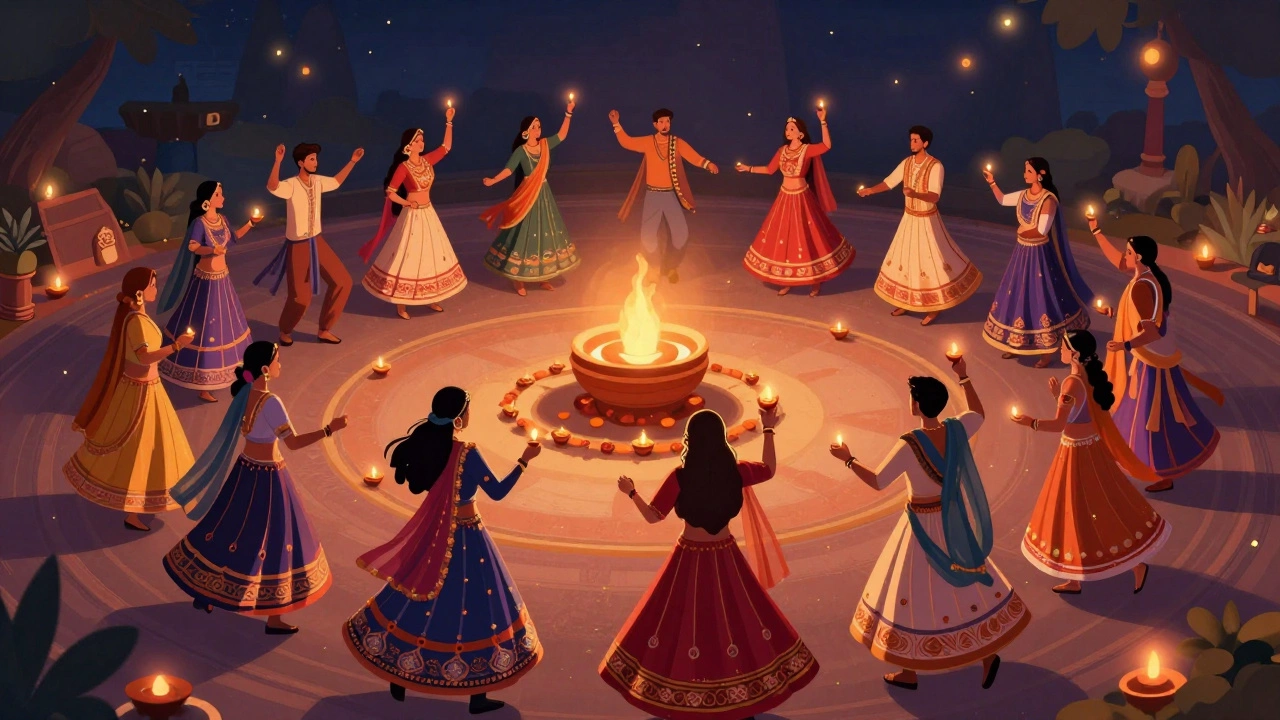
Move west to Gujarat, and the style changes. Here, the Garba dance is the highlight of the Navratri festival. Women and men stand in concentric circles and move in a specific pattern around a central light or image of the goddess. The movements are graceful but rhythmic. Clapping is a major part of the dance. It is a dance of devotion and community harmony. Unlike the high jumps of Bhangra, Garba is about synchronization and flow. The circle represents unity and the cycle of life.
Garba is a traditional Gujarati folk dance performed in circles during Navratri, involving rhythmic clapping and graceful steps around a central light. The attire is often Chaniya Choli for women and Kediya for men. The music uses traditional instruments like the Dhol and Nagada. It creates a hypnotic atmosphere where thousands of people move as one.
In the south, the styles are more intricate and often involve storytelling. Kathakali from Kerala is often classified as classical, but it has strong folk roots in the temple traditions. However, a more purely folk example is the Thiruvathira dance. Performed by women, it involves sitting in a circle and singing songs while moving gracefully. It celebrates the bond between women and the goddess Parvati. The movements are slow and fluid, mimicking the flow of water. It is a dance of femininity and grace.
Thiruvathira is a traditional folk dance from Kerala performed by women in a circle, celebrating the goddess Parvati with graceful movements and songs. The dancers wear white and gold sarees. The music is soft, using percussion instruments like the Thappu. It is a serene contrast to the high-energy dances of the north.
Another fascinating example is the Chhau dance from Odisha and West Bengal. This is a martial dance. It involves masks and acrobatic movements. It depicts stories from the Mahabharata and Ramayana. The dancers wear heavy masks and move with power. It is not just a dance; it is a performance of strength and skill. The training is rigorous, often involving physical conditioning similar to martial arts. It shows how dance can also be a form of combat training and storytelling combined.
Key Characteristics of Folk Performances
What do all these different dances have in common? First, the music is always live and integral. You cannot separate the dance from the sound. The instruments used are often traditional and made locally. Drums, flutes, and string instruments create the rhythm. The musicians are part of the performance, not just background support. They interact with the dancers, speeding up or slowing down based on the energy of the crowd.
Costumes are another defining feature. They are not just decorative; they are functional and symbolic. Bright colors are common because they represent joy and prosperity. Jewelry and accessories often make sound when the dancer moves, adding to the rhythm. For example, the anklets worn in many Indian folk dances create a clicking sound that matches the beat. This turns the body into an instrument.
Finally, the steps are designed for group participation. While some lead, most are designed so that anyone can learn them quickly. The choreography is repetitive but allows for individual expression within the structure. This is why a child can dance alongside an elder. The steps are simple enough to learn but complex enough to master over a lifetime. It is a democratic art form that belongs to everyone in the community.
Folk Dance vs. Classical Dance
People often confuse folk dance with classical dance. While they share cultural roots, there are clear differences. Classical dances have a codified system of movements, often written down in ancient texts like the Natya Shastra. They require years of formal training. Folk dances are more flexible and evolve with time. They do not have a strict rulebook. Here is a quick comparison to help you understand the distinction.
| Feature | Folk Dance | Classical Dance |
|---|---|---|
| Training | Informal, community-based | Formal, guru-shishya tradition |
| Purpose | Celebration, social bonding | Artistic expression, devotion |
| Structure | Flexible, adaptable | Rigid, codified rules |
| Performance | Group participation | Solo or small ensemble |
| Origin | Everyday life, agriculture | Courts, temples |
Understanding this difference helps you appreciate the unique value of local dance. It is not "lesser" than classical dance; it is simply different. It serves a different function in society. While classical dance elevates the spirit through discipline, folk dance connects the community through shared joy. Both are essential for a complete cultural ecosystem.
Preservation in the Modern World
Today, urbanization and technology pose challenges to these traditions. Young people move to cities and lose touch with their village roots. However, there is a growing movement to preserve these forms. Cultural festivals now showcase folk dances on big stages. Schools are incorporating local dance into their curriculum. Social media has also helped. Videos of traditional dances go viral, sparking interest among the youth.
But preservation is not just about recording videos. It is about keeping the context alive. If you only perform the dance without understanding the story or the season, it loses its meaning. Efforts are being made to document the oral histories and the specific rituals associated with each dance. This ensures that the next generation knows not just the steps, but the soul of the movement. It is about keeping the flame burning in a changing world.
What is the main purpose of a local dance?
The main purpose is community bonding, celebration of festivals, and passing down cultural stories. It often marks agricultural cycles or religious events.
How does folk dance differ from classical dance?
Folk dance is informal, community-based, and flexible, while classical dance is formal, codified, and requires rigorous training in specific traditions.
Can anyone learn local dance forms?
Yes, most local dances are designed for group participation and do not require professional training. They are often learned by observation and practice.
What instruments are used in folk music?
Common instruments include drums like the Dhol, Nagada, and Thappu, as well as flutes and string instruments specific to the region.
Why are costumes important in local dance?
Costumes are symbolic and functional. They represent the region's culture, and accessories like anklets often create rhythm during the performance.
How are local dances preserved today?
They are preserved through cultural festivals, school curriculums, digital documentation, and community efforts to teach the stories behind the movements.