Modern Indian Dance Music Explorer
Find Your Sound
Select the elements that define your preferred dance vibe to discover the genre.
Analysis Result
-- BPM---
Select your preferences and click 'Identify Genre' to see what you're listening to.
---
---
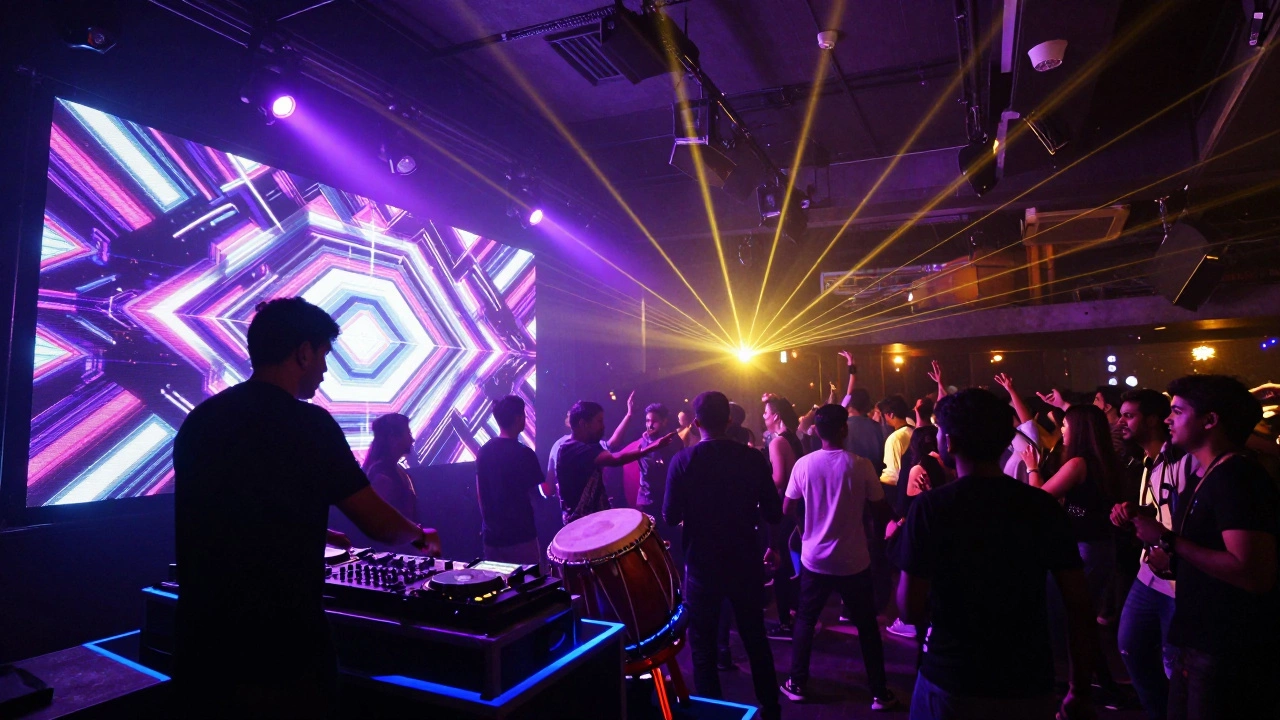
Walk into any club in Mumbai or London tonight, and you won't hear the same soundtrack as your parents did in the 1990s. The term "dance music" in India has shifted dramatically. It is no longer just about disco remixes of old songs. Today, it is a complex blend of traditional regional rhythms and modern electronic production. But what do we actually call this new sound?
If you are looking for a single label, you might be disappointed. However, the most accurate term for today's dominant dance sound is Bhangra-pop fusion. This genre takes the high-energy dhol beats of Punjab and mixes them with synthesizers, trap hi-hats, and auto-tuned vocals. It is the heartbeat of modern Indian nightlife.
Why is there no single name for Indian dance music today?
The landscape is too fragmented. Unlike the West, where "EDM" became a catch-all term, India's dance scene is defined by regional roots. A track from Bengal will sound different from one from Goa because they use different traditional instruments and scales. Therefore, we see micro-genres rather than one unified label.
The Dominance of Bhangra-Pop Fusion
To understand what dance music is called now, you have to look at the charts. Since the early 2020s, artists like Diljit Dosanjh and AP Dhillon have pushed a specific sound to the forefront. This sound is rooted in Bhangra, a folk music and dance style from the Punjab region characterized by upbeat rhythms and energetic movements.
Traditionally, Bhangra was performed during harvest festivals using the dhol (a double-headed drum) and tumbi (a stringed instrument). Today, producers take these acoustic samples and layer them over heavy basslines. The result is a track that feels familiar to an older generation but pulses with the energy of global pop culture. This hybrid is widely referred to as "Desi Hip-Hop" or simply "Punjabi Pop," but functionally, it serves as the primary dance music for weddings and clubs alike.
The reason this genre dominates is accessibility. The 4/4 time signature of Bhangra aligns perfectly with Western house music structures. This makes it easy for DJs to mix tracks seamlessly. When you hear a song like "Born to Shine" or "Excuses," you are hearing the modern evolution of rural folk music transformed into urban club fuel.
The Return of Regional Roots: Beyond Punjab
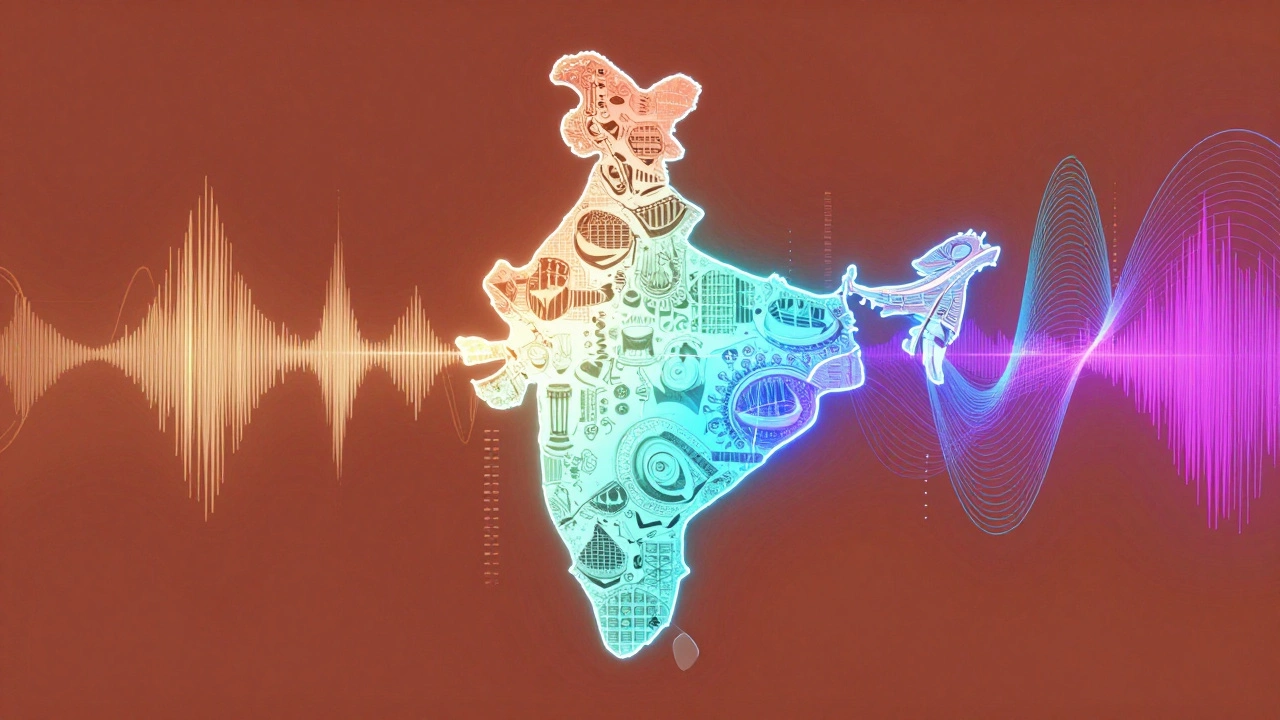
While Punjabi sounds dominate the mainstream, a significant shift is happening across other states. The monolithic idea of "Indian dance music" is breaking apart into regional identities. This trend is often called "Indie Folk Fusion" or "Regional Electronic."
In South India, for example, we are seeing a surge in Kollywood EDM, electronic dance music productions that incorporate Tamil folk rhythms and Carnatic musical elements. Producers are sampling the chenda (a barrel-shaped drum used in Kerala and Tamil Nadu) and pairing it with techno beats. Similarly, in Bengal, the fast-paced beats of Dhamail, a traditional folk song and dance form from West Bengal associated with agricultural cycles are being remixed into indie-pop tracks.
This decentralization means that "dance music" is no longer a top-down imposition from Bollywood. It is a bottom-up movement where local artists digitize their heritage. If you are in Chennai, the dance music might be called "Kuthu-Trap." If you are in Kolkata, it might be "Folk-Electro." The common thread is the preservation of rhythm while updating the instrumentation.
Bollywood's Role: From Playback to Club Mixes
You cannot discuss Indian dance music without addressing Bollywood. For decades, the film industry dictated what people danced to. Songs were composed specifically for choreography, often relying on simple, repetitive hooks. However, the role of Bollywood in the current dance landscape has changed.
Today, Bollywood acts more as a curator than a creator of pure dance genres. Film composers hire independent electronic producers to create "club versions" of movie songs. These remixes are often released simultaneously with the original track. The original might be a romantic ballad, but the "DJ Edit" features heavy sub-bass and rapid-fire percussion designed for nightclubs.
This practice has blurred the lines between "film music" and "dance music." Many listeners do not distinguish between a standalone Bhangra track and a Bollywood hit with similar production values. The industry standard now involves creating multiple versions of a single composition: a lyrical version for radio, a cinematic version for the film, and a high-BPM (beats per minute) version for streaming playlists labeled "Party Hits" or "Club Bangers."
The Influence of Global Genres: Trap and House
Indian dance music does not exist in a vacuum. It is heavily influenced by global trends. Two major international genres have reshaped the local sound: Trap and House.
Trap music, a subgenre of hip hop characterized by hi-hat rolls, deep sub-bass, and snare drums, has been adopted extensively by younger Indian artists. In cities like Delhi and Mumbai, "Desi Trap" has become a staple. Artists rap in Hindi, Urdu, or English over beats that mirror Atlanta or New York productions. The key difference is the incorporation of traditional melodic loops, such as sitar or flute riffs, which provide an exotic texture to the otherwise Western beat structure.
On the other hand, House music, a genre of electronic dance music characterized by a repetitive four-on-the-floor beat and a typical tempo of 120 beats per minute, has found a home in Goa and Bangalore. The underground club scenes in these cities favor minimal techno and deep house. Here, the influence of Indian classical music is subtler. Instead of obvious dhol beats, producers use rhythmic patterns inspired by Tala, the system of rhythmic cycles in Indian classical music. This creates a sophisticated, hypnotic groove that appeals to an audience looking for a more immersive experience than high-energy Bhangra offers.
Streaming Playlists as Genre Definers
In the past, radio stations and TV channels decided what was popular. Today, algorithms on platforms like Spotify, Apple Music, and YouTube Music define genres. If you search for "Indian Dance," you will find playlists with names like "Bollywood Beats," "Punjabi Party," and "Indie India."
These playlist titles effectively become the genre names for the average listener. A user might not know the technical difference between a "remix" and a "cover," but they will identify a song as "club music" if it appears in a playlist titled "Night Out." This algorithmic categorization simplifies the complex reality of Indian music into digestible buckets. It also encourages artists to produce music that fits these specific sonic profiles to gain visibility.
For instance, the rise of "Lo-fi Bollywood" playlists has created a new sub-niche where dance music is slowed down and stripped of its aggressive elements. Conversely, "Gym Motivation" playlists feature high-intensity Bhangra and Trap hybrids. The context of consumption now dictates the label.
Comparison of Modern Indian Dance Subgenres
| Genre Name | Primary Rhythm Source | Typical Tempo (BPM) | Key Instruments | Common Context |
|---|---|---|---|---|
| Bhangra-Pop Fusion | Dhol (Punjab) | 120-130 BPM | Synthesizers, Dhol Samples, Bass Guitar | Weddings, Mainstream Clubs |
| Desi Trap | 808 Drums, Hi-Hats | 130-150 BPM (half-time feel) | Sub-bass, Sitar Loops, Auto-tune Vocals | Urban Youth Culture, Streaming |
| Kollywood EDM | Chenda, Thavil | 128 BPM | Traditional Percussion, Digital Synths | South Indian Festivals, Nightlife |
| Folk-Electro | Regional Folk Drums | 110-125 BPM | Acoustic Strings, Minimal Drum Machines | Indie Conferences, Cafes |
The Future: AI and Hyper-Local Sounds
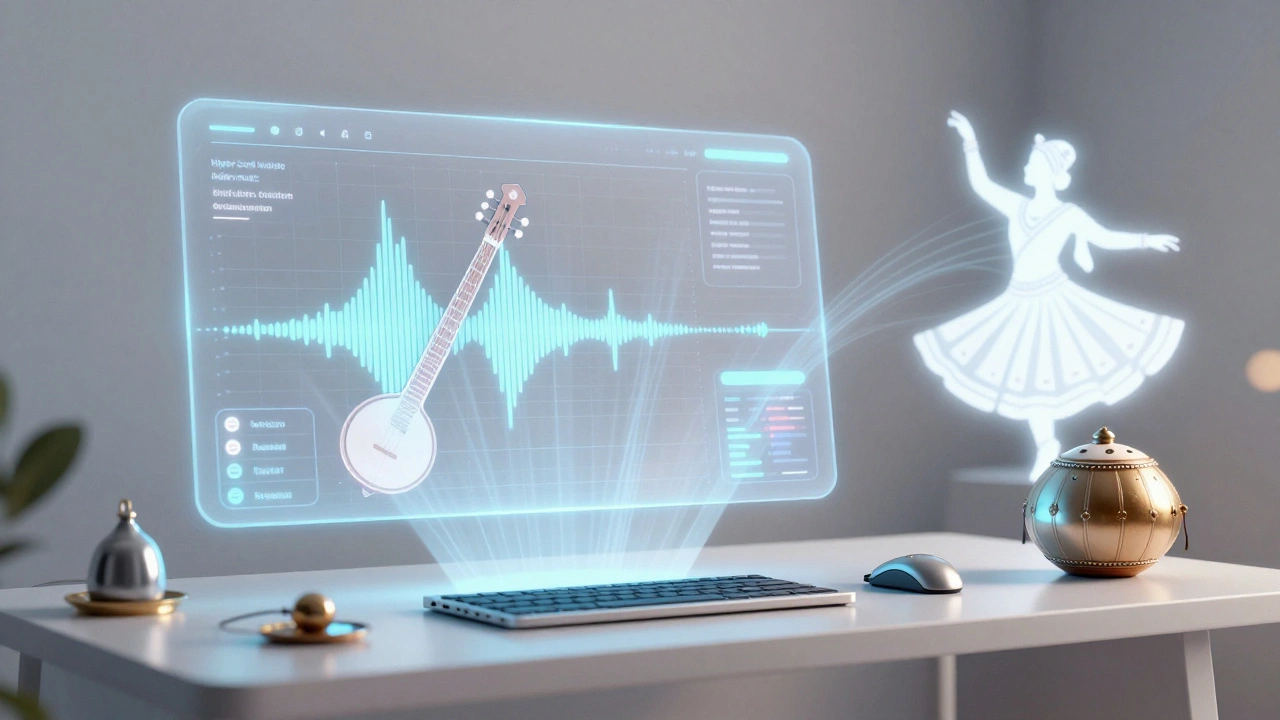
Looking ahead, the definition of dance music will likely become even more granular. Artificial Intelligence tools are allowing independent musicians to generate beats that mimic specific regional styles with unprecedented accuracy. We are already seeing experiments where AI analyzes thousands of recordings of Ghoomar, a traditional Rajasthani folk dance accompanied by slow, rhythmic music and converts them into electronic dance tracks.
This technology democratizes production. You no longer need to be a master musician to create a convincing fusion track. This will lead to an explosion of hyper-local dance genres. Imagine a "Konkani Techno" scene emerging from Goa or a "Tribal House" movement from the forests of Odisha. The central entity of "Indian Dance Music" is fracturing into a vibrant ecosystem of niche sounds.
For the listener, this means more variety but also more confusion regarding terminology. However, the core appeal remains the same: the joy of moving to a rhythm that connects you to your cultural roots while propelling you into the future. Whether you call it Bhangra-pop, Desi Trap, or simply "good vibes," the music is alive, evolving, and distinctly Indian.
Is Bollywood music considered dance music?
Not all of it, but a significant portion is. Modern Bollywood films include dedicated "item numbers" or party tracks designed specifically for dancing. These songs often employ the same production techniques as standalone dance music, including heavy bass and fast tempos. However, many Bollywood songs are narrative-driven ballads that do not fit the dance music category.
What is the difference between Bhangra and Punjabi Pop?
Bhangra refers to the traditional folk genre with acoustic instruments like the dhol and tumbi. Punjabi Pop is a broader commercial category that includes Bhangra but also incorporates R&B, Hip-Hop, and Rock influences. While all Bhangra can be considered part of the Punjabi music scene, not all Punjabi Pop is Bhangra. The line blurs when producers fuse the two, creating the popular Bhangra-Pop fusion heard in clubs today.
Why is Trap music so popular among Indian youth?
Trap music resonates with younger generations because of its association with global streetwear culture, luxury lifestyles, and digital identity. The aggressive beats and lyrical focus on ambition and struggle mirror the experiences of urban Indian youth. Additionally, the genre's flexibility allows artists to rap in their native languages, making it a powerful vehicle for self-expression and regional pride.
Are there any non-Punjabi dance music genres gaining traction?
Yes, significantly. South Indian genres like Kuthu and Jingle are being remixed into electronic formats. Bengali folk traditions like Dhamail and Baul are inspiring indie-electronic projects. Marathi Lavani rhythms are appearing in Bollywood club mixes. This diversification reflects a growing desire to celebrate regional identities beyond the dominant Punjabi sound.
How do I find authentic regional dance music?
Start by exploring curated playlists on streaming platforms that focus on specific regions, such as "Indie Bengal" or "South Indian Indie." Follow independent artists on social media who specialize in fusion genres. Look for labels that promote underground electronic music in cities like Bangalore, Goa, and Kolkata, as these scenes often prioritize experimental regional fusions over mainstream Bollywood hits.