🕉️ Shiva's Symbolic Colors Explorer
Click on a symbol below to discover the color it represents and its profound spiritual significance in Hindu cosmology.
Skin Complexion
The Infinite VoidVibhuti (Ash)
Impermanence & DetachmentCrescent Moon
Cycle of Time & MindSnake (Vasuki)
Kundalini EnergyMatted Hair (Jata)
Renunciation of VanityTrident (Trishula)
Transcending QualitiesSelect a symbol above to reveal its meaning
Explore the visual language of Lord Shiva's appearanceWalk into any temple in India or watch a dramatic scene from a mythological series, and you’ll see him: the ascetic with matted hair, a crescent moon on his forehead, and a body that defies simple description. Is he blue? Grey? Covered in white ash? The answer isn't a single hue but a complex visual language rooted in Lord Shiva is the destroyer and transformer in the Hindu Trinity, often depicted with specific symbolic colors representing cosmic elements. To understand why he looks the way he does, we have to look beyond the surface paint and into the symbolism of the universe itself.
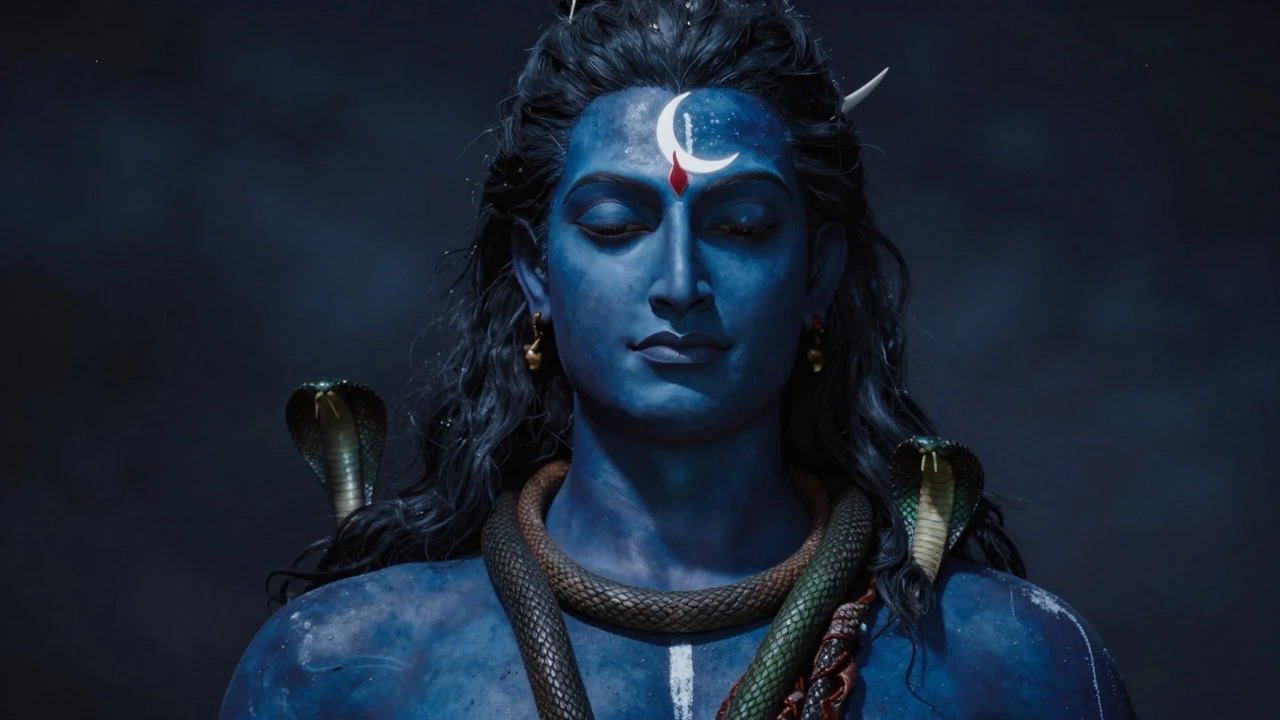
The most iconic attribute of Shiva is his deep blue complexion. This isn't just an artistic choice; it’s a direct reference to the night sky. In Hindu cosmology, Shiva represents the infinite void, the space where creation begins and ends. Just as the night sky appears black or deep blue to the human eye, Shiva's skin signifies the boundless nature of time and space. It is a color that absorbs light rather than reflecting it, symbolizing his role as the one who dissolves the material world back into pure consciousness.
The Significance of the Blue Complexion
When artists depict Shiva, they rarely use a flat, uniform blue. Instead, they use gradients that shift from dark indigo to lighter shades, mimicking the twilight hour. This specific shade is often associated with Nilakantha, which translates to "the one with the blue throat." This title stems from the famous legend of the churning of the ocean, known as Samudra Manthan. During this cosmic event, a deadly poison called Halahala emerged, threatening to destroy all existence. Shiva drank the poison to save the universe, but Vishnu placed a rope around his neck to trap the toxin in his throat. The poison turned his neck blue, marking him forever as the protector who bears the burden of destruction so others can live.
This blue skin also connects to the concept of Aghora, which means "non-terrible" or "fearless." Despite his appearance as a fierce ascetic living in the Himalayas, Shiva is considered benevolent to his devotees. The blue color softens his terrifying aspects, reminding worshippers that behind the destructive power lies a calm, meditative presence. It is the color of the sky above the snowy peaks of Mount Kailash, his primary abode, linking him directly to the highest points of spiritual attainment.
Vibhuti: The Sacred Ashes
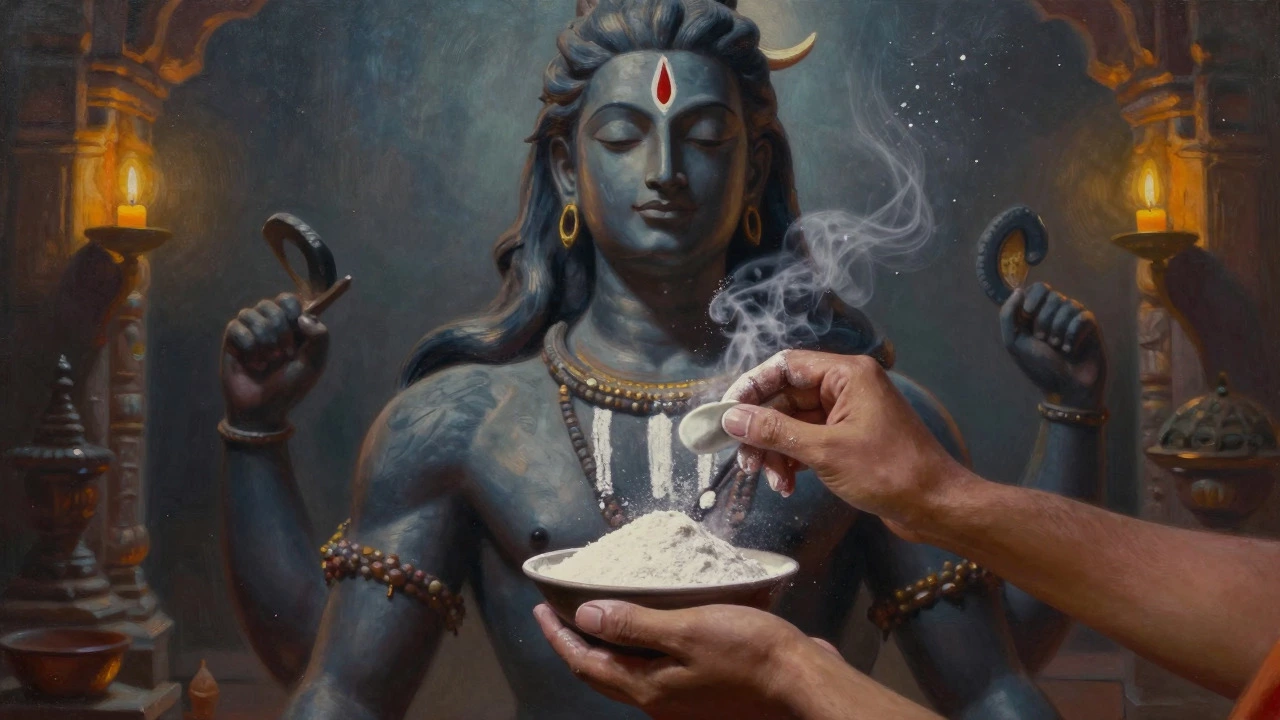
If you look closely at traditional statues or paintings, you will notice thick streaks of white powder smeared across Shiva’s chest, arms, and face. This is not dirt; it is Vibhuti, sacred ash derived from burnt sandalwood or other holy materials. Applying Vibhuti is a ritual act for both the deity and his followers. For Shiva, it represents the impermanence of the physical body. No matter how strong or beautiful a body is, it eventually turns to ash. By wearing this ash, Shiva demonstrates his detachment from worldly desires and his mastery over life and death.
The application of Vibhuti is usually done in three vertical lines. Each line holds specific meaning:
- The first line represents Brahma, the creator, signifying that all things are created by the divine will.
- The second line represents Vishnu, the preserver, indicating that the universe is sustained by cosmic order.
- The third line represents Shiva himself, the destroyer, reminding us that all things must eventually return to the source.
For devotees, smearing these ashes on their own bodies is a daily reminder to stay grounded. It serves as a psychological tool to reduce attachment to material wealth and status. In temples, you will often see priests applying this ash to the foreheads of visitors, a gesture that bridges the gap between the divine representation and the human experience.
The Crescent Moon and Other Symbols
Shiva’s appearance is completed by several other distinct features that interact with his color palette. On his left ear, he wears a large, ornate earring, while his head is adorned with a crescent moon. This moon, known as Chandra, is silver-white and sits amidst his matted locks (Jata). The moon symbolizes the cycle of time, waxing and waning, much like the phases of life. Its cool, pale light contrasts sharply with the deep blue of his skin, creating a visual balance between the coldness of the cosmos and the warmth of devotion.
He also carries a trident, or Trishula, which is typically metallic silver or gold. The three prongs represent the three gunas (qualities) of nature: Sattva (purity), Rajas (activity), and Tamas (inertia). Shiva holds the trident to show that he transcends these qualities, standing above the dualities of good and evil, joy and sorrow. The snake wrapped around his neck, usually named Vasuki, adds another layer of texture and color. The snake is often depicted in green or brown, coiled loosely around his throat. This serpent represents kundalini energy, the dormant power within every human being that Shiva awakens through meditation.
Regional Variations in Depiction
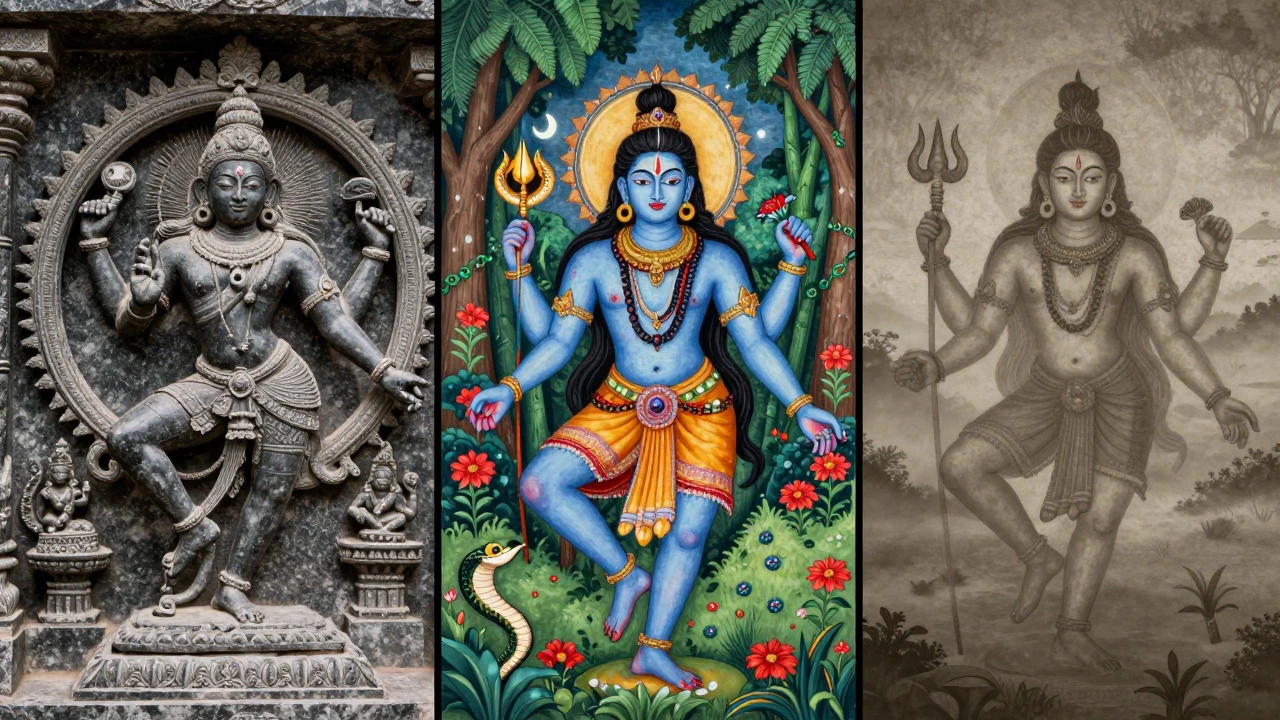
While the core attributes remain consistent, the specific colors used can vary based on regional art styles and temple traditions. In South Indian temples, such as those in Tamil Nadu, Shiva is often depicted in stone with intricate carvings that emphasize texture over color. The stone itself may be dark granite or lighter gneiss, and the focus is on the dynamic posture of Nataraja, the cosmic dancer. Here, the "color" is less about pigment and more about the interplay of shadow and light on the carved surface.
In contrast, North Indian Pahari miniature paintings often use vibrant, jewel-like colors. Shiva might appear with a softer, paler blue skin tone, surrounded by lush green forests and bright red flowers. These artistic choices reflect the local environment and cultural aesthetic. In Bengal, Shiva is sometimes depicted with a more earthy, greyish tone, blending into the misty landscapes of the region. These variations remind us that while the theological core remains the same, the visual expression of Shiva adapts to the cultural context of the devotee.
Why Does Shiva Wear Minimal Clothing?
You might wonder why Shiva is often shown nearly naked, wearing only a tiger skin or minimal dhoti. This lack of colorful clothing reinforces his status as an ascetic. Unlike gods who are dressed in royal silks and gold jewelry to signify their power and wealth, Shiva rejects materialism. His "clothing" is the skin of a tiger, symbolizing his control over wild instincts and primal urges. The simplicity of his attire directs the viewer’s attention away from external adornments and toward the internal state of mind. It suggests that true divinity is not found in what you wear, but in how you perceive the world.
This minimalism also plays a crucial role in the visual hierarchy of the icon. Because his body is largely exposed, the blue skin and white ash become the dominant visual elements. There are no distracting patterns or fabrics to obscure the symbolism. The viewer sees the essence of the deity without the filter of social status or fashion. This makes Shiva’s image uniquely powerful; it is raw, direct, and unadorned, mirroring the raw energy of the universe he embodies.
Connecting the Colors to Daily Life
Understanding these colors helps devotees connect with Shiva on a deeper level. When you apply Vibhuti during festivals like Mahashivratri, you are not just following tradition; you are engaging with the philosophy of impermanence. The blue of his skin reminds you to look inward, to find the quiet space within your own mind that is vast and unchanging. The white ash reminds you to let go of grudges, fears, and attachments that weigh you down.
In modern times, these symbols have transcended religious boundaries. Many people use the Om symbol or Shiva’s imagery for meditation, regardless of their faith. The colors serve as focal points for concentration. The deep blue can induce a sense of calm and depth, while the stark white of the ash provides clarity. Whether you are a devout believer or simply interested in Indian culture, recognizing these visual cues unlocks a richer understanding of the stories and philosophies behind them.
Frequently Asked Questions
Is Lord Shiva always depicted as blue?
In classical iconography, yes, he is predominantly depicted with blue skin. However, in some regional art forms or specific contexts, such as when he is shown as Ardhanarishvara (half-Shiva, half-Parvati), the coloring may blend or vary. But the standard theological representation maintains the blue complexion to signify his cosmic nature.
What is the difference between Vibhuti and Bhasma?
The terms are often used interchangeably, but there is a subtle distinction. Vibhuti refers to the sacred ash applied to the body, often made from sandalwood or specific herbs burned in a ritual fire. Bhasma generally refers to the ash resulting from cremation rituals or the burning of offerings. Both carry the same symbolic weight of impermanence, but Vibhuti is specifically associated with Shiva worship and personal adornment.
Why does Shiva have a snake around his neck?
The snake, usually identified as Vasuki, represents Kundalini energy, the spiritual potential dormant in the base of the spine. By wearing it calmly around his neck, Shiva shows that he has mastered this powerful energy. It also symbolizes his connection to the natural world and his ability to tame even the most dangerous forces.
Can non-Hindus wear Vibhuti?
Yes. While Vibhuti is a central part of Shaivite practice, it is widely respected in broader Hindu culture and even adopted by practitioners of yoga and meditation worldwide. It is seen as a universal symbol of letting go and staying grounded, making it accessible to anyone seeking mindfulness or spiritual reflection.
What does the crescent moon on Shiva's head signify?
The crescent moon, or Chandra, represents the cycle of time and the mind. Just as the moon waxes and wanes, the mind fluctuates between states of activity and rest. Shiva wearing the moon indicates his control over time and his ability to remain steady despite the changing phases of existence. It also adds a cooling element to his fiery nature, balancing the intense energy of the third eye.