Discover Your Spiritual Path (Marga)
According to ancient texts, there are four main ways people connect with the divine. Click on the descriptions below that resonate most with your natural inclinations to find your primary path.
Emotional Connection
I feel deeply connected through love, prayer, and personal relationships with the divine.
Action & Duty
I believe in doing my duty selflessly without worrying about the results or rewards.
Intellectual Inquiry
I prefer studying scriptures, philosophy, and using logic to understand reality.
Discipline & Mind
I value mental control, meditation, yoga, and disciplined routines for inner peace.
Your Primary Path
Key Characteristics
Core Focus
When you ask what the heritage religion of India is, you aren't just asking for a label on a census form. You are digging into the bedrock of a civilization that has existed for over four thousand years. The short answer is Hinduism. But if you stop there, you miss the whole story. To understand India's spiritual DNA, you have to look beyond modern labels and step back into the ancient world where these beliefs were born.
The term most Indians use to describe this deep-rooted tradition is not "Hinduism" in the Western sense, but Sanatana Dharma, which translates to the "Eternal Order" or "Eternal Law". This concept suggests that the truths being practiced-duty, righteousness, and cosmic order-are timeless and universal, not invented by any single prophet at a specific moment in history.
The Roots: From Indus Valley to the Vedas
To grasp why this tradition is so unique, we have to look at its origins. Unlike Christianity or Islam, which started with a clear founder and a definitive starting date, India's heritage religion evolved slowly. It grew out of the confluence of two major ancient cultures.
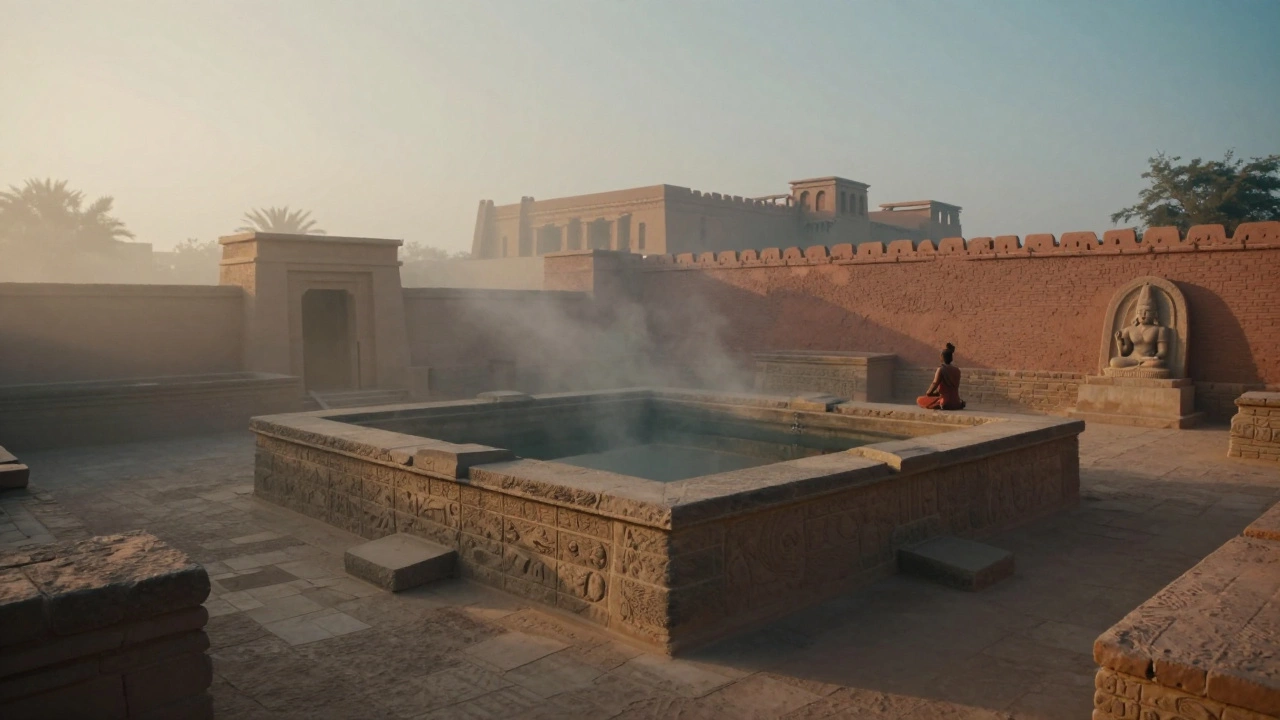
First, there was the Indus Valley Civilization, flourishing around 3300-1300 BCE. Archaeologists find seals with figures that look like proto-Shiva meditating in a yogic posture. They find baths that suggest ritual purification was key long before written records began. These people didn't leave behind readable texts, but their artifacts show a society deeply concerned with ritual, water purity, and possibly early forms of yoga.
Then came the arrival of Indo-Aryan speakers around 1500 BCE. They brought with them the Vedas, a collection of hymns, rituals, and philosophical speculations. The Rigveda, the oldest of these texts, contains some of the earliest poetry in human history. It asks profound questions about creation: "Who really knows? Who will here proclaim it? Whence was it produced? Whence is this creation?" This spirit of inquiry-questioning the nature of reality rather than accepting dogma-is central to the heritage religion.
Why "Hinduism" is a Tricky Label
You might wonder why we call it Hinduism if the insiders call it Sanatana Dharma. The word "Hindu" actually comes from the Persian pronunciation of "Sindhu," the name of the Indus River. Persians used it to refer to anyone living across that river. For centuries, the people living in that region didn't call themselves Hindus; they called themselves Aryans, Vaishnavas, Shaivas, or simply followers of the Dharma.
The term "Hinduism" became popular only during the British colonial era in the 18th and 19th centuries. The British needed a way to categorize the diverse religious practices they encountered. They lumped together temple worship, philosophy, caste duties, and local folk traditions under one umbrella term. So, when you hear "Hinduism" today, think of it as an external label for a very internal, fluid experience.
The Four Main Paths (Margas)
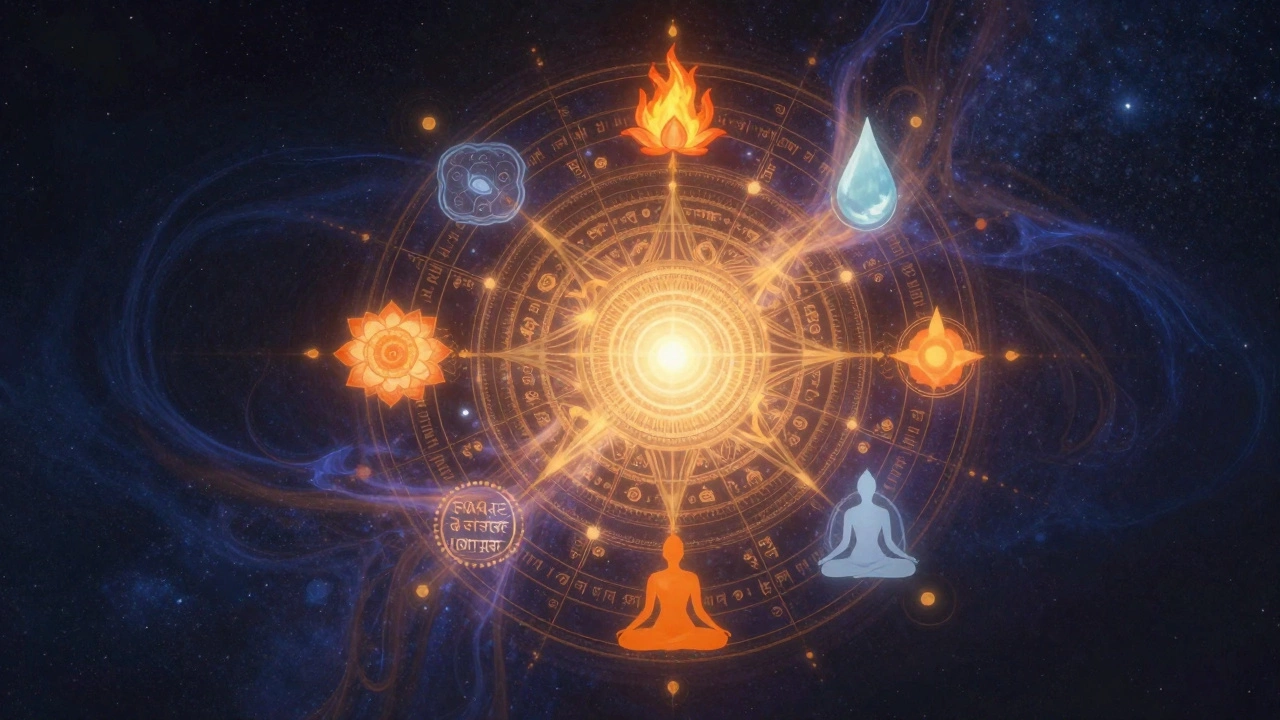
If you walk into a temple in Kerala, a gurukulam in Punjab, and a monastery in Bengal, you might see three completely different practices. Yet, they all fall under the same heritage religion. How does that work? Because the tradition recognizes that people connect with the divine in different ways. Ancient texts outline four main paths, or margas:
- Bhakti Marga (Path of Devotion): This is the most common path today. It involves loving devotion to a personal god, like Vishnu, Shiva, or Devi (the Goddess). You pray, sing hymns, and offer flowers. It’s emotional and relational.
- Karma Marga (Path of Action): Based heavily on the Bhagavad Gita, this path teaches that you should perform your duty without attachment to the results. It’s about selfless service and ethical action in daily life.
- Jnana Marga (Path of Knowledge): This is for the intellectuals and philosophers. It involves rigorous study of scriptures like the Upanishads and meditation to realize that the individual soul (Atman) is identical to the ultimate reality (Brahman).
- Raja Marga (Path of Meditation/Yoga): Associated with Patanjali’s Yoga Sutras, this path uses disciplined mental control, breathwork, and meditation to achieve spiritual liberation.
This flexibility is a hallmark of the heritage religion. You don’t have to pick one and stick to it forever. Many people blend devotion with knowledge, or action with meditation.
Core Concepts That Define the Tradition
Despite the diversity in practice, there are core concepts that bind this heritage together. If you want to understand the worldview, you need to know these five pillars:
- Dharma: Often translated as "duty" or "righteousness," Dharma is the moral order that upholds the universe. It’s context-specific; your dharma as a student is different from your dharma as a parent.
- Karma: The law of cause and effect. Every action has a consequence. Good actions lead to positive outcomes, bad actions to suffering. It’s not about punishment; it’s about natural justice.
- Samsara: The cycle of birth, death, and rebirth. Life doesn’t end with death; it continues until you break free.
- Moksha: Liberation from Samsara. This is the ultimate goal. It’s not going to heaven; it’s realizing your true nature and merging with the infinite.
- Ahimsa: Non-violence. This principle extends to thoughts, words, and deeds. It’s why vegetarianism is common among many followers, though not mandatory for all.
The Living Pantheon: Gods and Goddesses
One of the most confusing aspects for outsiders is the number of gods. Texts mention 33 million deities. Does that mean polytheism? Not exactly. The tradition operates on a spectrum from monotheism to pantheism.
Most practitioners focus on a Ishvara, or a supreme personal god. The Trimurti-the Trinity-consists of Brahma (the Creator), Vishnu (the Preserver), and Shiva (the Destroyer/Transformer). However, in daily practice, people often worship avatars (incarnations) of Vishnu, like Rama or Krishna, or manifestations of Shiva.
Then there is Devi, the Divine Mother. She appears as Lakshmi (wealth), Saraswati (knowledge), and Durga/Kali (power and protection). The worship of the feminine divine is central to Indian culture, acknowledging that the creative energy of the universe is female.
Underneath these major figures are local deities, village gods, and ancestral spirits. This syncretism allows the heritage religion to absorb and respect local traditions without forcing uniformity.
Influence on Daily Life and Culture
The heritage religion isn't just something you do on Sundays. It permeates everyday life. Your calendar is dictated by lunar cycles and festivals like Diwali, Holi, and Navaratri. Your food choices may be influenced by Ahimsa. Your architecture reflects cosmic principles, seen in the intricate geometry of temples.
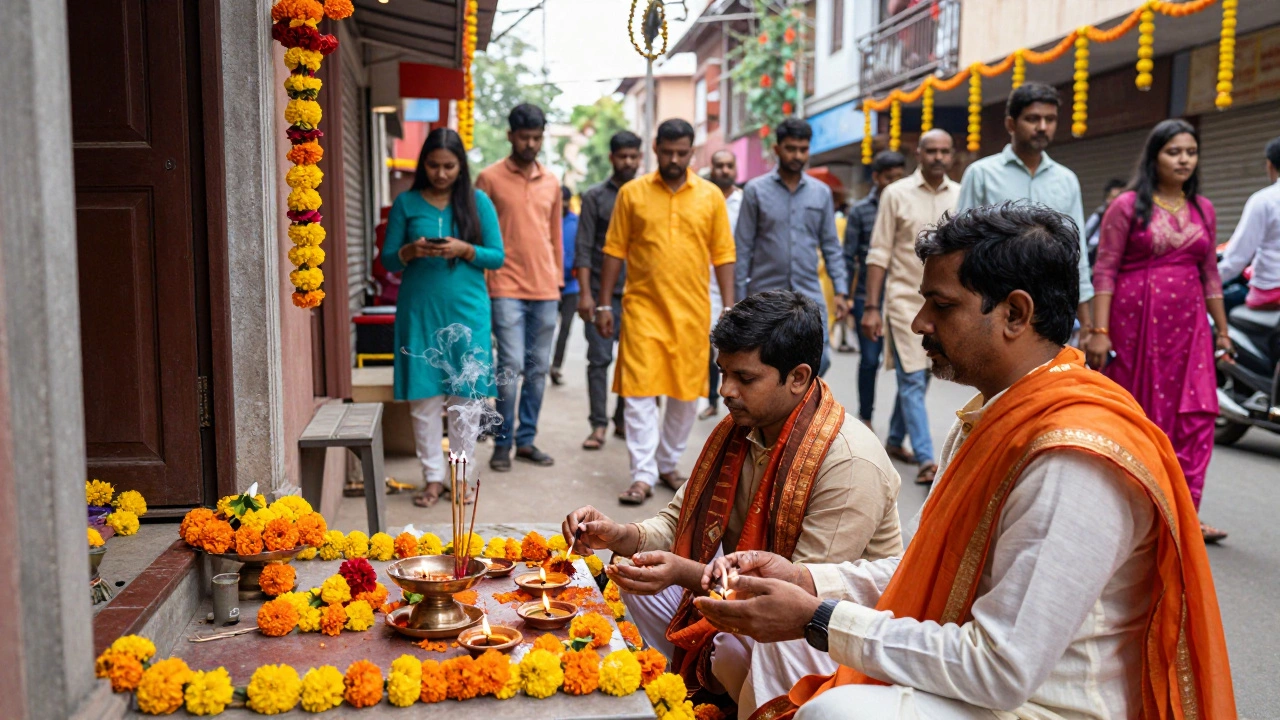
Even secular activities are infused with spiritual intent. Before starting a new venture, buying a car, or moving into a house, families often perform a small puja (worship ceremony) to seek blessings. This connects the mundane with the sacred, reminding us that every action is part of a larger cosmic play.
Modern Challenges and Evolution
Like any ancient tradition, it faces modern challenges. Caste discrimination, once justified by rigid interpretations of Dharma, is now widely rejected and illegal in India. Women’s roles are evolving, with more women taking on priestly roles traditionally reserved for men. Environmental concerns are also reshaping practices; the massive pollution caused by festival waste is leading to eco-friendly alternatives.
Yet, the core appeal remains strong. In a fast-paced, materialistic world, the heritage religion offers a framework for meaning, ethics, and inner peace. It provides tools-from yoga to mindfulness-that are now global phenomena.
| Concept | Meaning | Practical Application |
|---|---|---|
| Dharma | Cosmic Order/Duty | Acting ethically according to your role in life |
| Karma | Action and Consequence | Taking responsibility for your choices |
| Moksha | Liberation | Seeking freedom from ego and desire |
| Ahimsa | Non-Violence | Practicing compassion in speech and deed |
Is Hinduism the same as the heritage religion of India?
Yes, largely. "Hinduism" is the modern English term for Sanatana Dharma, the eternal tradition that originated in the Indian subcontinent. While "Hinduism" is an exonym (a name given by others), Sanatana Dharma is the endonym (the name used by practitioners). Both refer to the same complex web of beliefs, practices, and philosophies.
Who founded the heritage religion of India?
It has no single founder. Unlike religions based on a specific prophet, this tradition evolved over thousands of years through the contributions of countless sages, poets, and philosophers. It grew organically from the Indus Valley Civilization and the Vedic period.
What is the difference between Sanatana Dharma and Hinduism?
Sanatana Dharma emphasizes the eternal, unchanging nature of truth and duty. Hinduism is the sociological and historical label applied to the community of people who follow these traditions. Think of Sanatana Dharma as the essence and Hinduism as the container.
Do all Indians follow the heritage religion?
No. India is home to many religions, including Islam, Christianity, Sikhism, Buddhism, and Jainism. However, the heritage religion (Hinduism) is the majority faith, followed by about 79-80% of the population. Its influence, however, permeates Indian culture broadly, affecting festivals and social norms even for non-Hindus.
Is the heritage religion polytheistic?
It can appear so, but it is more accurately described as henotheistic or monistic. Practitioners may worship many gods, but they often view these deities as different manifestations of one ultimate reality, Brahman. It’s like looking at light through colored glass: the light is one, but the colors are many.