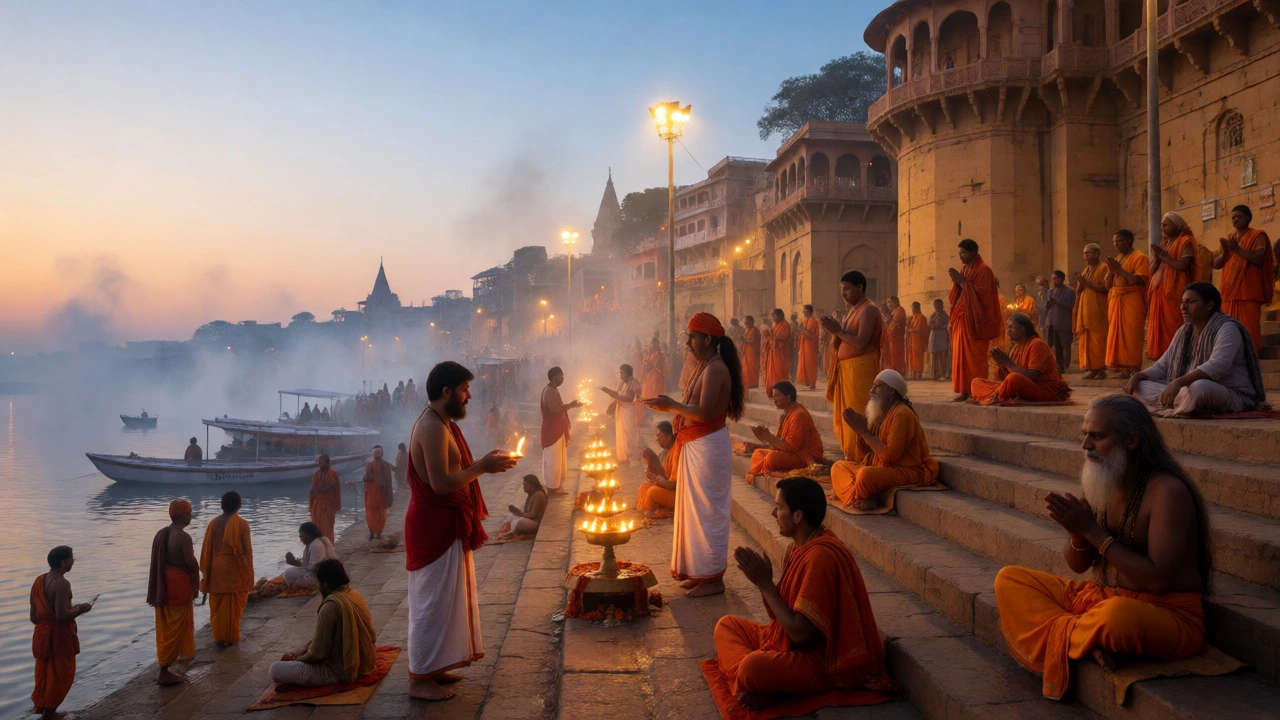
India's Religious Diversity Explorer
Click on a religion below to view detailed statistics, regions, and cultural insights.
Hinduism
~79.8%Primary Regions
Nationwide, especially North and South India
Key Characteristics
- Diverse pantheon
- Karma/Dharma concepts
- Major festivals like Diwali
Cultural Impact & Daily Life
Influences diet (vegetarianism), clothing, business hours, and calendar. Festivals are social glue where neighbors exchange sweets across faith lines.
You might think asking what is the main religion in India is a simple question with a one-word answer. But if you’ve ever spent time in Varanasi, walked through the streets of Amritsar, or visited a church in Kerala, you know that India doesn’t do "simple." Yes, there is a dominant faith, but the country is more like a massive, vibrant tapestry where threads of different colors weave together to create something entirely new. If you’re planning a trip, studying culture, or just curious about how a nation of 1.4 billion people manages such spiritual complexity, understanding the religious landscape is your first step.
The short answer? Hinduism is the largest religion in India, practiced by approximately 79.8% of the population according to recent census data. But that number barely scratches the surface. India is also home to the world’s second-largest Muslim population, significant communities of Christians, Sikhs, Buddhists, Jains, and Zoroastrians. This isn’t just about statistics; it’s about daily life, architecture, festivals, and social norms. Let’s break down who believes what, where they live, and why this mix matters so much.
Hinduism: The Majority Faith and Its Roots
Hinduism, often referred to as Sanatana Dharma (the eternal order), is not just a religion but a way of life for the majority of Indians. It is one of the oldest living religions in the world, with roots tracing back over 4,000 years to the Indus Valley Civilization and the Vedic period. Unlike Abrahamic faiths, Hinduism has no single founder, no single scripture, and no common set of beliefs. Instead, it is a diverse system of thought with gods, rituals, and philosophies that vary from village to village.
When you ask locals about their faith, you’ll hear terms like dharma (duty/righteousness), karma (action and consequence), and moksha (liberation). These concepts shape everything from career choices to dietary habits. For instance, many Hindus are vegetarian, not just because of health trends, but due to the principle of ahimsa (non-violence) towards all living beings. The religion is polytheistic in practice but often monotheistic or monistic in philosophy-meaning devotees may worship specific deities like Lord Krishna or Goddess Durga while believing in a single ultimate reality, Brahman.
Geographically, Hinduism is dominant across most of the Indian subcontinent. States like Uttar Pradesh, Madhya Pradesh, Rajasthan, and Tamil Nadu have overwhelming Hindu majorities. However, even within these states, practices differ wildly. In the north, you might see grand temples dedicated to Shiva, while in the south, intricate Dravidian architecture houses shrines to Vishnu and Murugan. Understanding this regional variation is key to grasping the true scope of the majority faith.
Islam: The Second Largest Community
If Hinduism is the backbone of Indian spirituality, Islam is its largest minority partner, making up about 14.2% of the population. India has the third-largest Muslim population in the world, after Indonesia and Pakistan. Islam arrived in India via Arab traders on the Malabar Coast in the 7th century and later through Central Asian invasions and the Delhi Sultanate. Over centuries, it blended with local cultures, creating unique traditions like Sufi music and Indo-Islamic architecture.
Muslim-majority areas are concentrated in regions like Kashmir, parts of Assam, West Bengal, and Kerala. The Mappila Muslims of Kerala, for example, have distinct customs that blend Islamic law with local Malayali culture. You’ll find mosques everywhere, from the historic Jama Masjid in Delhi to the modern glass structures in Hyderabad. Despite being a minority nationally, Muslims play a crucial role in India’s economy, politics, and arts. They are integral to the fabric of society, contributing significantly to fields like cinema, cricket, and commerce.
Christianity, Sikhism, Buddhism, and Jainism
Beyond the two giants, India hosts several other significant faiths, each with deep historical roots and unique contributions to the national identity.
Christianity accounts for roughly 2.3% of the population. While small in percentage, Christian influence is highly visible in certain regions. Kerala claims apostolic origins, with tradition holding that St. Thomas the Apostle arrived in AD 52. Northeastern states like Nagaland, Mizoram, and Meghalaya have Christian majorities due to missionary work during the British era. Christianity in India is known for its strong network of educational institutions and hospitals, which serve people of all faiths.
Sikhism makes up about 1.7% of the population, but its impact is disproportionate to its size. Founded in the Punjab region in the 15th century by Guru Nanak, Sikhism emphasizes equality, hard work, and devotion. The Golden Temple in Amritsar is one of the most visited sites in the world. Sikhs are renowned for their martial history and agricultural prowess, dominating India’s food grain production. Their concept of seva (selfless service) is evident in the free community kitchens (langars) that feed thousands daily, regardless of caste or creed.
Buddhism, which originated in India before spreading across Asia, has seen a modern revival. It currently represents about 0.7% of the population. This resurgence is largely driven by Dr. B.R. Ambedkar’s movement in the mid-20th century, encouraging Dalits (formerly untouchables) to convert to Buddhism to escape caste discrimination. Today, Maharashtra has a large Buddhist population. Additionally, Tibetan Buddhism thrives in northern states like Himachal Pradesh and Ladakh, where monasteries dot the Himalayan landscape.
Jainism is an ancient Indian religion focused on extreme non-violence. Though only 0.4% of Indians identify as Jain, the community is economically powerful and influential. Jains avoid harming any living creature, which leads them to wear masks when sweeping floors and avoid root vegetables. Their temples, particularly in Gujarat and Rajasthan, are architectural marvels made of white marble.
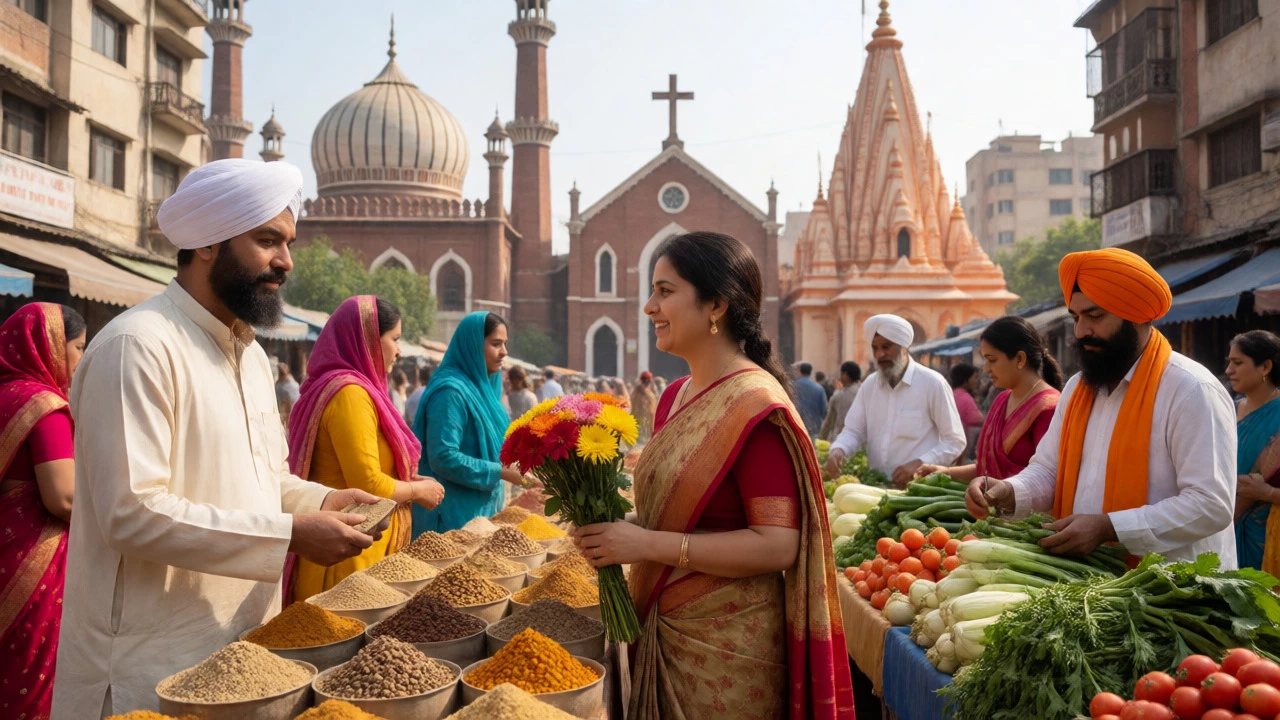
Religious Diversity at a Glance
To help you visualize the breakdown, here is a comparison of the major religious groups in India based on recent demographic estimates. Note that percentages can fluctuate slightly depending on the source and year of the survey, but the hierarchy remains stable.
| Religion | Approximate Percentage | Primary Regions | Key Characteristics |
|---|---|---|---|
| Hinduism | ~79.8% | Nationwide, especially North and South India | Diverse pantheon, karma/dharma concepts, major festivals like Diwali |
| Islam | ~14.2% | Kashmir, Kerala, West Bengal, Assam, Karnataka | Monotheistic, Sharia-influenced personal laws, Eid celebrations |
| Christianity | ~2.3% | Kerala, Goa, Northeast India | Educational/hospital networks, Christmas/Easter focus |
| Sikhism | ~1.7% | Punjab, Haryana, Delhi | Community kitchens, martial tradition, Guru Granth Sahib |
| Buddhism | ~0.7% | Maharashtra, Ladakh, Northeast India | Meditation, non-theistic, Dalit conversion movement |
| Jainism | ~0.4% | Gujarat, Rajasthan, Karnataka | Ahimsa (non-violence), strict vegetarianism, ascetic practices |
How Religion Shapes Daily Life and Culture
Knowing the numbers is one thing; seeing how they play out on the ground is another. In India, religion isn’t confined to places of worship. It dictates your calendar, your diet, your clothing, and even your business hours.
Festivals are the clearest indicator. Diwali, the festival of lights, is celebrated by Hindus, Jains, and some Sikhs, turning entire cities into glowing spectacles. Eid-ul-Fitr marks the end of Ramadan for Muslims, featuring feasts and new clothes. Christmas in Goa feels distinctly European with midnight masses and carols, while in Kerala, Onam is a harvest festival rooted in Hindu mythology but celebrated by all communities. These events aren’t just religious; they are social glue. Neighbors exchange sweets across faith lines, and public holidays are often shared regardless of individual belief.
Food culture is deeply tied to faith. You will struggle to find beef in many Hindu-majority areas, while pork is rare in Muslim neighborhoods. Jain restaurants exclude onions and garlic, believing they increase passion and harm microscopic life. Alcohol availability varies by state and religious sentiment; some states like Gujarat and Bihar enforce dry laws influenced by Gandhian ideals and religious conservatism.
Architecture tells the story too. Walk through Old Delhi, and you’ll see the Red Fort (Mughal/Islamic) standing near the Jama Masjid, while nearby stands the Lotus Temple (Baha’i) and the Akshardham Temple (Hindu). In Chennai, the Kapaleeshwarar Temple sits miles away from the San Thome Basilica. This physical proximity fosters a unique syncretic culture where artistic styles borrow from each other. For example, Hindustani classical music was heavily patronized by Mughal emperors, blending Persian scales with Indian ragas.
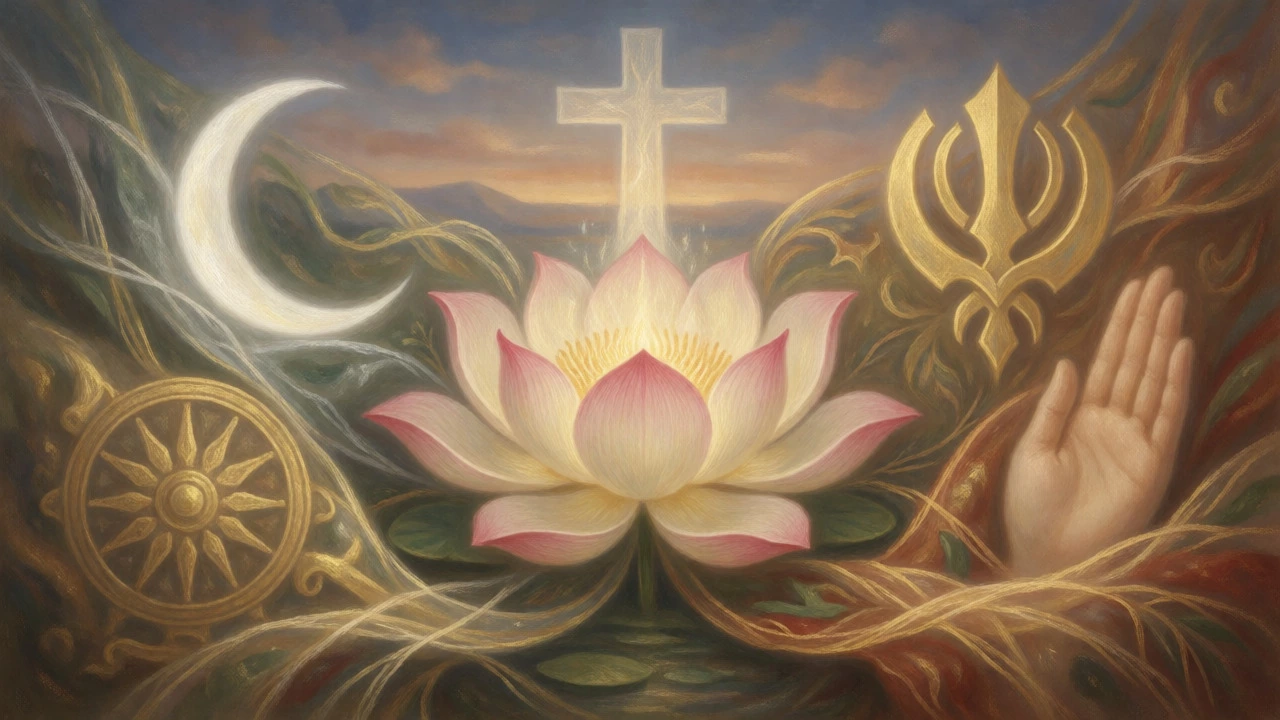
Common Misconceptions About Indian Religion
Outsiders often misunderstand the nature of religion in India. Here are three myths that need busting:
- Myth 1: All Indians are devout. While religion is culturally pervasive, secularism is constitutionally mandated. Many urban Indians identify as spiritual but not religious, or simply follow cultural traditions without strict theological adherence.
- Myth 2: Hinduism is chaotic. To a Western eye accustomed to organized churches, Hinduism looks disorganized. But it has a structured philosophical framework (Vedanta, Yoga, Samkhya) and ritualistic precision. What looks like chaos is actually pluralism.
- Myth 3: Religious tensions dominate daily life. Yes, political and communal tensions exist. But for most citizens, daily interactions are marked by coexistence. Shared spaces, markets, and workplaces function smoothly despite differences. Interfaith marriages, though less common than intra-faith ones, are increasing in metropolitan areas.
Why Understanding This Matters for Travelers and Learners
If you’re visiting India, knowing the main religion helps you navigate etiquette. Dress modestly when entering temples. Remove shoes before stepping onto sacred grounds. Ask before taking photos of priests or worshippers. Be mindful of dietary restrictions when hosting friends. If you’re learning about Indian heritage, recognizing that no single narrative defines the country is crucial. India’s strength lies in its ability to hold contradictions in balance-ancient and modern, sacred and secular, unified yet diverse.
So, next time someone asks you what the main religion in India is, don’t just say "Hinduism." Say that it’s a land where Hinduism provides the majority voice, but Islam, Christianity, Sikhism, Buddhism, and Jainism add essential harmonies to the chorus. That’s the real story.
Is Hinduism the official religion of India?
No, India does not have an official state religion. The Constitution of India declares the country a secular republic, meaning the state treats all religions equally. However, Hinduism is the majority religion, practiced by nearly 80% of the population.
Which state in India has the highest Muslim population?
In terms of absolute numbers, Uttar Pradesh has the largest Muslim population. However, in terms of percentage, Lakshadweep and Jammu & Kashmir have the highest proportions of Muslims relative to their total populations.
Do all Hindus believe in reincarnation?
Reincarnation (Samsara) is a core concept in mainstream Hinduism, linked to Karma. However, Hinduism is diverse, and some philosophical schools or individual practitioners may interpret these concepts metaphorically or focus more on ethical living than metaphysical specifics.
Are Christians a significant minority in India?
Christians make up about 2.3% of India's population. While small nationally, they form majorities in several northeastern states like Nagaland and Mizoram, and have a historically significant presence in Kerala and Goa.
What is the difference between Jainism and Hinduism?
Both are Indian-origin religions sharing concepts like karma and ahimsa. However, Jainism rejects the idea of a creator god, focuses strictly on non-violence (even towards insects), and has a distinct monastic tradition. Jains do not accept the authority of the Vedas, which are central to Hinduism.
Can tourists visit religious sites in India?
Yes, most religious sites in India are open to tourists of all faiths. Some temples may restrict entry to Hindus only, or require specific dress codes. Always check local rules, remove footwear where required, and respect ongoing prayers or rituals.