Ancient Indian Art Symbol Explorer
When you stand in front of a 2,000-year-old stone statue of a dancing Shiva from Tamil Nadu, or trace the faded murals of Ajanta’s cave paintings, you’re not just looking at old art. You’re touching a living thread that connects modern India to a civilization that thought deeply about the universe, the body, and the divine-and carved that understanding into stone, clay, and pigment. Ancient Indian art wasn’t made for decoration. It was made to teach, to worship, to remember, and to transform.
Art as a Language of Belief
Unlike Western art traditions that often separated aesthetics from religion, ancient Indian art was never just about beauty. It was theology made visible. Every curve of a goddess’s hip, every gesture of a Buddha’s hand, every pattern in a temple wall carried meaning. The ancient Indian art of the Gupta period (320-550 CE) perfected the human form not to celebrate physical perfection, but to show spiritual balance. A statue of Vishnu holding a conch and discus wasn’t just a god-it was a map of cosmic order. The conch represented sound, the origin of creation. The discus, the wheel of time. These weren’t random props. They were symbols encoded in stone.
Even the way figures were posed mattered. In early Buddhist sculptures from Sarnath, the Buddha stands with one hand raised in abhaya mudra-the gesture of fearlessness. That single hand movement told devotees: ‘You are safe here.’ No words needed. Art didn’t illustrate stories; it activated them.
The Indus Valley: India’s First Artistic Blueprint
Long before the Vedas were written, before the great temples rose, the Indus Valley Civilization (3300-1300 BCE) was already making art that stunned archaeologists. At Mohenjo-Daro, they found a tiny bronze statue of a dancer-just 10.8 centimeters tall-with a poised stance, one arm resting on the hip, the other missing. The figure’s rhythm, the way the weight shifts onto one leg, shows a culture that understood movement, grace, and human anatomy. This wasn’t primitive. This was sophisticated.
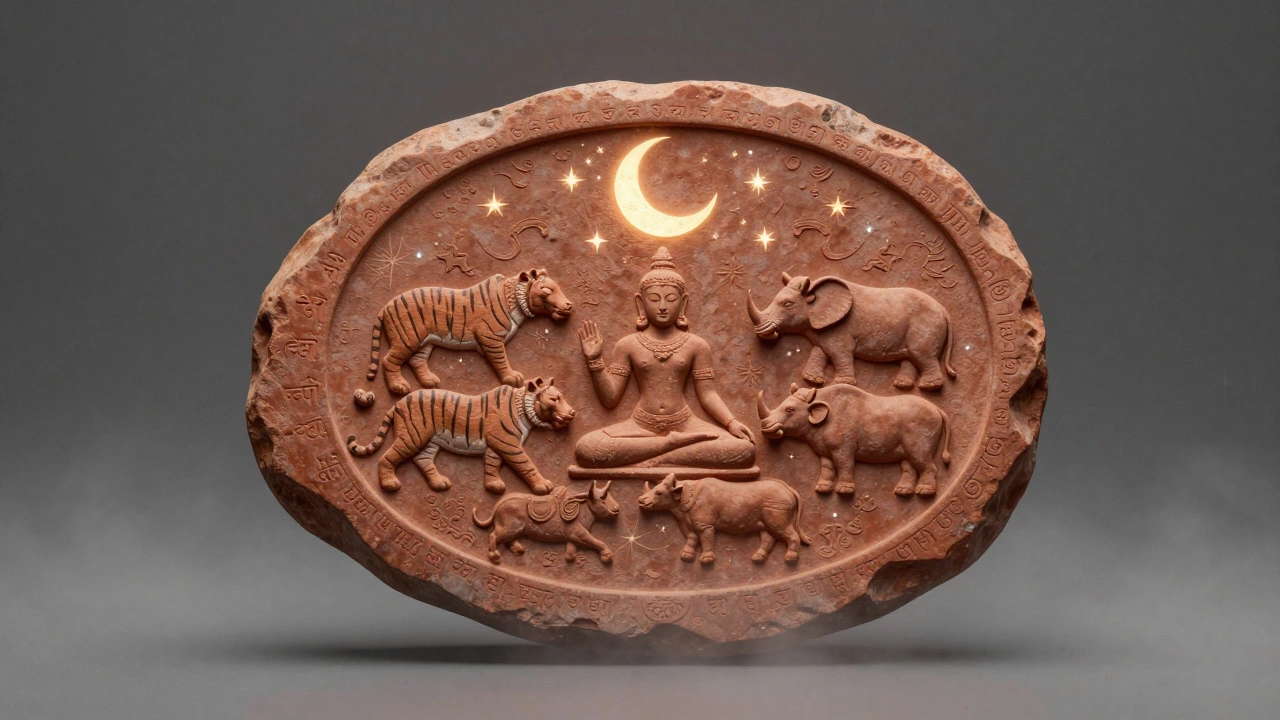
They also made seals-small carved stones used for trade or identity. One famous seal shows a figure seated in a yogic posture, surrounded by animals. Scholars call it the ‘Pashupati’ seal, suggesting an early form of Shiva as lord of beasts. Whether it’s a god or a priest, the image proves that meditation, nature, and spiritual authority were part of daily life over 4,000 years ago. The Indus people didn’t leave written records, but their art speaks clearly: they valued harmony, ritual, and the connection between humans and the natural world.
Temple Art: Where Architecture Became Worship
By the 6th century CE, temples across India became canvases for divine storytelling. In Khajuraho, the walls of Chandela temples aren’t just covered in carvings-they’re layered with meaning. You’ll find scenes of kings hunting, musicians playing, and lovers embracing. But you’ll also see demons being slain, gods meditating, and celestial beings flying. These aren’t random decorations. They’re a visual Veda.
The erotic sculptures at Khajuraho are often misunderstood. They weren’t there to shock. In Tantric traditions, the union of male and female represented the cosmic balance of Shiva and Shakti-the merging of consciousness and energy. The art didn’t glorify sex; it used it as a metaphor for spiritual union. To see only the erotic is to miss the whole point.
South Indian temples like those in Thanjavur and Madurai took this further. Their towering gopurams (gateway towers) were covered in hundreds of clay figures-gods, dancers, animals, sages-all painted in bright colors. Each figure had a role in the temple’s spiritual ecosystem. Walking through the gateway wasn’t just entering a building. It was entering a sacred narrative.
Sculpture: The Body as a Sacred Vessel
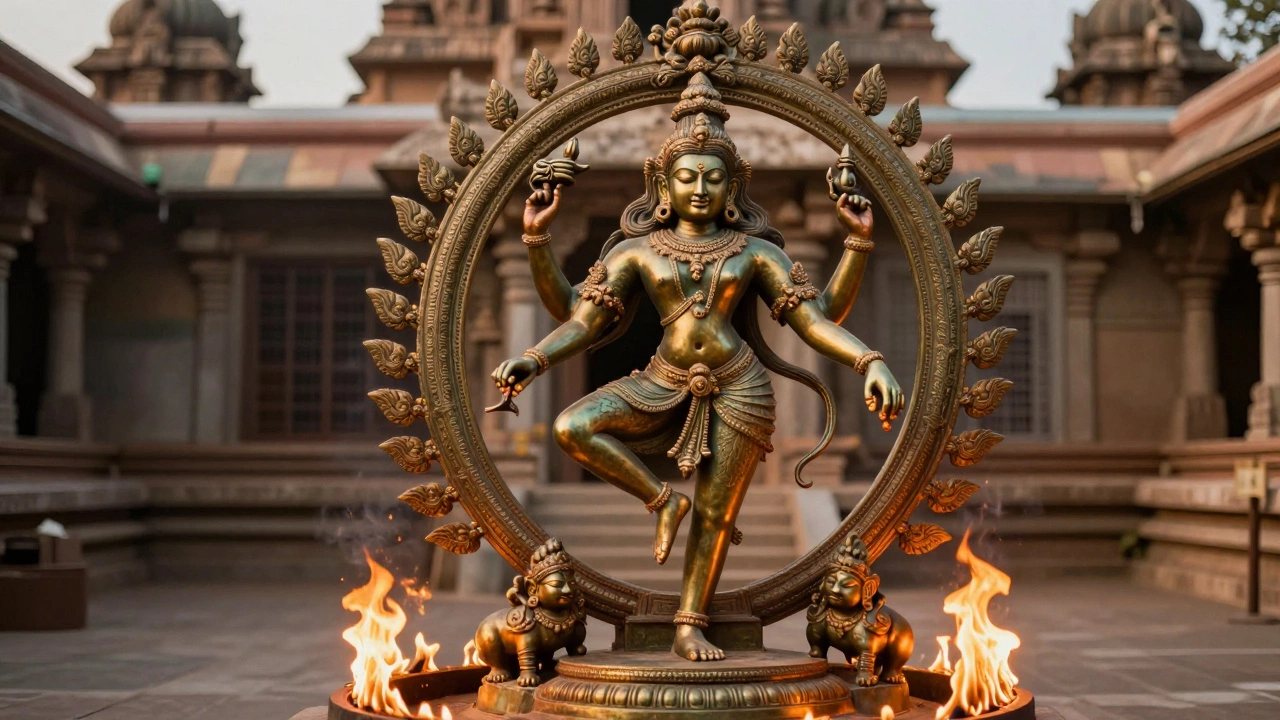
Ancient Indian sculptors didn’t carve statues to look real. They carved them to feel alive. The Chola bronze dancers from Tamil Nadu, made between the 9th and 13th centuries, are perfect examples. The bronze was cast using the lost-wax method, a technique so precise that even the strands of the dancer’s hair and the delicate jewelry are visible. But what makes these statues unforgettable isn’t their craftsmanship-it’s their energy.
The Nataraja, Shiva as the cosmic dancer, is the most famous. He dances within a ring of fire, one foot crushing a dwarf (symbolizing ignorance), the other raised in liberation. His drum beats time. His hand offers protection. His flowing hair shows the universe spinning. This single statue holds the entire Hindu cosmology. It’s not art you admire. It’s art you experience.
These bronzes were never meant to sit in museums. They were carried in processions during festivals, their weight swaying as they moved through the streets. People touched them, offered flowers, sang to them. They were living beings. That’s why the surface of these statues often shows smooth patches-centuries of hands brushing over them in devotion.
Painting: Color as Spirit
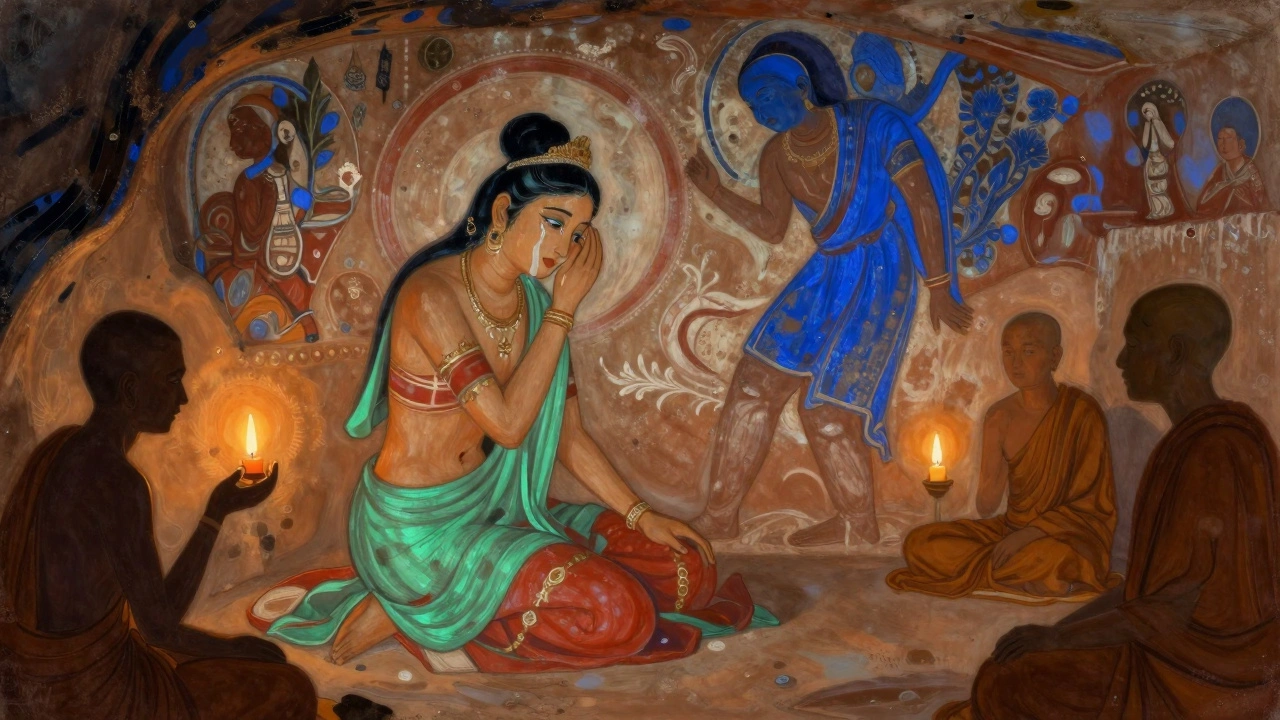
The caves of Ajanta, carved into a cliffside in Maharashtra, hold some of the oldest surviving wall paintings in India. Created between the 2nd century BCE and 6th century CE, they depict scenes from the Jataka tales-stories of the Buddha’s past lives. What’s remarkable isn’t just the detail, but the emotion.
One painting shows a princess weeping as her lover leaves. Another shows a king offering his kingdom to a beggar. The artists used natural pigments: red from ochre, blue from lapis lazuli, green from malachite. They mixed them with animal glue and applied them with brushes made from animal hair. The colors haven’t faded because they were meant to last-not just for years, but for lifetimes.
These paintings weren’t just stories. They were lessons in compassion, sacrifice, and detachment. Monks would sit in the dim light of the caves, meditating on these images, letting them guide their thoughts. The art didn’t hang on a wall. It lived inside the mind.
Why Ancient Indian Art Still Matters Today
When you look at modern Indian art, you see echoes of this past. Contemporary artists like Bhupen Khakhar or Nalini Malani draw from temple motifs, folk patterns, and mythic figures. Why? Because ancient Indian art didn’t die. It transformed.
It’s still in the way dancers move in Bharatanatyam, with hand gestures that haven’t changed in 1,500 years. It’s in the intricate kolam designs drawn at doorsteps every morning-geometric patterns that connect the home to the cosmos. It’s in the gold filigree work of Odisha’s silver ornaments, which still follow the same floral designs from the Mauryan era.
More than that, it teaches us how to see the world. Ancient Indian art didn’t separate the sacred from the everyday. A potter shaping clay, a weaver threading silk, a sculptor carving stone-they were all doing the same thing: giving form to the invisible. That’s the deepest significance of this art. It didn’t just show gods. It showed how to live like one.
Why is ancient Indian art different from Greek or Roman art?
While Greek and Roman art often focused on idealized human forms for beauty or political power, ancient Indian art used the human body as a vessel for spiritual ideas. A Greek statue of Apollo celebrated physical perfection; an Indian statue of Shiva Nataraja showed the rhythm of the universe. Indian art wasn’t about realism-it was about meaning. Every gesture, pose, and object carried symbolic weight tied to philosophy, religion, and cosmic order.
Did ancient Indian art influence other cultures?
Absolutely. Indian artistic styles traveled along trade routes to Southeast Asia. The Borobudur temple in Indonesia, built in the 9th century, shows clear influence from Gupta-period Indian sculpture in its Buddha figures and narrative reliefs. In Tibet and Nepal, Buddhist art adopted Indian iconography-mudras, lotus thrones, and mandala designs-while adding local elements. Even in Central Asia, Greco-Buddhist art from Gandhara blended Hellenistic styles with Indian spiritual themes, creating a unique hybrid that shaped early Buddhist imagery across Asia.
What materials did ancient Indian artists use?
They used whatever was locally available and spiritually significant. Stone-especially sandstone, limestone, and schist-was common for temple carvings. Bronze, made from copper and tin, was used for ritual statues, especially in South India. Terracotta was popular for small figurines and seals in the Indus Valley. Paintings used natural pigments: red from iron oxide, blue from lapis lazuli imported from Afghanistan, green from malachite, and white from crushed shells. Binders like animal glue or gum arabic held the colors together. Even the brushes were handmade from squirrel or goat hair.
Is ancient Indian art still being created today?
Yes-but not as a relic. Traditional forms like Thanjavur painting, Pattachitra from Odisha, and Chola-style bronze casting are still practiced by families who’ve passed down the techniques for generations. Artisans in Kanchipuram still weave silk saris with motifs from temple carvings. Sculptors in Swamimalai use the same lost-wax method to cast Nataraja statues as they did 800 years ago. These aren’t tourist crafts. They’re living traditions, taught in gurukuls and honored in temple rituals. Modern artists also reinterpret them, blending ancient symbols with contemporary themes.
Why do so many ancient Indian artworks depict gods and goddesses?
Because in ancient India, divinity wasn’t separate from daily life. Gods weren’t distant figures in the sky-they were forces in nature, in the body, in the mind. Shiva represented destruction and regeneration. Lakshmi embodied abundance. Saraswati was knowledge itself. Depicting them wasn’t about worship alone-it was about understanding the world. Art made abstract ideas tangible. A goddess with multiple arms didn’t just look powerful; it showed she could act in many ways at once. The imagery helped people grasp complex spiritual truths without needing to read scriptures.
What to Look for Next
If you want to see ancient Indian art in person, start with the National Museum in Delhi or the Government Museum in Chennai. Both hold original Chola bronzes, Indus seals, and temple fragments. If you can’t travel, explore digital archives from the Archaeological Survey of India-they’ve scanned hundreds of cave paintings and sculptures in high resolution.
Don’t just look at the art. Ask: What was this made for? Who touched it? What did it mean to them? When you start asking those questions, you stop seeing relics. You start seeing voices-from thousands of years ago-that are still speaking.