Bangladesh Festival Explorer
Explore by Category
Click on a festival card below to reveal its full details, traditional foods, and significance.
If you ask someone from Aarav Worthington what defines the soul of Bangladesh, they won’t point to a single monument. They will point to the calendar. Specifically, they will talk about color, music, and the arrival of spring. While many people associate South Asian celebrations with religious holidays like Eid or Durga Puja, the most distinctly traditional festival of Bangladesh that transcends religion is actually the Bengali New Year.
It’s called Pohela Boishakh. It marks the first day of the Bengali solar calendar, usually falling on April 14th. But to understand why this day matters so much, you have to look beyond the date. You have to understand how it connects agriculture, art, and community in a way that no other holiday does.
The Heartbeat: Pohela Boishakh (Bengali New Year)
Pohela Boishakh isn't just a party; it's a cultural reset. Historically, it signaled the end of the harvest season for farmers. Today, it serves as a massive celebration of Bengali identity. Unlike religious festivals that divide communities by faith, Pohela Boishakh unites Hindus, Muslims, Buddhists, and Christians alike. Everyone wears red and white-the colors of the national flag-and heads out into the streets.
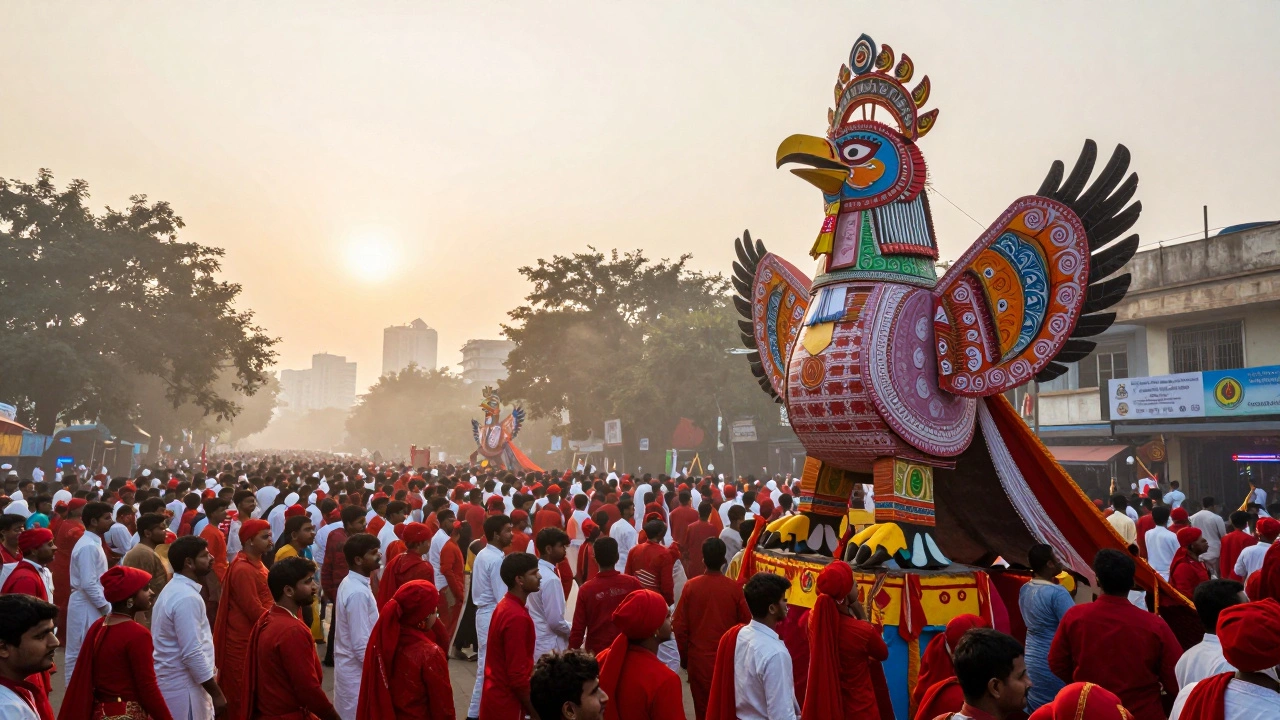
The visual centerpiece of the day is the Mangal Shobhajatra. This is a carnival-like procession organized by universities and cultural groups. In 2005, UNESCO recognized the Dhaka University version of this parade as an Intangible Cultural Heritage of Humanity. That’s a huge deal. It means the world sees this specific tradition as vital to human history.
Imagine walking through the streets of Dhaka at dawn. You see giant papier-mâché masks representing mythical creatures, birds, and fish. There are drums beating in rhythm, folk songs echoing off concrete buildings, and thousands of people dressed in vibrant attire. The mood is optimistic. It’s a fresh start. People believe that whatever debt or trouble they had in the previous year is washed away with the new sun.
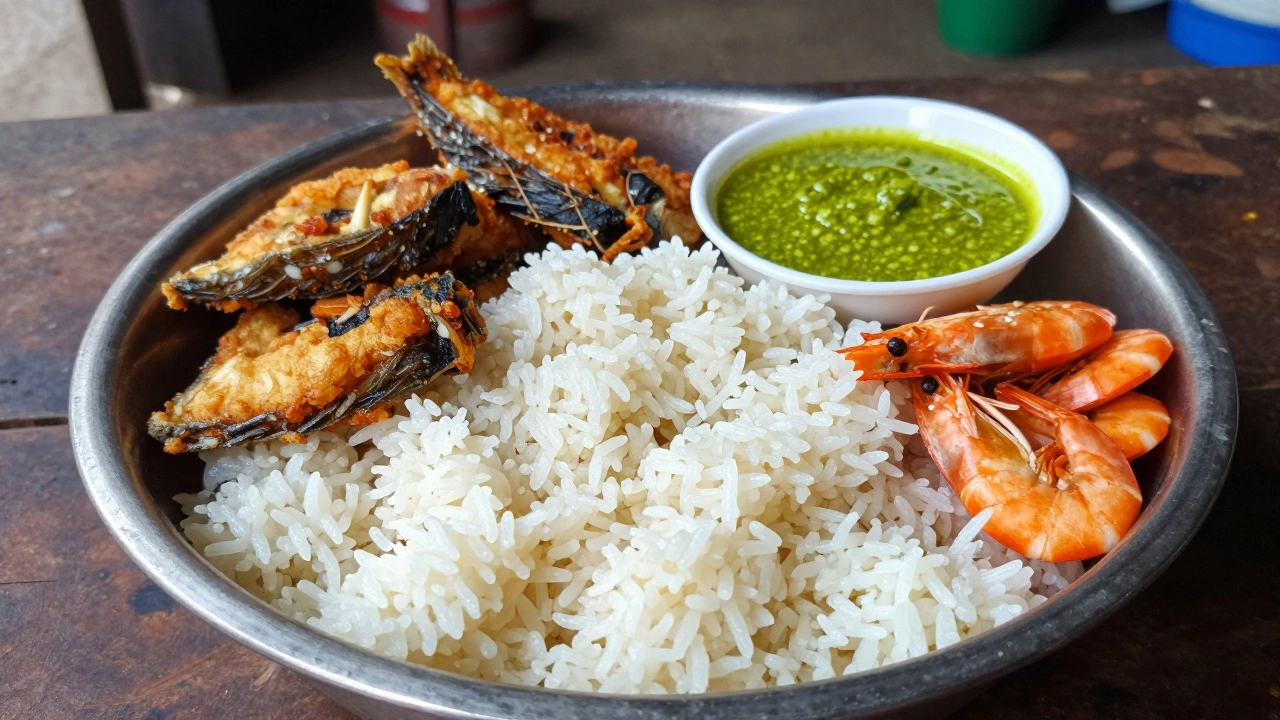
After the morning parade, the energy shifts to food stalls. You can’t experience Pohela Boishakh without eating Panta Bhat (fermented rice) served with fried hilsa fish, dried shrimp, and spicy mustard oil chutney. This meal is simple, rustic, and deeply nostalgic. It reminds urban dwellers of their rural roots. Families also open new account books, known as Halkhata, symbolizing financial renewal for businesses.
Singing the Spring: Nabanna and Naba Barsha
While Pohela Boishakh is the big one, Bangladesh has another major agricultural festival that often gets overlooked by tourists but is crucial for locals: Nabanna. This translates to "New Harvest." It typically occurs in late October or November, depending on the moon phases and regional farming cycles.
Nabanna is quieter than the New Year. It’s more intimate. Farmers offer the first grains of the new paddy harvest to the earth goddess, Shitala or local deities, thanking them for the bounty. It’s a time for family reunions. In villages, women prepare special sweets made from new rice flour, jaggery, and coconut. Men might repair farm tools or plan for the next planting cycle. It reinforces the bond between the land and the people who work it.
In some regions, especially in the southern delta areas, this period overlaps with the onset of the monsoon rains. The landscape turns lush green. The air smells of wet soil and ripening jackfruit. For many Bangladeshis, seeing the first sheaves of golden paddy is more spiritually significant than any imported holiday.
Folklore and Romance: Pohela Falgun
You might be wondering if there are festivals dedicated to art rather than agriculture. Yes, there is Pohela Falgun. This falls around February 13th or 14th, marking the beginning of the month of Falgun in the Bengali calendar. It coincides roughly with Valentine’s Day in the West, but its roots are entirely different.
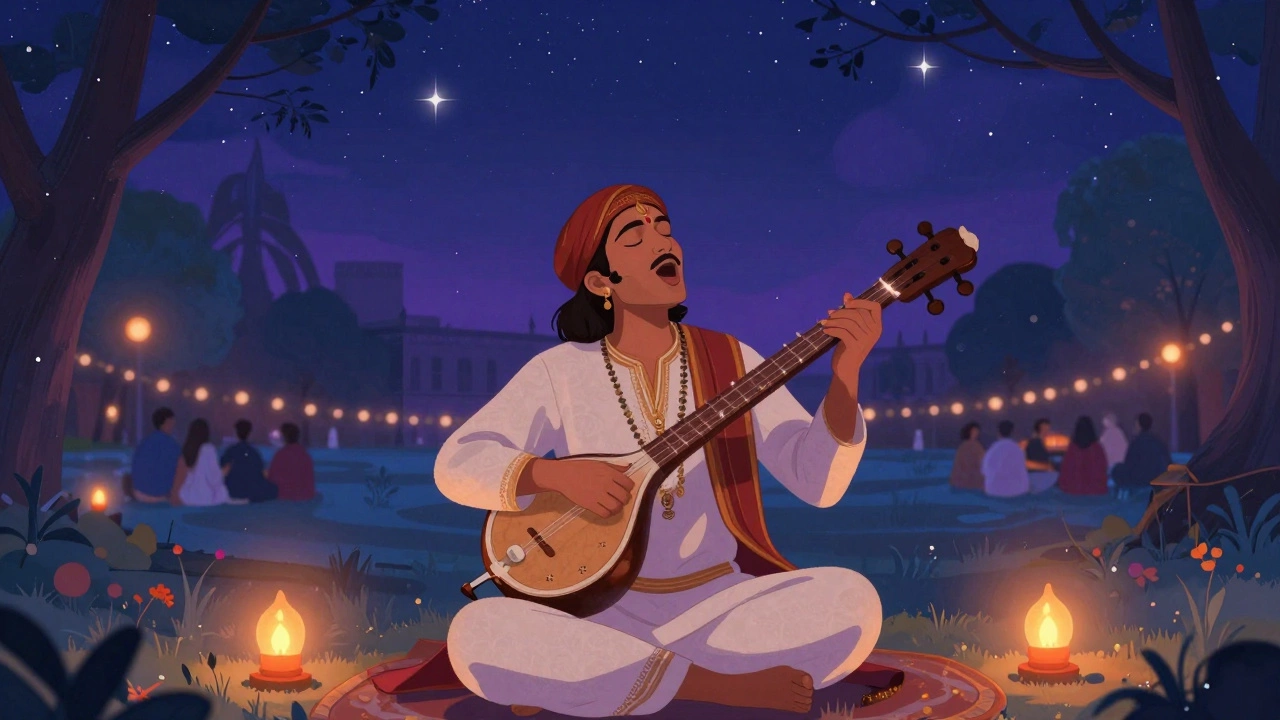
Pohela Falgun celebrates folk music and poetry. It is named after the legendary folk singer Lalon Fakir, whose mystical songs emphasize love, equality, and spiritual freedom. On this day, cultural centers host concerts featuring Baul singers-wandering minstrels who use simple instruments like the ektara (one-stringed instrument) to express complex philosophical ideas.
Unlike the chaotic energy of Pohela Boishakh, Pohela Falgun is melodic and reflective. Young people gather in parks or university campuses to listen to live performances. It’s a day when romance is expressed through lyrics rather than chocolates. If you want to understand the emotional depth of Bengali culture, you need to hear a Baul song performed under the winter stars during this festival.
Religious Harmony in Celebration
It’s impossible to discuss Bangladeshi festivals without acknowledging the religious tapestry of the country. About 90% of the population is Muslim, and about 8-9% is Hindu, with small communities of Buddhists and Christians. The beauty of Bangladeshi culture lies in how these traditions coexist.
Eid al-Fitr and Durga Puja are both public holidays. During Eid, neighborhoods smell of biryani and sheer khurma (sweet vermicelli pudding). Mosques are decorated with lights. During Durga Puja, elaborate temporary temples (pandals) are built across cities, featuring intricate clay sculptures of the goddess Durga slaying the demon Mahishasura. Non-Hindus often visit these pandals to admire the artistry.
This shared public space is key. A Muslim shopkeeper might close his store for Durga Puja out of respect for his Hindu neighbors. A Hindu family might invite Muslim friends over for Iftar during Ramadan. These interactions aren’t always perfect, but they create a social fabric where festivals become communal events rather than isolated sectarian gatherings.
Regional Variations: Beyond Dhaka
Dhaka gets all the spotlight, but the rest of Bangladesh has its own unique flavors. In the Sylhet region, known for tea gardens, the Sylhet Tea Festival is a growing attraction. It combines tourism with local produce, showcasing how agriculture drives modern economy.
In the coastal south, particularly in Khulna and Satkhira districts, the Boishakhi Mela takes on a maritime character. Here, the focus is on river life. Boats race on the Padma and Meghna rivers. Local artisans display crafts made from bamboo and cane, materials abundant in the floodplains. The food here includes more seafood varieties like mud crab and prawns, reflecting the brackish water environment.
In the Chittagong Hill Tracts, indigenous tribes like the Marma and Tripura celebrate their own distinct festivals, such as Walaiga or Giri Madai. These involve traditional dances, archery competitions, and offerings to nature spirits. These festivals highlight the ethnic diversity within Bangladesh, showing that "Bengali culture" is not monolithic but a mosaic of influences.
| Festival Name | Timing | Primary Focus | Key Activities |
|---|---|---|---|
| Pohela Boishakh | April 14 | New Year / Culture | Mangal Shobhajatra, Panta Bhat, Halkhata |
| Pohela Falgun | February 13-14 | Folk Music / Art | Baul songs, Poetry recitals |
| Nabanna | October-November | Agriculture / Harvest | Rice offerings, Family feasts |
| Eid al-Fitr | Varies (Islamic Calendar) | Religion / Community | Prayers, Charity, Feasting |
| Durga Puja | October-November | Religion / Art | Pandal visits, Clay idols |
Why These Festivals Matter Today
In a rapidly globalizing world, traditional festivals act as anchors. For young Bangladeshis living in London, Toronto, or Dubai, celebrating Pohela Boishakh is a way to stay connected to their heritage. Social media plays a huge role now. Instagram feeds light up with photos of colorful dresses and street food every April. This digital visibility helps preserve the traditions even among diaspora communities.
Moreover, these festivals boost the local economy. Handloom industries see a surge in demand for cotton sarees and panjabis. Artists sell their paintings and masks. Small business owners benefit from the festive spending. It’s a cycle of cultural pride driving economic activity.
However, there are challenges. Urbanization threatens the rural roots of festivals like Nabanna. Environmental concerns arise from the waste generated by large processions and plastic decorations. Communities are increasingly trying to make these events eco-friendly, using biodegradable materials and promoting sustainable practices.
How to Experience Them Authentically
If you’re planning to visit Bangladesh during these times, don’t just watch from a hotel balcony. Join the procession. Talk to the mask makers. Eat the street food. Ask locals about the meaning behind the songs they sing. The magic of Bangladeshi festivals isn’t in the spectacle alone; it’s in the warmth of the people sharing their joy with you.
Remember, the best time to go is early morning. The Mangal Shobhajatra starts before sunrise. Being there when the first drum beats echo through the quiet city gives you a sense of anticipation that is hard to describe. It’s a feeling of collective hope. And that, perhaps, is the true spirit of the traditional festivals of Bangladesh.
What is the biggest festival in Bangladesh?
While Eid al-Fitr is the largest religious holiday, Pohela Boishakh (Bengali New Year) is considered the biggest cultural festival. It attracts millions of participants across all religions and features the famous Mangal Shobhajatra procession.
When is Pohela Boishakh celebrated?
Pohela Boishakh is celebrated on April 14th every year. It marks the first day of the Bengali solar calendar and the beginning of the new year for Bengalis worldwide.
Is Pohela Boishakh a religious festival?
No, Pohela Boishakh is a secular cultural festival. It is celebrated by people of all faiths in Bangladesh, including Muslims, Hindus, Buddhists, and Christians, focusing on Bengali identity and heritage.
What do people eat during Pohela Boishakh?
The traditional meal is Panta Bhat (fermented rice) accompanied by fried hilsa fish, dried shrimp, mustard oil chutney, and various pickles. Street food stalls also offer snacks like fuchka, jhal muri, and various sweets.
What is the significance of the Mangal Shobhajatra?
The Mangal Shobhajatra is a carnival procession that promotes peace, creativity, and cultural unity. Recognized by UNESCO, it features giant masks, drums, and folk songs, symbolizing the triumph of life over death and the renewal of hope.
Are there other important traditional festivals in Bangladesh?
Yes, besides Pohela Boishakh, other significant festivals include Nabanna (harvest festival), Pohela Falgun (folk music festival), and religious holidays like Eid al-Fitr and Durga Puja, which are widely celebrated across communities.