
Discover Your Indian Cultural Archetype
Imagine trying to describe the weather in a country that has snow-capped Himalayas, scorching deserts, and tropical rainforests all within its borders. That is exactly what happens when you ask, what is typical Indian culture? There is no single answer because India is not just one thing. It is a collection of thousands of distinct identities woven together by shared history, spiritual roots, and social habits.
If you look for a uniform "Indian" way of life, you will be disappointed. However, if you look for common threads-like the deep respect for elders, the central role of family, or the vibrant celebration of festivals-you will find a pattern. This guide breaks down those patterns without ignoring the massive diversity that makes India unique.
The Myth of a Single "Typical" Culture
The first thing to understand about Indian culture is a complex tapestry of regional variations, religious practices, and linguistic differences spanning over 1.4 billion people is that it resists simple labels. When outsiders think of India, they often picture Bollywood movies, spicy curries, or Hindu temples. While these are real parts of the culture, they represent only a fraction of the whole.
India is home to six major religions: Hinduism, Sanatana Dharma, Islam, Christianity, Sikhism, Buddhism, and Jainism. Each religion brings its own rituals, dietary rules, and festivals. A typical day in Kerala, a state on the southwest coast, looks very different from a day in Punjab, a state in the north. In Kerala, rice and coconut dominate the diet, and the language is Malayalam. In Punjab, wheat-based foods like roti and sarson ka saag are staples, and the language is Punjabi.
This diversity means that "typical" is a relative term. What is typical in one region might be completely foreign in another. Yet, despite these differences, there are cultural constants that bind the country together. These constants include the importance of community, the reverence for nature, and the blending of the sacred with the everyday.
Family as the Core Unit
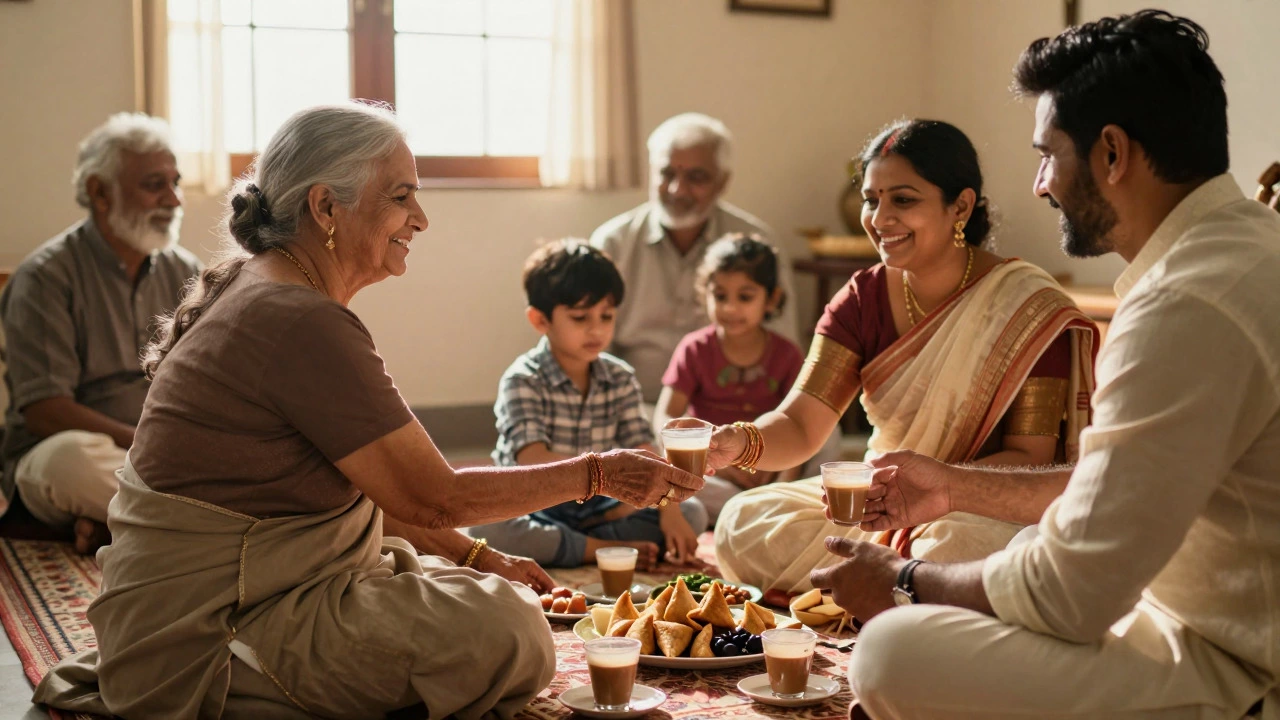
In many Western societies, the individual is the primary unit of society. In India, the family takes center stage. The concept of the Joint Family System is a traditional living arrangement where multiple generations live under one roof, sharing resources and responsibilities is still influential, even as nuclear families become more common in cities. Elders are respected not just out of politeness but as a core cultural value. Their advice is sought on everything from career choices to marriage.
This family-centric approach affects how Indians interact socially. Hospitality is paramount. If a guest visits an Indian home, they are treated with immense care. Food is offered immediately, often before the guest has even removed their shoes. Refusing food can sometimes be seen as rude, so guests usually accept at least a small portion. This practice stems from the ancient principle of Atithi Devo Bhava, which translates to "The guest is equivalent to God."
Family ties also extend beyond blood relations. Close friends are often considered part of the extended family. Social gatherings, whether for weddings, festivals, or casual get-togethers, are large and lively. Privacy is less emphasized than connection, and boundaries between personal and communal life are fluid.
Festivals: The Rhythm of Life
If you want to see Indian culture in action, watch the festivals. India does not have a single national holiday calendar; instead, it has a continuous cycle of celebrations that vary by region and religion. These festivals are not just days off work; they are deeply embedded in the social and spiritual fabric of life.
| Festival | Religion/Origin | Key Practices | Timing |
|---|---|---|---|
| Diwali | Hinduism, Sikhism, Jainism | Lights, fireworks, sweets, family prayers | October/November |
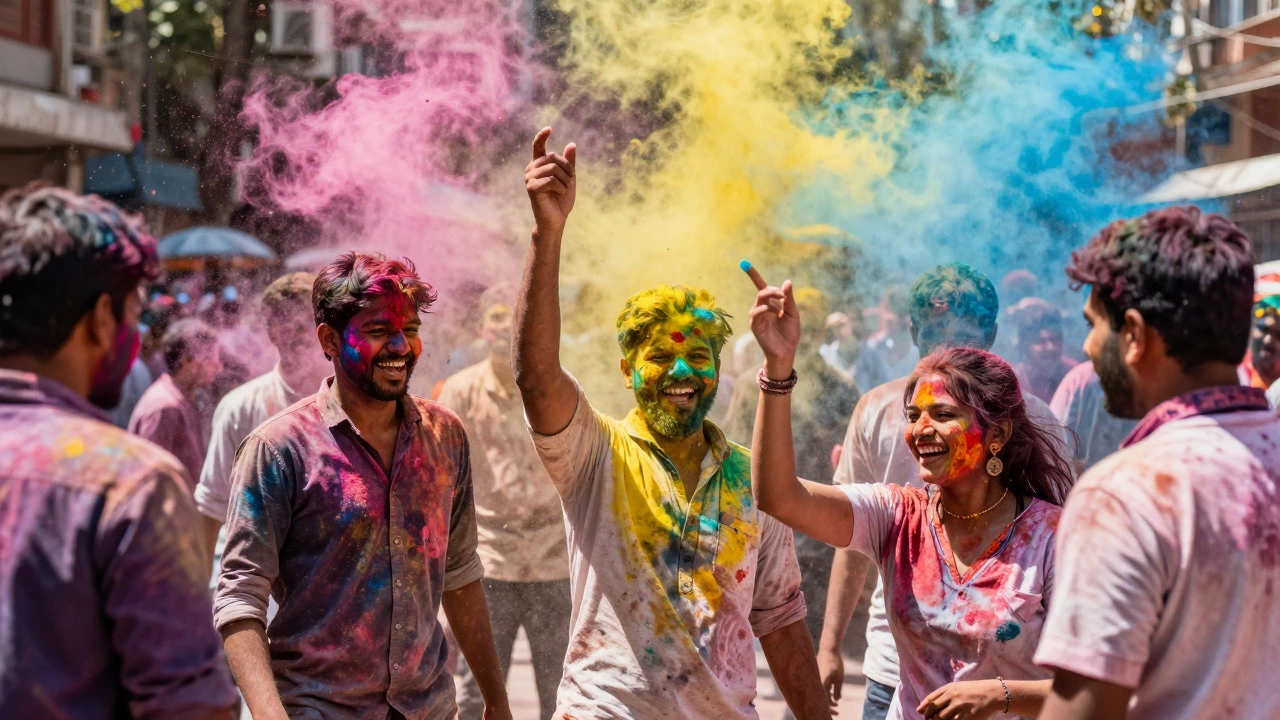
| Holi | Hinduism | Color throwing, bonfires, forgiveness | March |
| Eid al-Fitr | Islam | Prayers, feasting, charity | End of Ramadan (varies) |
| Vaisakhi | Sikhism | Nagar Kirtan processions, harvest celebration | April 13 |
| Onam | Kerala Folk/Hindu | Flower carpets, boat races, grand feast | August/September |
Diwali, also known as the Festival of Lights, is perhaps the most widely celebrated festival across India. It symbolizes the victory of light over darkness and good over evil. Homes are cleaned and decorated with oil lamps and rangoli (colorful floor designs). Families exchange gifts and sweets. Even non-Hindus often participate in the festivities, highlighting the inclusive nature of Indian culture.
Holi, the festival of colors, is another major event. It marks the arrival of spring and is characterized by people throwing colored powder and water at each other. Social barriers dissolve during Holi; strangers become friends, and hierarchies are temporarily ignored. It is a day of joy, mischief, and renewal.
Food: More Than Just Spice
When people think of Indian cuisine is a diverse culinary tradition characterized by varied spices, herbs, and cooking techniques that differ significantly by region, they often think of heat. But Indian food is not just about spice; it is about balance. The use of spices like turmeric, cumin, coriander, and cardamom is both for flavor and health. Ayurvedic principles influence cooking, aiming to balance the body's doshas (energies).
Dietary habits vary widely. In the south, rice is the staple grain, served with lentil soups (sambar) and vegetable stir-fries. In the north, wheat is dominant, consumed as flatbreads like roti and naan. Coastal regions rely heavily on seafood, while inland areas prefer meat or vegetarian options. Vegetarianism is more common in India than in most other countries, driven by religious beliefs in Hinduism, Jainism, and Buddhism that promote non-violence (ahimsa).
Eating is a communal activity. Traditionally, meals are eaten with the right hand, sitting on the floor around a banana leaf or metal plate. This method allows diners to mix flavors and appreciate the texture of the food. While forks and spoons are now common, especially in urban areas, the hand-eating tradition persists in many households and is considered a sensory experience that connects the eater to the food.
Clothing and Adornment
Traditional clothing in India reflects climate, culture, and occasion. The Saree is a long piece of cloth, typically 5 to 9 yards in length, draped elegantly around the body is the most iconic garment for women. It comes in various styles depending on the region-Nivi style from Andhra Pradesh, Bengali style, or Gujarati style. Men traditionally wear the Dhoti or Lungi, though the kurta-pajama (tunic and trousers) is more common today.
Fabric choice depends on the season. Cotton is preferred in hot climates, while silk and wool are used in cooler regions. Silk sarees, such as Banarasi from Varanasi or Kanjeevaram from Tamil Nadu, are prized for weddings and festivals. Jewelry plays a significant role in adornment, with gold being a symbol of prosperity and purity. Bangles, necklaces, and nose rings are common accessories, especially for married women.
In modern urban settings, Western clothing like jeans and t-shirts is widely worn, particularly among the youth. However, traditional attire is still reserved for formal occasions, religious ceremonies, and festivals. This blend of old and new is a hallmark of contemporary Indian culture.
Spirituality and Daily Rituals
Spirituality is woven into the daily lives of many Indians, regardless of their specific religion. Morning routines often begin with prayer or meditation. Many homes have a small shrine where offerings of flowers, incense, and food are made to deities. This practice, known as puja, is a way to start the day with mindfulness and gratitude.
Yoga originated in India and is an ancient physical, mental, and spiritual practice that aims to unite the body, mind, and spirit is now practiced globally, but in India, it remains a part of daily life for millions. It is not just exercise; it is a discipline for self-improvement and spiritual growth. Similarly, concepts like karma (action and consequence) and dharma (duty/righteousness) guide ethical behavior and decision-making.
Even secular activities often have spiritual undertones. Starting a new business, buying a car, or moving into a new house usually involves a ceremony to seek blessings. This integration of the sacred and the mundane helps individuals navigate life’s challenges with a sense of purpose and connectedness.
Modern Shifts and Global Influence
India is rapidly changing. Urbanization, globalization, and technology are reshaping cultural norms. Younger generations are more exposed to global trends through social media and international education. This has led to a hybrid culture where traditional values coexist with modern lifestyles.
For example, arranged marriages are still common, but they are evolving into "assisted" marriages where couples meet and consent before finalizing the union. Gender roles are shifting, with more women entering the workforce and pursuing higher education. However, patriarchal structures persist in many areas, creating a tension between tradition and progress.
Indian culture also has a significant global footprint. Bollywood films, yoga, and Indian cuisine are enjoyed worldwide. Diaspora communities maintain strong ties to their roots, celebrating festivals and preserving languages abroad. This global presence reinforces a sense of pride and identity among Indians, both at home and overseas.
Conclusion: Embracing the Complexity
So, what is typical Indian culture? It is a dynamic, multifaceted entity that cannot be reduced to stereotypes. It is the warmth of hospitality, the vibrancy of festivals, the diversity of food, and the depth of spirituality. It is a culture that honors its past while embracing the future. To understand India, one must appreciate its contradictions and complexities. It is not a monolith but a mosaic, where each piece contributes to the larger picture.
Is Indian culture strictly Hindu?
No. While Hinduism is the majority religion, Indian culture is pluralistic. It includes significant Muslim, Christian, Sikh, Buddhist, and Jain influences. Cultural practices vary widely based on religious affiliation and regional traditions.
Do Indians eat with their hands?
Traditionally, yes. Eating with the right hand is common, especially for homemade meals. It is believed to enhance the sensory experience of eating. However, utensils are widely used in restaurants and urban settings.
What is the most important festival in India?
There is no single most important festival as it varies by region and religion. Diwali is widely celebrated across India, but other festivals like Eid, Christmas, Vaisakhi, and Pongal hold equal significance for different communities.
How does family structure impact Indian society?
The joint family system emphasizes collective responsibility and support. Elders are highly respected, and decisions are often made collectively. This structure provides a strong social safety net but can also limit individual autonomy compared to nuclear family models.
Is vegetarianism common in India?
Yes, a significant portion of the population is vegetarian, largely due to religious beliefs in Hinduism, Jainism, and Buddhism. However, meat consumption is also common, particularly in coastal and northeastern regions.