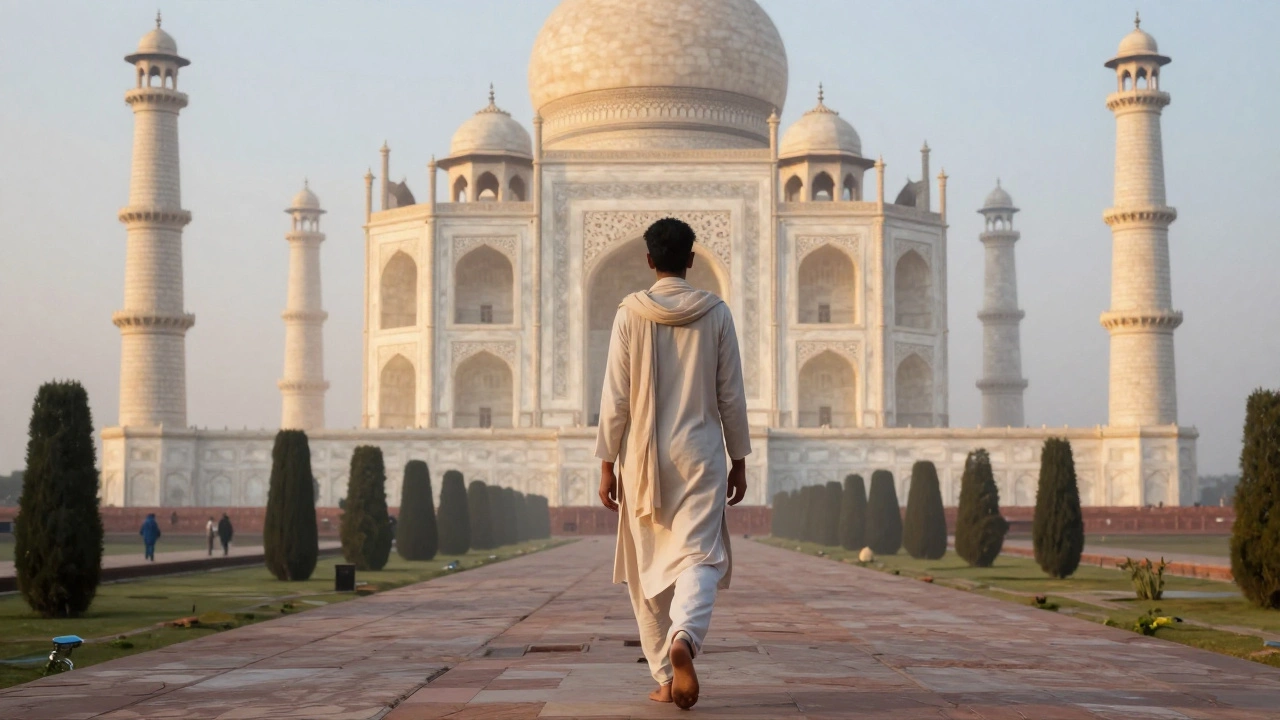
Walking up to the Taj Mahal at sunrise, the white marble glows like milk under the first light. You’ve dreamed of this moment. But then you realize: what to wear to the Taj Mahal actually matters-not just for respect, but for comfort, safety, and how locals see you.
This isn’t just about fashion. It’s about blending in, staying cool in the heat, and avoiding unwanted attention. The Taj Mahal isn’t a beach resort. It’s a sacred site built as a symbol of love, and the rules around dress reflect that. Skip the shorts and tank tops, and you’ll have a smoother, more meaningful experience.
Dress for the climate, not just the culture
Agra, where the Taj Mahal sits, gets brutally hot from March to June. Temperatures regularly hit 40°C (104°F). Even in December, when you’re likely visiting, daytime temps hover around 25°C (77°F), and the sun hits hard with no shade. You’ll be walking on hot stone for hours.
Lightweight, breathable fabrics are non-negotiable. Cotton and linen are your best friends. Avoid polyester or synthetic blends-they trap heat and sweat. A loose cotton kurta or long tunic over leggings works perfectly. Women can wear a long maxi dress made of cotton, paired with a light scarf. Men can go for cotton trousers and a short-sleeved shirt. The goal? Stay cool without exposing skin.
Footwear matters more than you think. You’ll walk barefoot on the marble inside the main mausoleum. Bring thin, slip-on sandals you can easily kick off. Flip-flops are fine, but avoid thick soles-they get hot and make walking on stone uncomfortable. A small bag to carry your shoes is handy.
Respect the site’s religious and cultural significance
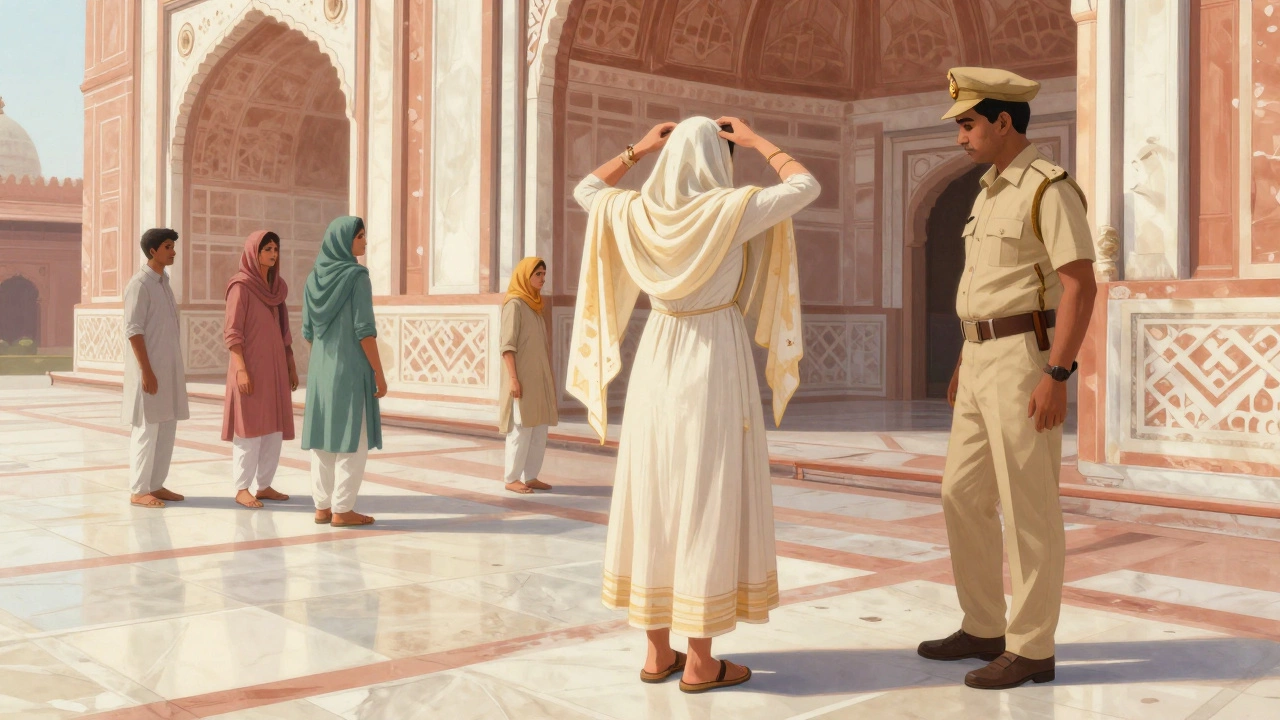
The Taj Mahal is a Muslim mausoleum. While it’s open to all visitors, it’s still a place of mourning and reverence. Locals dress modestly here-even non-Muslims. You don’t need to wear a burqa, but you do need to cover your shoulders and knees.
Women: Skip tank tops, spaghetti straps, crop tops, and short skirts. A sleeveless dress? Add a light shawl. A pair of capris? Fine. Shorts? Not allowed. Men: No sleeveless shirts or shorts below the knee. Even in summer, long pants are the norm for men visiting the inner chambers.
Why does this matter? Because Indian visitors follow these rules strictly. When tourists show up in revealing clothes, it creates tension. Locals notice. Staff notice. You’ll feel it-the stares, the quiet disapproval. Dress modestly, and you’ll be treated with more warmth.
What to avoid: Common mistakes tourists make
Here’s what not to wear, based on real visitor reports and security logs:
- Shorts above the knee
- Mini skirts or dresses
- Low-cut tops or plunging necklines
- Transparent or sheer fabrics
- Flip-flops with no back (they slip off on marble)
- Heavy boots or hiking shoes (they’re hard to remove quickly)
- Large backpacks (they’re not allowed inside the main tomb)
One tourist told me she wore a pretty sundress to the Taj-until a security guard gently asked her to cover her shoulders with her scarf. She didn’t have one. She ended up buying a cheap cotton dupatta from a street vendor for 50 rupees (less than $0.60). It saved her day.
Another guy wore shorts and got turned away from the inner chamber. He had to wait outside while his group went in. He didn’t realize the inner tomb had stricter rules than the outer grounds.
What to bring: The 5 essentials
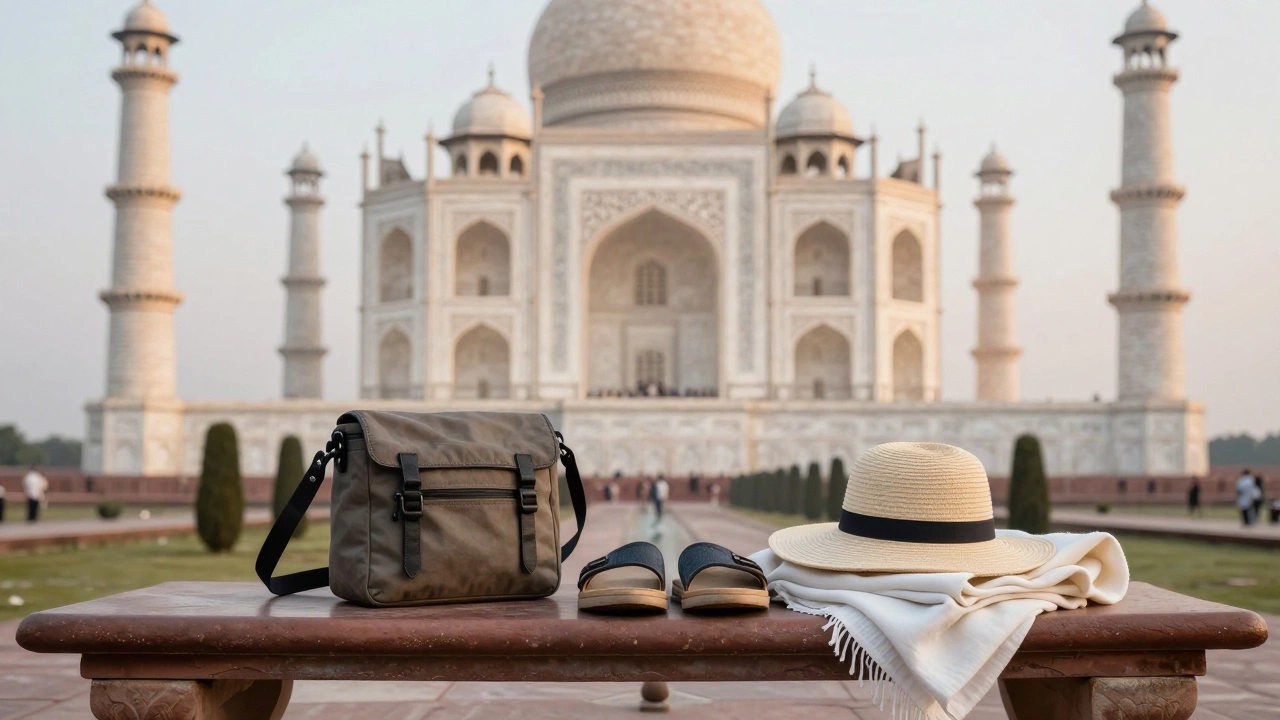
Here’s a simple packing list that works every time:
- Light cotton clothing that covers shoulders and knees
- A lightweight scarf or shawl (for women, and men if needed)
- Slip-on sandals you can take off easily
- A small crossbody bag (for phone, water, sunscreen)
- Sunscreen and a wide-brimmed hat (the sun here is intense)
Don’t pack a big backpack. Lockers are available, but they cost extra and fill up fast. A small bag you can carry is ideal. Bring water-there’s no drinking water inside the complex, and the nearest stalls are crowded.
What about traditional Indian clothing?
Should you wear a sari or sherwani? Not unless you’re visiting for a wedding or festival. Tourists wearing full traditional outfits often stand out in a way that draws unwanted attention. You’re not expected to dress like a local-you’re expected to dress respectfully.
That said, if you want to honor the culture, a simple cotton kurta for men or a long, plain cotton dress with a dupatta for women is a quiet nod of respect. It doesn’t have to be fancy. Just clean, covered, and comfortable.
Some travelers bring a traditional outfit as a photo prop-perfect for outside the gates. But change into your modest attire before entering. The Taj’s security team doesn’t care if you wore a sari to the gate. They care what you’re wearing when you step inside.
Seasonal tips: What to wear in December
December is one of the best months to visit. The weather is mild, the skies are clear, and the crowds are thinner than in summer. But nights get chilly-down to 10°C (50°F).
Layer up. Wear a light cotton tunic over leggings. Bring a light jacket or cardigan for early morning or evening visits. A scarf doubles as a neck warmer and a shoulder cover. Avoid heavy wool-it’s too hot during the day.
Early morning visits (sunrise) are magical. But the grounds are cold before the sun rises. Don’t show up in just a t-shirt. Bring something you can wrap around you until the heat kicks in.
What if you’re not dressed right when you arrive?
Don’t panic. There are vendors near the main gates selling affordable cotton dupattas, shawls, and even simple kurtas. Prices range from 30 to 150 rupees ($0.35-$1.80). Most are locals who know tourists forget. They’re not trying to rip you off-they’re helping you avoid being turned away.
Some visitors bring a lightweight sarong or beach towel from home. That works too. Wrap it around your shoulders or waist. Security guards are usually understanding if you’re making an effort.
Just don’t try to bluff your way in. If you’re wearing shorts and a tank top, you’ll be asked to cover up-or asked to leave. It’s not a punishment. It’s a rule. And it’s there for a reason.
Final tip: Think like a local
Indian families visit the Taj Mahal in quiet, respectful clothing. Grandmothers in cotton saris. Fathers in kurta-pajamas. Kids in simple shirts and pants. No one’s wearing neon. No one’s showing skin. No one’s loud.
You don’t have to dress like them. But if you dress like you understand why they dress that way, you’ll blend in. And you’ll feel more connected to the place.
The Taj Mahal isn’t just a building. It’s a promise. A love letter in marble. Dressing appropriately isn’t about rules-it’s about showing you get that.