Ayurvedic Bedtime Calculator
Why Timing Matters
Ayurveda teaches that sleep timing aligns with dosha rhythms:
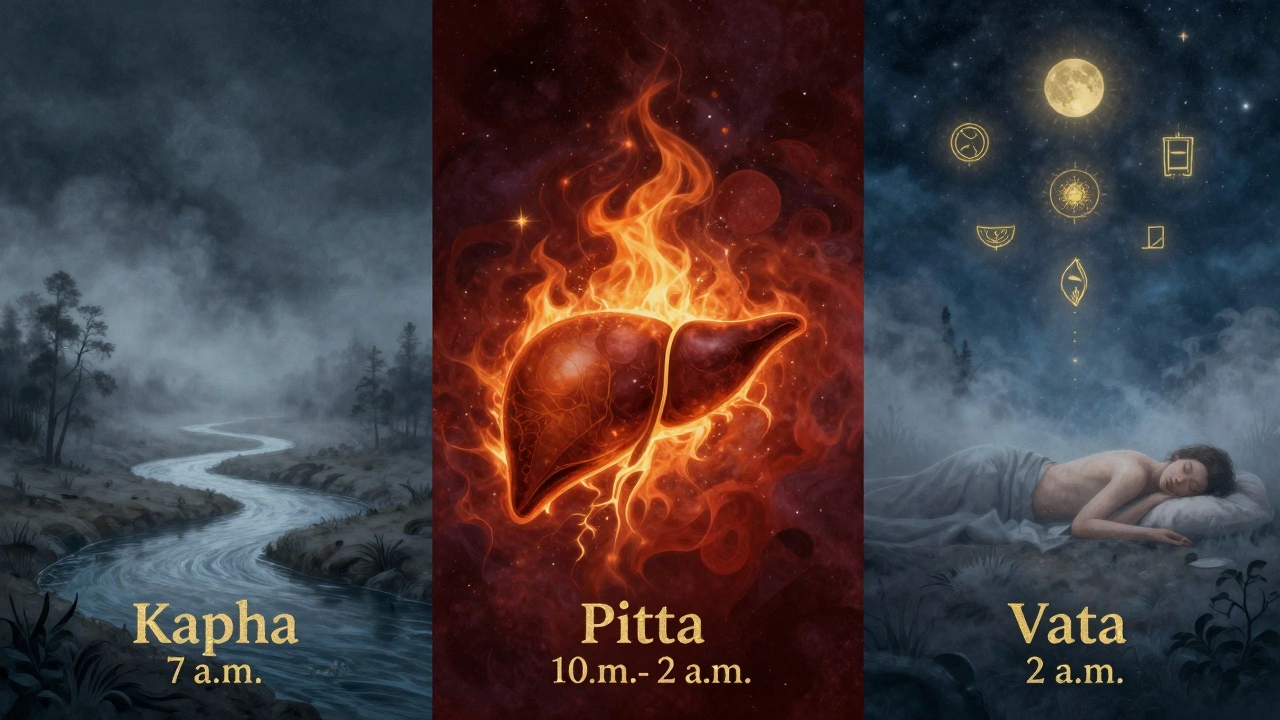
- 10 p.m. - 2 a.m. = Pitta time (critical detox window)
- 2 a.m. - 6 a.m. = Vata time (nervous system reset)
- 6 p.m. - 10 p.m. = Kapha time (winding down)
Missing the 10 p.m. window disrupts liver detox and healing.
Most people check the time before bed. But in Ayurveda, it’s not about what time the clock says-it’s about what your body is doing. Sleep isn’t just rest. It’s a repair cycle. And if you’re sleeping at the wrong time, even eight hours won’t fix what’s broken.
Why Ayurveda Cares About Sleep Timing
Ayurveda doesn’t treat sleep like a checklist item. It sees it as a vital part of your dosha rhythm-the natural flow of energy in your body. According to ancient texts like the Charaka Samhita, your body runs on three main energies: Vata, Pitta, and Kapha. Each dosha dominates a two-hour window during the day and night. When you sleep outside these windows, you disrupt your digestion, immunity, and even your mood.
Modern science agrees. Studies show that melatonin, the sleep hormone, peaks between 9 p.m. and 2 a.m. But Ayurveda goes further. It says if you’re not asleep by 10 p.m., you’re missing the most healing part of the night. That’s not a suggestion. It’s a biological truth.
The Three Phases of Night: What Happens When You Sleep
Think of your night in three blocks, each ruled by a dosha:
- 6 p.m. to 10 p.m. - Kapha time: This is when your body winds down. Heavy, slow energy builds. Your digestion slows. You feel calm. This is the ideal window to relax, eat dinner, and prepare for sleep.
- 10 p.m. to 2 a.m. - Pitta time: This is when your body cleanses. Liver detoxes, blood purifies, tissues repair. If you’re awake, your body shifts into stress mode. Cortisol rises. Healing stalls.
- 2 a.m. to 6 a.m. - Vata time: Light, airy energy. This is when dreams happen, and your nervous system resets. If you wake up here often, it’s a sign your Vata is imbalanced-stress, anxiety, or overthinking are likely the cause.
Missing the Pitta window means your liver doesn’t get the deep reset it needs. That’s why people who sleep late often feel tired even after a full night. They’re not sleeping less-they’re sleeping poorly.
What Time Should You Go to Bed?
The Ayurvedic answer is simple: before 10 p.m. That’s the golden window. Not 11. Not midnight. 10 p.m.
If you’re a Vata type-thin, anxious, prone to insomnia-you need to be in bed by 9:30 p.m. Your nervous system is already overstimulated. Every minute past 9:30 adds to the noise.
If you’re a Pitta type-driven, intense, a night owl-you might think you’re fine sleeping at midnight. But your liver is screaming. You’ll feel hot, irritable, or have acid reflux. Your body is trying to detox while you’re scrolling on your phone.
If you’re a Kapha type-grounded, slow, heavy-you can sleep a little later, maybe 10:30 p.m., but not later. Kapha types tend to oversleep and still feel sluggish. Going to bed too late makes that worse.
There’s no one-size-fits-all. But the rule is universal: sleep before 10 p.m. to let Pitta do its job.
What About Waking Up?
Sleep timing isn’t just about when you go to bed-it’s about when you wake up too. Ayurveda recommends rising before sunrise, ideally between 5:30 a.m. and 6:30 a.m. That’s the end of Vata time, when energy is light and clear.
Waking up late-after 7 a.m.-floods your system with Kapha energy. You feel heavy, foggy, sluggish. That’s why so many people need coffee just to get moving. It’s not caffeine they need. It’s a reset.
Try this: Set your alarm for 6 a.m. for a week. Don’t hit snooze. Drink a glass of warm water before you do anything else. Walk outside if you can. Let the morning air touch your skin. You’ll feel different by day three.
What If You Can’t Sleep Before 10 p.m.?
Life happens. Work, kids, deadlines. You’re not failing. You’re just out of sync.
Here’s how to fix it without quitting your job:
- Turn off screens 90 minutes before bed. Blue light kills melatonin. Use amber bulbs or dim lights after 8 p.m.
- Drink warm milk with a pinch of turmeric or ashwagandha. Not coffee. Not tea. Milk with spices calms the nervous system.
- Massage your feet with warm sesame oil. It’s an ancient trick. The soles of your feet have nerve endings that connect to your brain. Oil massage before bed signals rest.
- Stop eating after 7 p.m. Digestion competes with detox. If your stomach is working, your liver can’t.
- Keep your room cool and dark. Ayurveda says your bedroom should feel like a cave-quiet, cool, and still.
One woman in London, who worked late shifts, started doing just the foot massage and turning off screens. Within two weeks, she stopped waking up at 3 a.m. She didn’t change her job. She changed her ritual.

What Happens When You Ignore Ayurvedic Sleep
Sleeping late isn’t just about feeling tired. It’s about long-term imbalance.
- Chronic late sleep → liver overload → skin problems, anger, acidity
- Irregular sleep → Vata imbalance → anxiety, insomnia, brain fog
- Skipping the Pitta window → poor detox → weight gain, hormonal issues
- Waking up late → Kapha buildup → lethargy, depression, slow metabolism
This isn’t folklore. It’s physiology. Your liver doesn’t care if you’re busy. It works on a clock. Miss its window, and toxins build up. Over time, that shows up as acne, fatigue, or even thyroid issues.
Real-Life Ayurvedic Sleep Routine (Sample)
Here’s what a simple, doable routine looks like:
- 6:30 a.m. - Wake up, drink warm water, walk outside
- 7:30 a.m. - Light yoga or stretching
- 8:00 a.m. - Breakfast (warm, cooked, not cold or raw)
- 1:00 p.m. - Lunch (biggest meal of the day)
- 6:30 p.m. - Light dinner, no heavy carbs or fried food
- 7:30 p.m. - Walk after dinner, no screens
- 8:30 p.m. - Dim lights, read a book, sip herbal tea
- 9:30 p.m. - Foot massage with warm oil
- 10:00 p.m. - Lights out, quiet mind
You don’t need to do all of this. Start with one thing. Turn off screens. Be in bed by 10. That’s enough to begin healing.
Why This Works in Modern Life
Ayurveda isn’t about going back to the past. It’s about tuning into your biology. Your body hasn’t changed since 500 B.C. It still needs dark nights and quiet hours. The world has changed. Your body hasn’t.
People in India who follow this schedule don’t drink sleep aids. They don’t count sheep. They just follow the rhythm. And they wake up refreshed-not because they slept longer, but because they slept right.
You don’t need to become an Ayurvedic expert. You just need to respect the clock your body was born with.