Cultural Dance Difficulty Analyzer
Select a dance style to analyze its technical demands. Which one matches your physical and mental strengths?
Dance Analysis
AttributeChallenge description goes here.
Mental load description goes here.
Key Takeaways
- Physical difficulty varies between extreme flexibility (Ballet), rhythmic complexity (Bharatanatyam), and acrobatic power (Capoeira).
- The hardest dances usually require a combination of 'Sthayi' (stability) and 'Bhava' (emotional expression).
- Training for elite cultural dances often starts in early childhood to mold the body's anatomy.
The Physical Toll of Classical Ballet
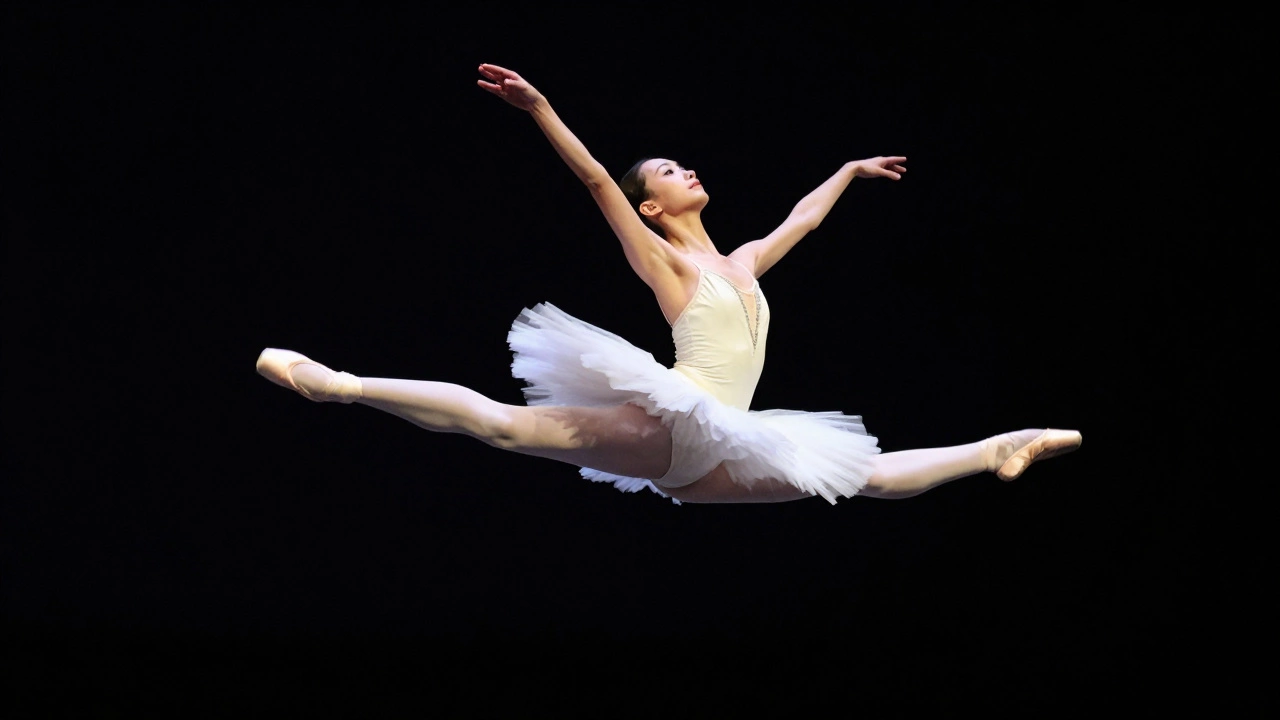
If we define 'hard' as the most taxing on the human skeletal structure, Ballet is a formalized dance system originating in the Italian and French Renaissance courts . It is essentially an athletic feat disguised as art. The most notorious element is en pointe, where dancers support their entire body weight on the tips of their toes using reinforced shoes. This puts immense pressure on the metatarsals and ankles, often leading to chronic injuries if the technique isn't perfect.
But it isn't just the toes. A dancer must maintain a perfectly rigid torso while their legs perform complex, rapid movements. This requires a level of core strength that would make most gym-goers sweat. Think about a Grand Jeté-that massive leap where the dancer seems to float. To achieve that, they need explosive power in their calves and quads, all while keeping their arms in a soft, curved position to hide the effort. It's a constant battle between extreme tension and the illusion of weightlessness.
Why Bharatanatyam is a Mathematical Nightmare
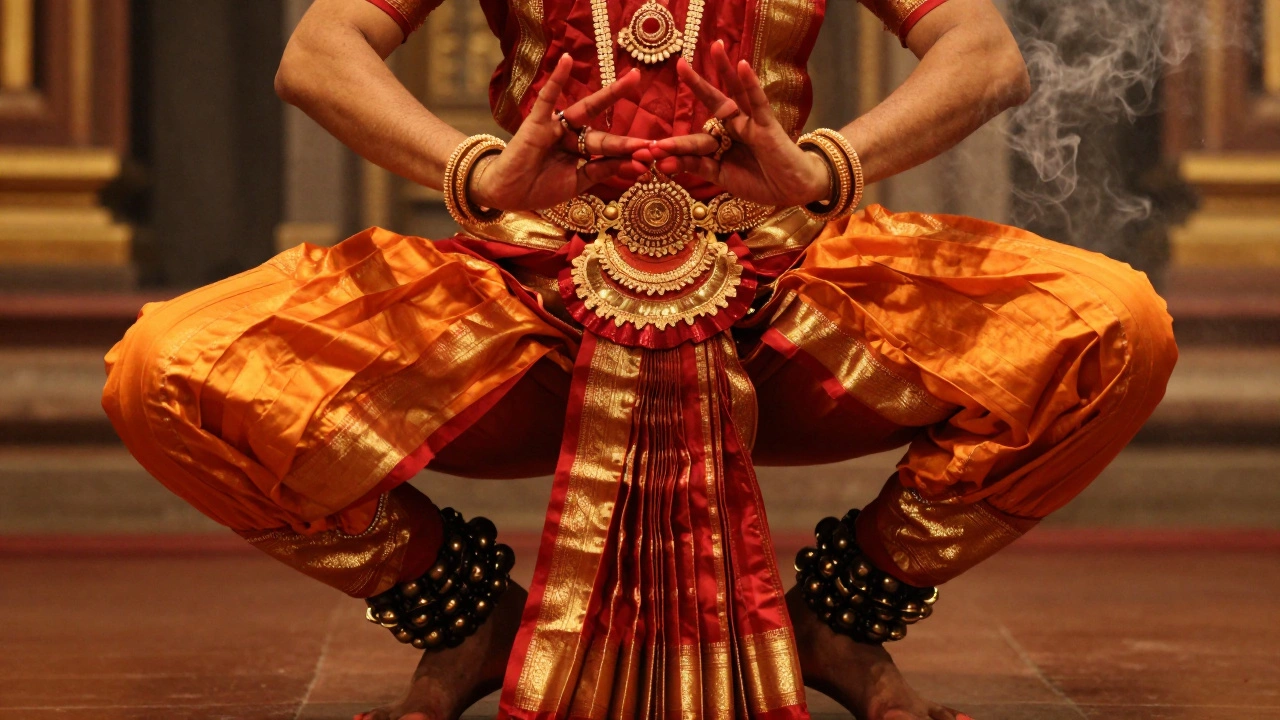
While Ballet focuses on verticality and air, Bharatanatyam is a major Hindu classical dance form from Tamil Nadu, India, known for its fixed upper body and intricate footwork . If Ballet is a study in geometry, Bharatanatyam is a study in percussion. The dancer's body becomes a musical instrument. They wear Ghungroos (heavy bells) around their ankles, and every strike of the foot must hit a specific beat with pinpoint accuracy.
The hardest part for most is the Araimandi position-a deep half-squat where the knees are turned outward. Holding this position for an entire performance is a grueling test of endurance. But the physical pain is only half the battle. You also have to master Mudras, which are symbolic hand gestures used to convey specific meanings, objects, or emotions . Imagine trying to maintain a deep squat while your fingers are rapidly switching between 50 different shapes to tell a story about a god or a flower, all while your eyes follow the movement of your hand with a specific rhythmic pulse. It is hardest cultural dance because it demands a simultaneous mastery of the body, the mind, and a complex linguistic code of gestures.
The Combat Art of Capoeira
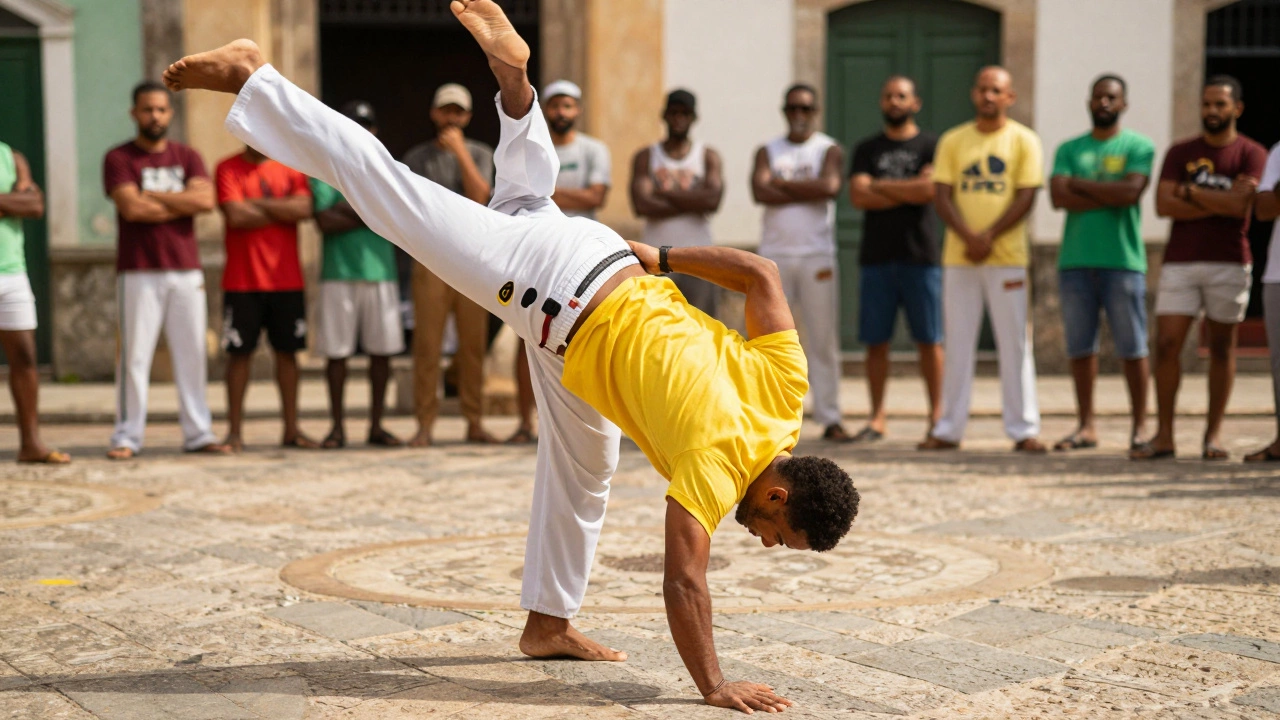
Not every hard dance happens in a theater. In Brazil, Capoeira is an Afro-Brazilian martial art that combines elements of dance, acrobatics, and music . This is a different kind of difficulty. While Ballet and Bharatanatyam are about precision and adherence to a set form, Capoeira is about fluidity and unpredictability. It's a 'game' played within a circle called a Roda.
The physical demand here is centered on inverted strength. Dancers spend a huge amount of time upside down, supporting their weight on their hands while kicking or swinging their legs. The Ginga, the basic rocking step, provides a constant state of motion that keeps the dancer ready to dodge or attack. The challenge lies in the spontaneity; you aren't following a choreographed routine, but reacting to an opponent's movement in real-time, all while keeping time with the Berimbau (a musical bow).
Comparing the Technical Demands
To understand why one might be 'harder' than another, we have to look at what the dance actually asks of the human body. A dancer trained in one of these styles cannot simply switch to another without years of retraining because the physical 'logic' is different.
| Dance Form | Primary Physical Challenge | Mental Load | Key Attribute |
|---|---|---|---|
| Ballet | Ankle/Toe pressure & Core rigidity | Spatial awareness & Balance | Weightlessness |
| Bharatanatyam | Knee endurance (Araimandi) & Feet percussion | Memorizing Mudras & Rhythmic cycles | Precision |
| Capoeira | Upper body strength & Inversion | Improvisation & Opponent reaction | Fluidity |
| Flamenco | Rapid heel-work & Lower back tension | Emotional intensity (Duende) | Passion |
The Invisible Difficulty: The Emotional Layer
We often focus on the sweat, but the mental load of cultural dances is where the real difficulty lies. In many Western styles, the goal is a certain aesthetic look. In Eastern and African traditions, the dance is a vehicle for spirituality or history. For instance, in Flamenco, the dance from southern Spain, there is a concept called Duende. It's not a step you can learn from a book; it's a state of raw, authentic emotion. A dancer can have perfect footwork-the zapateado-but if they don't possess Duende, the dance is considered empty.
This emotional requirement makes these dances 'hard' because you cannot fake it. You have to tap into genuine grief, joy, or anger while performing high-impact physical movements. The cognitive dissonance of maintaining a complex rhythmic pattern while simultaneously projecting a specific, deep emotion is an immense mental strain that separates the amateurs from the masters.
Which One Wins the Title?
If you value skeletal endurance and the defiance of gravity, Ballet takes the crown. If you value rhythmic complexity and the ability to multitask with your entire body, Bharatanatyam is the winner. If you value acrobatic power and combat reflexes, Capoeira is the toughest.
However, most experts agree that the 'hardest' dance is the one that requires the most diverse set of skills. Bharatanatyam often edges out others because it requires the dancer to be a percussionist, a mime, a storyteller, and an athlete all at once. You aren't just dancing a song; you are translating a poem into a physical language using your feet and fingers, while your legs are screaming from the deep squat of the Araimandi.
Can a beginner learn these dances without formal training?
While you can learn basic steps through videos, these forms are dangerous without a teacher. For example, trying en pointe in Ballet without proper ankle strengthening can lead to permanent fractures, and incorrect posture in Bharatanatyam can cause chronic knee injuries.
How long does it take to master Bharatanatyam?
A traditional training period, known as the initial phase leading up to the Arangetram (debut performance), usually takes between 7 to 12 years of rigorous daily practice.
Is Capoeira considered a dance or a fight?
It is both. It was developed by enslaved Africans in Brazil as a way to practice combat skills under the guise of a dance to deceive their oppressors. Today, it is practiced as a cultural art form that blends both elements.
What is the most difficult part of Ballet?
The most difficult part is the combination of turnout (rotating the legs outward from the hips) and the balance required for pointe work, which requires extreme strength in the core and ankles.
Why are hand gestures important in cultural dances?
In many cultures, especially in India and Southeast Asia, gestures serve as a visual alphabet. They allow the dancer to communicate complex narratives, such as the difference between a bee and a lotus flower, without saying a word.
Next Steps for Aspiring Dancers
If you're drawn to the challenge, don't just jump in. Start with a general fitness routine. For Ballet or Bharatanatyam, focus on hip mobility and core strength. For Capoeira, work on your wrist strength and balance. The best way to start is to find a certified instructor who understands the anatomy of the dance-they'll ensure you're pushing your limits without breaking your body.