Cultural Similarity Finder
Compare Cultural Similarity to Indian Culture
Select a country to see how closely its culture resembles Indian culture through key cultural elements.
When you think of Indian culture, you might picture colorful saris, temple bells, or the smell of turmeric and cumin drifting from a kitchen. But if you’ve ever traveled just a few hours across the border, you might have felt something familiar-like coming home without knowing why. The truth is, no culture exists in a vacuum. Indian culture didn’t grow in isolation. It spilled over, blended, and mirrored itself in neighboring lands. So which culture is closest to Indian culture? The answer isn’t one country. It’s a whole region.
Nepal: A Mirror of Indian Traditions
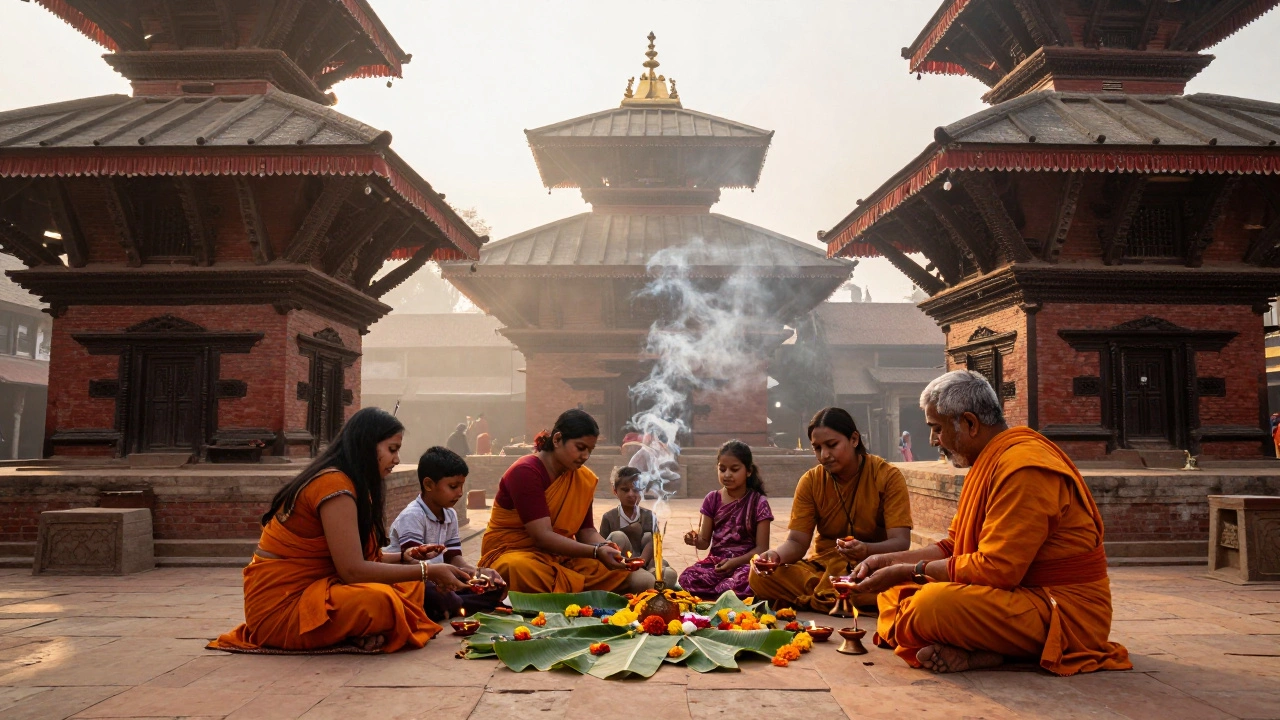
Nepal shares more than a border with India-it shares a soul. Hinduism isn’t just practiced in Nepal; it’s woven into daily life like thread in a sari. Temples in Kathmandu look like those in Varanasi. The way people offer flowers to deities, the timing of festivals like Dashain (which mirrors Durga Puja), even the way elders touch feet for blessings-it’s nearly identical. The Nepali language has over 60% Sanskrit-derived vocabulary. Many Nepali surnames like Sharma, Poudel, and Thapa are the same as in northern India. In rural areas, you’ll find the same joint family structures, the same reverence for cows, and the same rituals around birth, marriage, and death.
And then there’s the food. Dal bhat-lentils and rice-is Nepal’s daily staple, just like in Bihar or Uttar Pradesh. Pickles, chutneys, spicy curries, and the use of mustard oil? All the same. Even the way people eat with their hands, the way they sit cross-legged on the floor during meals, the way they serve food on banana leaves-it’s a direct echo.
Sri Lanka: Shared Roots, Different Paths
Sri Lanka might feel distant, but its cultural DNA is deeply Indian. The Sinhalese people, who make up the majority, trace their origins to North Indian migrants over 2,500 years ago. Buddhism, which dominates Sri Lankan life, was brought from India by Emperor Ashoka’s son, Mahinda. The rituals around temple visits, the chanting of Pali scriptures, the use of oil lamps and incense-all mirror practices in southern India, especially Tamil Nadu.
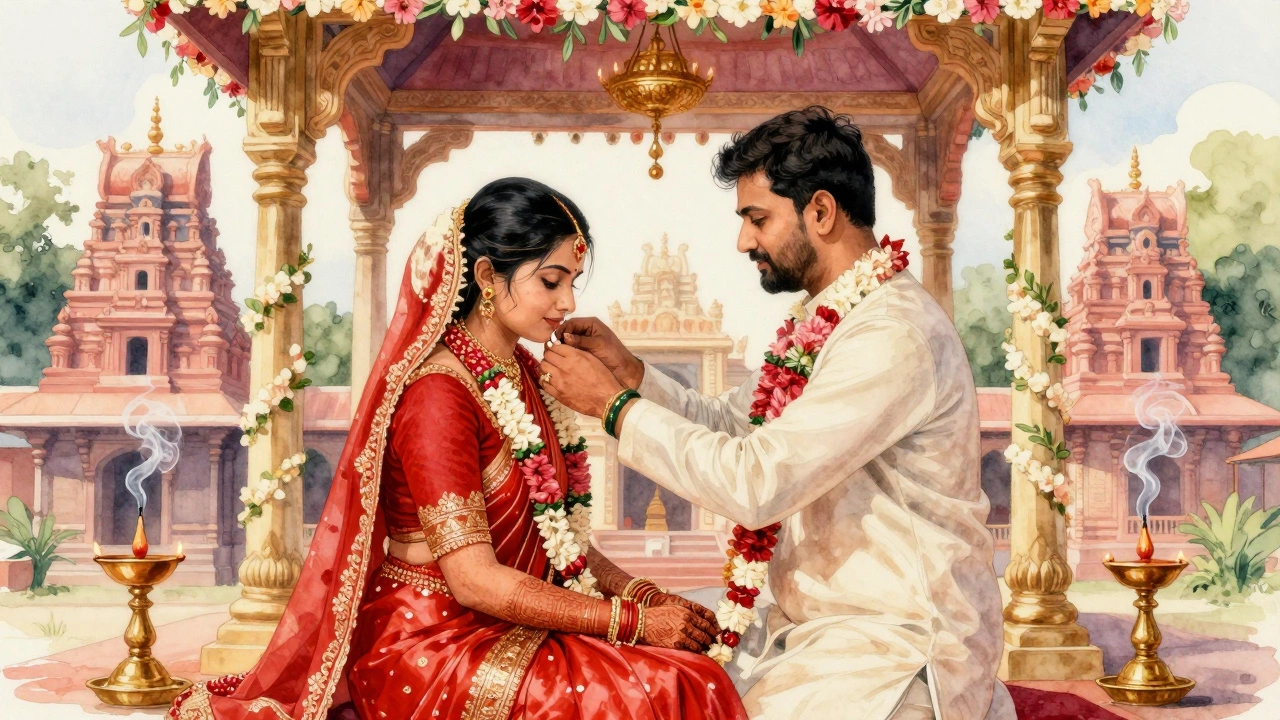
But the real surprise is the Tamil community in Sri Lanka. They speak a dialect nearly identical to that in Tamil Nadu. Their weddings follow the same rituals: the tying of the thali (mangalsutra), the seven steps around the fire, the use of turmeric paste on the bride’s skin. Even the traditional dress-the saree style, the way it’s draped-is the same. In Jaffna, you’ll find the same temple architecture as in Madurai, the same street food like idli and dosa, and the same love for coconut-based curries.
What’s different? Sri Lankans have added their own spices-more cinnamon, cardamom, and dried mango powder-but the foundation? Indian through and through.
Bangladesh: The Forgotten Twin
Bangladesh was part of British India until 1947. And even after partition, culture didn’t split down a map. In Dhaka and Chittagong, you’ll hear Bengali spoken with the same melodic lilt as in West Bengal. The poetry of Rabindranath Tagore is taught in schools on both sides of the border. Durga Puja isn’t just celebrated in Kolkata-it’s a massive public festival in Dhaka, with pandals, music, and processions that feel like they’re in the same city.
Food? Identical. The use of mustard oil, fish curry with poppy seeds, the way rice is steamed in banana leaves, the love for sweets like rasgulla and sandesh-it’s the same. Even the way people greet each other with “Nomoshkar” instead of “Namaste” is just a linguistic twist. The same festivals, the same family values, the same emphasis on education and arranged marriages. The only real difference? Religion. Bangladesh is majority Muslim, but cultural practices around weddings, childbirth, and festivals still carry unmistakable Indian roots.
Bhutan and Maldives: Subtle Echoes
Bhutan’s culture is more Tibetan than Indian, but Indian influence is undeniable. The use of chili peppers in every dish? That came from India. The architecture of dzongs (fortress-monasteries) mirrors temple complexes in Sikkim and Arunachal Pradesh. Even the traditional Bhutanese dress-the gho and kira-has roots in Tibetan and Nepali styles that themselves trace back to Indian textile traditions.
The Maldives? You wouldn’t expect it. But the Maldivian language, Dhivehi, has over 20% Sanskrit-derived words. Traditional Maldivian music uses instruments like the dholak and tabla. Wedding ceremonies include rituals where the bride’s hands are painted with henna, just like in Rajasthan. The use of coconut in cooking, the emphasis on community gatherings, the way elders are revered-all mirror South Indian patterns.
Why These Similarities Exist
It’s not coincidence. For over 3,000 years, India was the cultural engine of South Asia. Trade routes carried not just spices and cloth, but ideas-philosophy, language, art, and religion. The Mauryan and Gupta empires spread Hindu-Buddhist culture from Nepal to Sri Lanka. The Bhakti movement, which began in Tamil Nadu, reached Bengal and beyond. Sufi saints from Persia and Central Asia blended with Indian mystics, influencing rituals in Pakistan, Bangladesh, and even Afghanistan.
Colonial borders were drawn by British cartographers, not by culture. People didn’t suddenly stop celebrating Diwali because a line was drawn on a map. Families stayed connected. Marriages happened across borders. Songs were sung in both languages. Food recipes traveled with migrating workers.
What Makes Indian Culture Unique? Not Isolation-But Influence
People often think Indian culture is unique because it’s ancient. That’s true. But what makes it truly special is how deeply it’s been absorbed, adapted, and returned by its neighbors. Nepal didn’t copy India-it grew alongside it. Sri Lanka didn’t imitate it-it enriched it. Bangladesh didn’t inherit it-it lived it.
So when someone asks, “Which culture is closest to Indian culture?” the real answer is: the ones that never left it. Nepal, Sri Lanka, Bangladesh-they’re not distant cousins. They’re siblings raised in the same house, wearing different clothes, speaking different dialects, but sharing the same heartbeat.
What You’ll Notice If You Travel
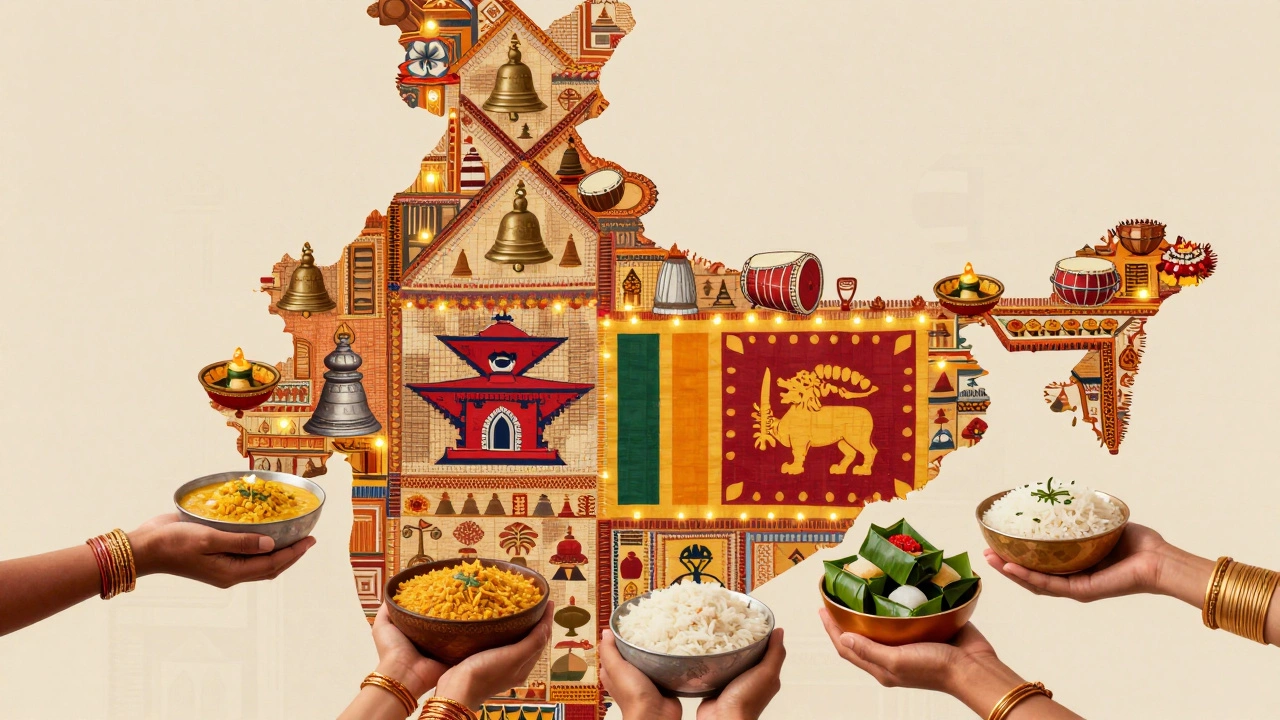
Here’s what you’ll see if you visit these places:
- In Nepal: The same temple bells, the same morning aarti, the same way people light diyas during Tihar.
- In Sri Lanka: The same Tamil wedding rituals, the same temple architecture, the same love for filter coffee.
- In Bangladesh: The same Durga Puja pandals, the same fish curry recipes, the same family gatherings during Eid that still feel like Diwali.
You won’t find a single festival, food, or ritual in these countries that doesn’t have a clear Indian cousin. And that’s not because they’re “less original.” It’s because culture isn’t about borders-it’s about connection.
Why This Matters Today
In a world divided by politics and borders, these cultural ties remind us that identity isn’t about flags or passports. It’s about shared meals, shared songs, shared prayers. When you see a Nepali grandmother praying at a temple, or a Sri Lankan woman applying kumkum on her forehead, or a Bangladeshi mother singing a Bengali lullaby-you’re not seeing a different culture. You’re seeing the same one, quietly continuing, in another home.
Is Nepalese culture just Indian culture?
No, Nepalese culture isn’t just Indian culture-it’s its own distinct identity shaped by Himalayan geography, Tibetan Buddhism, and unique ethnic groups like the Newars. But it shares deep roots with India: same Hindu rituals, similar languages, identical festivals, and overlapping food traditions. Think of it as a close relative who dresses differently but speaks the same family language.
Why is Sri Lankan culture similar to South Indian culture?
Sri Lanka’s Tamil population has lived there for over 2,000 years, migrating from Tamil Nadu. Their language, religion, food, and wedding rituals are nearly identical. Even the architecture of ancient temples in Anuradhapura mirrors those in Madurai. The differences are mostly in spice blends and local adaptations, not in core traditions.
Does Bangladesh have more Indian influence than Pakistan?
Yes. While both countries were part of British India, Bangladesh retained far more cultural continuity with eastern India-especially West Bengal. Bengali language, food, music, and festivals like Durga Puja are central to Bangladeshi identity. Pakistan, especially in the west, developed stronger Persian and Central Asian influences, making its cultural ties to India more distant.
Are Indian and Bhutanese cultures similar?
Bhutanese culture is primarily Tibetan Buddhist, so it’s closer to Tibet than India. But Indian influence is strong in southern Bhutan, especially in food (chilies, rice, lentils), textiles, and architecture. The use of incense, prayer wheels, and temple bells shows shared spiritual roots. It’s not a mirror, but a reflection.
Can you trace Indian culture’s influence to the Maldives?
Yes. Dhivehi, the Maldivian language, has over 20% Sanskrit-derived words. Traditional wedding customs include henna application, coconut-based rituals, and community feasts that mirror South Indian practices. Even the use of the dholak drum in music points to Indian origins. It’s subtle, but it’s there.
Where to Go Next
If you want to feel Indian culture without leaving South Asia, start in Nepal. Then head to Sri Lanka’s Jaffna peninsula. Visit Dhaka during Durga Puja. You’ll realize-this isn’t about one country. It’s about a region that still breathes the same air, eats the same food, and sings the same songs.