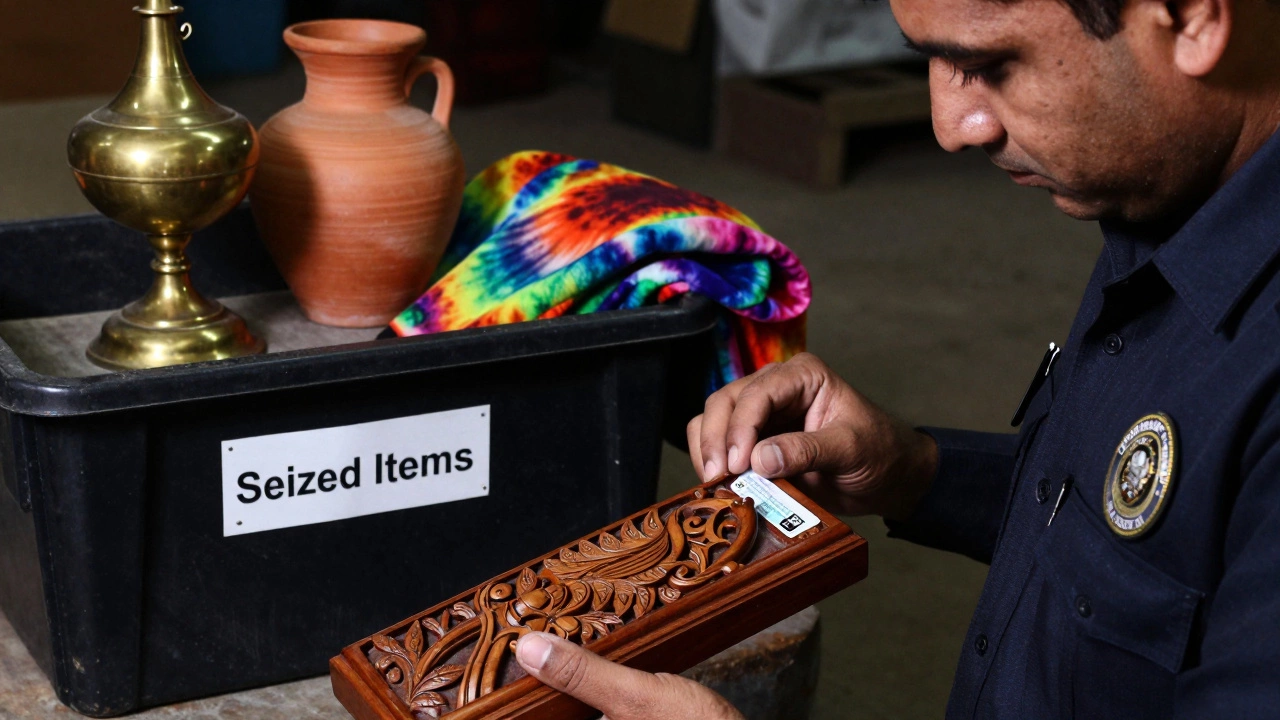
US Customs Compliance Checker for Indian Crafts
Check Your Item's Compliance
Select your craft type to see if it meets US Customs requirements
Every year, thousands of Indian handicrafts make their way into American homes - handwoven textiles, carved wooden artifacts, brass lamps, and terracotta pottery. But not all of them are allowed in. The U.S. Customs and Border Protection (CBP) blocks certain Indian-made goods not because they’re cheap or ugly, but because they violate health, environmental, or animal welfare laws. If you’ve ever shipped a gift from India and had it seized at the border, you’re not alone. Here’s what’s actually banned, why, and what you can still send without trouble.
What’s Actually Banned? The Top 5 Indian Products Blocked by U.S. Customs
The U.S. doesn’t ban Indian products out of prejudice. It’s about specific risks. The most common banned items fall into five categories.
- Items made from endangered animal parts - This includes jewelry made from ivory, turtle shell, or pangolin scales. Indian artisans have long used ivory in temple carvings and decorative boxes. But since 1989, the U.S. has enforced the Endangered Species Act strictly. Even antique ivory pieces from India are prohibited unless they have a CITES permit - and those are nearly impossible to get for personal imports.
- Handmade toys with lead-based paint - Many traditional Indian toys, especially from Rajasthan and West Bengal, use natural pigments. But some older or mass-produced ones still contain lead oxide for brighter reds and yellows. The U.S. Consumer Product Safety Commission (CPSC) has seized shipments where lead levels exceeded 90 ppm. A 2023 CBP report found 17% of inspected Indian toy shipments failed lead tests.
- Wooden artifacts made from protected species - Sandalwood is famous, but it’s not banned. What is? Items made from rosewood (Dalbergia spp.) and teak from unregulated sources. India exports carved furniture and statues from these woods, but under CITES Appendix II, all rosewood products require export permits. The U.S. blocks shipments without them. In 2024 alone, CBP intercepted 230 shipments of unpermitted rosewood carvings from Gujarat and Tamil Nadu.
- Brass and copper items coated with toxic lacquers - Indian brass lamps and utensils often get a shiny finish using chemical lacquers containing cadmium or hexavalent chromium. The U.S. bans products with these coatings under California’s Proposition 65 and federal EPA rules. A 2022 lab test of 50 imported Indian brass items found 14 had unsafe levels of cadmium.
- Handwoven textiles treated with azo dyes - Brightly colored silk and cotton fabrics from Varanasi and Kanchipuram are popular. But some dyes used to achieve deep reds and blacks contain banned azo compounds that break down into carcinogenic amines. The U.S. Food and Drug Administration (FDA) and CBP test textiles for these chemicals. In 2023, 11% of Indian textile shipments were held for chemical violations.
Why Do These Bans Exist? It’s Not About Culture
Some people think the U.S. is targeting Indian crafts to protect local industries. That’s not true. The bans are based on science, not trade policy. The real goal is to stop harm to people and ecosystems.
For example, the ivory ban isn’t about stopping Indian art - it’s about saving elephants. The global ivory trade fueled poaching in Africa and Asia. The U.S. joined 180 other countries in 1989 to shut down commercial ivory sales. Even if your carved elephant came from a 100-year-old family heirloom, U.S. law doesn’t make exceptions for personal use.
Same with lead paint. In India, rural artisans often use locally sourced pigments passed down for generations. But lead doesn’t care about tradition. When children chew on painted toys, lead enters their bloodstream. The U.S. has zero tolerance because even small amounts can affect brain development.
These rules aren’t meant to punish. They’re meant to protect. That’s why CBP works with Indian exporters to help them comply - not to block trade.
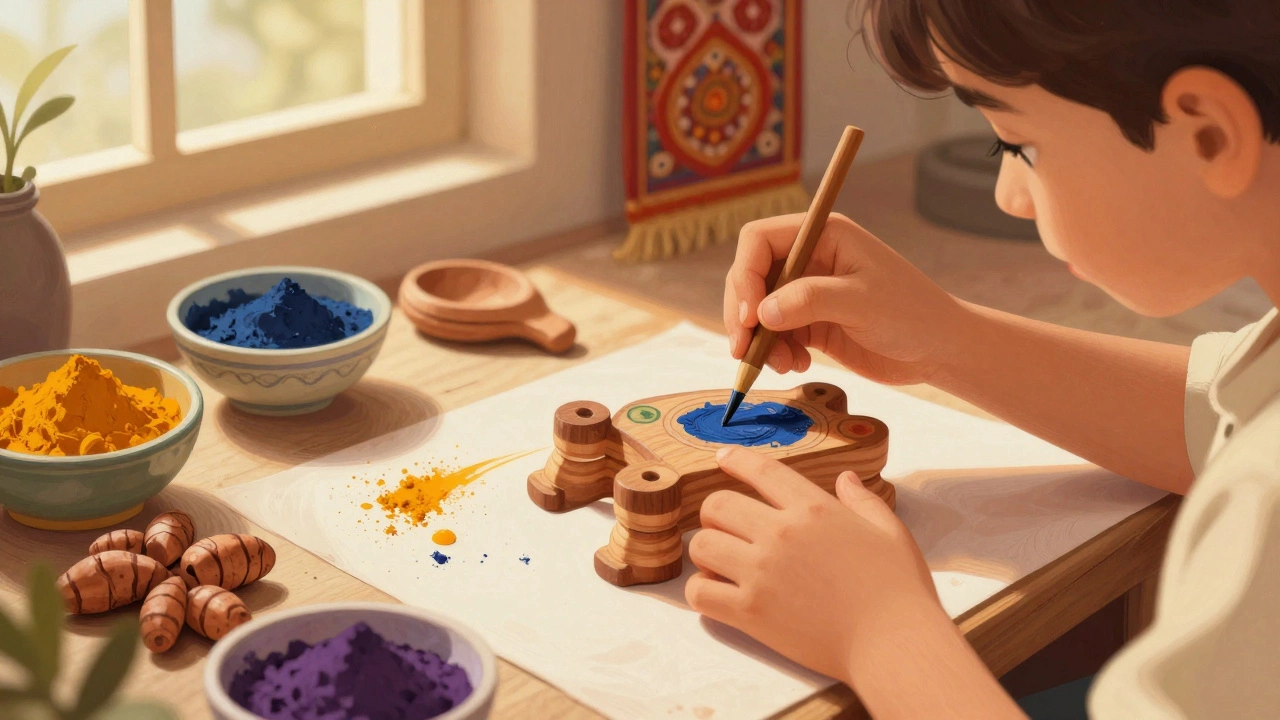
What Can You Still Send? Safe Alternatives
Don’t panic. Most Indian handicrafts are perfectly legal. Here’s what you can ship with confidence:
- Handmade pottery - Clay items from Khurja or Puducherry, as long as they’re glazed with non-toxic, lead-free glazes.
- Wooden carvings - From teak or mango wood, as long as the wood isn’t from a CITES-listed species. Look for FSC-certified labels.
- Brass and copper items - If they’re polished with beeswax or natural oils instead of chemical lacquers.
- Textiles - Silk, cotton, and handloom fabrics dyed with natural dyes like indigo, turmeric, or madder root.
- Stone carvings - Marble and soapstone statues from Rajasthan, especially if they’re from quarries with legal permits.
Pro tip: Always include a receipt or certificate that says the item is handmade, uses no endangered materials, and is free of lead, cadmium, or banned dyes. Many U.S. customs officers will let goods through with just a clear note.
How to Check If Your Item Is Allowed
There’s no single list of banned Indian products. But here’s how to check:
- Visit the U.S. Customs and Border Protection website and search "prohibited items".
- Use the CITES Species Database to look up wood or animal materials. If it says "Appendix I or II", you need a permit.
- Check the Consumer Product Safety Commission for toy and paint rules.
- For textiles, look for OEKO-TEX Standard 100 certification - it means no banned dyes.
- If you’re unsure, email CBP at [email protected] with a photo and description. They respond within 5-7 business days.
Many Indian exporters now label their products with QR codes linking to compliance certificates. If you’re buying or shipping, look for those.

What Happens If You Try to Bring a Banned Item In?
Don’t risk it. If CBP finds a banned item:
- The item is seized and destroyed.
- You may be fined up to $2,500 per violation.
- Repeated offenses can lead to being flagged for future inspections.
- There’s no appeal process for personal items - once seized, they’re gone.
One traveler in 2024 tried to bring a 200-year-old ivory comb from Lucknow as a family heirloom. CBP seized it, fined her $1,200, and told her: "Your history doesn’t override U.S. law."
Indian Craftsmen Are Adapting - And That’s Good News
Many artisans in Varanasi, Jaipur, and Channapatna are switching to safe materials. Artisans in Kutch now use vegetable dyes instead of synthetic azo dyes. Woodcarvers in Odisha are using mango wood instead of rosewood. Some cooperatives even get certified by the U.S. Department of Agriculture as "organic handicrafts."
There’s a quiet revolution happening. Indian crafts are becoming more sustainable - not because of pressure, but because artisans see the value in protecting their markets abroad.
So if you love Indian handicrafts, support those who follow the rules. Look for labels like "lead-free," "CITES-compliant," or "natural dyes." You’re not just buying art - you’re helping preserve it.
Are all Indian wooden crafts banned in the USA?
No. Only wooden items made from CITES-listed species like rosewood, ebony, or certain types of teak are restricted. Most common woods like mango, neem, and sheesham are perfectly legal. Always check the wood type and ask for proof of legal sourcing.
Can I bring Indian jewelry with ivory or tortoiseshell into the U.S.?
No. The U.S. bans all ivory and tortoiseshell items, regardless of age or origin. Even if it’s an antique passed down through generations, it cannot be imported for personal use. There are no exceptions.
Do U.S. customs inspect every Indian package?
No, but they randomly sample shipments, especially from high-risk categories like toys, textiles, and wood carvings. Items with bright colors, animal motifs, or metal finishes are more likely to be checked. Don’t assume your package will slip through.
What if I buy Indian handicrafts online from a U.S. seller?
The seller is responsible for ensuring compliance. If the item is banned, they’ll likely refund you or replace it. But if you order directly from India and the item gets seized, you’re on your own. Always buy from sellers who provide compliance documentation.
Are there any Indian products banned only in certain U.S. states?
Yes. California has stricter rules under Proposition 65, banning cadmium and lead in all consumer goods, not just toys. New York and Washington also have additional restrictions on certain dyes and coatings. If you’re shipping to these states, extra caution is needed.