Durga Puja Economic Impact Calculator
Durga Puja is the most significant cultural and economic event in Bengali culture. This calculator shows how the festival impacts local economies across regions. Based on data from the article, which states the festival contributes over $1.2 billion annually to West Bengal alone.
Every year, as autumn sets in and the air turns crisp, millions of people across West Bengal, Bangladesh, and Bengali communities worldwide stop what they’re doing. Streets fill with lights, music blares from loudspeakers, and the scent of incense and fried sweets drifts through neighborhoods. This isn’t just a celebration - it’s a cultural earthquake. And at the center of it all is Durga Puja.
Durga Puja isn’t just a festival - it’s a way of life
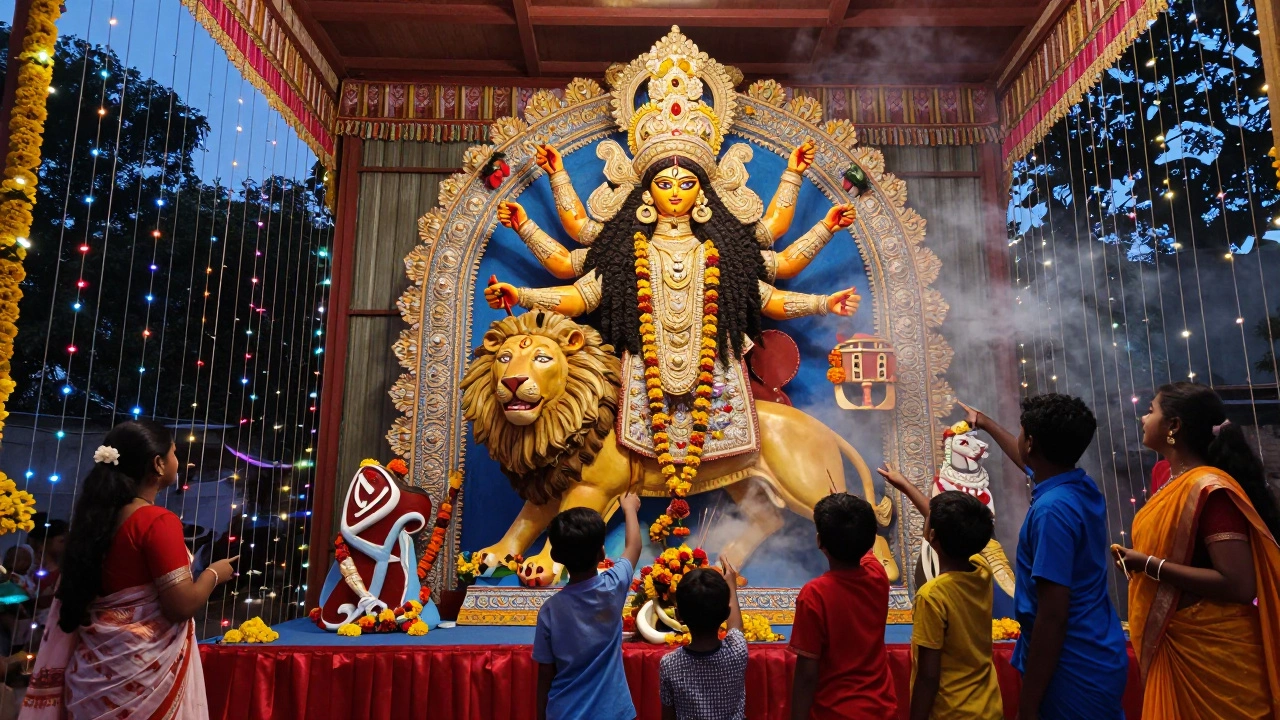
Ask anyone in Kolkata, Dhaka, or even London’s Southall what the biggest event of the year is, and they won’t hesitate: Durga Puja. It’s not merely a religious observance. It’s a 10-day cultural explosion that brings together art, music, food, fashion, and community in a way no other festival in Bengali culture does. More than 100 million people participate directly, and tens of millions more watch, celebrate, or are touched by its energy.
The festival honors the goddess Durga’s victory over the buffalo demon Mahishasura - a story of good defeating evil. But in practice, it’s less about doctrine and more about connection. Families reunite. Friends exchange gifts. Artists compete to build the most stunning clay idols. Neighborhoods transform into open-air galleries. Even non-Hindus take part - Muslims in Dhaka host pandals, Christians in Kolkata volunteer to help set up lights. That’s the power of Durga Puja: it doesn’t ask you to believe. It asks you to show up.
Why Durga Puja beats every other Bengali festival
Bengali culture has many festivals - Pohela Boishakh, Saraswati Puja, Kali Puja, Sharad Purnima. Each has its charm. But none matches Durga Puja in scale, emotional weight, or economic impact.
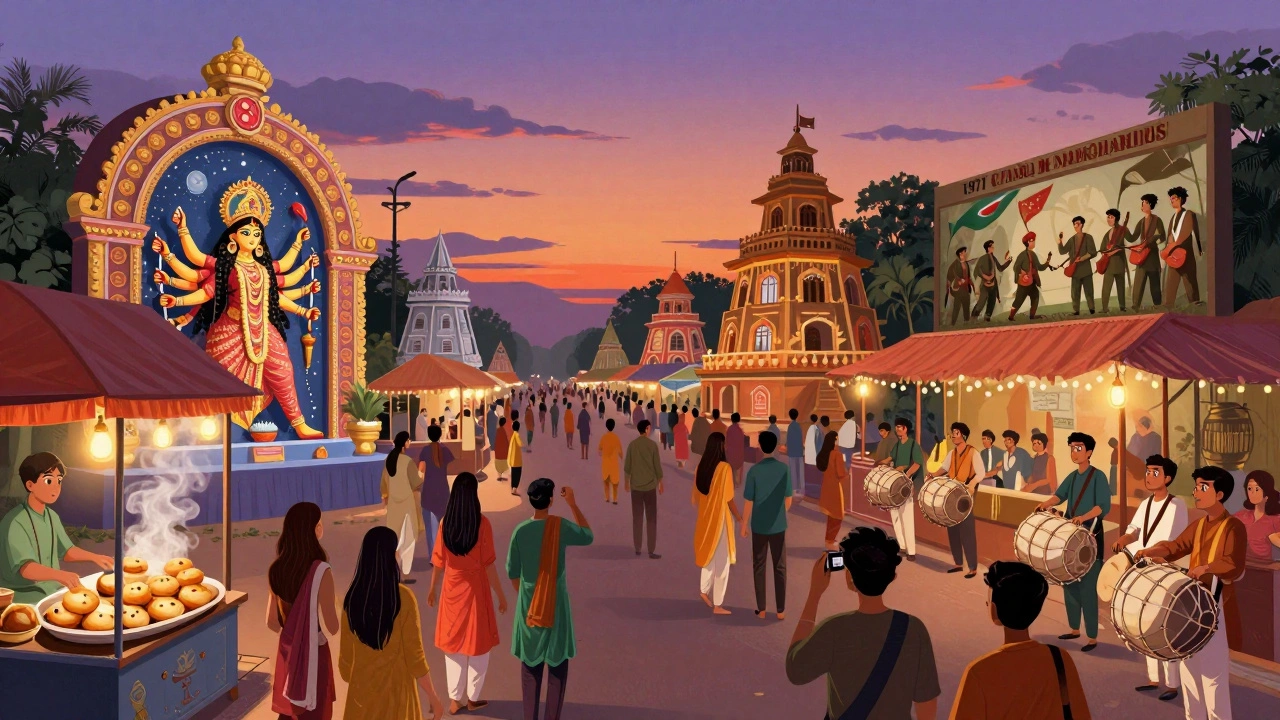
Take Pohela Boishakh, the Bengali New Year. It’s colorful, lively, and full of tradition. But it’s mostly a one-day affair. Durga Puja lasts ten days. It starts with Mahalaya, when the sound of devotional songs wakes up the city before dawn. Then come the days of pandal hopping - walking from one elaborate temporary temple to another, each with its own theme: space travel, climate change, Bollywood, historical epics. In 2024, one Kolkata pandal recreated the entire set of the film Barfi! using only recycled materials. Another recreated the 1971 Bangladesh Liberation War with life-sized figures and projected audio.
Then there’s the money. The Durga Puja economy in West Bengal alone is worth over $1.2 billion annually. That’s more than the annual revenue of many small countries. It pays for artisans who spend months sculpting idols, tailors who make new clothes, caterers who serve thousands of meals, electricians who string up thousands of lights, and musicians who perform nonstop. In rural Bengal, entire villages pool their savings to build one big pandal. It’s not a cost - it’s an investment in identity.
What makes Durga Puja different from other Hindu festivals
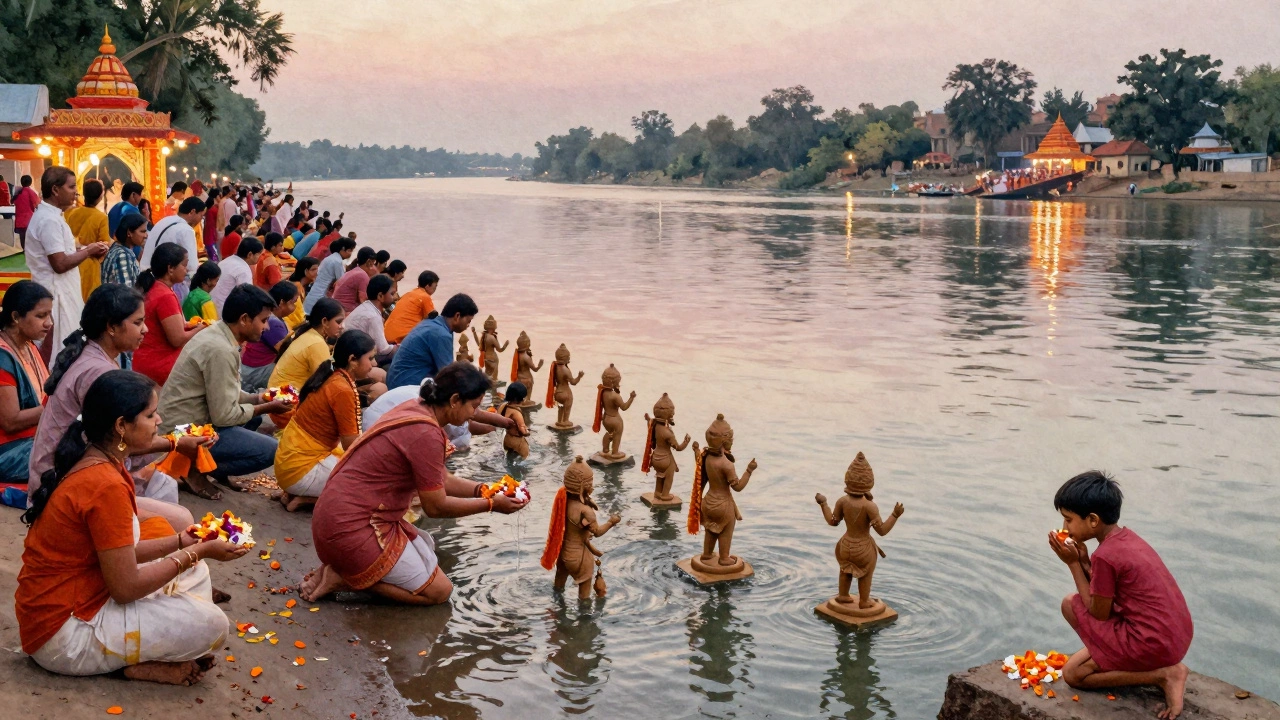
Diwali is bright. Holi is wild. Navratri is danced. But Durga Puja is different because it’s deeply personal. The goddess isn’t worshipped from afar. She’s brought home - literally. Families commission idols of Durga, her children Lakshmi, Saraswati, Ganesha, and Kartikeya, and place them in their homes or community pandals. The idols aren’t just statues. They’re treated like guests. They’re bathed, fed, dressed, sung to. On the final day, they’re carried in procession to rivers and lakes, and immersed - a bittersweet goodbye that feels like losing a beloved relative.
Unlike other festivals that focus on prayer or fasting, Durga Puja is about presence. You don’t need to be religious to feel it. You just need to be human. The way a grandmother holds her grandson’s hand as they walk past a pandal. The way strangers share plates of luchi and alur dom. The way teenagers take selfies in front of a 20-foot idol of Durga riding a lion, then later help clean up the streets after the immersion.
The global reach of Durga Puja
It’s not just India and Bangladesh. Durga Puja has gone global. In London, the largest celebration outside Asia happens in East Ham. Over 50,000 people showed up in 2024. The event features live tabla and dhol players, food stalls serving jhal muri and puchka, and a competition for the best pandal design. In New York, Toronto, Sydney, and even Dubai, Bengalis gather to recreate the magic. In 2023, a group of students in Toronto built a pandal entirely out of cardboard and LED lights, inspired by the theme of climate justice.
Even non-Bengalis are drawn in. In London, locals who’ve never heard of Durga Puja now come every year. They bring their kids. They take photos. They try the food. Some even join the immersion procession. Why? Because it’s not about religion. It’s about beauty. Community. Joy.
The quiet rituals that make it unforgettable
Beyond the crowds and lights, Durga Puja thrives in small moments. The pre-dawn ritual of anjali, where family members silently offer flowers to the idol. The smell of sandalwood oil on the idol’s forehead. The sound of a single harmonium playing a slow raga as the sun rises. The way children, wide-eyed, whisper to the goddess, asking for good grades or a new bicycle.
And then there’s the food. No other festival has such a rich culinary tradition tied to it. Shukto, the bitter vegetable curry, is served as a reminder that life isn’t all sweetness. Cholar dal, sweet and nutty, is a comfort. Pantua and rasgulla are devoured in quantities that would make a pastry chef faint. In many homes, the first plate of food is always offered to the goddess - then everyone eats together, no matter their status, age, or background.
What happens after the immersion?
On Vijaya Dashami, the final day, the idols are carried to rivers or lakes. Crowds line the banks. Music swells. People cry. Some throw petals. Others whisper goodbyes. The water takes the clay - which is biodegradable - back to the earth. The idols dissolve. The lights go off. The music fades.
And then, silence.
For a few days, the city feels empty. But the memory lingers. People start planning for next year. Artisans begin sculpting new clay. Designers sketch new pandal themes. Mothers teach their daughters how to make the perfect bhaja. And when the next Mahalaya comes - usually in late September - it starts all over again.
Durga Puja isn’t just the most popular festival in Bengali culture. It’s the heartbeat. It’s the proof that tradition doesn’t have to be static to survive. It can evolve, adapt, and still feel like home.
Is Durga Puja only celebrated in India?
No. Durga Puja is celebrated across the global Bengali diaspora - in Bangladesh, the UK, the US, Canada, Australia, the UAE, and even parts of Europe. Cities like London, New York, and Toronto host massive public celebrations with thousands attending. In Bangladesh, it’s a national holiday and the biggest cultural event of the year.
How long does Durga Puja last?
Durga Puja officially lasts ten days, starting with Mahalaya (when the goddess is believed to arrive) and ending with Vijaya Dashami (when the idols are immersed). The main public celebrations - pandal visits, feasts, and cultural events - happen from Shashthi to Dashami, the final five days.
Why are Durga Puja idols made of clay?
Clay idols are made because they’re eco-friendly and symbolize the cycle of life. The clay is sourced from the Ganges, shaped by hand, and immersed in rivers after the festival. This return to nature reflects the belief that everything comes from the earth and returns to it. Plastic or metal idols are discouraged by environmental groups and religious leaders alike.
Can non-Bengalis participate in Durga Puja?
Absolutely. Durga Puja is open to everyone. You don’t need to be Hindu or Bengali to visit a pandal, enjoy the food, or join the immersion. Many non-Bengalis attend for the art, music, and community spirit. In fact, the festival’s inclusivity is part of what makes it so powerful.
What’s the difference between Durga Puja and Navratri?
Both honor the goddess Durga, but they’re very different. Navratri is celebrated across India with nine nights of fasting and dancing, especially in Gujarat and North India. Durga Puja, unique to Bengal, focuses on elaborate idol-making, community pandals, and a ten-day celebration with feasts and cultural programs. It’s more theatrical, more communal, and more deeply tied to Bengali identity.