Theological Perspectives Explainer
Islamic Theology
(Focus: Allah)
Tawhid
View on Nature
Focuses on Tawhid: Absolute oneness. God is transcendent, beyond form, and separate from creation. Nothing exists on His level.
- • Sovereignty: Total and unique
- • Form: Absolutely Formless
Hindu Philosophy
(Focus: Krishna)
Lila
View on Nature
Focuses on Vishvarupa: Cosmic forms. God is immanent within creation, manifesting through avatars to maintain order.
- • Presence: Within time and space
- • Form: Manifested (Avatar)
In Islam, the gap between Creator and creation is vast. In Hinduism, the Divine enters creation directly. Both aim to explain how the finite human interacts with the infinite.
People often ask big questions about faith. You might wonder who holds more strength between Allah, the supreme deity in Islam and Krishna, a major deity in Hinduism. This question pops up in conversations across London and Delhi alike. It sounds simple, but the answer lies deep within theology and culture. Neither belief system offers a simple scoreboard to measure godhood. Instead, they describe power in completely different languages.
Imagine trying to compare the speed of light with the weight of a mountain. One describes a physical phenomenon, the other a mass. Similarly, comparing Allah and Krishna requires looking at what "power" means to each tradition. In Islam, power is absolute sovereignty and singularity. In Hindu philosophy, power manifests through many forms and cosmic roles. Let’s explore these distinct views to find clarity.
The Concept of Allah in Islamic Tradition
To understand Allah, you must grasp the core principle of Tawhid. This is the absolute oneness of God. There is no partner, no division, and no offspring. For over a billion Muslims worldwide, Allah represents the ultimate source of creation and sustenance. The power here is not about muscle or physical feats; it is about command.
When the Quran, Holy Book of Islam states “There is nothing whatever like unto Him,” it sets a boundary. Nothing exists on the same level. In Islamic theology, Allah is omnipotent by definition. His will creates reality. He speaks, and things come into being. This is a transcendent power. It is beyond human comprehension, unreachable and infinite.
Sufism, the mystical branch of Islam, adds another layer. Sufis believe that while Allah remains separate, He is also present in every living heart. This doesn’t mean Allah becomes a person. It means His mercy covers everything. So, when people discuss Allah’s power, they refer to His ability to create, destroy, and sustain the entire universe with a single thought. It is a static, eternal authority that never changes.
Krishna in Hindu Cosmology
Now look at Krishna. He belongs to the Hinduism pantheon. Specifically, devotees view him as an avatar of Vishnu, the Preserver in the Trimurti. While some schools treat him as the Supreme Being himself, others see him as a divine manifestation. The concept of power here is dynamic. It flows through action, guidance, and cosmic display.
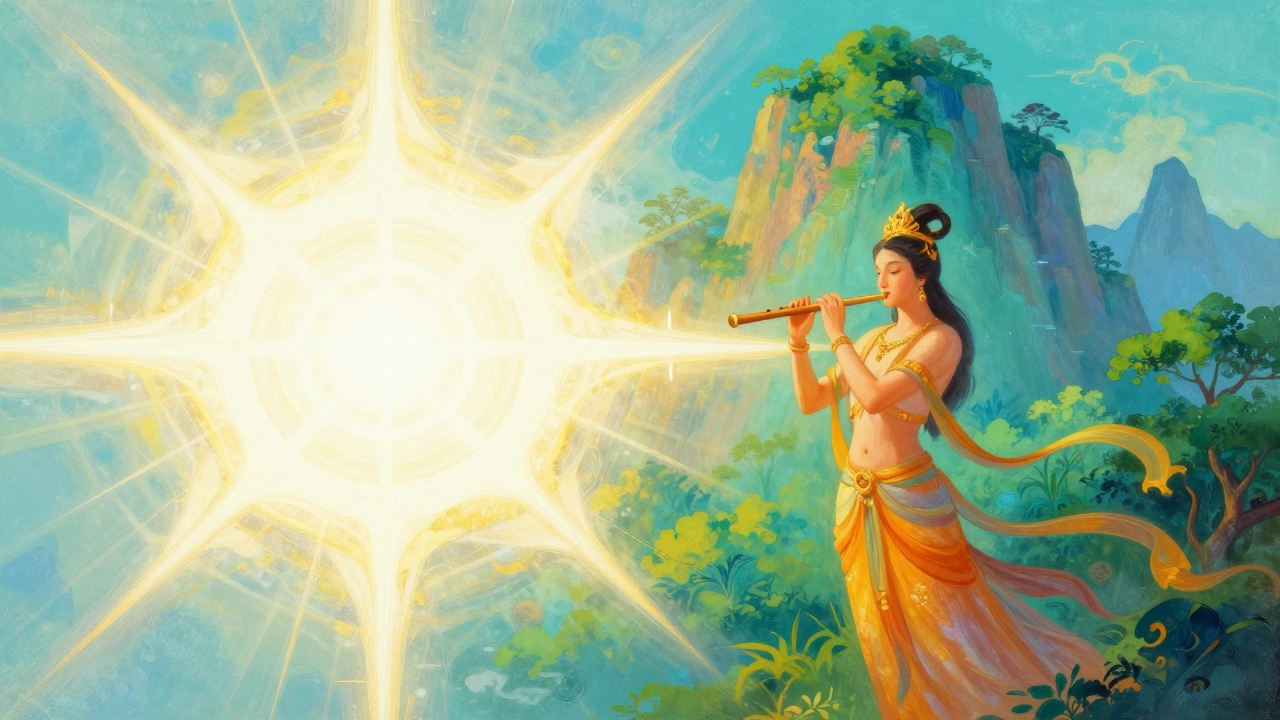
In the Bhagavad Gita, sacred text of Hindu philosophy, Krishna reveals his universal form, known as Vishvarupa. He tells Arjuna that time itself is him. This suggests a power that permeates time and space. Unlike the distant authority of Allah in orthodox Sunni thought, Krishna’s power is intimate. He plays the flute. He raises mountains with a finger. He guides warriors in battle. The power is accessible and personal.
Hindu theology allows for different paths to the divine. Some worship Shiva, some Lakshmi, others Rama or Krishna. Within the framework of Vaishnavism, a tradition centered on Vishnu, Krishna holds a supreme position. Here, he is the source of all incarnations. But unlike the strict monotheism of Islam, Hinduism accepts multiple manifestations of the one ultimate reality, Brahman. Power in this context is less about exclusivity and more about capacity to manifest in varied forms to guide humanity.
Comparing Divine Attributes
We can visualize these differences using a comparison table. Both faiths revere their deities intensely, but the definitions differ.
| Attribute | Islamic View (Allah) | Hindu View (Krishna) |
|---|---|---|
| Nature | Transcendent, Formless | Immanent, Manifested |
| Concept of One | Absolute Monotheism | Henotheism / Panentheism |
| Scripture | Quran | Vedas, Gita |
| Power Source | Will (Kun) | Dharma/Karma |
| Relationship | Lord and Servant | Friend, Father, Lover |
Notice the shift in relationship. In Islam, the believer stands before Allah in submission. This submission acknowledges the vast gap in power. The servant knows they are finite, and the Creator is infinite. In the Gita, Krishna acts as a friend and charioteer. He guides Arjuna not just by command, but by explanation of duty and cosmic order. This shows power working through wisdom rather than just force.
Historical and Cultural Context
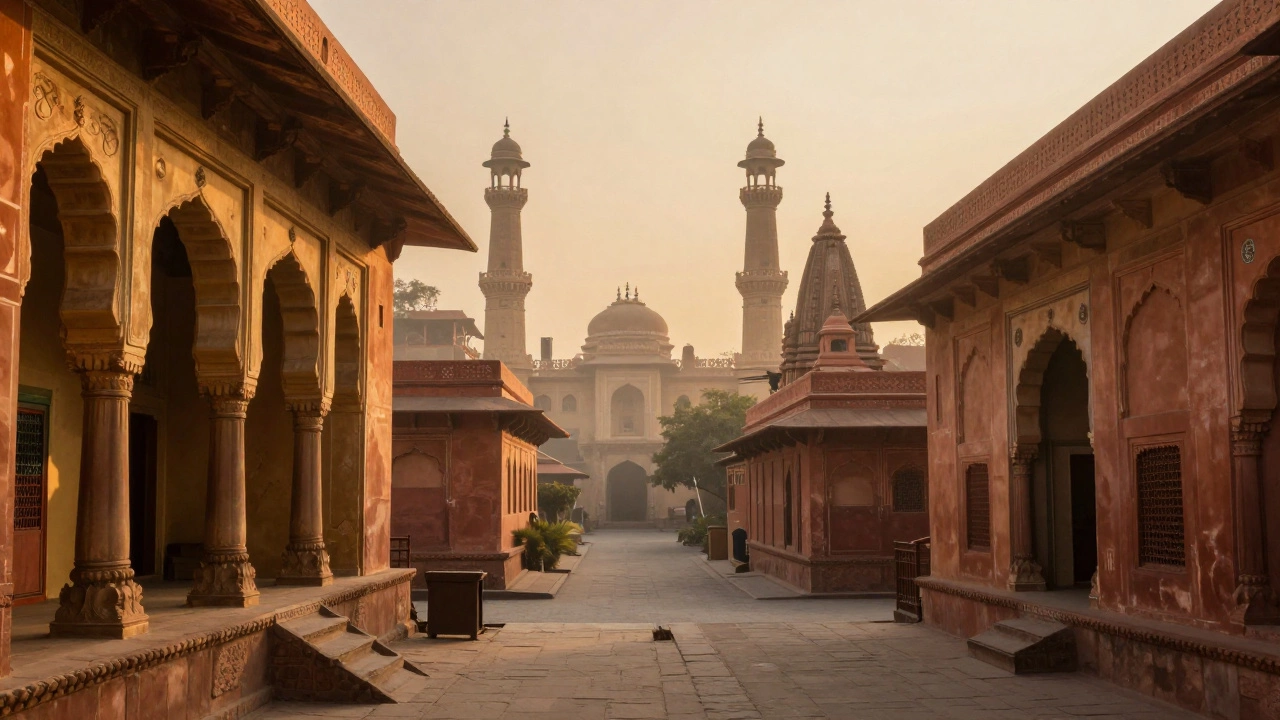
Living in places like India, these concepts exist side by side. You walk down a street in Jaipur, hear the call to prayer, and minutes later, hear temple bells ringing. For centuries, communities have navigated this coexistence. Sufism often shares poetic similarities with Bhakti movement, devotional Hindu tradition. Mystics in both sides spoke of love as the highest form of divine connection.
In medieval India, poets like Bulleh Shah or Kabir addressed both concepts. They argued that names change, but the truth remains one. For them, asking "who is more powerful" missed the point. They sought the essence behind the names. This perspective helps modern readers understand that theological terms carry heavy weight. You cannot simply weigh them against each other like gold bars. You have to understand the language they speak.
Theological Frameworks Explained
Let’s get specific about how power functions in practice. In Islam, miracles happen solely through Allah’s permission. Even prophets act as agents. The power comes from the Source, not the vessel. This maintains the sanctity of monotheism. If anything else had independent power, it would break the concept of Tawhid. Thus, Allah remains the sole active agent in the universe.
Hinduism, however, operates on the principle of Lila, or divine play. Deities like Krishna engage directly with the world. He lifts Govardhan Hill to protect villagers. He defeats demons. These are physical demonstrations of might. But the deeper teaching is about moral balance. True power is maintaining Dharma. When evil rises, the divine intervenes to restore order. This makes power responsive rather than purely administrative.
Furthermore, the idea of Omnipotence works differently. For Allah, potential and action are unified. He can do anything that does not contradict His nature. For Krishna, the limits are sometimes chosen. He chooses to bind himself to rules of engagement during battles. This choice highlights a different kind of majesty. It is the power of restraint, which is arguably harder than brute force.
Why the Question Matters Today
In 2026, discussions about faith often face polarization. People look for winners. They want to know whose book is right or whose god is stronger. But history teaches us that conflict usually arises from misunderstanding. When we study texts honestly, we see nuance. The Quran commands respect for the Children of Israel. The Gita encourages tolerance towards all beings.
Understanding these distinctions fosters better dialogue. If you explain to a Muslim that Krishna represents a path to the Divine, you honor their belief. If you explain to a Hindu that Allah is the One Truth without form, you validate their scripture. The goal isn’t to prove superiority. It is to map the landscape of human spirituality. Knowing the boundaries of each belief prevents disrespect. It builds bridges instead of walls.
Respecting the Unique Paths
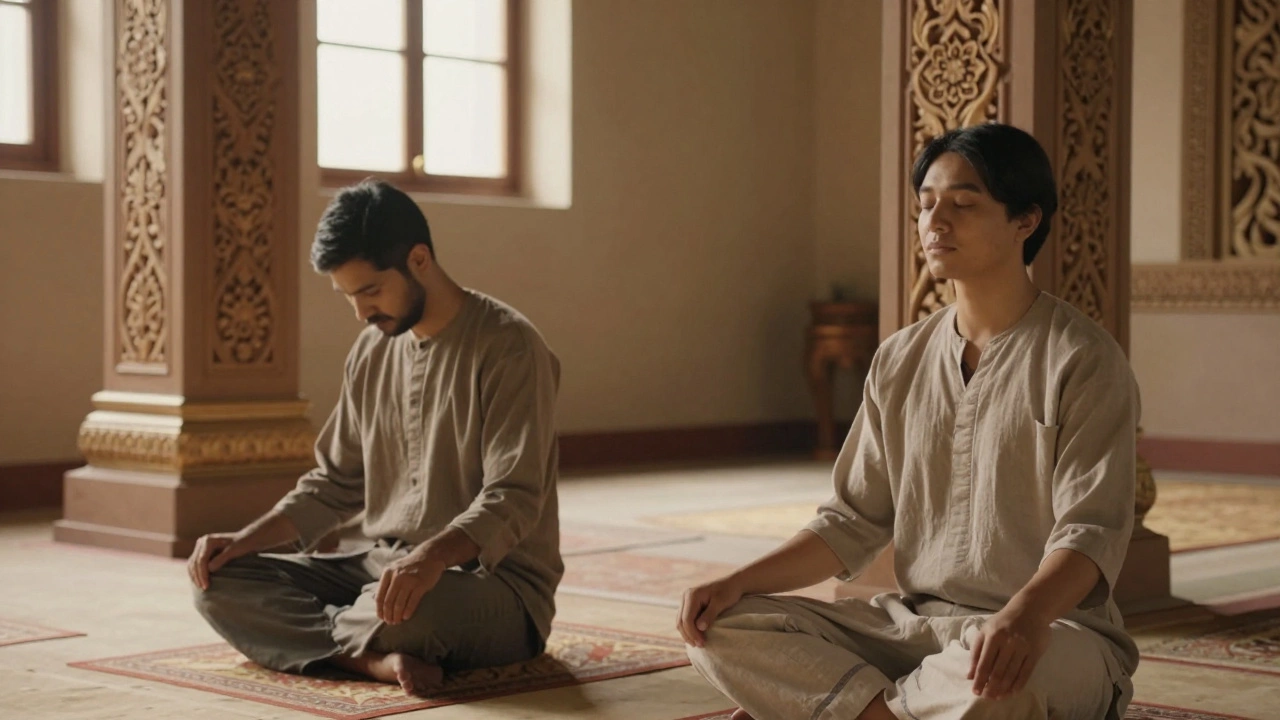
You might meet someone who worships the Quranic God and another who prays to the Cowherd Lord. Both feel an overwhelming sense of peace in prayer. That emotional experience is real regardless of terminology. Faith provides purpose, comfort, and community. Reducing these complex systems to a "strength contest" ignores the spiritual utility for billions of lives.
Philosophically, scholars argue about whether Krishna is equivalent to Godhead or a reflection of it. Debates range from dualistic school thoughts to non-dualistic Advaita Vedanta. All roads lead to the same destination in terms of seeking transcendence. Whether you seek refuge in the Oneness of Allah or the Grace of Krishna, the outcome for the believer is transformation. They both aim to lift the human spirit above ego.
So, the answer to "who is powerful" depends entirely on your theological lens. From the Muslim lens, Allah is the Absolute. From the Hindu lens, Krishna is the Supreme Personality of Godhead. Neither admits defeat in their own canon. Trying to mix the two frameworks leads to confusion. Respecting their distinct logic brings clarity.
Is Krishna considered God in Hinduism?
Yes, for followers of Vaishnavism, Krishna is the Supreme God. Other traditions view him as an avatar of Vishnu, meaning a divine incarnation of the singular preserver force. The exact status varies by sect.
Do Muslims believe Krishna is real?
Muslims recognize previous messengers sent by God. However, standard Islamic theology does not accept Krishna as a prophet. He is viewed within the broader context of history and culture, but not as a figure of religious authority.
What is the main difference in their power?
Allah’s power is defined by total oneness and transcendence beyond creation. Krishna’s power is often expressed through presence within creation and various forms. One is abstract sovereignty; the other is dynamic manifestation.
Can Hindus pray to Allah?
Some Hindu mystics equate the Sanskrit word 'Ishvara' with Allah. While mainstream theology keeps the traditions separate, spiritual seekers often acknowledge the universal attributes of the Divine across names.
Which scripture is older?
The Vedas, which are central to Krishna lore, predate the Quran. The oldest parts of the Rig Veda date back thousands of years earlier than the revelation of the Quran in the 7th century CE.