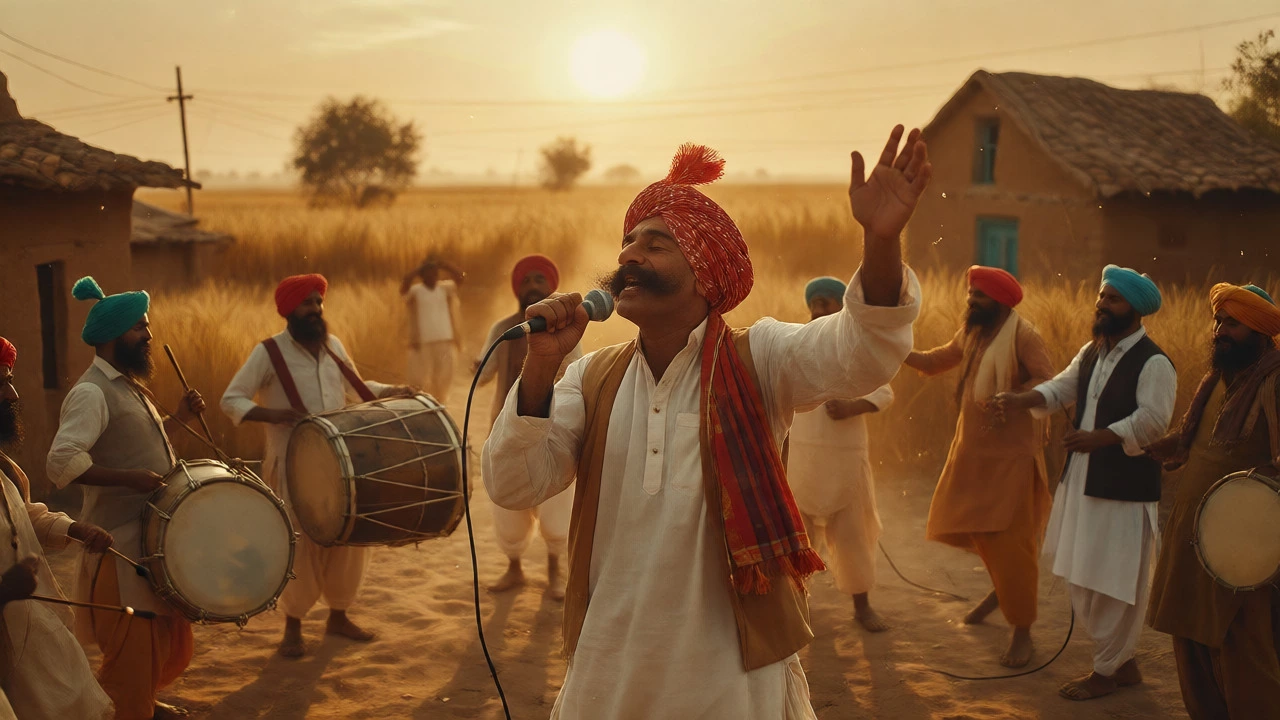
Punjabi Folk Legends Explorer
Explore the icons who defined generations of Punjabi music. Click on a legend to learn more, or take the quiz below to test your expertise.
Surjit Bindrakhia
The Lion (1980s-2003)Known for unmatched vocal range and high-energy Bhangra-folk fusion. His voice was deep, resonant, and powerful.
Gurdas Maan
The Bard (1970s-Present)Poet laureate with socially conscious lyrics. Bridged folk traditions with Bollywood cinema and received the Padma Shri.
Satinder Sartaaj
The Revivalist (2010s-Present)PhD holder in Punjabi literature reviving classical forms like Tappi and Bolian with modern production quality.
Arzoo Govindpuri
Traditional Voice (1990s-Present)Preserves female-centric genres like Subhaan and Alaap, keeping wedding and devotional traditions alive.
Loading question...
Quiz Complete!
Your Score: 0 / 3
Review the cards above to learn more about these legends.
If you ask ten people who the famous folk singer of Punjab is, you might get ten different answers. That’s because there isn’t just one. Punjab has a rich musical heritage that spans centuries, from the soulful cries of Gurbani devotional hymns to the high-energy beats of modern Bhangra. But if we’re talking about the voices that defined generations, a few names stand out above the rest.
You’ve probably heard their songs at weddings, on the radio, or in Bollywood movies. Maybe you know them by their unique style-whether it’s the raw power of Surjit Bindrakhia, known as the "Lion of Punjab" for his unmatched vocal range, or the poetic elegance of Gurdas Maan, often called the "Bard of Punjab," who brought folk themes to mainstream cinema. Or perhaps you think of Satinder Sartaaj, the modern scholar-singer who revived traditional Qissa singing with a contemporary twist.
This article breaks down who these artists are, why they matter, and how they shaped Punjabi culture. We’ll look at the legends who passed the torch, the stars who carried it forward, and the new generation keeping the flame alive.
The Voice That Defined an Era: Surjit Bindrakhia
For many, Surjit Bindrakhia is the face of Punjabi folk music. Born in 1964 in the village of Bindrakh, he rose to fame in the late 1980s and early 1990s. His voice was unlike anything heard before-deep, resonant, and capable of hitting notes that seemed impossible for a human throat.
Why do people still talk about him today? It’s not just nostalgia. Surjit pioneered a style that blended traditional Dhol rhythms with emotional ballads. Songs like "Tere Bin Nachna" and "Jatt Di Kudi" became anthems. He didn’t just sing; he performed. His live concerts were legendary for their energy and his ability to connect with rural audiences who saw themselves in his lyrics.
Tragically, his life was cut short in 2003 due to health complications, but his influence remains massive. Young singers today still try to mimic his signature vocal runs. If you’re looking for the most iconic figure in recent history, this is likely the name you’re searching for.
The Bard of Punjab: Gurdas Maan
If Surjit was the rockstar, Gurdas Maan is the poet laureate. Active since the 1970s, he has had a career spanning over four decades. Unlike many folk singers who stayed strictly within regional boundaries, Maan crossed into Bollywood, acting in films like Shaheed-e-Mohabbat Boota Singh.
What makes him special? His lyrics. While some folk songs focus purely on romance or party vibes, Maan tackled social issues, migration, war, and identity. His song "Dil Da Mamla Hai" became a cultural touchstone during times of political tension in Punjab. He received the Padma Shri, India’s fourth-highest civilian award, recognizing his contribution to arts.
Maan represents the intellectual side of Punjabi folk. He proved that folk music could be sophisticated, philosophical, and globally relevant. For anyone asking who the famous folk singer of Punjab is with a legacy of activism and artistry, Gurdas Maan is the answer.
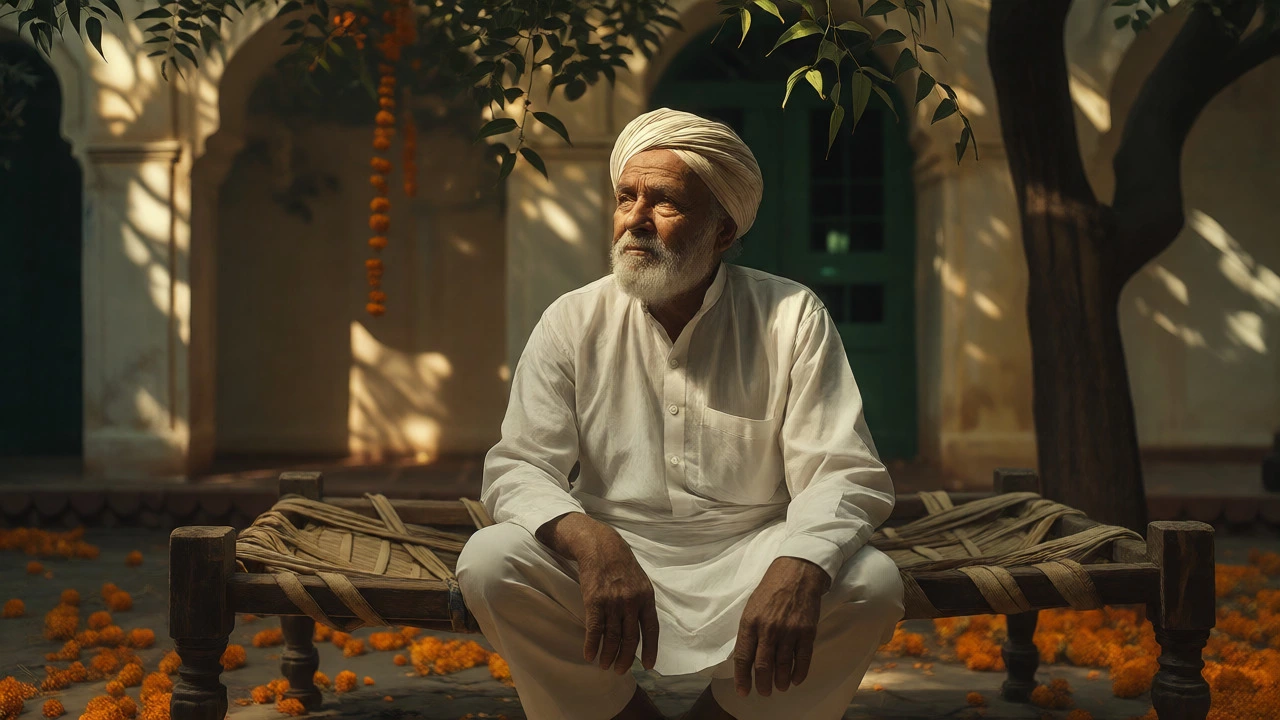
The Revivalist: Satinder Sartaaj
Fast forward to the 2010s and 2020s. A new kind of star emerged: Satinder Sartaaj, a PhD holder in Punjabi literature who sings classical folk forms like Tappi and Bolian. He didn’t just copy old styles; he refined them. His album Shikariyan Channian introduced millions of young listeners to traditional melodies they thought were outdated.
Sartaaj’s appeal lies in his authenticity. He wears traditional turbans and performs with classical instruments, yet his production quality matches modern pop standards. He bridges the gap between the village square and the global stage. When he sings "Mera Ki Jora," you hear centuries of tradition wrapped in a modern package. He is currently one of the most streamed Punjabi artists worldwide.
Women Who Shaped Punjabi Folk
It’s easy to overlook women in this conversation, but they have always been central to Punjabi folk traditions. Historically, women sang Subhaan (wedding songs) and Alaap (long, improvisational melodic introductions). These weren’t just entertainment; they were storytelling mediums where women shared news, grief, and joy.
| Artist | Era | Signature Style | Notable Contribution |
|---|---|---|---|
| Surjit Bindrakhia | 1980s-2003 | High-pitched, powerful vocals | Popularized modern Bhangra-folk fusion |
| Gurdas Maan | 1970s-Present | Poetic, socially conscious lyrics | Bridged folk and Bollywood cinema |
| Satinder Sartaaj | 2010s-Present | Classical revival, academic approach | Revived interest in traditional Qissa singing |
| Arzoo Govindpuri | 1990s-Present | Traditional wedding and devotional songs | Kept female-led folk traditions alive |
In recent years, artists like Arzoo Govindpuri have gained recognition for preserving these female-centric genres. She sings traditional wedding songs with a purity that reminds older generations of their grandmothers’ voices. Her work ensures that the feminine perspective in Punjabi music isn’t lost to male-dominated pop trends.
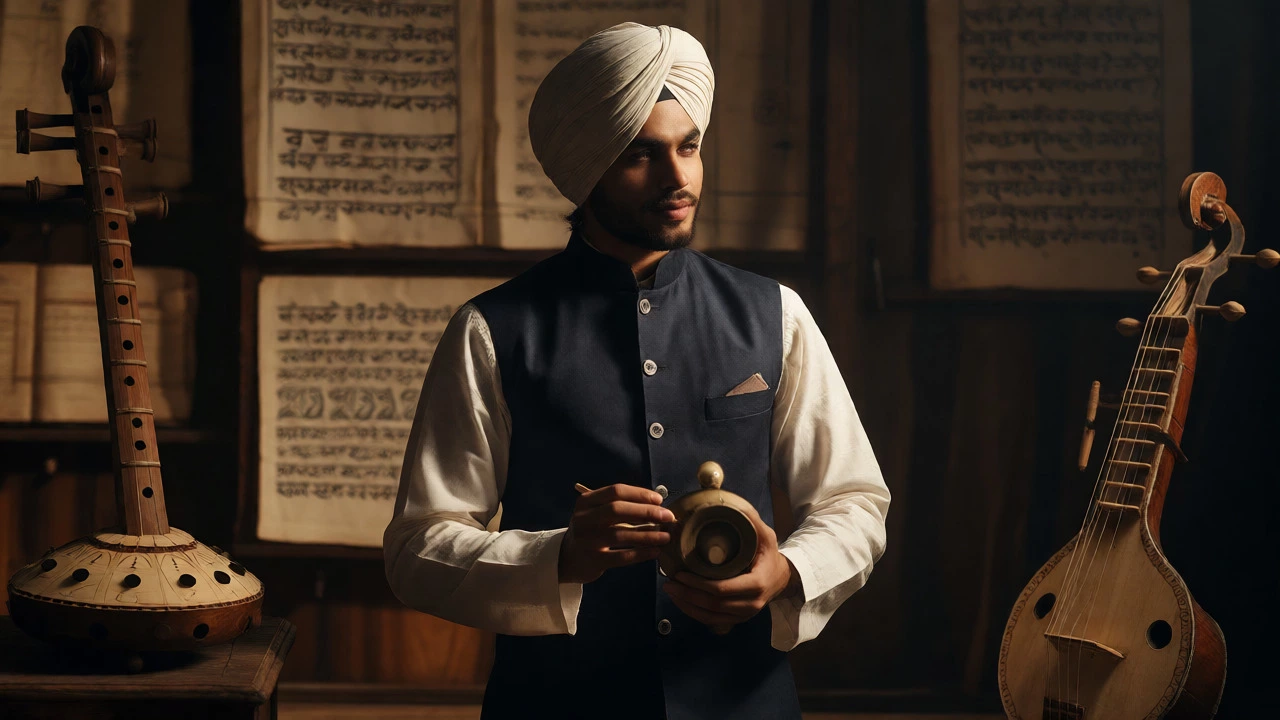
How to Identify Authentic Punjabi Folk
With so much modern "Punjabi Pop" flooding Spotify and YouTube, it can be hard to tell what’s actually folk. Here’s a quick guide:
- Lyrics: Traditional folk uses metaphors related to farming, seasons, and village life. Look for references to wheat fields (khet), rivers, and specific local dialects.
- Instruments: Listen for the Dhol (drum), Tumbi (string instrument), and Algoza (flute). Modern tracks often replace these with synthesizers.
- Vocal Technique: Folk singers often use long, sustained notes and improvised variations. Pop singers tend to stick to shorter, repetitive hooks.
Understanding these elements helps you appreciate why singers like Surjit or Sartaaj are considered masters. They aren’t just following trends; they are mastering ancient techniques.
Why This Question Matters Today
Asking "who is the famous folk singer of Punjab?" is really asking about cultural preservation. Globalization threatens local traditions. When a young person learns a TikTok dance instead of a traditional Bhangra step, something shifts.
These singers fight that erosion. By keeping old stories alive through new recordings, they ensure that future generations know where they come from. Whether it’s Surjit’s raw emotion, Maan’s wisdom, or Sartaaj’s scholarship, each artist plays a role in maintaining Punjab’s identity.
Who is considered the greatest Punjabi folk singer of all time?
While subjective, Surjit Bindrakhia is frequently cited as the most influential due to his revolutionary vocal style and mass appeal in the 1990s. However, Gurdas Maan holds equal prestige for his longevity, lyrical depth, and contributions to cinema and social commentary.
Is Gurdas Maan a folk singer or a pop singer?
Gurdas Maan is primarily a folk singer who incorporated pop and cinematic elements into his work. His roots are deeply embedded in traditional Punjabi poetry and music, making him a bridge between pure folk and mainstream entertainment.
What is the difference between Bhangra and folk music?
Bhangra is a dance form associated with harvest festivals, often accompanied by fast-paced drumming. Folk music is broader, including slow ballads, wedding songs, and devotional chants. Bhangra is a subset of folk performance, but not all folk music is Bhangra.
Are there any famous living Punjabi folk singers?
Yes, Satinder Sartaaj and Gurdas Maan are both active and highly respected. Additionally, newer artists like Diljit Dosanjh incorporate folk elements, though they are often categorized under modern Punjabi pop.
Why is Surjit Bindrakhia called the Lion of Punjab?
He earned this nickname due to his powerful, roaring vocal quality and his commanding presence on stage. His voice had a ferocity and strength that stood out dramatically compared to other singers of his era.