Indian Wedding Cost Split Calculator
Estimated Financial Responsibility
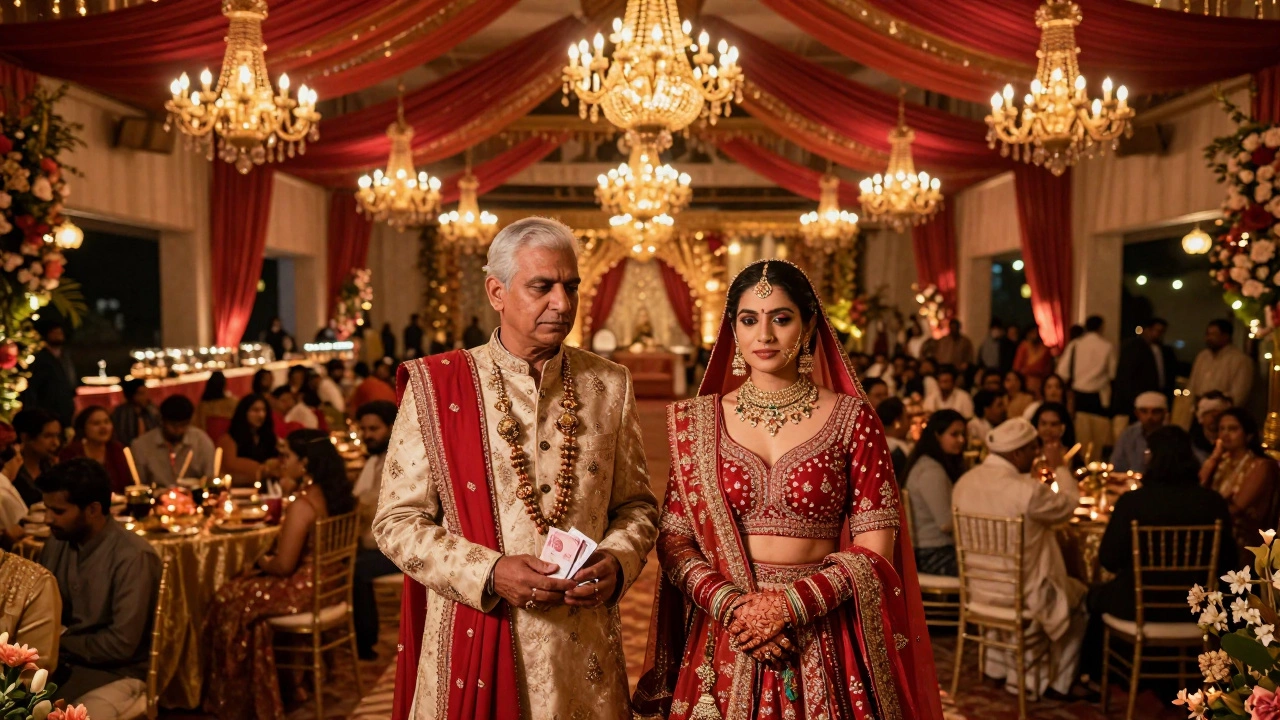
Walk into any Indian wedding is a grand celebration involving multiple ceremonies, lavish feasts, and significant financial investment from both families, and you’ll notice one thing immediately: it’s expensive. If you’re asking whether the girl’s family pays for the wedding in India, the short answer is yes-but with major caveats that have changed dramatically over the last decade. The traditional model is shifting fast, especially in urban centers like Mumbai, Delhi, and Bangalore.
In the past, the burden fell almost entirely on the bride’s side. Today, it’s more of a shared responsibility, though the split varies wildly depending on religion, region, and social class. Understanding who actually writes the checks helps you navigate these events without awkward money talks or cultural faux pas.
The Traditional Rule: Bride’s Family Foots the Bill
To understand where we are now, you need to know where we started. For centuries, under Hindu law and custom, the bride’s family was responsible for the majority of the wedding costs. This wasn’t just about throwing a party; it was rooted in the concept of dowry (stridhan), which historically meant gifts given to the bride by her parents to help her establish her new home. Over time, this evolved into a system where the bride’s family paid for the venue, the feast, the decorations, and often even the groom’s attire.
This tradition stems from the idea that the bride is leaving her parental home to join the groom’s household. Therefore, her family provides the resources to ensure she starts her new life comfortably. In many rural communities and conservative households, this expectation remains strong. The bride’s father might pay for the entire reception, while also providing gold jewelry, vehicles, or cash as part of the dowry.
| Expense Category | Bride's Family Responsibility | Groom's Family Responsibility |
|---|---|---|
| Venue & Catering | Primary payer (Reception) | Minimal or none |
| Jewelry & Attire | Bridal trousseau & heavy jewelry | Groom's sherwani & basic jewelry |
| Ceremonies | Mehendi, Haldi, Sangeet | Wedding ceremony rituals |
| Dowry/Gifts | Cash, gold, appliances | None (traditionally receives) |
However, calling it all "wedding costs" misses the nuance. The Dowry Prohibition Act of 1961 made demanding dowry illegal in India, yet the practice persists in subtle forms. What looks like voluntary gifting is often an unspoken expectation. This creates immense pressure on the bride’s family, sometimes leading to financial ruin or domestic tension.
The Modern Shift: Shared Expenses and Urban Trends
If you live in London or any major global city, you’ve likely seen how Indian weddings adapt abroad. But even within India, the script is rewriting itself. Young couples, especially those who are dual-income professionals, are rejecting the old model. They view marriage as a partnership, not a transaction. As a result, many couples now contribute equally to the wedding budget.
In metropolitan areas like Hyderabad, Pune, and Chennai, it’s becoming common for the groom’s family to take charge of specific high-cost items. For instance, the groom’s side might pay for the wedding hall during the main ceremony, while the bride’s side handles the after-party reception. Some families split the cost 50-50. Others adopt a "host what you love" approach: if the bride’s family loves music, they fund the Sangeet night; if the groom’s family enjoys food, they sponsor the grand banquet.
This shift isn’t just about fairness; it’s practical. With average Indian wedding costs rising sharply-often exceeding ₹20 lakhs ($24,000 USD) for middle-class families-no single family can easily shoulder the entire load alone. Inflation, luxury venue fees, and designer outfits have forced a collaborative approach. You’ll hear phrases like "we’re co-hosting" more often than "her family is paying."
Regional Variations: North vs. South vs. West
India is not a monolith. What happens in Punjab rarely mirrors what occurs in Kerala. Regional customs play a huge role in determining who pays.
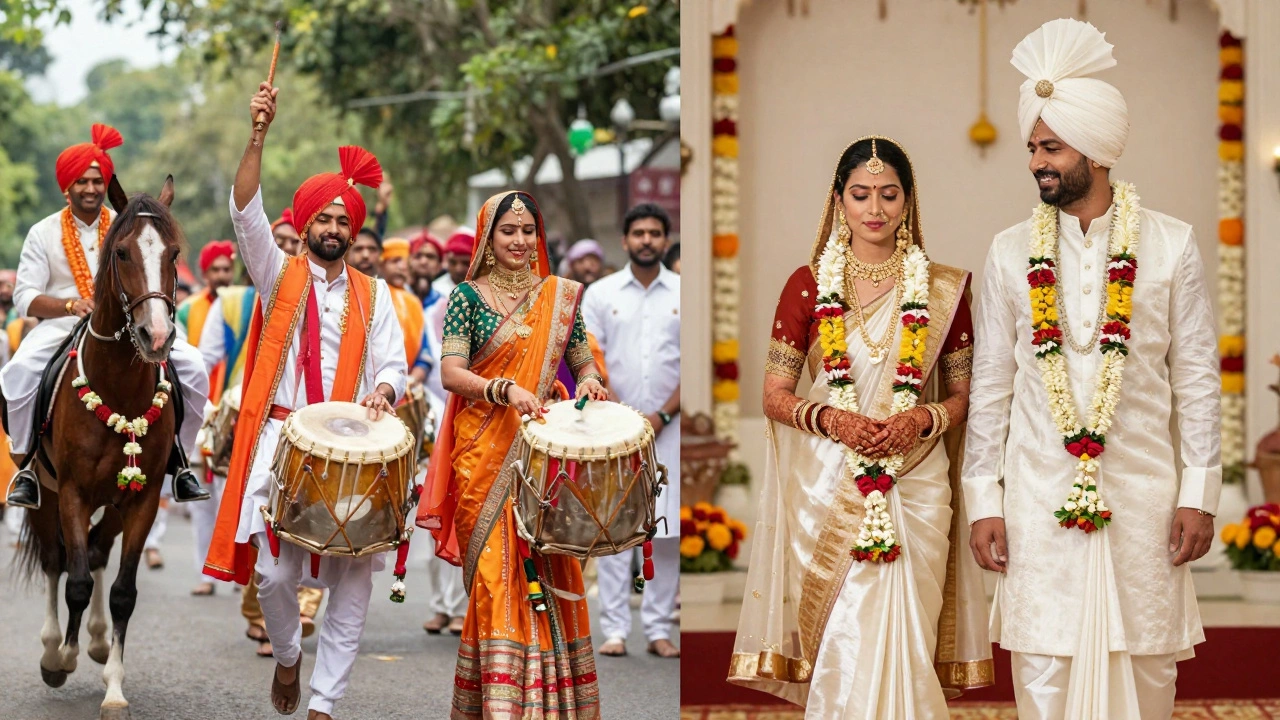
- North India (Punjab, Haryana, Uttar Pradesh): Traditionally, the bride’s family bears the brunt. Punjabi weddings are known for their scale, and the bride’s parents often spend lavishly on the Baraat (groom’s procession) and reception. However, modern Punjabi families are increasingly splitting costs, especially for pre-wedding events.
- South India (Kerala, Tamil Nadu, Karnataka): Here, the dynamic flips. In many South Indian communities, particularly among Brahmins and certain castes, the groom’s family traditionally pays for the wedding. The bride’s family may provide gifts, but the major expenses-venue, catering, priest fees-are covered by the groom’s side. This reflects a different cultural emphasis on the groom’s readiness to support his wife.
- West India (Gujarat, Maharashtra): Practices vary. In Gujarati weddings, the bride’s family typically hosts the reception, but the groom’s family contributes significantly to the ceremony. Marathi weddings often see a more balanced split, with both families contributing to the Ganesh Puja and subsequent festivities.
- East India (Bengal, Odisha): Bengali weddings usually involve the bride’s family hosting the main reception, but the groom’s family pays for the wedding day rituals. There’s a strong emphasis on modesty compared to the North, so costs are generally lower, but the bride’s family still carries a heavier financial load.
Understanding these regional differences prevents misunderstandings. Assuming everyone follows the North Indian model can lead to offense, especially when interacting with South Indian families who expect the opposite arrangement.

Religious Differences: Hindu, Muslim, Sikh, Christian
Religion adds another layer to the equation. While Hindu weddings follow the traditional dowry-influenced model, other religions have distinct practices.
In Muslim weddings are ceremonies governed by Islamic principles where the groom provides Mahr (dower) to the bride, and costs are often shared or borne by the groom's family, the focus is on the Nikah (marriage contract). The groom must give Mahr, a mandatory gift to the bride, which can be cash, property, or goods. This is the groom’s obligation, not the bride’s family’s expense. Often, the groom’s family hosts the Walima (post-wedding feast), while the bride’s family hosts the Mehndi or Barat. The financial burden is more evenly distributed, with the groom’s side taking on significant responsibilities.
Sikh weddings, centered around the Anand Karaj ceremony in the Gurdwara, tend to be simpler. The Guru Granth Sahib guides the ritual, and there’s no formal dowry system. Costs are usually shared, with the bride’s family handling the pre-wedding functions and the groom’s family contributing to the main ceremony and reception. Community kitchens (Langar) often reduce catering costs, making these weddings more affordable.
Christian weddings in India vary by denomination but generally lean toward shared expenses. The church service is simple, and the reception is often hosted by either family or jointly. Unlike Hindu traditions, there’s less emphasis on lavish displays of wealth, so the financial pressure is lower overall.
What Exactly Does Each Family Pay For?
Let’s get concrete. When people ask "who pays," they want a list. Here’s a typical breakdown in a modern, semi-traditional Indian wedding:
- Bride’s Family: Typically covers the bridal lehenga/saree, jewelry, makeup artist, Mehendi, Haldi, and Sangeet night. They often host the reception dinner, which is the most expensive single event. They may also provide the bridal trousseau (clothes for the first few years).
- Groom’s Family: Usually pays for the groom’s outfit, the wedding ring, and the main wedding ceremony venue. They often cover the priest’s fees, flowers for the mandap, and the Baraat logistics. In many cases, they also host the post-wedding breakfast or brunch.
- The Couple: Increasingly, the newlyweds pay for their honeymoon, registry items, and sometimes a portion of the venue if they choose a luxury destination. Some couples even start a joint wedding fund to offset costs.
Note that "hosting" doesn’t always mean paying 100%. It means being the primary organizer and funder, but guests often contribute through gifts. Cash envelopes at receptions are a significant source of revenue that helps offset costs for the hosting family.
The Hidden Costs and Social Pressure
Money isn’t the only currency at play. Social status drives spending. In many communities, the size of your wedding reflects your family’s standing. A small wedding might be viewed as stingy or indicative of low status. This peer pressure forces families to overspend, leading to debt.
Consider the "gift economy." Guests bring cash, but the amount expected depends on their relationship to the couple. Close relatives give large sums; distant acquaintances give smaller amounts. Families often calculate potential returns when deciding how much to spend. If you spend ₹10 lakhs on a wedding, you might recover ₹8 lakhs in gifts. But if you spend ₹20 lakhs to impress neighbors, you’re out ₹12 lakhs-and possibly in debt.
This cycle perpetuates inequality. Lower-income families struggle to keep up, while wealthy families engage in competitive extravagance. The result? Weddings become financial burdens rather than joyful celebrations.
How to Navigate Wedding Payments Gracefully
If you’re planning an Indian wedding or attending one, here’s how to handle the money talk without awkwardness:
- Talk Early: Have a frank discussion between both families before booking anything. Decide who hosts which event. Write it down.
- Set a Budget: Agree on a total cap. Stick to it. Avoid upgrading venues mid-planning because "everyone else is doing it."
- Embrace Simplicity: Consider smaller guest lists. Fewer guests mean lower catering costs and less pressure to display wealth.
- Use Registries Wisely: Instead of expecting cash, suggest registries for home essentials. This reduces the need for large cash exchanges.
- Respect Regional Norms: If marrying across regions, learn each other’s expectations. Compromise is key. Maybe the bride’s family hosts the reception, but the groom’s family pays for the honeymoon.
Remember, the goal is union, not competition. A wedding should bring families together, not divide them over bills.
Does the bride's family pay for everything in an Indian wedding?
Traditionally, yes, the bride's family bore most costs, including the reception and dowry. However, in modern times, especially in urban areas, costs are increasingly shared. The groom's family often pays for the ceremony venue, rings, and some pre-wedding events. Many couples now split expenses 50-50 or assign specific events to each family.
Why does the bride's family pay more in North India?
This stems from historical dowry practices where the bride's family provided resources to help her establish herself in the groom's home. Cultural norms emphasize the bride's transition into the groom's household, placing financial responsibility on her parents. While dowry is illegal, the expectation of lavish spending by the bride's side persists due to social status pressures.
Do South Indian weddings cost less for the bride's family?
Yes, in many South Indian communities, the groom's family traditionally pays for the wedding ceremony and major expenses. The bride's family may provide gifts or host smaller events, but the primary financial burden falls on the groom's side. This reflects different cultural values regarding marriage and family roles.
Is dowry still practiced in Indian weddings today?
Despite being illegal since 1961, dowry persists in many parts of India, often disguised as voluntary gifts. It remains a significant issue in rural areas and conservative families. Urban, educated families are moving away from this practice, favoring shared expenses and mutual respect. Legal penalties exist, but enforcement varies.
How much does an average Indian wedding cost in 2026?
Costs vary widely. A modest wedding might cost ₹5-10 lakhs ($6,000-$12,000 USD), while a lavish urban wedding can exceed ₹20-50 lakhs ($24,000-$60,000 USD). Factors include location, guest count, venue type, and luxury level. Metropolitan cities like Mumbai and Delhi command higher prices due to real estate and vendor costs.