Indian Bridal Makeup Style Estimator
Configure Your Bridal Look
Select your preferences and click "Estimate My Bridal Style" to see your personalized bridal makeup profile.
Makeup Breakdown:
Symbolic Elements:
Walk into any traditional Indian wedding, and the first thing that catches your eye is often the bride. She isn’t just dressed in vibrant silks; she is adorned with layers of intricate jewelry and a face painted with rich, opaque makeup. To an outsider, it might look excessive. Why cover natural features under such thick foundation? Why apply bright red lipstick that doesn't match her daily style? The answer isn't vanity-it’s symbolism. In Indian culture, the bride’s appearance is a canvas for storytelling, spirituality, and social status.
The heavy makeup worn by Indian brides is a deeply rooted cultural practice that signifies auspiciousness, fertility, and marital bliss through specific colors and rituals serves multiple purposes beyond aesthetics. It marks the transition from daughter to wife, invokes divine blessings, and adheres to ancient texts on beauty and wellness. Let’s break down why this tradition persists and how it has evolved in modern times.
The Spiritual Significance of Red and Gold
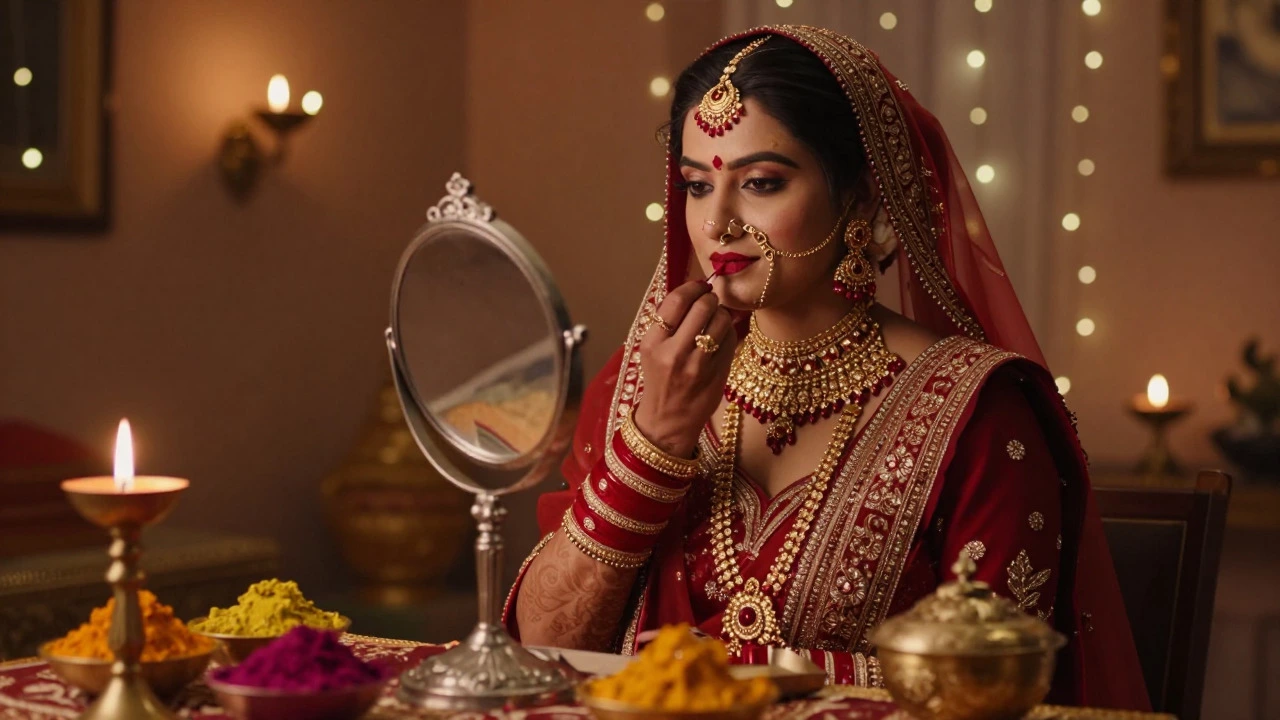
If you ask anyone what color represents love and marriage in India, they will say red. But it’s not just about romance. Red, or lal, is associated with Shakti, the divine feminine energy. When a bride wears red lipstick or applies Sindoor is a vermilion powder applied in the hair parting by the groom, symbolizing her married status and invoking protection from the goddess Parvati in her hair parting, she is visually connecting herself to the divine.
- Sindoor: This bright red-orange powder is perhaps the most critical element. It is applied during the pheras (circumambulation around the fire) and signifies that the woman is now a suhagan (married). Historically, it also served as a public marker of marital status, which was crucial in joint family systems.
- Kumkum: Applied on the forehead, kumkum is linked to the third eye and spiritual awakening. For a bride, it represents the beginning of a new life phase filled with prosperity.
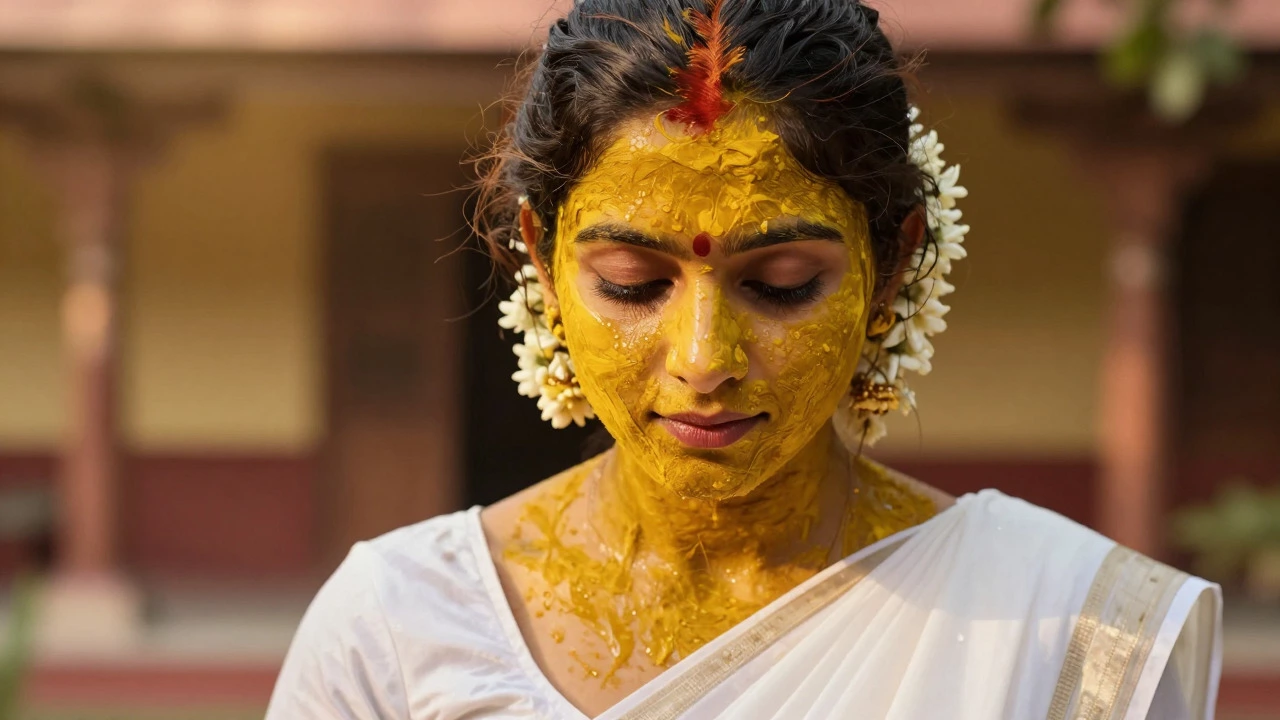
- Haldi: Before the heavy makeup comes the yellow turmeric paste. While not makeup per se, it sets the tone. Turmeric is antiseptic and brightens the skin, but spiritually, it wards off evil spirits.
Gold jewelry complements these red tones. Gold is considered pure and auspicious. The combination of red and gold creates a visual harmony that is believed to attract positive energy and ward off negativity. This isn’t just fashion; it’s a protective ritual disguised as beauty.
Cultural Roots: Ayurveda and Ancient Beauty Standards
The idea of “heavy” makeup in India has roots in Ayurveda, the traditional system of medicine. Ancient texts like the Sushruta Samhita discuss cosmetics extensively. However, these weren’t chemical products; they were natural pastes made from herbs, minerals, and flowers.
In the past, a bride’s face was prepared with Multani Mitti is a fullers earth clay used in facial packs to cleanse and tighten the skin, often mixed with rose water or sandalwood for bridal prep (fuller’s earth), sandalwood, and saffron. These ingredients provided coverage and glow while nourishing the skin. Over time, as global cosmetics entered the market, these natural pastes were replaced by foundations and concealers, but the expectation of a flawless, luminous complexion remained.
The concept of Alta-a red dye applied to hands and feet-is another example. Originally made from the seeds of the Lithospermum rubrum plant, Alta stains the skin red, symbolizing vitality and passion. Today, synthetic versions are common, but the ritual remains. A bride with red-stained palms and soles is seen as ready to start her journey with energy and grace.
Social Status and Family Honor
Indian weddings are not just unions of two individuals; they are mergers of two families. The bride’s appearance reflects the honor and wealth of her natal family. A heavily made-up bride signals that the family has invested significantly in the ceremony. This investment is visible in the quality of the silk saree, the weight of the gold jewelry, and the intricacy of the makeup.
In rural areas, this display can be even more pronounced. Bright, bold colors stand out in outdoor settings and against simple backdrops. In urban centers, the trend has shifted toward “glamorous” looks inspired by Bollywood celebrities. Think of actresses like Deepika Padukone or Alia Bhatt, whose wedding looks set trends nationwide. Their makeup is often dramatic, with sharp contouring, glittering eyes, and matte lips, influencing millions of brides to seek similar results.
| Element | Traditional Approach | Modern Adaptation |
|---|---|---|
| Base | Natural pastes (sandalwood, multani mitti) | Full-coverage foundation, HD makeup |
| Eyes | Kajal (soot-based eyeliner) for health and beauty | Faux lashes, heavy eyeshadow palettes, winged liner |
| Lips | Betal nut stain or red alta | Matte liquid lipsticks, ombre effects |
| Forehead | Kumkum and bindi | Decorative maang tikka, glitter bindis |
| Durability | Lasts hours, fades naturally | Transfer-proof, sweat-resistant formulas for 12+ hour events |
The Practical Side: Long Hours and Emotional Stress
Let’s talk logistics. An Indian wedding day is a marathon. It starts early with the Haldi ceremony, continues with Mehndi, Sangeet, and ends with the Pheras and reception. Brides spend over 12 hours in front of cameras, under hot lights, and amidst emotional highs and lows. Crying is expected-happy tears during the Vidaai (farewell) are a staple.
Light makeup would melt away within minutes. The heavy application acts as armor. High-coverage foundation prevents sweat from showing. Waterproof mascara ensures eyes remain defined despite tears. Matte lipstick stays put through meals and kisses. Without this layer of protection, the bride might feel self-conscious about her appearance fading throughout the day. The makeup provides confidence, allowing her to focus on the rituals rather than her reflection.
Regional Variations Across India
India is diverse, and so are its bridal looks. While red dominates North India, other regions have distinct preferences:
- South India: Brides often wear white or cream Kanjeevaram sarees with extensive gold jewelry. Makeup is lighter, focusing on a natural glow, jasmine flowers in the hair, and a prominent kumkum dot. The emphasis is on elegance rather than opulence.
- West India (Gujarat/Rajasthan): Here, colors explode. Brides might wear green, pink, or orange lehengas. Makeup includes bold kajal and bright red lips. Jewelry is heavy, including nose rings and headpieces.
- East India (Bengal): Bengali brides typically wear red and white sarees. Makeup is subtle, with a focus on a fresh-faced look. Kumkum is essential, but heavy foundation is less common compared to North India.
These variations show that while the principle of adorning the bride is universal, the execution respects local customs and climates. Humid regions opt for lighter textures, while drier areas can handle heavier applications.
Modern Shifts: Minimalism and Skin Health
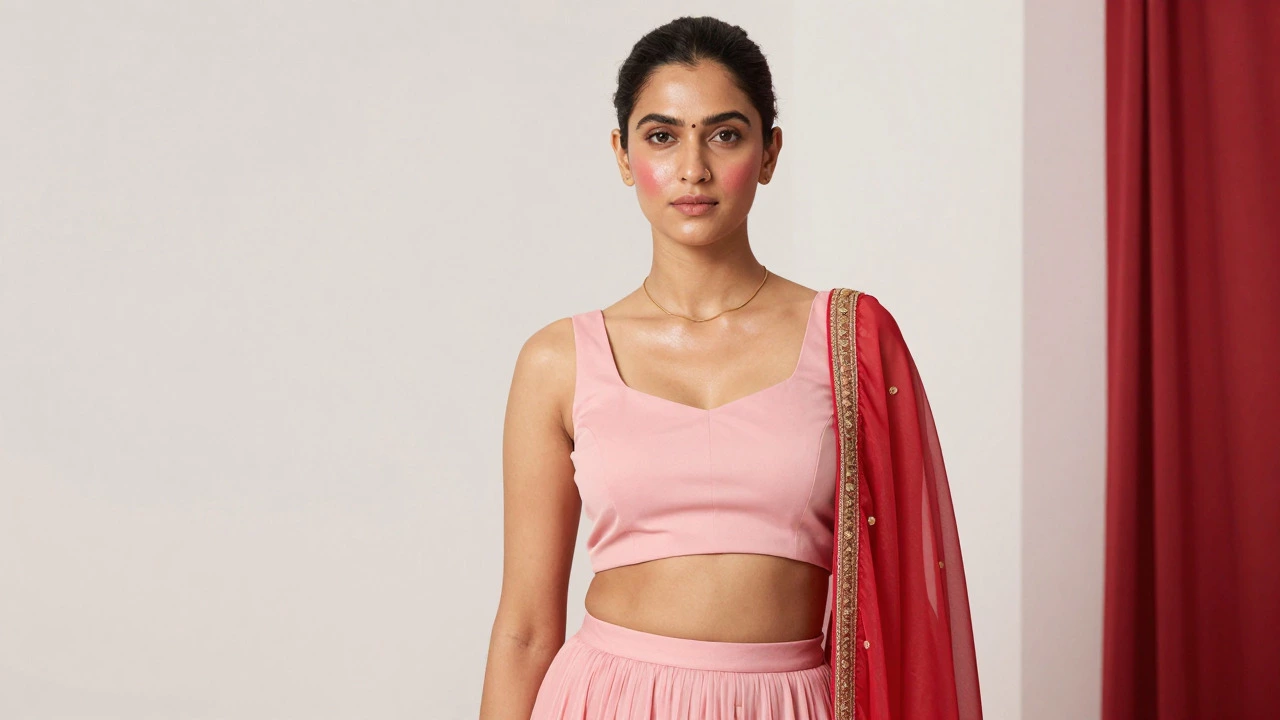
In recent years, a shift is visible among younger brides. Many are opting for “no-makeup” makeup looks. They want their skin to breathe. Influenced by global beauty standards and concerns about skin damage, some brides choose dewy finishes instead of matte ones. They skip heavy contouring and prefer blush for a healthy flush.
This change is driven by several factors:
- Skin Consciousness: Awareness of clogged pores and allergies has led brides to choose non-comedogenic products.
- Photography Advances: Modern cameras capture details better. Heavy cakey makeup can look unnatural in high-definition photos. A natural glow photographs better.
- Personal Expression: Brides today want to look like themselves, just enhanced. They reject the idea that they must conform to a single standard of beauty.
However, complete minimalism is still rare in traditional ceremonies. Even “natural” looks involve significant preparation-primers, serums, and light bases. The goal is balance: honoring tradition while prioritizing comfort.
Conclusion: More Than Just Cosmetics
So, why do Indian brides wear so much makeup? It’s not about hiding flaws. It’s about celebrating a milestone. Every stroke of red, every glint of gold, and every layer of foundation carries meaning. It connects the bride to her ancestors, her community, and her future. Whether you prefer a classic red-lipped look or a modern dewy finish, the intent remains the same: to honor the bride and mark the occasion with joy and reverence.
Is heavy makeup mandatory for Indian brides?
No, it is not legally or religiously mandatory. However, socially, it is strongly expected in many communities. Some brides choose lighter looks, especially in South India or among progressive urban families, but traditional elders may prefer the classic heavy look for auspicious reasons.
What is the significance of Sindoor in bridal makeup?
Sindoor is a vermilion powder applied in the hair parting by the groom. It symbolizes the bride’s married status, invokes the blessings of Goddess Parvati, and is believed to ensure the long life of her husband. It is one of the most important markers of marriage in Hindu culture.
How long does bridal makeup last?
Professional bridal makeup is designed to last 10-12 hours. It uses waterproof and transfer-proof products to withstand sweat, tears, and humidity. Touch-ups are usually limited to blotting oil and refreshing lip color.
Are there regional differences in bridal makeup?
Yes. North Indian brides often wear heavy red makeup and jewelry. South Indian brides prefer a natural glow with gold accents and jasmine flowers. West Indian brides use bright colors and bold kajal, while East Indian brides favor subtle, fresh-faced looks with white and red attire.
Can brides wear minimal makeup?
Yes, many modern brides opt for "no-makeup" makeup looks featuring dewy skin, light blush, and defined brows. This trend is growing due to skin health concerns and advancements in photography that favor natural textures over heavy coverage.