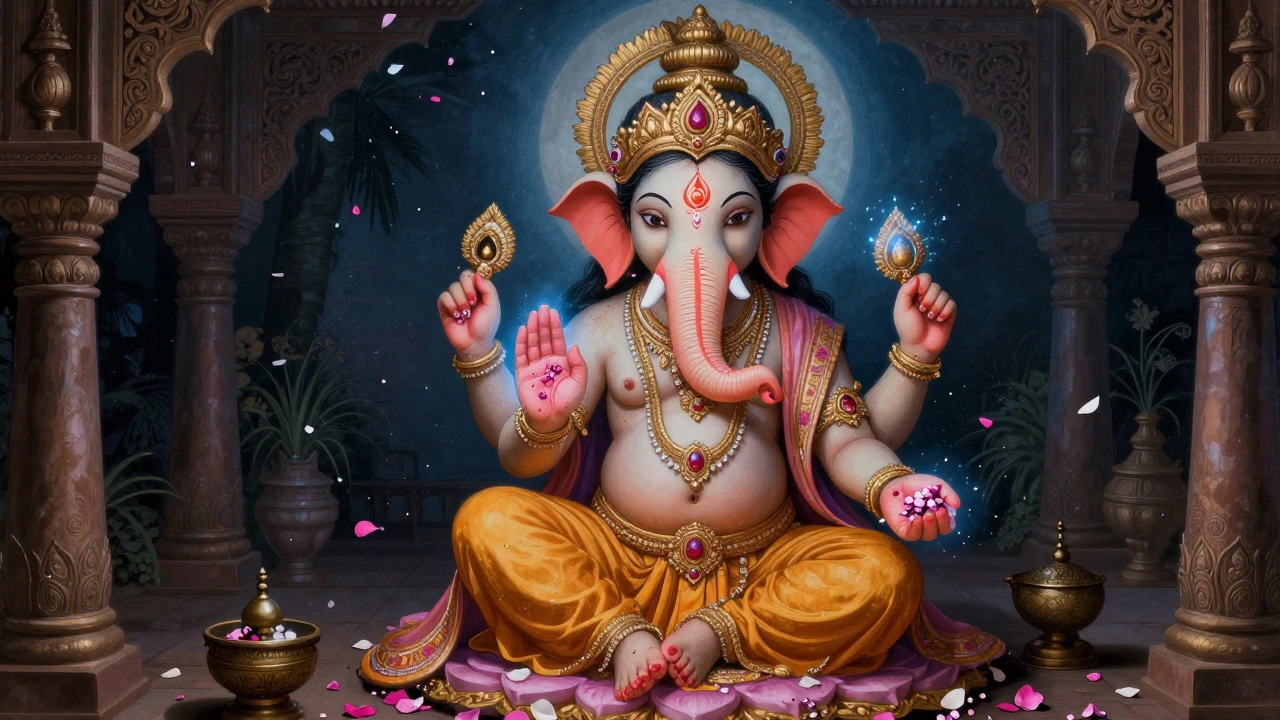
Ganesha Symbolism Explorer
Why Elephant? The Divine Symbolism of Ganesha
Discover how each feature of Ganesha's form represents deeper spiritual truths
Wisdom
Elephants possess remarkable memory and wisdom. In Hindu tradition, Ganesha represents the ability to see beyond surface problems and remember what matters most.
Compassion
Unlike fierce animals, elephants are gentle and caring. Ganesha embodies strength with compassion—the divine power that helps without harming.
Balance
Elephants are steady and balanced. Ganesha's form represents the ability to navigate life's challenges without losing equilibrium.
Reliability
Elephants are dependable and persistent. Ganesha's elephant head symbolizes unwavering commitment to clearing obstacles.
Why Elephant? The Symbolic Difference
Lion
Represents power and courage, but lacks wisdom and compassion
Elephant
Represents power with wisdom and compassion—perfect for removing obstacles without causing harm
Why does one of the most worshipped gods in Hinduism have the head of an elephant? It’s a question that stops people in their tracks-whether they’re visiting a temple in Varanasi, seeing a Ganesha statue in a London shop, or just scrolling through images online. The answer isn’t just about mythology. It’s about transformation, loss, and the idea that divine power doesn’t look like what we expect.
The Story of Ganesha’s Birth
Long before Ganesha became the elephant-headed god, he was simply a boy created by Parvati, the goddess of devotion and strength. She made him from the scrubbing of her skin-her own essence-and gave him life. Her instructions were simple: guard the door while she bathed. No one was to enter.
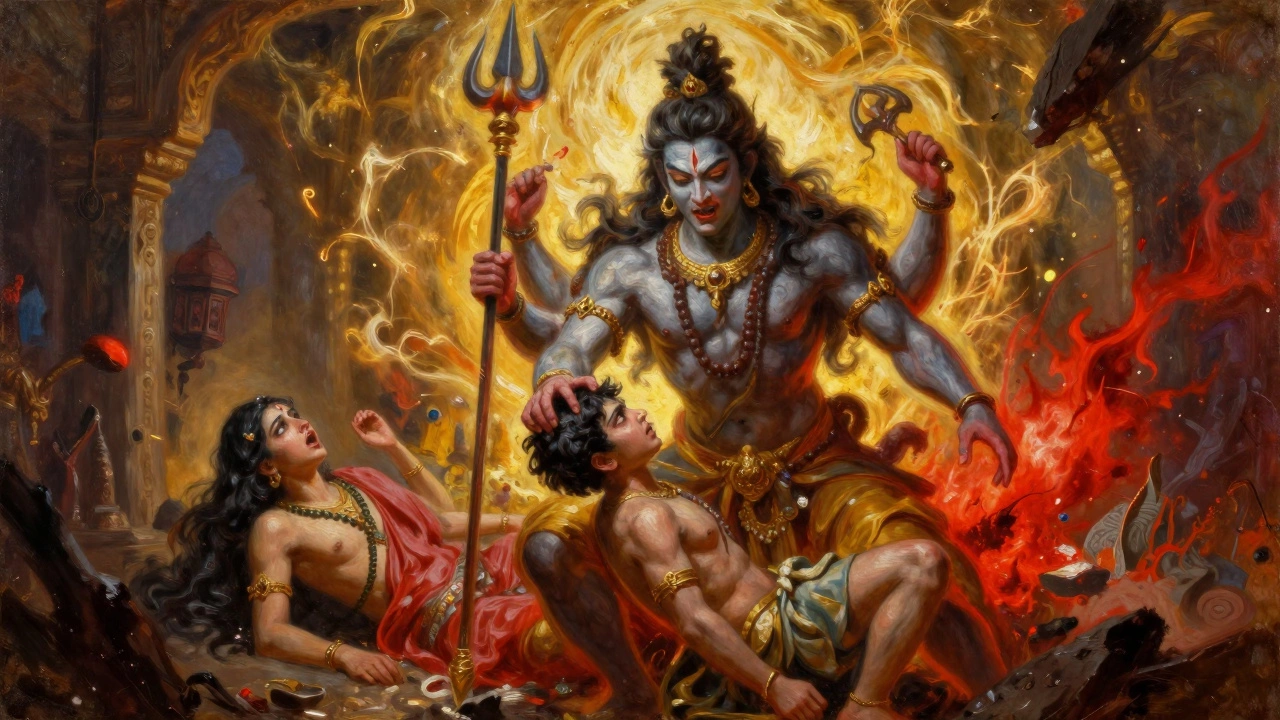
When Shiva, her husband and the god of destruction and renewal, returned home, he didn’t know this boy was his son. He was blocked at the door. When the boy refused to let him pass, even after warnings, Shiva lost patience. In a moment of divine fury, he severed the boy’s head.
When Parvati saw what had happened, her grief shook the universe. She wept so hard that the gods feared the world would collapse. Shiva, realizing his terrible mistake, promised to restore the boy. But the head was gone. What could replace it?
The Elephant’s Head: A Divine Solution
The gods searched the world for a head that could match the boy’s soul. They found it in the largest, most powerful creature nearby: an elephant. The elephant’s head was placed on the boy’s body, and with a breath from Shiva, life returned.
But why an elephant? Why not a lion? A peacock? A bull? The answer lies in what the elephant represents in Indian culture.
Elephants are strong, wise, and gentle. They carry heavy loads without complaint. They remember paths long forgotten. They are calm, even in chaos. In ancient India, elephants were royal symbols-used in war, in ceremony, and in daily life as both laborers and protectors. To give Ganesha an elephant’s head was to say: this god is strength with compassion.
It also meant: loss can become something greater. The boy didn’t die. He was transformed. His identity didn’t vanish-it evolved. That’s why Ganesha is not just a god with an elephant head. He is the god who turned tragedy into triumph.
Ganesha as the Remover of Obstacles
After his rebirth, Shiva blessed Ganesha with a new role: the remover of obstacles. Before any new beginning-before a journey, a business, a marriage, or even writing this article-people chant his name. They place his image at the entrance of homes and temples. Why? Because he doesn’t just clear the path. He changes how we see the path.
Think about it: an elephant is not fast. It doesn’t dart around. It plods forward, steady and sure. It doesn’t avoid obstacles. It walks through them. That’s the lesson Ganesha teaches: progress isn’t about speed. It’s about persistence.
His large ears listen to prayers. His small eyes see beyond surface problems. His trunk, flexible and strong, can pick up a flower or lift a mountain. His belly holds the universe’s abundance. Even his broken tusk-he broke it off to write the Mahabharata-is a symbol of sacrifice for something greater than yourself.
Why Not Another Animal?
Some wonder: why didn’t the gods just give him a human head? Or a lion’s? Or even a buffalo’s, like his brother Kartikeya?
The answer is in the symbolism. A lion is fierce, but not wise. A buffalo is strong, but stubborn. A human head? That would have made him just another boy. The elephant head makes him unforgettable. It makes him unmistakably divine.
In a culture where animals carry deep spiritual meaning, the elephant stands apart. It’s not sacred because it’s rare. It’s sacred because it’s reliable. It doesn’t roar. It doesn’t flee. It simply shows up. That’s what Ganesha does-for devotees, for seekers, for anyone who’s ever felt stuck.
The Elephant in the Room: A Deeper Meaning
There’s another layer to this story. The elephant head wasn’t chosen because it was powerful. It was chosen because it was unexpected.
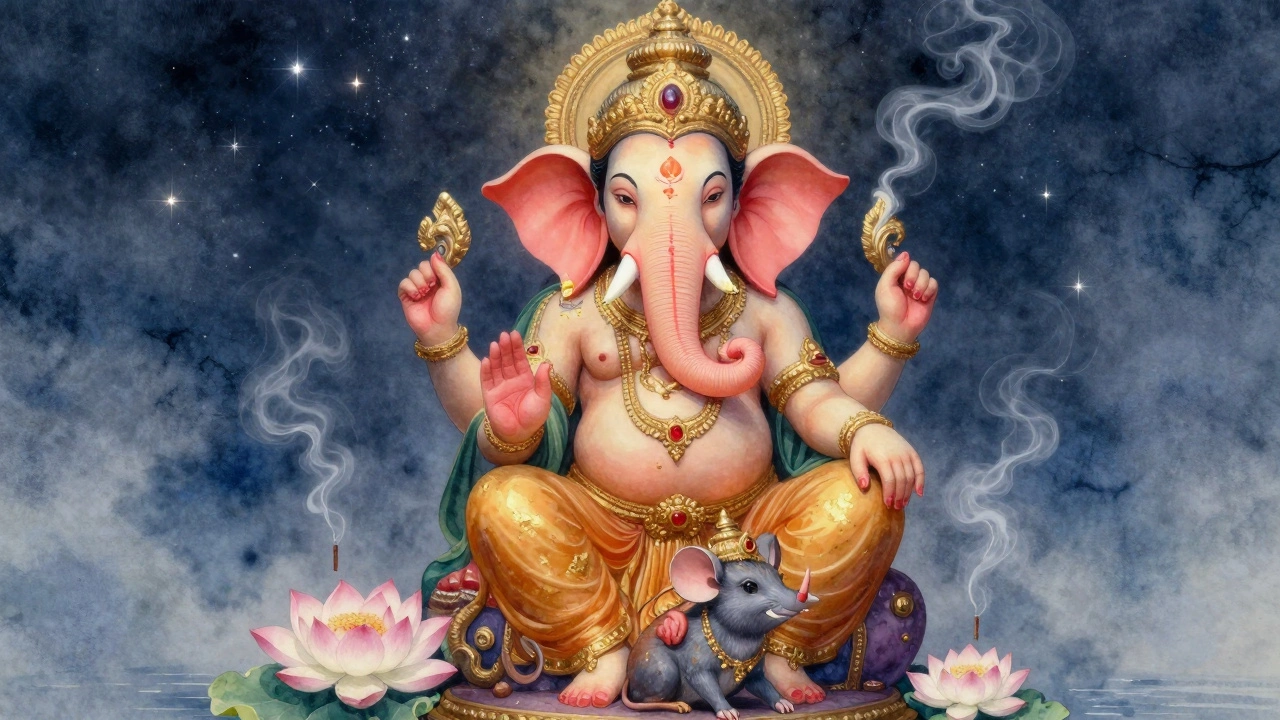
Think about how we judge things by appearance. We assume gods should look majestic, human-like, or even intimidating. But Ganesha defies that. He’s a child with a giant head. He’s clumsy. He rides a mouse. He eats sweets by the basketful. And yet-he’s the most beloved god in Hinduism.
His form tells us: divinity doesn’t look like perfection. It looks like acceptance. It looks like the strange, the broken, the different. It looks like a boy who lost his head and still became the god who clears every path.
In a world obsessed with looking ‘right,’ Ganesha reminds us that being different doesn’t make you less. It can make you more.
Modern Ganesha: Beyond the Myth
Today, you’ll find Ganesha statues in offices from Mumbai to Melbourne. Students light incense before exams. Artists paint his image before starting a new project. Even non-Hindus keep his image for good luck.
Why? Because his story speaks to something universal. Everyone faces loss. Everyone feels out of place. Everyone wonders if they’re enough. Ganesha doesn’t offer easy answers. He offers presence. He says: you don’t have to be normal to be powerful.
His trunk holds the sweet of success. His belly holds the weight of the world. His broken tusk writes the stories of those who keep going. And his elephant head? It’s not just a symbol. It’s a reminder: the things that make you different are the things that make you divine.