Key Takeaways
- Hindus have full legal freedom to marry outside their religion under Indian and British law.
- The Hindu Marriage Act 1955 requires both partners to be Hindu, Buddhist, Jain, or Sikh, so interfaith unions often use the Special Marriage Act 1954.
- Temples generally do not perform marriages for non-Hindus unless they convert or specific sects allow exceptions.
- Familial acceptance varies widely depending on region, urbanization, and traditional beliefs.
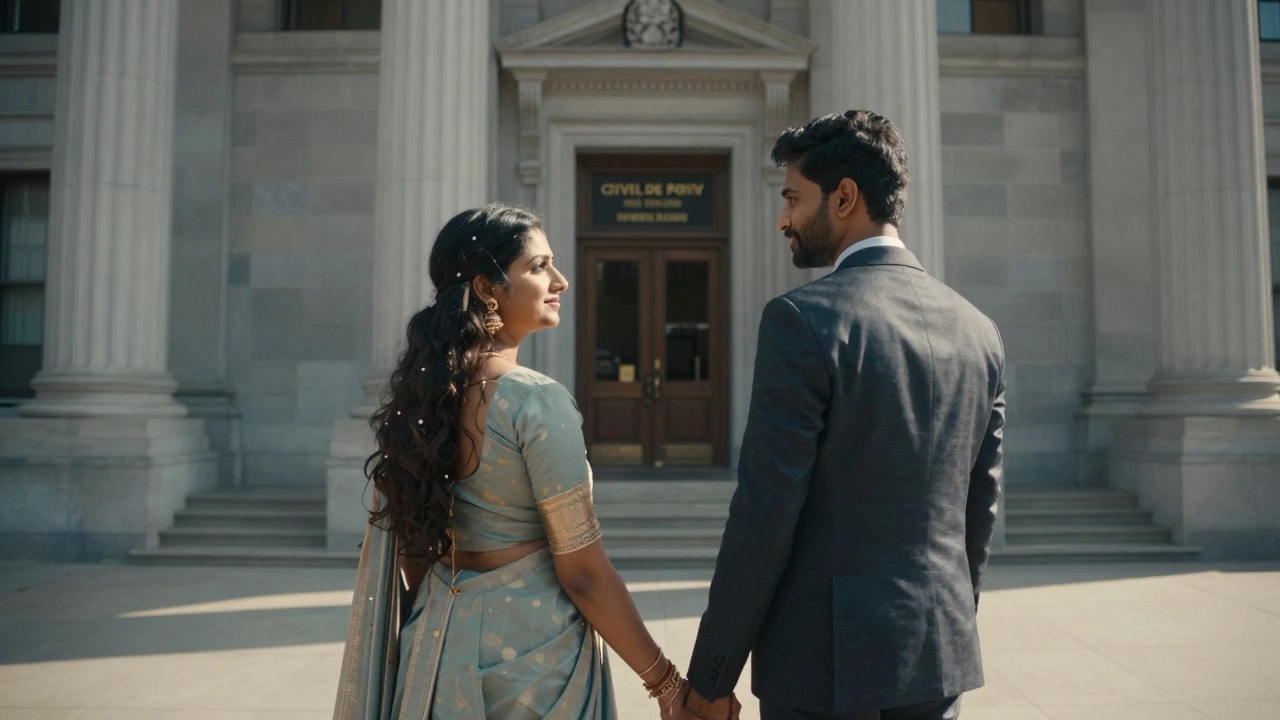
- In the UK, civil registration applies regardless of faith, removing many ceremonial barriers.
You might be standing at a crossroads right now. Love isn't bound by scripture, but life often feels constrained by it. If you ask, are Hindus allowed to marry non-Hindus, the simple answer is yes. Legally, nothing stops you. Culturally, it depends entirely on who you talk to. In 2026, the conversation has shifted significantly compared to fifty years ago. While the legal framework remains solid, the ground reality involves navigating complex family expectations and religious customs. Many couples assume the law works one way when their local priest says another thing completely.
This confusion usually stems from mixing up two distinct systems: religious ritual and civil law. When people discuss "permission," they often mean social approval rather than government regulation. We need to separate these clearly because conflating them causes unnecessary stress for young couples in India and the diaspora. Understanding the difference empowers you to plan your future without falling into bureaucratic traps.
The Legal Landscape of Interfaith Unions
Laws in India function differently than religious texts. The foundation of marriage law here is split into personal laws based on religion and a secular code applicable to everyone. The most common mistake is thinking the Hindu Marriage Act 1955 is the only law governing Hindu marriages. It defines a Hindu broadly to include Buddhists, Jains, and Sikhs. However, it specifically mandates that both parties must belong to one of these groups. If one partner is Christian, Muslim, or follows no religion, this Act does not cover the union legally.
Hindu Marriage Act 1955.
For couples where one person is Hindu and the other is not, the solution lies in the Special Marriage Act 1954 provides a secular framework for registration of marriage between persons of any religion. It treats marriage as a contract rather than a sacrament. Both parties give notice to the Marriage Officer. After a period for objections, the marriage is solemnized in a civic office. This ensures your union is recognized by the state without needing conversion or adherence to a specific deity.
Special Marriage Act 1954. This act removes the religious barrier entirely. You register at the registrar's office, get a certificate, and you are married. The state doesn't care which gods you worship; it cares about the contract.
| Feature | Hindu Marriage Act 1955 | Special Marriage Act 1954 |
|---|---|---|
| Applicability | Hindu, Buddhist, Jain, Sikh only | All religions / Interfaith |
| Ceremony | Ritualistic (Saptapadi) | Civil / Contractual |
| Registration Time | Immediate or planned | Minimum 30 days notice required |
| Religious Rituals | Mandatory for validity | Not required |
| Societal Acceptance | High among traditional families | Variable / Secular focus |
It is important to remember that the 30-day waiting period under the Special Marriage Act allows anyone to object publicly. This was designed to prevent bigamy or coercion, but today it can cause embarrassment or tension in close-knit communities. Your marriage details get posted on a public board. Some couples prefer the privacy of a religious ceremony first, then registering later, though strictly speaking, the registration is what makes it legally binding.
What the Scriptures Actually Say
Beyond the courtroom, the question moves to the temple. Traditional Hindu theology is nuanced. Ancient texts like the Vedas focus heavily on Dharma (duty) and social order. The Manusmriti, an ancient legal text, suggests marrying someone of similar caste and background. These ideas shaped tradition for centuries. However, interpreting ancient smritis as strict bans on interfaith marriage in the modern era is debated aggressively by scholars.
The Bhagavad Gita teaches devotion over rigid lineage. It states that the divine resides in all beings equally. Modern movements, particularly Arya Samaj is a reform movement within Hinduism that emphasizes the Vedas and rejects idol worship. They are famous for facilitating interfaith marriages through a simplified fire ceremony known as Kanya Dana. Unlike orthodox priests, Arya Samaj priests often do not require the non-Hindu partner to formally change their name or faith to join the ceremony.
Arya Samaj, actively support such unions. They view the core issue as the couple's commitment to shared values rather than exclusive dogma. Many priests in North India, especially those aligned with reformist groups, will bless the union even if the partner remains Christian or Jewish.
Conversely, some South Indian temples and conservative orthodoxy still hold firm boundaries. If you plan a Purohit-led ceremony involving elaborate Agnihotra, the priest may refuse to touch the non-Hindu partner. This isn't necessarily a universal "ban" but a local restriction. You might hear stories of couples being told to wait for a specific temple festival or needing to perform a specific purification ritual for the outsider. These requirements vary wildly from village to village and priest to priest.
Navigating Family Dynamics in 2026
Law and scripture are documents; people are feelings. Even if the paperwork is perfect, convincing parents is a different battle. In 2026, urban India sees much higher acceptance rates than rural areas. A study by the Pew Research Center previously highlighted shifting generational gaps in religious tolerance. Younger generations prioritize companionship and mutual respect over ancestral lineage.
Families often fear the loss of identity. They worry about grandchildren not knowing their roots or dietary restrictions. If you are marrying a non-Hindu, preparation is key. Have conversations months in advance. Explain that you plan to celebrate Diwali alongside Christmas. Discuss where you will live. Reassurance helps more than legal threats. Sometimes, couples host a pre-marriage counseling session just to help elders feel included. It shows that the new union respects the old home rather than erasing it.
In the diaspora, such as in London or New York, the dynamic shifts again. The UK Marriage Act 1949 (and subsequent updates) focuses on civil consent rather than religious adherence. As a Hindu living in England, the state recognizes your marriage regardless of whether you went to a Gurudwara, Church, or Registry Office. However, community events like weddings often remain tied to cultural expectations. If you hold a reception at a hotel instead of a hall, you bypass many traditional gatekeepers who enforce cultural purity.
Conversion and Child Rearing
A major concern families voice is the faith of future children. In a Hindu-non-Hindu marriage, the child does not automatically inherit the father's or mother's religion by birth law. It becomes a choice made later. Under Indian law, until a minor reaches adulthood, guardians decide upbringing. Often, couples agree on a neutral approach, raising the child with exposure to multiple traditions. You can light the lamp at home during Diwali and say prayers for the non-Hindu holiday too. This dual celebration is becoming common practice.
Some older relatives push for immediate conversion before marriage. Be careful here. Forcing a partner to convert solely to satisfy a parent creates resentment. Voluntary adoption of Hindu culture-like learning Sanskrit names or observing fasts-is positive. Compulsion breaks trust. If the non-Hindu partner chooses to embrace Hindu rituals, treat it as joining your culture, not changing their soul.
Steps for a Smooth Process
If you decide to proceed, follow a structured path to avoid delays.
- Consult a lawyer: Confirm which act suits your situation. If one partner is Hindu and the other is Muslim, the Special Marriage Act is mandatory for civil recognition.
- Secure venue booking: Whether it is a Arya Samaj mandir or a civic center, secure the date well in advance. Popular venues get booked out for wedding season months ahead.
- Prepare documentation: Gather ID proofs, address proofs, and birth certificates. For the Special Marriage Act, you need proof of single status to prevent bigamy claims.
- Handle objection notices: If filing under the Special Marriage Act, anticipate that notices may appear. Keep evidence ready to prove consent was free and age requirements met.
- Plan the ceremony: Decide if you want a religious ritual followed by civil registration, or just civil. Both are valid, but one offers emotional closure while the other offers legal safety.
Do not rush the notice period. Missing the window can invalidate the registration timeline. Keep copies of everything. Digital backups are essential given how administrative offices sometimes lose paper trails.

Future Outlook and Support
The trajectory for interfaith marriages looks promising. Courts in India, including the Supreme Court, have consistently ruled that the right to choose a spouse is a fundamental human right. Recent judgments reinforce that forced conversions or violence against interfaith couples constitute criminal offenses. Police stations now often designate "Loving Couples" desks to investigate protection issues quickly.
Community support organizations are emerging. NGOs dedicated to interfaith dialogue offer mediation services between conflicting families. These resources were scarce a decade ago but are now accessible online. If you face harassment, document every instance. Evidence helps legal intervention later. Most importantly, lean on friends and professional counselors who understand the psychological toll of family estrangement.
Frequently Asked Questions
Is a Hindu-Christian marriage legal in India?
Yes, absolutely. You can register it under the Special Marriage Act 1954. It is fully recognized by the Indian government.
Does the non-Hindu partner need to convert?
Legally, no conversion is required for civil marriage. Religiously, some priests might insist, but you can choose a secular ceremony or a reformist group like Arya Samaj that does not mandate conversion.
Which act is better for interfaith couples?
The Special Marriage Act 1954 is the only option for a purely Hindu and non-Hindu legal union. The Hindu Marriage Act 1955 does not apply if one partner is outside Hinduism.
Will my family accept the marriage without conversion?
This varies individually. Urban families are generally more accepting. Preparation, counseling, and patience often improve outcomes compared to rushing into legal action.
Can we register our marriage abroad if we live in London?
Yes. UK law allows civil registration regardless of faith. If you return to India, you may need to register there separately for local legal documentation purposes.