Interactive Timeline: The Evolution of Indian Classical Music
Scroll through the timeline to understand how geography, politics, and culture shaped two distinct musical traditions from one ancient root.
The Unified Tradition
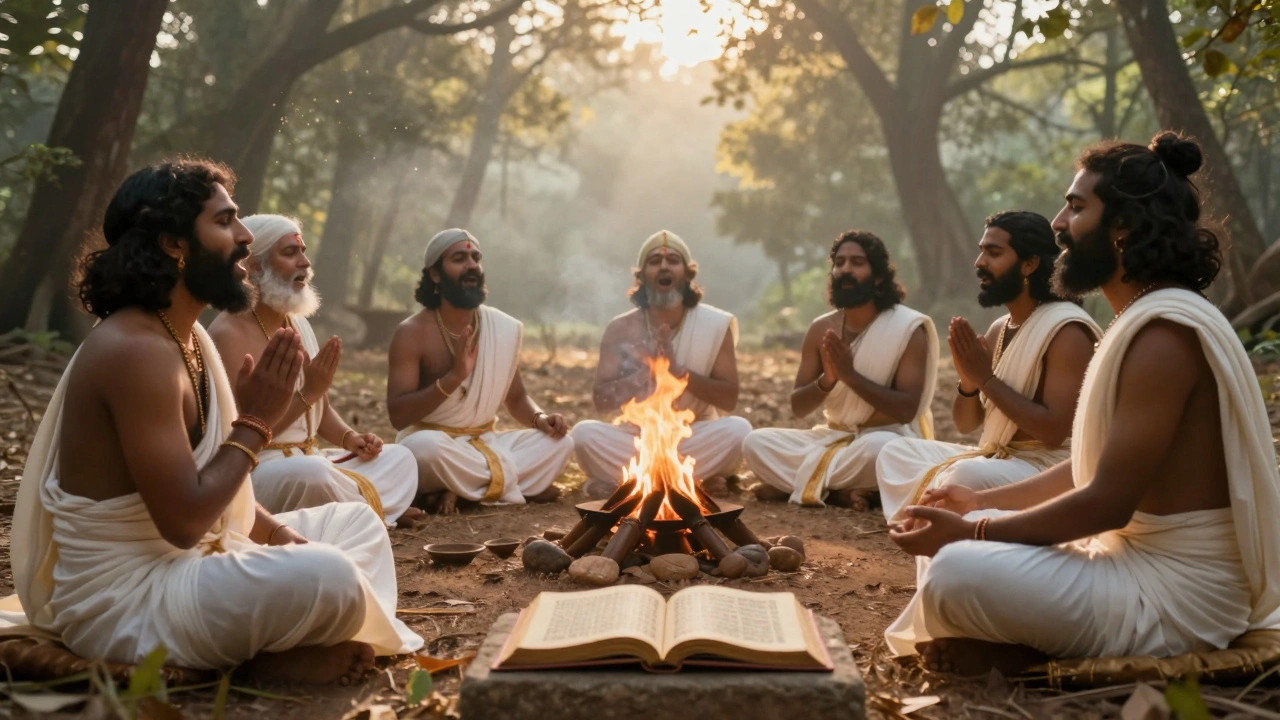
Ancient EraVedic chants establish the foundation. The Natya Shastra codifies musical theory. No distinction between North and South exists.
The Great Divide
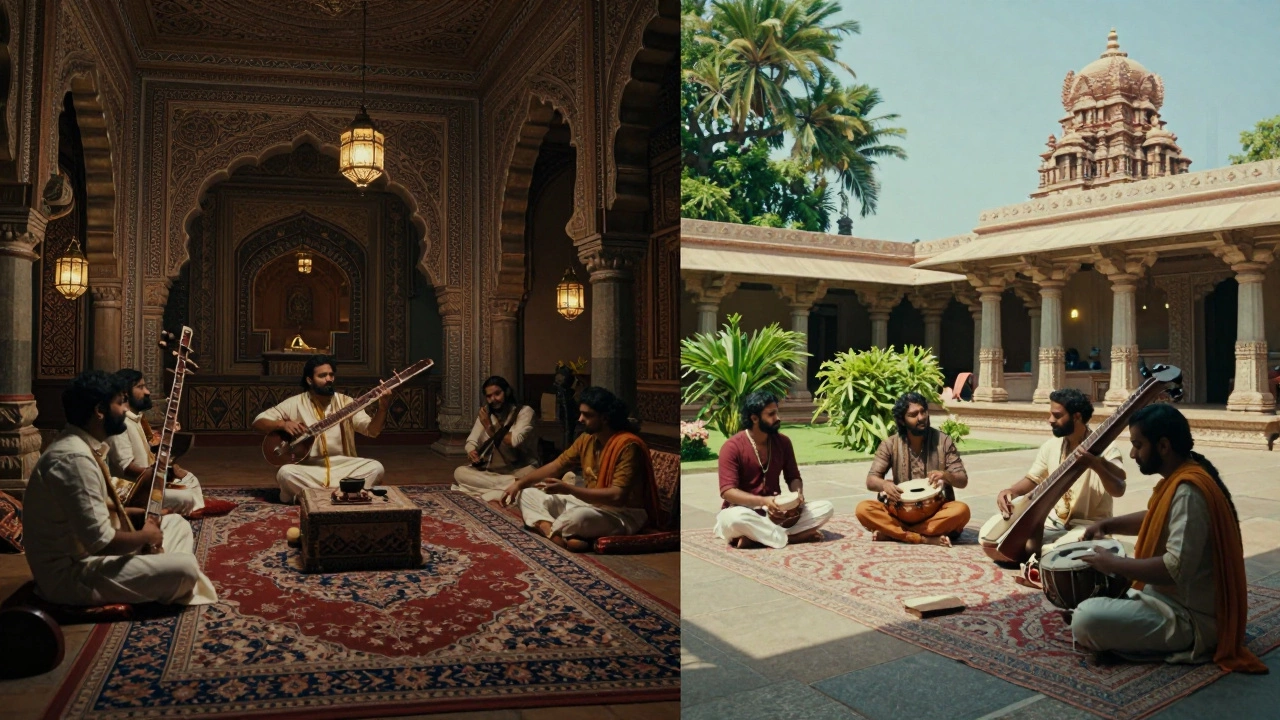
Medieval EraPolitical upheaval creates geographical separation. Northern courts embrace Persian influences while Southern kingdoms preserve Sanskrit traditions.
Religious Influence
Medieval EraBhakti and Sufi movements shape musical expression differently in each region. North embraces emotional simplicity, South refines devotional complexity.
Modern Convergence
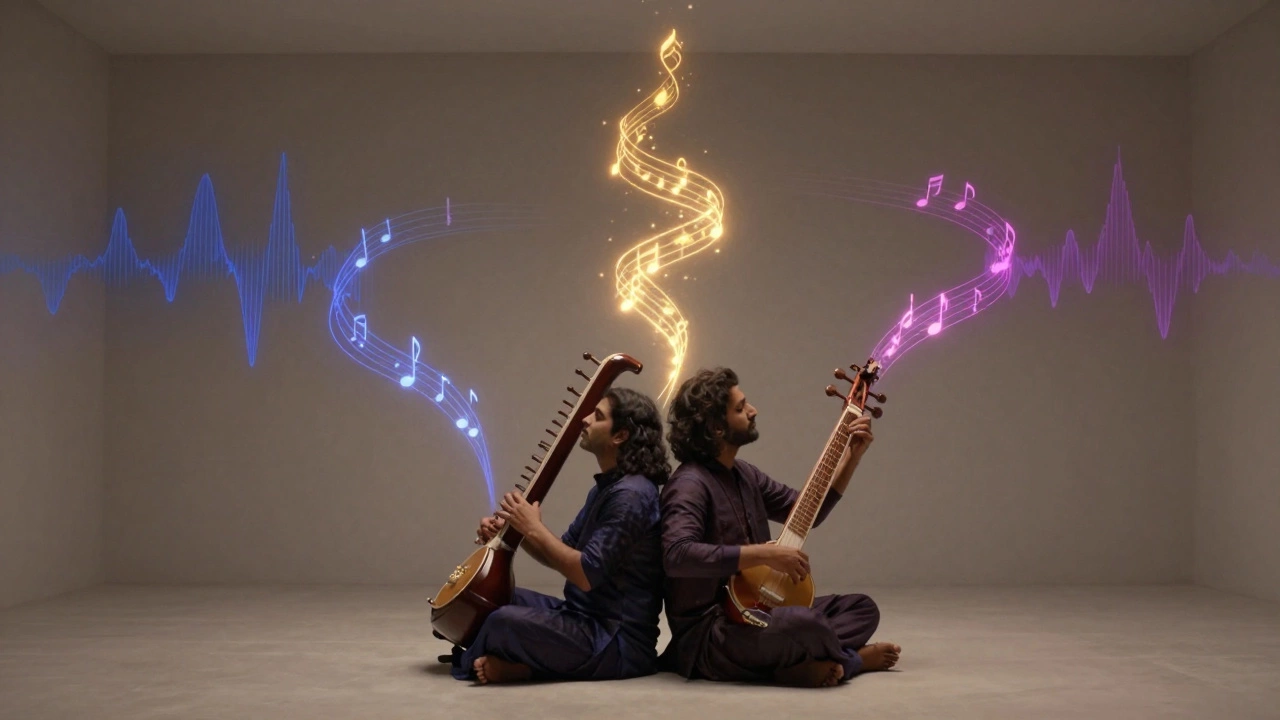
Modern EraGlobalization brings musicians together. Cross-training becomes common. The theoretical base remains united while stylistic differences persist.
Regional Characteristics After the Split
Hindustani (North)
- Influence: Persian, Arabic, Indigenous
- Focus: Improvisation & Raga exploration
- Languages: Braj Bhasha, Urdu, Hindi
- Key Instruments: Sitar, Tabla, Sarangi
- Theme: Spiritual + Secular emotions
Carnatic (South)
- Influence: Indigenous, Sanskrit, Dravidian
- Focus: Composition & Lyricism
- Languages: Telugu, Tamil, Kannada, Sanskrit
- Key Instruments: Veena, Mridangam, Flute
- Theme: Primarily devotional
Test Your Knowledge
Loading question...
Walk into any traditional music concert in India, and you’ll likely hear one of two distinct styles. In the North, the music flows like a river, meandering through improvisations with instruments like the Sarod is a stringed instrument with a gourd resonator and metal strings, central to Hindustani music. In the South, the rhythm is precise, mathematical, and driven by the complex percussion of the Mridangam is a double-headed barrel drum used primarily in Carnatic music for rhythmic accompaniment. But if you ask musicians which style is older, you might get a heated debate. The truth is less about age and more about geography and history. Did Carnatic music come first? Or did Hindustani music?
The short answer is that they share the same ancient root. Neither came strictly "first" in their modern form. Instead, both evolved from a single, unified tradition of Indian classical music that existed centuries before they split. To understand who is the elder sibling, we have to look back past the medieval period, into the Vedic era, and trace how politics, religion, and invasion changed the sound of India forever.
The Common Root: Vedic Chants and Natya Shastra
Before there was a North or South divide, there was simply Indian music. This ancient tradition dates back over 3,000 years. It began with the Vedas are ancient Sanskrit scriptures of Hinduism that contain hymns, rituals, and philosophical teachings. These texts weren’t just read; they were sung. The pitch, rhythm, and intonation were crucial because a slight change in tone could alter the meaning of a prayer. This strict adherence to melody created the foundation for what we now call ragas.
By around 200 CE, this musical knowledge was codified in the Natya Shastra is an ancient Sanskrit text on performing arts, attributed to sage Bharata Muni, covering dance, drama, and music theory. Written by the sage Bharata Muni, this book is the bible of Indian performing arts. It described the Shrutis (microtones) and the Talas (rhythmic cycles). At this stage, there was no distinction between Carnatic and Hindustani. A musician in Varanasi would sing very similarly to a musician in Madurai. The language might differ-Sanskrit was the liturgical language-but the theoretical framework was identical across the subcontinent.
This unified system relied heavily on the Raga is a melodic framework for improvisation in Indian classical music, defined by specific ascending and descending patterns. concept. However, the ragas of that time were fewer and structurally different from today’s complex forms. They were simpler, often pentatonic (five notes), and closely tied to religious rituals rather than entertainment. If you listen to early recordings or reconstructions of these ancient chants, you won’t hear the flamboyant ornamentations of modern concerts. You will hear solemnity, precision, and devotion.
The Great Divide: Persian Influence and Regional Isolation
So, when did the split happen? Most music historians point to the medieval period, specifically between the 12th and 16th centuries. This was a time of massive political upheaval. Northern India saw successive invasions by Turkic and Afghan dynasties, leading to the establishment of the Delhi Sultanate and later the Mughal Empire. Southern India, meanwhile, remained largely under the control of indigenous kingdoms like the Vijayanagara Empire and various Nayak rulers.
This geographical separation had profound effects on music. In the North, the ruling elites were often Muslim, and their courts patronized music that blended local Indian traditions with Persian and Central Asian influences. This fusion gave birth to what we now know as Hindustani music is the classical music tradition of Northern India, characterized by its emphasis on improvisation and influence from Persian and Islamic cultures.. Instruments like the Sitar and Sarod, which have Persian roots, became prominent. The vocal style also shifted, becoming more flexible and focused on intricate improvisation known as Alap.
In the South, the story was different. The Vijayanagara Empire and later the Maratha and Nayak courts actively preserved the older, Sanskrit-based traditions. There was less direct Persian influence. Instead, the focus turned inward, towards devotional poetry in local languages like Telugu, Tamil, and Kannada. This led to the development of Carnatic music is the classical music tradition of Southern India, known for its structured compositions and strong emphasis on devotional lyrics.. The structure became more rigid and composition-centric. While Hindustani music valued the journey of improvisation, Carnatic music began to value the perfection of the written composition.
| Feature | Hindustani (North) | Carnatic (South) |
|---|---|---|
| Primary Influence | Persian, Arabic, and Indigenous | Indigenous, Sanskrit, and Dravidian |
| Historical Catalyst | Mughal Courts & Sultanates | Vijayanagara Empire & Temple Traditions |
| Focus | Improvisation and Raga exploration | Composition and Lyricism |
| Language | Braj Bhasha, Urdu, Hindi | Telugu, Tamil, Sanskrit, Kannada |
| Key Instrument | Sitar, Tabla, Sarangi | Veena, Mridangam, Flute |
The Role of Bhakti and Sufi Movements
Religion played a huge role in shaping these two paths. In the North, the Bhakti movement is a devotional movement within Hinduism that emphasized personal love for God, transcending caste and ritual. encouraged simple, emotional songs. Figures like Kabir and Tulsidas wrote poetry that was meant to be sung by common people, not just priests. This democratized music. Simultaneously, the Sufi tradition is the mystical dimension of Islam, emphasizing inner spirituality and often using music and poetry to connect with the divine. introduced new melodic modes and instruments. The blending of these forces created a music that was deeply spiritual but also highly adaptable and expressive.
In the South, the Bhakti movement took a different turn. Saints like Nammalvar and later, the Trinity of Carnatic Music-Tyagaraja is one of the three greatest composers of Carnatic music, born in 1767, known for his thousands of Telugu compositions, Muthuswami Dikshitar is a Carnatic composer known for his complex Sanskrit compositions and mastery of ragas, and Syama Sastri is a Carnatic composer famous for his devotional songs dedicated to Lord Shiva and Goddess Kamakshi-codified the music into a sophisticated art form. Tyagaraja, living in the late 18th century, composed thousands of Kritis (songs) that set the standard for Carnatic performance. His works were so well-structured that they left little room for the wild improvisation seen in the North. The South preserved the ancient raga structures while refining them into a concert format that prioritized lyrical clarity and rhythmic complexity.
Did One Style Survive Older Elements?
If you argue that Carnatic music is "older," you’re arguing that it preserved the pre-medieval, Sanskrit-heavy, composition-focused style better than the North did. Many scholars agree that Carnatic music retains more elements of the ancient Dhrupad style (the oldest surviving genre of Hindustani music) in terms of purity of raga and lack of secular influence. The South was somewhat isolated from the rapid cultural shifts happening in the Delhi courts. This isolation acted as a preservative.
However, saying Hindustani music is "newer" doesn’t mean it’s inferior or less authentic. It means it evolved faster. The North absorbed foreign influences and created something entirely new. The Thumri and Ghazal forms, popular in Hindustani music, have no equivalent in Carnatic tradition. These forms deal with romance, heartbreak, and human emotion, whereas Carnatic music remains almost exclusively devotional. This shift in theme reflects the changing social fabric of Northern India during the Mughal era.
Consider the instrument. The Veena is a plucked string instrument, considered the ideal instrument for Carnatic music due to its pure tone and ability to produce Gamakas. has been mentioned in ancient texts like the Ramayana. It is still the primary instrument in Carnatic music. In contrast, the Sitar, the icon of Hindustani music, only emerged in its current form in the 15th or 16th century. It is a hybrid of the Persian Sehtar and the Indian Veena. So, in terms of instrumentation, the South kept the old guard, while the North innovated.
The Modern Convergence
Today, the line between the two is blurring again. With globalization and digital media, musicians from Chennai learn from masters in Mumbai, and vice versa. We see collaborations where a Tabla player accompanies a Veena artist, or a Sitarist performs a Carnatic Raga. The theoretical base is still the same-the 22 Shruti notes, the concept of Raga and Tala remain universal. The difference is now mostly stylistic preference rather than fundamental divergence.
But for the purists, the question of origin remains a point of pride. For the Carnatic musician, it’s about preserving the ancient, unadulterated form. For the Hindustani musician, it’s about celebrating the dynamic, evolving spirit of the North. Both are valid. Both are beautiful. And both are children of the same ancient mother: the Vedas.
Frequently Asked Questions
Is Carnatic music older than Hindustani music?
Not exactly. Both styles originated from the same ancient Indian classical tradition described in the Natya Shastra. However, Carnatic music is often considered to have preserved more of the ancient, pre-medieval structures and Sanskrit traditions, while Hindustani music evolved significantly due to Persian and Islamic influences starting around the 12th century.
What caused the split between Carnatic and Hindustani music?
The split was primarily caused by political and geographical factors during the medieval period. Northern India experienced significant Persian and Mughal influence, which altered its musical styles. Southern India, protected by kingdoms like Vijayanagara, maintained stronger ties to ancient Sanskrit traditions and local Dravidian cultures, leading to distinct evolutionary paths.
Do Carnatic and Hindustani music use the same Ragas?
They share many common Ragas, such as Yaman/Kalyani and Bhairav/Shankarabharanam, but the names and sometimes the structures differ. Over time, each tradition developed its own unique set of Ragas. While the core concepts of melody and scale are similar, the way a Raga is performed and elaborated upon varies greatly between the two styles.
Why is Carnatic music more focused on compositions?
Carnatic music emphasizes compositions (Kritis) because of the legacy of the Trinity of Carnatic Music (Tyagaraja, Dikshitar, Syama Sastri). Their works are so rich in melody and rhythm that they serve as the primary vehicle for learning and performance. In contrast, Hindustani music places greater emphasis on improvisation (Alap) and exploring the Raga itself, often with less reliance on fixed lyrical compositions.
Can a musician learn both Carnatic and Hindustani music?
Yes, many musicians do learn both, though it requires deep dedication. Since both systems share the same foundational theory (Shruti and Tala), understanding one helps in learning the other. However, the technical skills, vocal styles, and instrumental techniques differ significantly. Cross-training is becoming more common in the modern era, leading to interesting fusion performances.