Bengali Festival: Discover Durga Puja, Culture, and Traditions
When people talk about Bengali festival, a vibrant, deeply spiritual celebration rooted in the traditions of West Bengal and Bangladesh. Also known as Durga Puja, it’s more than just a holiday—it’s a full-season event that reshapes cities, rekindles family bonds, and turns streets into open-air temples. This isn’t just one day of prayer. It’s five days of drumming, dancing, clay idols rising from river mud, and millions lighting diyas to welcome the goddess Durga home.
What makes Bengali festivals stand out? It’s the blend of devotion and art. The idols aren’t mass-produced—they’re hand-sculpted by families who’ve passed down the craft for generations. The music? It’s not background noise—it’s live tabla and dhol, played with such intensity that you feel it in your chest. And the food? It’s not just snacks. It’s shorshe ilish, puchka, and mishti doi, served on banana leaves in courtyards turned into feasting halls. This is where Bengali culture, a rich blend of literature, music, and ritual that shaped modern India comes alive. You’ll find Rabindranath Tagore’s poems quoted in pandal banners, and street theater that turns ancient myths into modern commentary.
Don’t confuse this with other Indian festivals. While Diwali lights up homes, Durga Puja transforms entire neighborhoods. While Holi is about color, Bengali festivals are about connection—to ancestors, to community, to the divine. Even the way people dress matters: women in silk saris with red borders, men in dhoti-kurta, all chosen with care. And it’s not just in Kolkata. From Assam to Singapore, Bengalis carry this tradition with them, making it one of the most widely observed cultural events outside its homeland.
Underneath the drums and the sweets is a quiet truth: these festivals aren’t about spectacle. They’re about remembering. Remembering who you are. Who your parents were. Who your grandparents fought to protect when times got hard. That’s why even young people who barely speak Bengali still show up—to light a candle, to touch the idol’s foot, to eat one last plate of luchi-alur dom.
What you’ll find in the posts below isn’t just a list of events. It’s the story behind the drumbeats, the reason the clay idols are made with such care, and how food, dance, and silence all play their part in keeping a culture alive. You’ll read about why Bengal is famous for its festivals, how Durga Puja became a global symbol, and what happens when tradition meets modern life. No fluff. Just the real, raw, beautiful truth of what happens when a whole people decide to celebrate their soul, together.
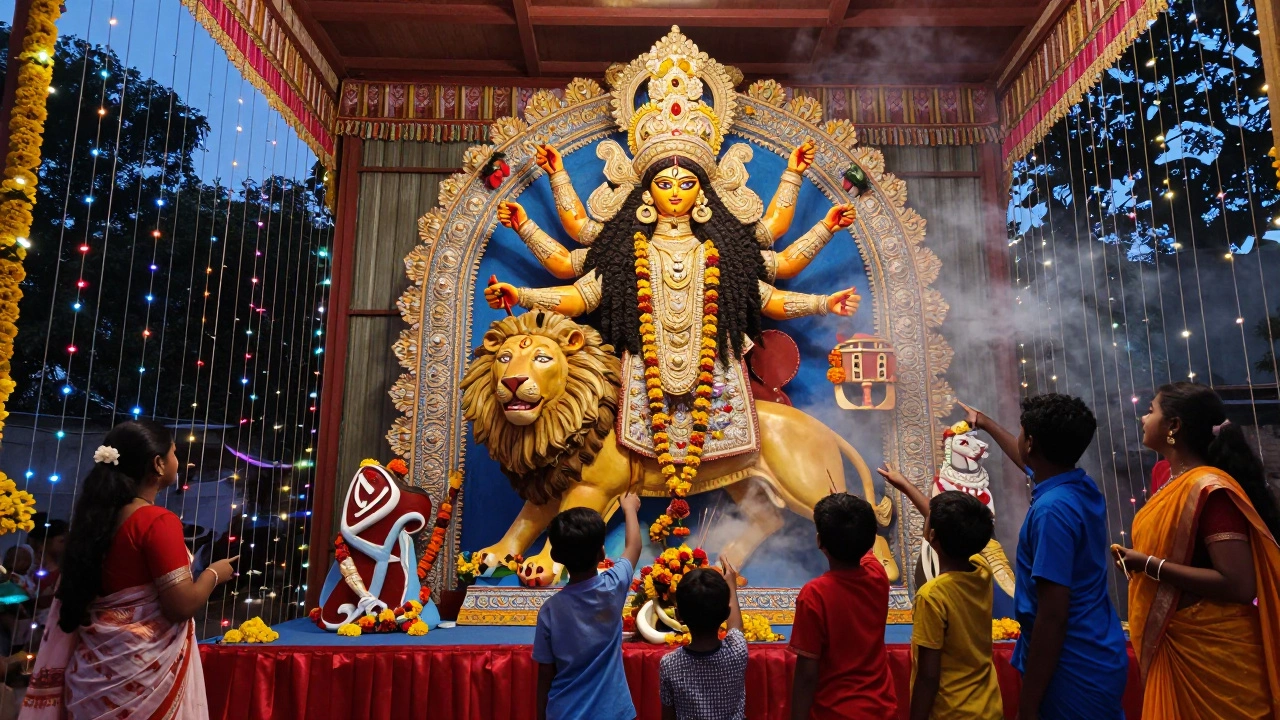
Which is the most popular festival celebrated in Bengali culture?
Durga Puja is the most popular festival in Bengali culture, uniting millions across India, Bangladesh, and the global diaspora with art, food, music, and community. It's more than a religious event - it's a living tradition that evolves every year.
Read more