Bharatanatyam Rules: What You Need to Know About This Classical Dance Form
When you see Bharatanatyam, a classical Indian dance form originating in Tamil Nadu that blends rhythm, gesture, and storytelling. Also known as Bharata Natyam, it’s not just movement—it’s a living code passed down for over 2,000 years. These aren’t arbitrary steps. Every turn, hand position, and facial expression follows strict guidelines rooted in the Natya Shastra, an ancient Sanskrit text on performing arts, written by Bharata Muni, that lays the foundation for all Indian classical dance. This isn’t history class—it’s the rulebook still used today by dancers from Chennai to Chicago.
Bharatanatyam rules break down into four key areas: angika (body movement), vachika (speech and song), aharya (costume and makeup), and sattvika (emotional expression). The dance mudras, hand gestures that represent everything from animals to emotions, with 28 basic ones and hundreds of combinations are the language. A single finger position can mean a bird, a flower, or a tear. The feet strike the floor like percussion, syncing with the tala (rhythm cycle), while the eyes dart across the space like a storyteller’s gaze. There’s no improvisation here—not in the way jazz or hip-hop allows. Every sequence is structured, precise, and trained for years. You don’t learn Bharatanatyam—you earn it.
These rules aren’t about rigidity for the sake of control. They’re the framework that lets emotion shine through. A dancer doesn’t just perform a story—she becomes it. The posture, called aramandi, isn’t just bent knees and turned-out feet—it’s the physical anchor for devotion. The makeup, the bells on the ankles, the saree draped just so—all serve the art, not the look. This dance was once performed in temples, as worship. Even today, when a dancer begins, she’s not just moving. She’s invoking. And if you watch closely, you’ll see why the rules matter: without them, the soul of the dance disappears.
What you’ll find in the articles below are real insights into how these rules shape performance, how they’ve been preserved, and sometimes, how they’re being rethought. You’ll read about the sacred geometry of movement, the training that takes decades, and why even small mistakes in mudra can change the meaning of a whole piece. This isn’t a dance you watch. It’s a system you learn. And these posts are your guide to understanding it—not as a tourist, but as someone who wants to see what’s really beneath the rhythm.
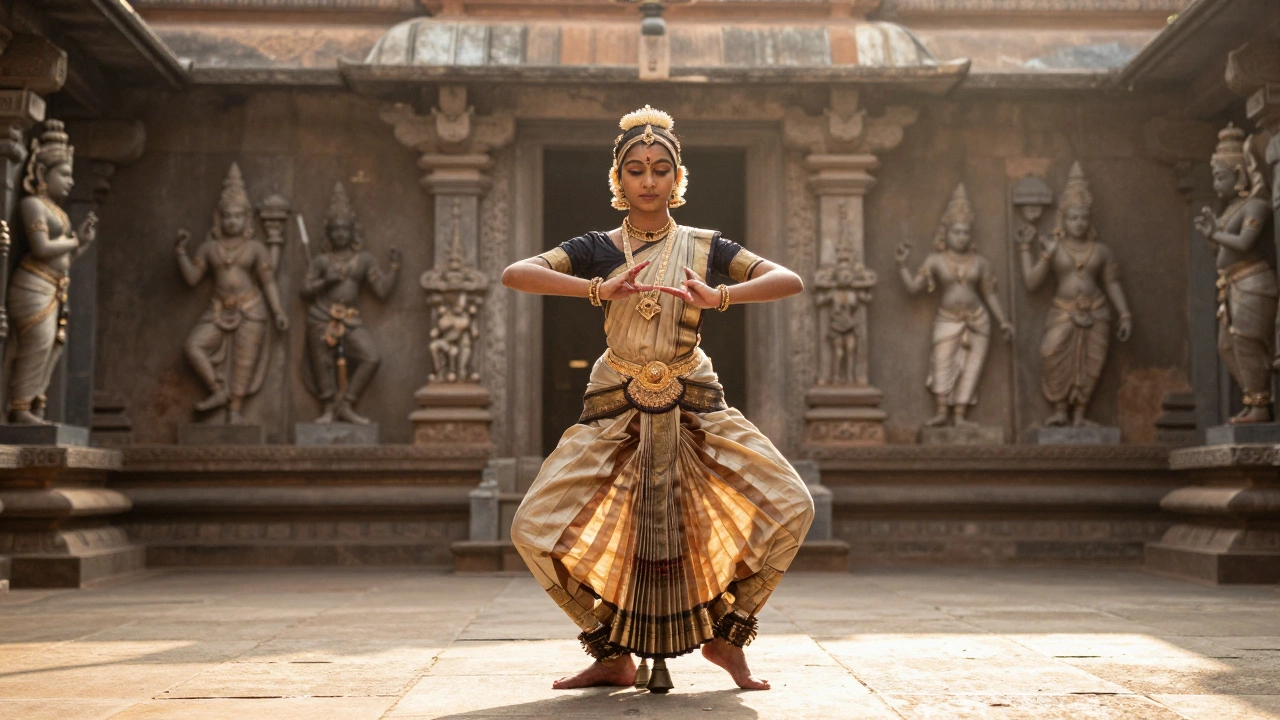
What Is the Most Strict Dance? The Rigid Discipline of Bharatanatyam
Bharatanatyam is the most strict dance form in India, with rigid rules for posture, movement, music, and expression that have remained unchanged for over two millennia. Its precision turns dance into sacred storytelling.
Read more