Dance Discipline: Understanding Traditional Indian Dance Forms and Their Cultural Roots
When we talk about dance discipline, a structured, rule-based form of movement rooted in cultural and spiritual tradition. Also known as classical or folk dance systems, it’s not about performance alone—it’s a living code passed down through generations. In India, dance discipline isn’t something you learn in a studio overnight. It’s a practice tied to temple rituals, village festivals, and ancestral memory. Each step, gesture, and rhythm carries meaning—sometimes sacred, sometimes political, always personal.
Take Bharatanatyam, a classical dance form from Tamil Nadu that combines intricate footwork, expressive hand gestures, and devotional storytelling. It was once performed only in temples by devadasis, women dedicated to the gods. Today, it’s taught worldwide, but its core remains unchanged: every movement maps to a verse from ancient texts. Then there’s Kalbeliya dance, a hypnotic, serpentine style from Rajasthan once banned as "immoral" but now recognized by UNESCO as intangible cultural heritage. Its dancers, from the Kalbeliya community, move like snakes—not to scare, but to honor their ancestral connection to nature and survival. These aren’t just dances. They’re resistance, identity, and survival encoded in motion.
What ties them together? Discipline. Not the kind you find in a military drill, but the kind that demands years of daily practice, emotional honesty, and deep respect for lineage. You can’t fake a mudra in Bharatanatyam. You can’t rush the rhythm of a Kalbeliya performance. These forms require patience, physical control, and spiritual awareness. And that’s why they endure—even when modern life tries to push them aside.
You’ll find posts here that dig into the hidden histories behind these dances—why some were nearly erased, how they survived bans, and what they reveal about the people who kept them alive. You’ll see how dance connects to music, religion, gender, and even food culture. Whether it’s the sacred geometry of temple dance or the raw energy of a folk performance, this collection shows you that dance discipline isn’t entertainment. It’s memory in motion.
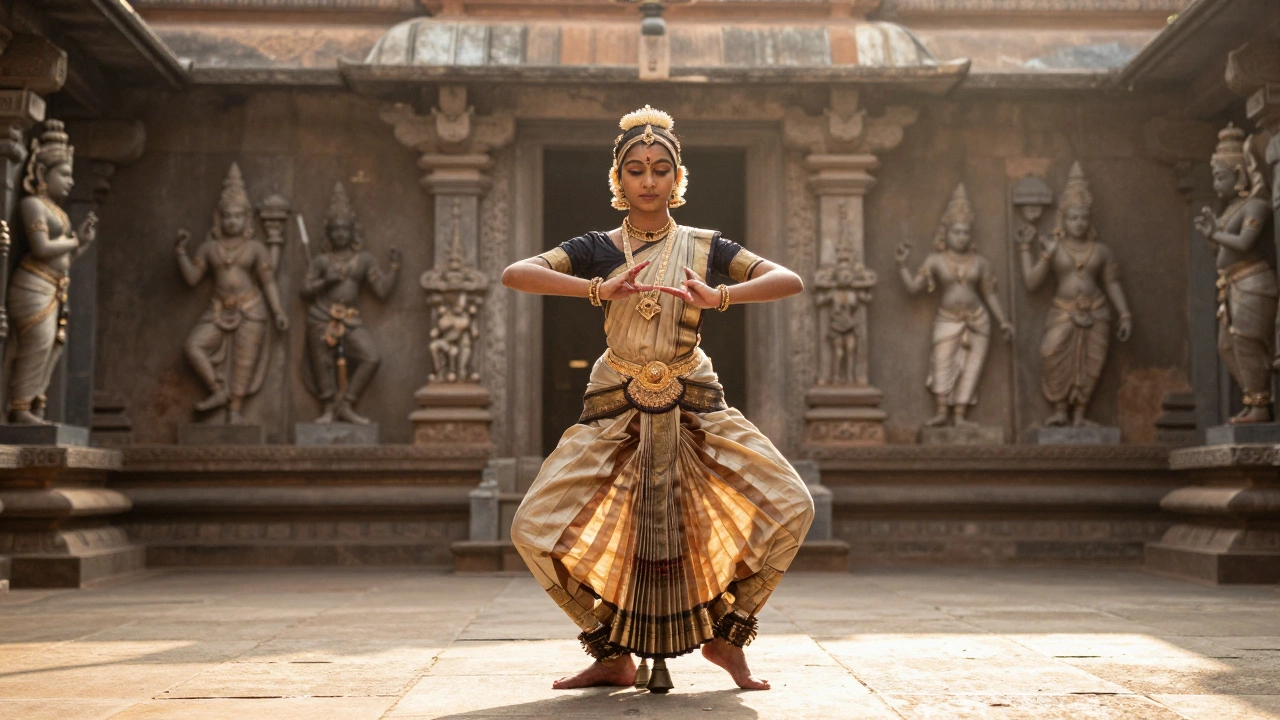
What Is the Most Strict Dance? The Rigid Discipline of Bharatanatyam
Bharatanatyam is the most strict dance form in India, with rigid rules for posture, movement, music, and expression that have remained unchanged for over two millennia. Its precision turns dance into sacred storytelling.
Read more